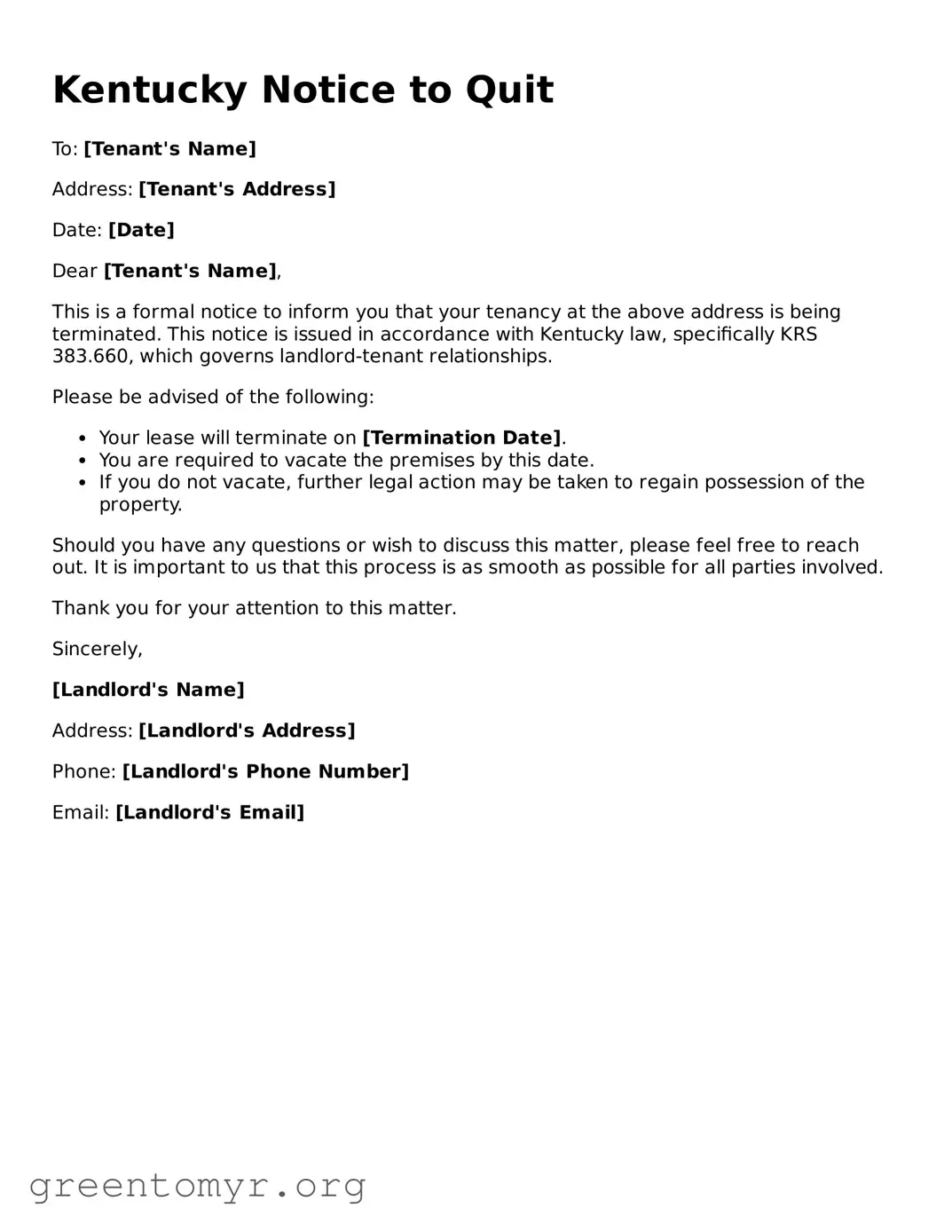
The Kentucky Notice to Quit form is an essential document for landlords and tenants navigating the rental process in the state. This form serves as a formal notification from a landlord to a tenant, indicating that they must vacate the rental property by a specified date. It is typically used in situations where a tenant has violated the terms of the lease agreement, such as failing to pay rent or engaging in disruptive behavior. The form outlines the reasons for the eviction and provides the tenant with a clear timeline for when they need to leave. Understanding the Notice to Quit is crucial for both parties, as it lays the groundwork for any potential eviction proceedings. By following the guidelines set forth in this form, landlords can ensure they are complying with Kentucky law, while tenants are given the opportunity to address any issues before facing eviction. Overall, the Notice to Quit is a vital step in the eviction process, balancing the rights and responsibilities of both landlords and tenants.
Kentucky Notice to Quit
To: [Tenant's Name]
Address: [Tenant's Address]
Date: [Date]
Dear [Tenant's Name],
This is a formal notice to inform you that your tenancy at the above address is being terminated. This notice is issued in accordance with Kentucky law, specifically KRS 383.660, which governs landlord-tenant relationships.
Please be advised of the following:
Should you have any questions or wish to discuss this matter, please feel free to reach out. It is important to us that this process is as smooth as possible for all parties involved.
Thank you for your attention to this matter.
Sincerely,
[Landlord's Name]
Address: [Landlord's Address]
Phone: [Landlord's Phone Number]
Email: [Landlord's Email]
| Fact Name | Details |
|---|---|
| Purpose | The Kentucky Notice to Quit form is used by landlords to inform tenants of their intent to terminate a lease agreement. |
| Governing Law | This form is governed by Kentucky Revised Statutes (KRS) § 383.660. |
| Delivery Method | The notice can be delivered in person, by certified mail, or by posting it on the property. |
| Notice Period | Typically, the notice period is seven days for non-payment of rent and 30 days for other lease violations. |
| Tenant Rights | Tenants have the right to contest the notice in court if they believe it is unjustified. |
| Form Requirements | The form must include the tenant's name, address, and the specific reason for the termination. |
| Signature Requirement | The landlord or their agent must sign the notice to make it valid. |
| Record Keeping | Landlords should keep a copy of the notice for their records as proof of delivery. |
| Legal Consequences | Failure to provide proper notice can result in delays in eviction proceedings. |
Once you have the Kentucky Notice to Quit form ready, it’s essential to fill it out accurately to ensure that the notice is valid. This form is a critical step in the eviction process, and completing it correctly will help you move forward in a timely manner.
After completing the form, ensure that you deliver it to the tenant in accordance with Kentucky law. This may involve personal delivery or sending it via certified mail. Keep a copy for your records as well.
The Kentucky Notice to Quit form is a legal document used by landlords to inform tenants that they must vacate the rental property. This notice is typically issued when a tenant has violated the lease agreement or failed to pay rent. It serves as a formal request for the tenant to leave the premises within a specified timeframe.
A landlord may use a Notice to Quit in various situations, including:
It's important for landlords to follow the proper legal process when issuing this notice to ensure compliance with Kentucky laws.
The amount of notice required depends on the reason for the eviction. Generally:
Landlords should ensure that they provide the correct amount of notice as required by Kentucky law.
Yes, a tenant can contest a Notice to Quit. If a tenant believes the notice is unjust or that they have rectified the issue, they may respond to the landlord. This can include paying overdue rent or addressing lease violations. If the dispute cannot be resolved, the tenant may seek legal advice or prepare for a court hearing.
If a tenant does not vacate the property by the deadline specified in the Notice to Quit, the landlord may initiate eviction proceedings. This process typically involves filing a lawsuit in the local court. The court will then determine whether the eviction is justified based on the evidence presented.
No, a Notice to Quit is not the same as an eviction notice. The Notice to Quit is the first step in the eviction process, informing the tenant of the need to leave. If the tenant fails to comply, the landlord can then proceed with filing for eviction, which is a more formal legal action.
Kentucky Notice to Quit forms can often be found online through legal aid websites or local court websites. Additionally, many office supply stores offer standard lease and eviction forms. It's important to ensure that any form used is compliant with current Kentucky laws.
Filling out the Kentucky Notice to Quit form can be a straightforward process, but many people make common mistakes that can lead to confusion or delays. One frequent error is failing to provide accurate tenant information. This includes not listing the correct name of the tenant or their current address. It's essential to ensure that all details are correct, as this helps in establishing a clear line of communication.
Another mistake often seen is not including the specific reason for the notice. The form requires a clear explanation of why the notice is being issued, such as non-payment of rent or lease violations. Omitting this information can lead to misunderstandings and may even invalidate the notice, causing unnecessary complications down the line.
People also tend to overlook the importance of providing the correct date. The Notice to Quit must specify when the tenant is expected to vacate the property. If this date is incorrect or unclear, it can create confusion regarding the timeline for the tenant to leave, potentially leading to further disputes.
In addition, some individuals forget to sign the form. A signature is a crucial element that validates the notice. Without it, the notice may be deemed incomplete, and the intended action may not be enforceable. Always double-check that the form is signed before delivering it to the tenant.
Lastly, many people do not keep a copy of the filled-out Notice to Quit form for their records. It's vital to retain a copy for future reference, especially if the situation escalates. Having documentation can be beneficial if any legal questions arise later. Taking these steps can help ensure that the process goes smoothly and that all parties understand their rights and responsibilities.
The Kentucky Notice to Quit form is an important document used in the eviction process. However, there are several other forms and documents that may accompany it to ensure all legal requirements are met and to facilitate the process for both landlords and tenants. Below is a list of some commonly used forms and documents that may be relevant in conjunction with the Notice to Quit.
Each of these documents plays a crucial role in the eviction process and helps ensure that both landlords and tenants understand their rights and responsibilities. It is important to handle these documents carefully and to follow the proper legal procedures to avoid complications.
The Notice to Quit form is an important document in the realm of landlord-tenant relationships. It serves as a formal communication that a tenant must vacate a rental property. There are several other documents that share similarities with the Notice to Quit, each serving its own purpose in the legal process. Here’s a list of seven such documents:
Understanding these documents can help both landlords and tenants navigate their rights and responsibilities effectively.
When filling out the Kentucky Notice to Quit form, there are important guidelines to follow. Here’s a list of things you should and shouldn't do:
Misconception 1: The Notice to Quit is only for non-payment of rent.
This is not true. While many people associate the Notice to Quit with non-payment situations, it can also be used for other lease violations. A landlord may issue this notice for reasons such as lease breaches, illegal activities, or property damage.
Misconception 2: A tenant can ignore the Notice to Quit.
Ignoring the Notice to Quit can lead to serious consequences. If a tenant does not respond or rectify the issue outlined in the notice, the landlord may proceed with eviction proceedings. It is crucial for tenants to take these notices seriously and address the concerns promptly.
Misconception 3: The Notice to Quit must be delivered in person.
This is a common misunderstanding. The Notice to Quit can be delivered through various methods, including certified mail or posting it on the property. However, landlords should ensure they follow the legal requirements for delivery to avoid complications.
Misconception 4: A Notice to Quit automatically leads to eviction.
Receiving a Notice to Quit does not mean that eviction is inevitable. Tenants often have the opportunity to resolve the issue before eviction proceedings begin. This might include paying overdue rent or correcting lease violations. Communication between the landlord and tenant can sometimes lead to a resolution.
Filling out and using the Kentucky Notice to Quit form is a crucial step for landlords seeking to terminate a lease. Here are some key takeaways to consider:
By following these guidelines, landlords can navigate the eviction process more effectively and ensure they are adhering to Kentucky laws.