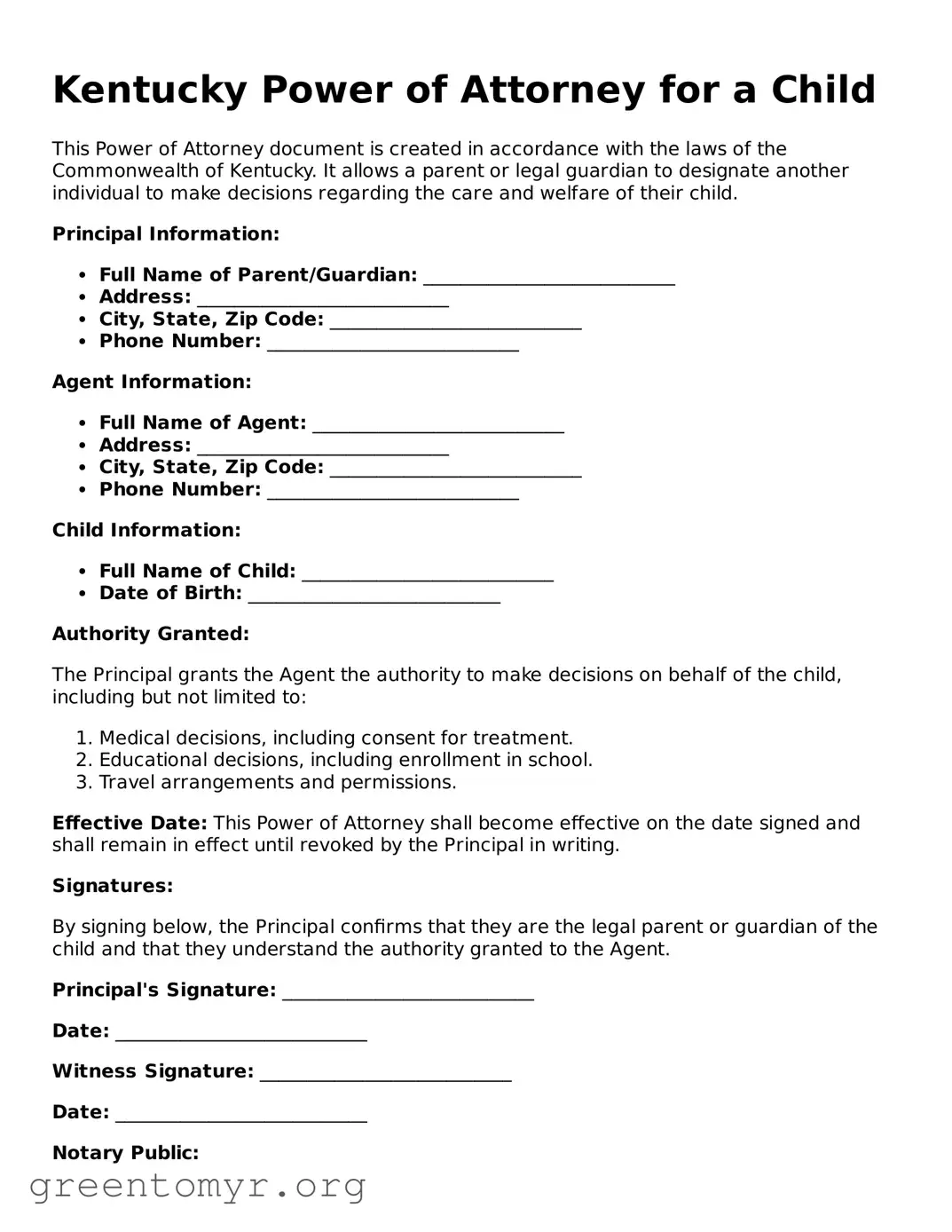
In Kentucky, the Power of Attorney for a Child form serves as a vital tool for parents and guardians who need to delegate their authority to another trusted adult. This legal document allows the appointed individual to make decisions regarding the child's care, education, and medical needs when the parent or guardian is unavailable. Whether it's for a short trip, an extended work commitment, or any situation where the child's primary caregiver cannot be present, this form ensures that the child's welfare is prioritized. It outlines the specific powers granted to the designated agent, which can include everything from enrolling the child in school to making healthcare decisions. Additionally, this form can be tailored to fit the unique circumstances of each family, providing flexibility and peace of mind. Understanding the importance of this document is crucial for any parent or guardian seeking to ensure their child's needs are met, even in their absence.
Kentucky Power of Attorney for a Child
This Power of Attorney document is created in accordance with the laws of the Commonwealth of Kentucky. It allows a parent or legal guardian to designate another individual to make decisions regarding the care and welfare of their child.
Principal Information:
Agent Information:
Child Information:
Authority Granted:
The Principal grants the Agent the authority to make decisions on behalf of the child, including but not limited to:
Effective Date: This Power of Attorney shall become effective on the date signed and shall remain in effect until revoked by the Principal in writing.
Signatures:
By signing below, the Principal confirms that they are the legal parent or guardian of the child and that they understand the authority granted to the Agent.
Principal's Signature: ___________________________
Date: ___________________________
Witness Signature: ___________________________
Date: ___________________________
Notary Public:
State of Kentucky
County of ______________________
Subscribed and sworn before me this ____ day of __________, 20__.
Notary Public Signature: ___________________________
My Commission Expires: ___________________________
| Fact Name | Description |
|---|---|
| Purpose | The Kentucky Power of Attorney for a Child form allows a parent or legal guardian to grant temporary authority to another individual to make decisions on behalf of a minor child. |
| Governing Law | This form is governed by Kentucky Revised Statutes, specifically KRS 403.270, which outlines the legal framework for powers of attorney in the state. |
| Duration | The authority granted through this form is typically temporary, lasting until a specified date or until revoked by the parent or guardian. |
| Signatures Required | To be valid, the form must be signed by the parent or legal guardian and may require notarization to ensure authenticity. |
Filling out the Kentucky Power of Attorney for a Child form is an important step in ensuring that a trusted individual can make decisions on behalf of your child when necessary. This form allows you to designate someone to act in your place for specific purposes, which can be crucial for various situations such as travel or medical emergencies. Follow these steps to complete the form accurately.
Once you have completed the form, ensure that copies are distributed to the attorney-in-fact and any relevant parties, such as schools or healthcare providers. Keeping a copy for your records is also essential. This will help maintain clarity and ensure that the designated individual can act on your behalf when needed.
The Kentucky Power of Attorney for a Child form is a legal document that allows a parent or legal guardian to designate another adult to make decisions on behalf of their child. This can include decisions related to education, healthcare, and general welfare. This form is particularly useful when parents are unable to care for their child due to travel, illness, or other circumstances. It ensures that the child’s needs are met and that someone is authorized to act in their best interest.
In Kentucky, you can appoint any adult as the attorney-in-fact for your child. This person could be a relative, family friend, or trusted neighbor. It is important to choose someone who is responsible and understands the needs of your child. The appointed individual should be willing to take on this role and be prepared to make decisions that align with your wishes for your child’s care and upbringing.
The duration of the Power of Attorney for a Child can vary based on your preferences. You can specify a start and end date for the authority granted in the document. If no end date is provided, the authority typically remains in effect until you revoke it or until the child reaches the age of majority, which is 18 years old in Kentucky. It’s advisable to clearly outline the time frame in the document to avoid any confusion.
If you need to revoke a Power of Attorney for a Child, you must do so in writing. Create a revocation document that clearly states your intention to cancel the previous Power of Attorney. It’s also important to notify the attorney-in-fact and any relevant parties, such as schools or healthcare providers, about the revocation. Keeping a copy of the revocation for your records is a good practice to ensure clarity and prevent misunderstandings.
Filling out the Kentucky Power of Attorney for a Child form can be a straightforward process, but there are common mistakes that people often make. One of the most frequent errors is not providing complete information about the child. This includes missing details such as the child's full name, date of birth, and address. Incomplete information can lead to confusion and may even invalidate the document.
Another mistake occurs when the designated agent is not clearly identified. It is crucial to specify who will act on behalf of the child. This includes providing the full name and contact information of the agent. If this information is vague or missing, the authority granted may be questioned, leading to complications in decision-making for the child.
Additionally, many individuals overlook the importance of signatures. Both the parent or guardian granting the power of attorney and the designated agent must sign the form. Failing to obtain the necessary signatures can render the document ineffective. It’s essential to ensure that all parties involved understand their roles and responsibilities, which can help avoid misunderstandings later on.
Lastly, people often forget to consider the duration of the power of attorney. The form should clearly state how long the authority will last. Without a specified timeframe, the document may be seen as open-ended, which could lead to disputes about when the authority ends. Being clear about the duration helps protect both the child’s interests and the agent’s responsibilities.
When creating a Power of Attorney for a Child in Kentucky, it’s essential to consider other documents that may complement or support this form. Each of these documents serves a specific purpose and can help ensure that your child's needs are met in various situations.
Having these documents prepared alongside the Power of Attorney for a Child can provide peace of mind. They ensure that your child’s care, education, and welfare are managed according to your wishes, even when you cannot be there.
The Power of Attorney for a Child form allows a designated individual to make decisions on behalf of a minor. This document shares similarities with several other legal documents that empower individuals to act on behalf of others. Below is a list of eight such documents, along with a brief explanation of how they are similar to the Power of Attorney for a Child form.
When filling out the Kentucky Power of Attorney for a Child form, it's important to approach the task with care. Here are some key do's and don'ts to keep in mind:
When it comes to the Kentucky Power of Attorney for a Child form, there are several misconceptions that people often have. Understanding these can help clarify the purpose and function of this important document.
Understanding these misconceptions can help parents navigate the process more confidently and ensure they make informed decisions regarding their child's care.
When filling out and using the Kentucky Power of Attorney for a Child form, it is essential to understand several key aspects. Below are important takeaways to consider:
Understanding these key points can help ensure that the Power of Attorney for a Child is executed correctly and serves its intended purpose effectively.