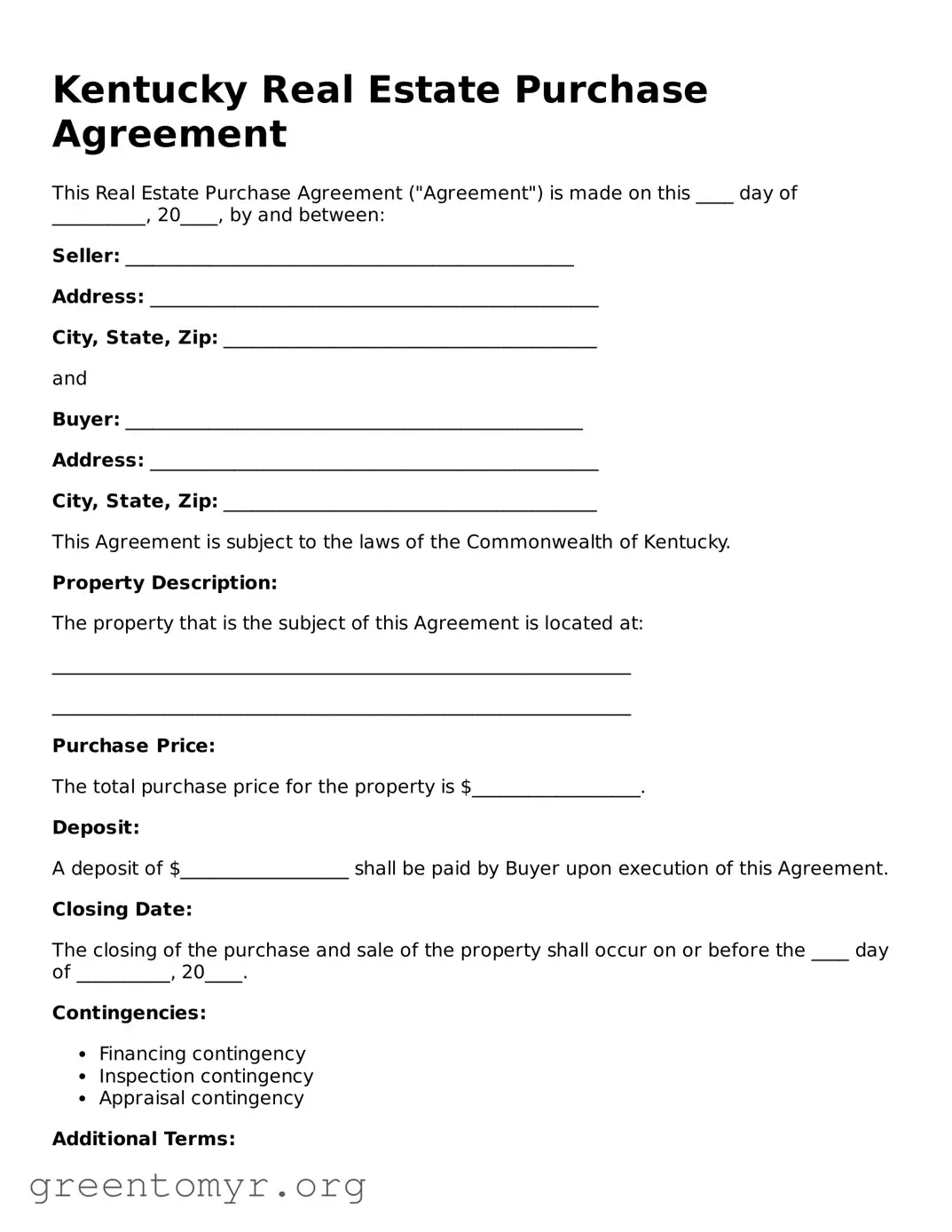
When diving into the world of real estate transactions in Kentucky, understanding the Kentucky Real Estate Purchase Agreement form is essential for both buyers and sellers. This form serves as a crucial document that outlines the terms and conditions of a property sale, ensuring that all parties are on the same page. It typically includes key elements such as the purchase price, financing details, and any contingencies that must be met before the sale can proceed. Additionally, it addresses important aspects like the closing date, property disclosures, and any agreements regarding repairs or inspections. By clearly laying out these details, the agreement helps to minimize misunderstandings and provides a roadmap for a smooth transaction. Whether you're a first-time homebuyer or a seasoned investor, familiarizing yourself with this form can empower you to navigate the process with confidence and clarity.
Kentucky Real Estate Purchase Agreement
This Real Estate Purchase Agreement ("Agreement") is made on this ____ day of __________, 20____, by and between:
Seller: ________________________________________________
Address: ________________________________________________
City, State, Zip: ________________________________________
and
Buyer: _________________________________________________
Address: ________________________________________________
City, State, Zip: ________________________________________
This Agreement is subject to the laws of the Commonwealth of Kentucky.
Property Description:
The property that is the subject of this Agreement is located at:
______________________________________________________________
______________________________________________________________
Purchase Price:
The total purchase price for the property is $__________________.
Deposit:
A deposit of $__________________ shall be paid by Buyer upon execution of this Agreement.
Closing Date:
The closing of the purchase and sale of the property shall occur on or before the ____ day of __________, 20____.
Contingencies:
Additional Terms:
____________________________________________________________________
____________________________________________________________________
IN WITNESS WHEREOF, the parties have executed this Agreement as of the date first above written.
Seller's Signature: ________________________________
Date: ___________________________
Buyer's Signature: ________________________________
Date: ___________________________
| Fact Name | Details |
|---|---|
| Governing Law | The Kentucky Real Estate Purchase Agreement is governed by Kentucky state law. |
| Purpose | This form outlines the terms and conditions for the sale of real estate in Kentucky. |
| Parties Involved | The agreement involves the buyer and the seller of the property. |
| Property Description | A detailed description of the property must be included in the agreement. |
| Purchase Price | The total purchase price of the property is specified in the agreement. |
| Earnest Money | The agreement typically requires a deposit known as earnest money from the buyer. |
| Contingencies | Buyers may include contingencies, such as financing or inspection requirements. |
| Closing Date | The agreement should specify a closing date for the transaction to be completed. |
Completing the Kentucky Real Estate Purchase Agreement form is an essential step in the process of buying or selling property. This document outlines the terms and conditions agreed upon by both the buyer and the seller, setting the stage for a successful transaction. To ensure clarity and accuracy, follow these detailed steps carefully.
Once the form is completed, it should be reviewed for accuracy before being submitted to the appropriate parties. This ensures that all terms are clear and agreed upon, paving the way for a smooth transaction process.
The Kentucky Real Estate Purchase Agreement form is a legal document used when buying or selling property in Kentucky. It outlines the terms and conditions of the sale, including the price, property details, and any contingencies. This form helps protect both the buyer and seller by clearly defining their responsibilities and expectations.
This form is typically used by individuals or entities involved in a real estate transaction in Kentucky. Buyers and sellers of residential properties, real estate agents, and attorneys may all find this form useful. It ensures that both parties are on the same page regarding the sale.
The agreement includes several important details, such as:
Yes, the agreement can be modified if both parties agree to the changes. Any modifications should be documented in writing and signed by both the buyer and seller to ensure clarity and enforceability.
If one party fails to meet their obligations under the agreement, the other party may have several options. They can seek to enforce the contract, request damages, or terminate the agreement. It is often advisable to consult with a legal professional in such situations.
While a real estate agent can help facilitate the transaction and provide guidance, using the Kentucky Real Estate Purchase Agreement form is not mandatory. Buyers and sellers can choose to use it or create their own agreement, but it is recommended to use a standard form to ensure all necessary elements are included.
The Kentucky Real Estate Purchase Agreement form can be obtained from various sources, including:
While it is not legally required to have a lawyer review the agreement, it is often a good idea. A legal professional can help identify any potential issues and ensure that the document meets all legal requirements. This can provide peace of mind for both buyers and sellers.
Filling out the Kentucky Real Estate Purchase Agreement form can be a daunting task. Many people make common mistakes that can lead to misunderstandings or even legal issues down the line. Understanding these pitfalls can help ensure a smoother transaction.
One frequent error is failing to include all necessary parties in the agreement. It’s essential to list everyone who has a stake in the property, including co-owners or spouses. Omitting a party can create complications later, especially when it comes to signatures and approvals.
Another common mistake is not specifying the purchase price clearly. The price should be stated explicitly and should match what was agreed upon in prior discussions. Leaving this blank or writing it ambiguously can lead to disputes between the buyer and seller.
Many individuals also neglect to include important contingencies in the agreement. Contingencies are conditions that must be met for the sale to proceed. These can include financing, inspections, or the sale of another property. Without these clauses, buyers may find themselves in difficult situations if their circumstances change.
Additionally, failing to provide accurate property descriptions is another mistake. The agreement should include the exact address and legal description of the property. Inaccuracies can lead to confusion and potential legal issues regarding ownership.
Some people overlook the significance of the closing date. Specifying a date for the closing is crucial, as it sets expectations for both parties. Not having a clear timeline can result in delays and frustration for everyone involved.
Moreover, many individuals do not fully understand the implications of earnest money. This deposit shows the buyer's commitment and can be forfeited if the buyer backs out without a valid reason. It’s important to specify the amount and conditions under which it may be returned or kept.
Finally, not seeking legal advice before signing the agreement can be a significant oversight. Consulting with a legal professional can provide clarity on the terms and conditions, ensuring that the agreement protects your interests. Taking this step can save time, money, and stress in the long run.
When engaging in a real estate transaction in Kentucky, several important documents often accompany the Real Estate Purchase Agreement. Each of these documents serves a specific purpose in facilitating a smooth and legally binding process.
Understanding these accompanying documents is crucial for anyone involved in a real estate transaction. Each one plays a vital role in ensuring that the process is clear and fair for both buyers and sellers.
When navigating the Kentucky Real Estate Purchase Agreement form, it's essential to approach the process with care. This document is a vital part of any real estate transaction, and filling it out correctly can help ensure a smooth experience for all parties involved. Here’s a list of things to do and avoid while completing the form.
By following these guidelines, you can help facilitate a successful real estate transaction in Kentucky. Remember, attention to detail can make all the difference!
Understanding the Kentucky Real Estate Purchase Agreement form is essential for anyone involved in real estate transactions in the state. However, several misconceptions can lead to confusion. Here are five common misconceptions:
Addressing these misconceptions can lead to a smoother real estate transaction and better outcomes for all parties involved.
When filling out and using the Kentucky Real Estate Purchase Agreement form, it's important to keep a few key points in mind. Here are some essential takeaways:
By following these takeaways, you can navigate the Kentucky Real Estate Purchase Agreement with greater confidence.