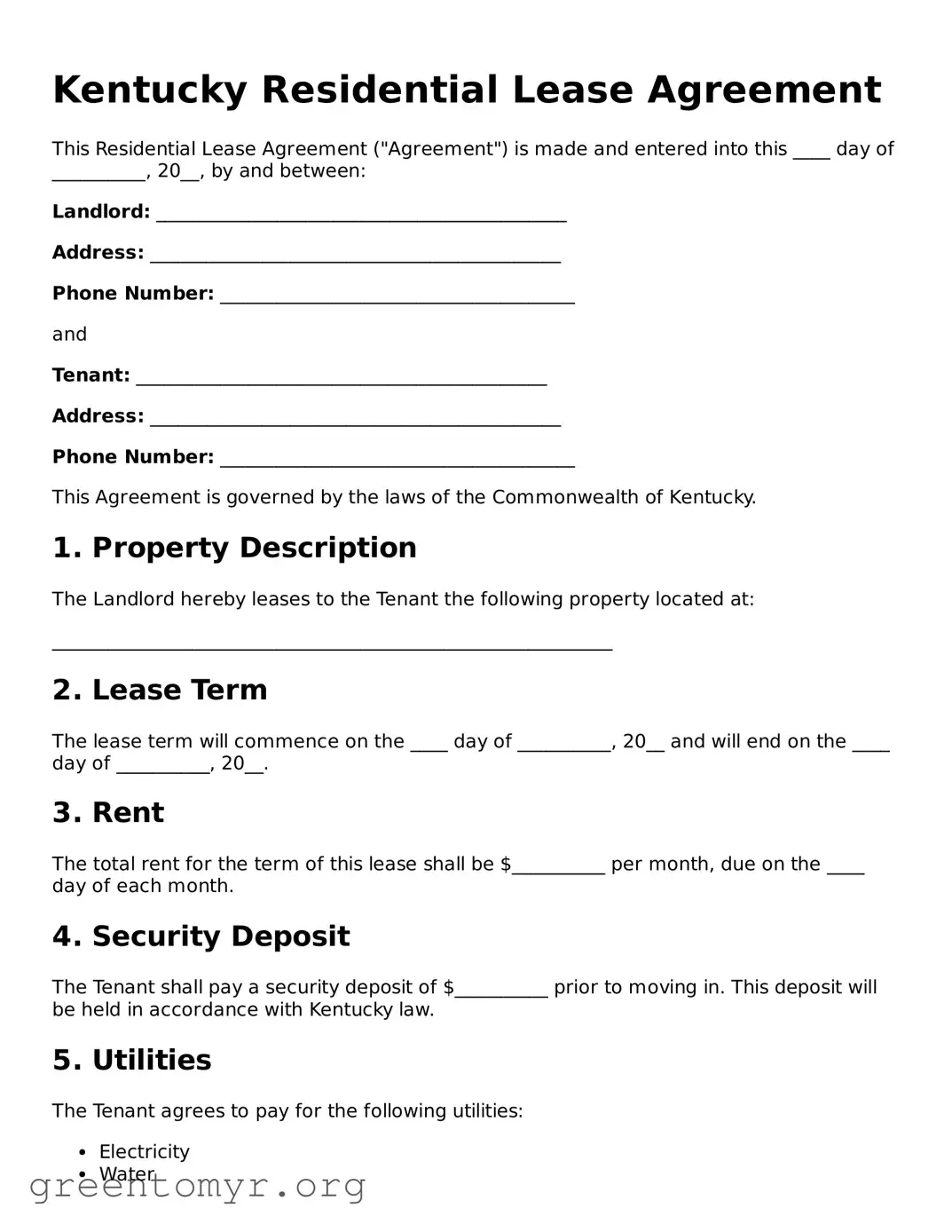
When it comes to renting a home in Kentucky, understanding the Residential Lease Agreement form is crucial for both landlords and tenants. This document serves as the foundation of the landlord-tenant relationship, outlining the rights and responsibilities of each party. Key aspects of the form include details about the rental property, such as its address and description, as well as the duration of the lease, which typically ranges from one year to month-to-month arrangements. Rent amount, payment due dates, and acceptable payment methods are clearly specified to avoid any confusion. Additionally, the agreement addresses security deposits, maintenance responsibilities, and rules regarding pets or subleasing. By carefully reviewing this form, both parties can ensure a smooth rental experience, minimizing potential disputes and fostering a positive living environment.
Kentucky Residential Lease Agreement
This Residential Lease Agreement ("Agreement") is made and entered into this ____ day of __________, 20__, by and between:
Landlord: ____________________________________________
Address: ____________________________________________
Phone Number: ______________________________________
and
Tenant: ____________________________________________
Address: ____________________________________________
Phone Number: ______________________________________
This Agreement is governed by the laws of the Commonwealth of Kentucky.
1. Property Description
The Landlord hereby leases to the Tenant the following property located at:
____________________________________________________________
2. Lease Term
The lease term will commence on the ____ day of __________, 20__ and will end on the ____ day of __________, 20__.
3. Rent
The total rent for the term of this lease shall be $__________ per month, due on the ____ day of each month.
4. Security Deposit
The Tenant shall pay a security deposit of $__________ prior to moving in. This deposit will be held in accordance with Kentucky law.
5. Utilities
The Tenant agrees to pay for the following utilities:
6. Maintenance and Repairs
The Landlord is responsible for maintaining the property in a habitable condition. The Tenant must promptly report any maintenance issues.
7. Use of Property
The property shall be used exclusively as a residential dwelling. No illegal activities are permitted.
8. Termination
Either party may terminate this lease by providing a written notice of ____ days.
9. Governing Law
This Agreement shall be governed by the laws of the Commonwealth of Kentucky.
10. Signatures
By signing below, both parties agree to the terms of this Agreement.
Landlord Signature: ________________________________ Date: _______________
Tenant Signature: _________________________________ Date: _______________
| Fact Name | Description |
|---|---|
| Governing Law | The Kentucky Residential Lease Agreement is governed by Kentucky Revised Statutes, Chapter 383. |
| Parties Involved | The agreement typically involves a landlord and a tenant, clearly identifying both parties. |
| Lease Duration | The lease can be for a fixed term or a month-to-month arrangement, as specified in the agreement. |
| Security Deposit | The form outlines the amount of the security deposit and conditions for its return, in compliance with state law. |
| Maintenance Responsibilities | The lease specifies the responsibilities of both the landlord and tenant regarding property maintenance and repairs. |
| Termination Notice | The agreement includes terms for terminating the lease, including the required notice period for both parties. |
Filling out the Kentucky Residential Lease Agreement form is an important step in establishing a rental relationship between a landlord and a tenant. After completing the form, both parties will have a clear understanding of their rights and responsibilities. Here’s how to fill it out correctly.
Once the form is completed and signed, both the landlord and tenant should keep a copy for their records. It’s essential to ensure that all information is accurate and that both parties understand the terms before moving forward.
A Kentucky Residential Lease Agreement is a legal document that outlines the terms and conditions under which a landlord rents property to a tenant. This agreement serves to protect both parties by clearly defining their rights and responsibilities. It typically includes details such as the rental amount, duration of the lease, security deposit requirements, and rules regarding property maintenance. Having a written lease helps prevent misunderstandings and provides a reference point if disputes arise.
Several essential elements should be included in a Kentucky Residential Lease Agreement:
Generally, a landlord cannot increase the rent during the lease term unless the lease agreement specifically allows for it. If the lease is month-to-month, the landlord can typically raise the rent by providing proper notice, which is usually 30 days in Kentucky. For fixed-term leases, any rent increase would typically take effect only after the lease expires, unless both parties agree to amend the lease. Always review your lease agreement for specific terms related to rent increases.
Breaking a lease early can have legal and financial consequences, so it’s important to proceed carefully. Here are some steps to consider:
Filling out the Kentucky Residential Lease Agreement form can be a straightforward process, but many individuals make common mistakes that can lead to confusion or legal issues down the line. One frequent error is neglecting to provide accurate personal information. Landlords and tenants must ensure that names, addresses, and contact details are correct. Inaccuracies can complicate communication and create problems in the event of disputes.
Another common mistake is failing to specify the lease term clearly. The lease should outline the start and end dates of the rental period. Without this information, both parties may have different interpretations of the agreement, which could lead to misunderstandings regarding the duration of tenancy. It's crucial to state whether the lease is for a fixed term or if it will continue on a month-to-month basis.
Additionally, some individuals overlook the importance of detailing the rent amount and payment terms. The agreement must explicitly state the monthly rent, due dates, and acceptable payment methods. If these terms are vague or missing, it can lead to disputes over payments and create financial strain on both parties.
Another mistake involves the security deposit. Many tenants and landlords fail to specify the amount of the security deposit and the conditions under which it may be withheld. Clear terms regarding the deposit can prevent disagreements when it comes time to return the funds. It's essential to outline the conditions for deductions, if any, to ensure transparency and fairness.
Finally, individuals often neglect to include provisions regarding maintenance and repairs. A well-drafted lease should address who is responsible for maintaining the property and handling repairs. Without these provisions, tenants may be left wondering about their responsibilities, while landlords may find themselves dealing with unexpected issues. Clarity in this area is vital for a smooth landlord-tenant relationship.
When entering into a rental agreement in Kentucky, several additional forms and documents may be necessary to ensure a smooth leasing process. These documents help clarify the terms of the lease, protect both parties, and ensure compliance with state laws. Below is a list of common forms often used alongside the Kentucky Residential Lease Agreement.
These documents play a crucial role in the rental process, ensuring clarity and protecting the interests of both landlords and tenants. By understanding and utilizing these forms, both parties can foster a positive rental experience and minimize potential conflicts.
When filling out the Kentucky Residential Lease Agreement form, it’s important to pay attention to detail. Here’s a helpful list of things you should and shouldn’t do:
The Kentucky Residential Lease Agreement form is an important document for both landlords and tenants. However, several misconceptions often arise around its use and requirements. Here are seven common misunderstandings:
Many people believe that all residential lease agreements are interchangeable. In reality, each state has its own regulations and requirements. The Kentucky Residential Lease Agreement is tailored specifically to meet the laws and needs of Kentucky residents.
Some tenants think that a verbal agreement with their landlord is enough to protect their rights. However, having a written lease agreement is crucial. It provides clear terms and conditions, which can prevent misunderstandings and disputes.
Another misconception is that only landlords are required to sign the lease agreement. In fact, both parties—landlords and tenants—should sign the document to ensure that everyone is held accountable for the terms outlined.
Some individuals believe that lease terms can be altered whenever it suits either party. Changes to the lease must typically be agreed upon in writing by both the landlord and tenant. This protects both parties and ensures clarity.
It's a common belief that every lease must contain identical clauses. While there are standard elements, landlords can customize agreements to reflect specific terms, such as pet policies or maintenance responsibilities.
Some tenants think they can stop paying rent if they feel the property is not maintained. However, withholding rent can lead to legal issues. Tenants should address concerns with the landlord and follow the proper legal channels if issues arise.
Many believe that a lease agreement is set in stone once signed. While breaking a lease can have consequences, there are legal ways to terminate a lease early, such as mutual agreement or specific circumstances like job relocation.
Understanding these misconceptions can help both landlords and tenants navigate their rental agreements more effectively. Clear communication and a solid understanding of the lease can lead to a more positive rental experience.
When dealing with the Kentucky Residential Lease Agreement form, it’s important to keep several key points in mind: