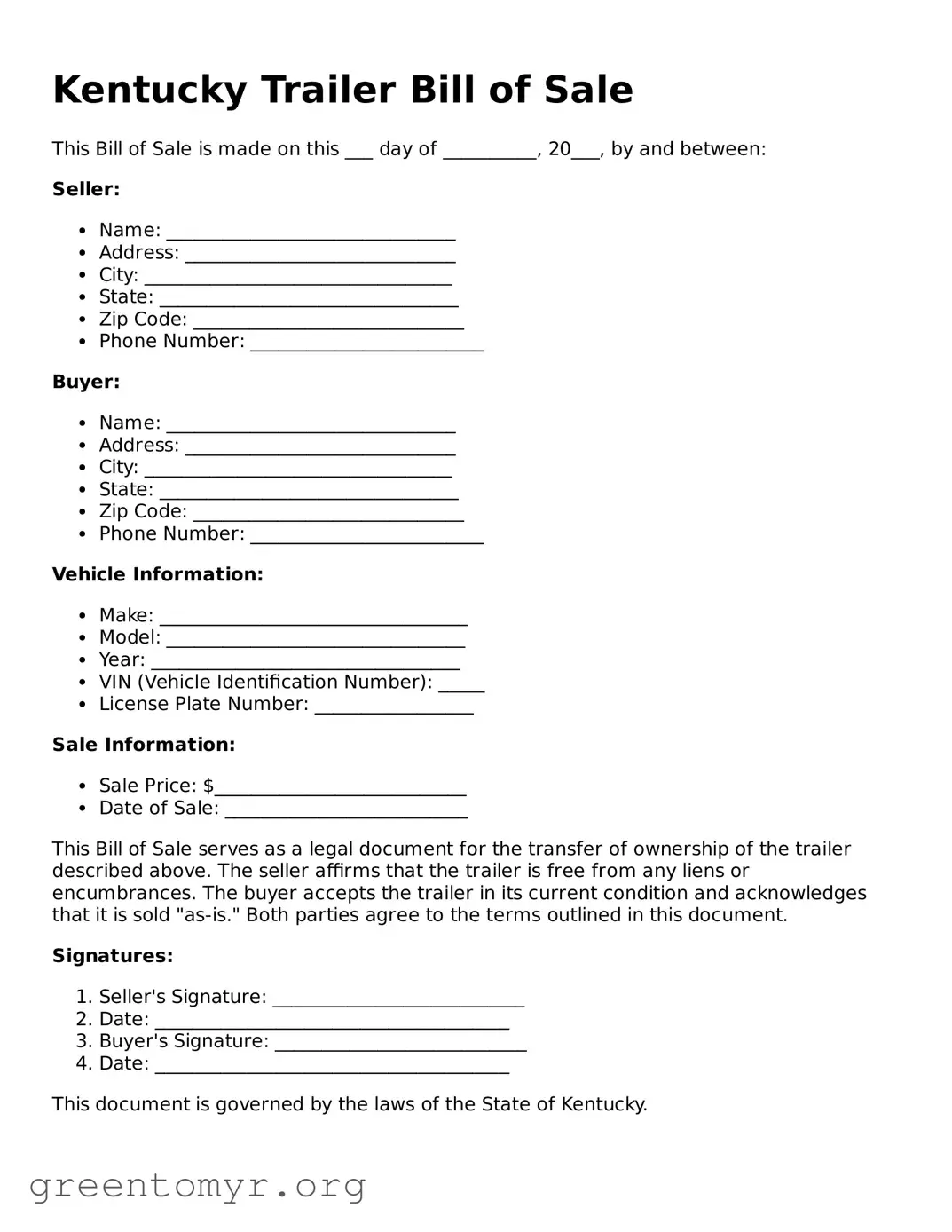
The Kentucky Trailer Bill of Sale form serves as a crucial document in the process of buying or selling a trailer in the state of Kentucky. This form provides essential details about the transaction, including the names and addresses of both the buyer and the seller, as well as the trailer's identification information, such as the Vehicle Identification Number (VIN), make, model, and year. It also outlines the purchase price and any terms of sale that may apply, ensuring that both parties have a clear understanding of the agreement. By documenting the transfer of ownership, the bill of sale helps protect the rights of both the buyer and the seller, making it an important part of the transaction process. Additionally, this form may be required for registration and titling purposes, further emphasizing its significance in the legal transfer of the trailer. Understanding the components and importance of the Kentucky Trailer Bill of Sale form can help facilitate a smooth and efficient transaction for all parties involved.
Kentucky Trailer Bill of Sale
This Bill of Sale is made on this ___ day of __________, 20___, by and between:
Seller:
Buyer:
Vehicle Information:
Sale Information:
This Bill of Sale serves as a legal document for the transfer of ownership of the trailer described above. The seller affirms that the trailer is free from any liens or encumbrances. The buyer accepts the trailer in its current condition and acknowledges that it is sold "as-is." Both parties agree to the terms outlined in this document.
Signatures:
This document is governed by the laws of the State of Kentucky.
| Fact Name | Description |
|---|---|
| Purpose | The Kentucky Trailer Bill of Sale is used to document the sale and transfer of ownership of a trailer in Kentucky. |
| Governing Law | This form is governed by Kentucky Revised Statutes (KRS) Chapter 186. |
| Required Information | Buyers and sellers must provide their names, addresses, and the trailer's details, including make, model, and VIN. |
| Notarization | While notarization is not mandatory, it is highly recommended to enhance the document's credibility. |
| Use for Registration | The completed Bill of Sale serves as proof of ownership when registering the trailer with the Kentucky Transportation Cabinet. |
| Record Keeping | Both the buyer and seller should keep a copy of the Bill of Sale for their records, as it may be needed for future reference. |
Once you have the Kentucky Trailer Bill of Sale form ready, it is essential to fill it out accurately to ensure a smooth transaction. Each section of the form requires specific information that will facilitate the transfer of ownership. Following the steps outlined below will help you complete the form correctly.
After completing the form, both parties should retain a copy for their records. This will serve as proof of the transaction and can be useful for future reference or registration purposes.
A Kentucky Trailer Bill of Sale is a legal document used to transfer ownership of a trailer from one party to another. This form provides essential information about the trailer, including its make, model, year, and Vehicle Identification Number (VIN). It serves as proof of the transaction and is often required for registration purposes.
Anyone involved in the buying or selling of a trailer in Kentucky should use a Trailer Bill of Sale. This includes private sellers, dealers, and buyers. The document protects both parties by clearly outlining the terms of the sale and providing a record of the transaction.
The form typically requires the following information:
While a notary is not legally required for a Kentucky Trailer Bill of Sale, having the document notarized can add an extra layer of authenticity. This can be beneficial if there are disputes in the future regarding the sale.
The Bill of Sale is often required when registering a trailer with the Kentucky Transportation Cabinet. It serves as proof of ownership and may be necessary for obtaining a title. Without it, the registration process could be delayed or denied.
Yes, you can create your own Bill of Sale as long as it includes all necessary information. However, using a standardized form can help ensure that all required details are included and that the document meets legal standards.
If there is a lien on the trailer, it is essential to address it before completing the sale. The seller should provide proof that the lien has been satisfied or that the buyer is aware of the lien. This information should also be included in the Bill of Sale.
Both the buyer and seller should keep a copy of the Bill of Sale for their records. It is advisable to store it in a safe place, as it may be needed for future reference, especially during registration or if any legal issues arise.
If the Bill of Sale is lost, the parties involved may need to create a new document that includes all the original details. This new Bill of Sale should be signed by both parties to validate the transaction again.
Filling out the Kentucky Trailer Bill of Sale form can seem straightforward, but many people make common mistakes that can lead to complications later. One frequent error is failing to include all required information. This includes the full names and addresses of both the buyer and seller. Omitting even one detail can create confusion and delay the transfer of ownership.
Another mistake is neglecting to provide a complete description of the trailer. The form should include the trailer’s make, model, year, and Vehicle Identification Number (VIN). Without this information, it may be difficult to identify the trailer in question, which can lead to disputes or issues with registration.
Many individuals also overlook the importance of the date of sale. This date is critical for establishing the timeline of ownership and any potential liability. If the date is missing or incorrect, it can create legal complications down the line.
Signatures are essential on the Bill of Sale. Some people forget to sign the document or fail to have the necessary parties sign it. Both the buyer and seller must sign the form to validate the transaction. Without these signatures, the document may not hold up in court.
Inaccurate payment information is another common error. It’s important to clearly state the purchase price and method of payment. If this information is vague or incorrect, it can lead to misunderstandings between the buyer and seller.
Some individuals fail to keep a copy of the completed Bill of Sale. It is crucial to retain a copy for personal records. This document serves as proof of the transaction and can be important for future reference, especially if any issues arise.
Another mistake is not verifying the buyer's identity. Sellers should take the time to confirm that the buyer is who they say they are. This step can prevent potential fraud and ensure a smooth transaction.
People sometimes forget to check local regulations regarding trailer sales. Different counties may have specific requirements or additional forms needed. Ignoring these can lead to fines or complications in registering the trailer.
Lastly, not consulting with a professional when needed can be a significant oversight. If there are any uncertainties about the form or the sale process, seeking legal advice can provide clarity and help avoid costly mistakes.
When completing a trailer sale in Kentucky, several documents often accompany the Bill of Sale. These forms help ensure a smooth transaction and provide necessary information for both the buyer and seller. Below is a list of common documents used alongside the Kentucky Trailer Bill of Sale.
Having these documents ready can simplify the process of buying or selling a trailer in Kentucky. Each form plays a crucial role in ensuring that the transaction is legally sound and that both parties are protected.
The Trailer Bill of Sale form serves as a crucial document in the transfer of ownership for trailers. It shares similarities with several other documents that facilitate transactions involving vehicles and property. Here’s a list of nine documents that are akin to the Trailer Bill of Sale:
Each of these documents plays a vital role in ensuring that transactions are clear, legal, and binding, just like the Trailer Bill of Sale. Understanding their similarities can help individuals navigate the complexities of buying and selling various types of property.
When filling out the Kentucky Trailer Bill of Sale form, it is important to follow specific guidelines to ensure the document is accurate and legally binding. Here are some do's and don'ts to consider:
Following these guidelines will help ensure that the Bill of Sale is completed correctly and serves its intended purpose.
Many people have misunderstandings about the Kentucky Trailer Bill of Sale form. Here are some common misconceptions and clarifications:
Some believe a bill of sale is optional. However, it serves as a crucial document for proving ownership and can be important for registration purposes.
Individuals can also use the form. It is designed for both private sales and dealer transactions.
While notarization can add an extra layer of security, it is not a requirement for the bill of sale to be valid in Kentucky.
Not every trailer sale necessitates a bill of sale. For example, trailers that are not titled may not need one, but it is still advisable to have documentation.
Although a handwritten bill of sale may be accepted, using a standardized form is recommended to ensure all necessary information is included.
Both the buyer and seller should keep a copy for their records. This helps avoid disputes in the future.
Essential information such as the trailer's VIN, purchase price, and the names of both parties should be included for clarity and legal purposes.
The bill of sale is applicable for both new and used trailers, making it versatile for various transactions.
There is no need to file the bill of sale with the state. However, it should be kept safely by both parties involved in the transaction.
When filling out and using the Kentucky Trailer Bill of Sale form, consider the following key takeaways: