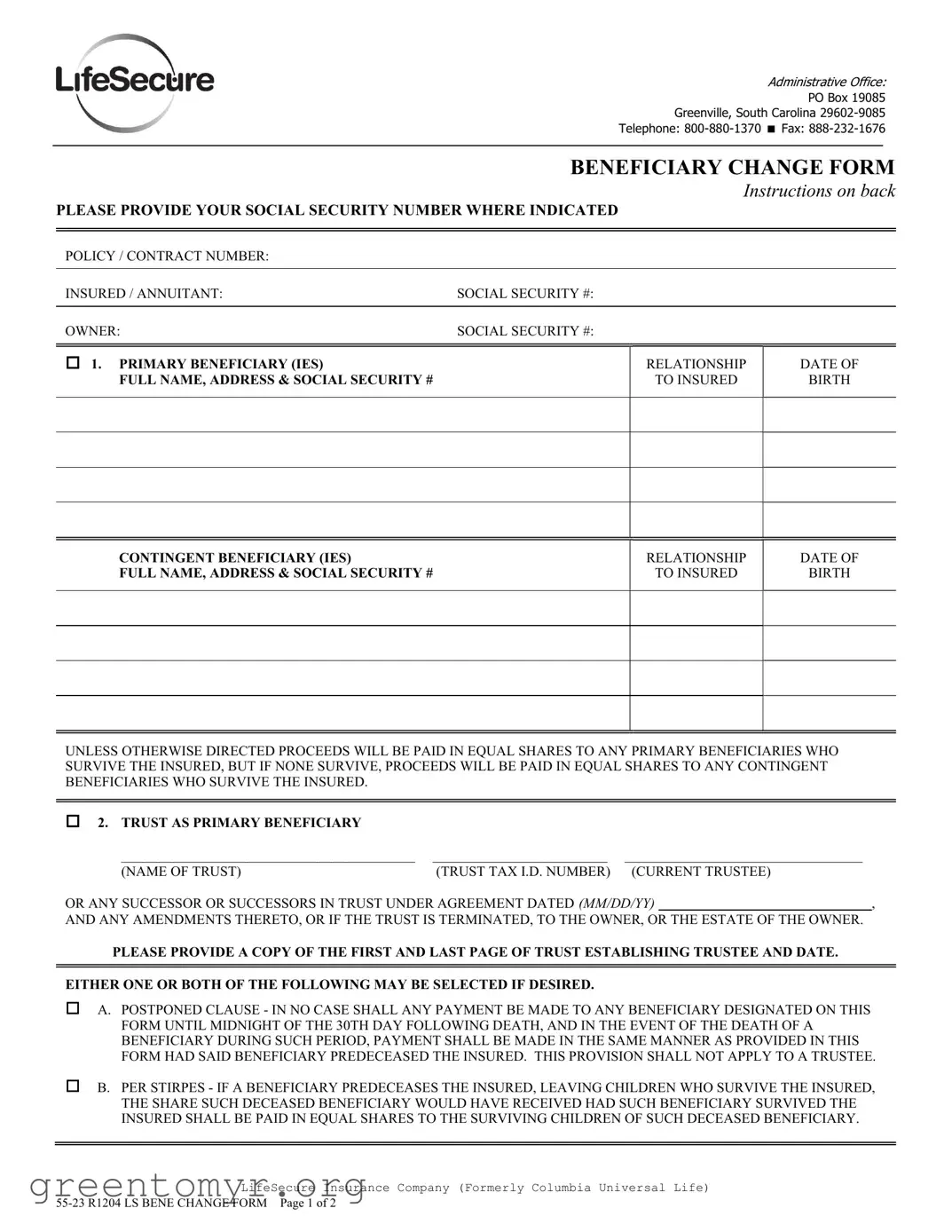
The Lifesecure Beneficiary Change form is a crucial document for policyholders looking to update their designated beneficiaries. It allows individuals to specify both primary and contingent beneficiaries, ensuring that the right people receive benefits in the event of the policyholder's passing. The form requires detailed information, including the full legal names, social security numbers, and relationships of the beneficiaries to the insured. Additionally, it provides options for naming a trust as a primary beneficiary, which can offer further estate planning benefits. Important clauses, such as the postponed clause and per stirpes designation, allow policyholders to customize how benefits are distributed under certain circumstances. Completing this form accurately is essential, as any errors could lead to delays or complications in benefit distribution. Policyholders must also ensure that their signatures are witnessed by a responsible adult who is not a relative or beneficiary. This form must be submitted to LifeSecure Insurance Company, and it is vital to keep a copy for personal records. Updating beneficiary information should not be taken lightly, as it can significantly impact the financial security of loved ones.

Administrative Office:
PO Box 19085
Greenville, South Carolina
Telephone:
BENEFICIARY CHANGE FORM
Instructions on back
PLEASE PROVIDE YOUR SOCIAL SECURITY NUMBER WHERE INDICATED
POLICY / CONTRACT NUMBER:
INSURED / ANNUITANT: |
SOCIAL SECURITY #: |
|
|
|
|
|
|
OWNER: |
SOCIAL SECURITY #: |
|
|
1. PRIMARY BENEFICIARY (IES) |
|
|
|
|
RELATIONSHIP |
DATE OF |
|
FULL NAME, ADDRESS & SOCIAL SECURITY # |
|
TO INSURED |
BIRTH |
|
|
|
|
|
|
|
|
|
|
|
|
|
|
|
|
|
|
|
|
|
|
|
|
CONTINGENT BENEFICIARY (IES) |
RELATIONSHIP |
DATE OF |
FULL NAME, ADDRESS & SOCIAL SECURITY # |
TO INSURED |
BIRTH |
|
|
|
|
|
|
|
|
|
|
|
|
|
|
|
UNLESS OTHERWISE DIRECTED PROCEEDS WILL BE PAID IN EQUAL SHARES TO ANY PRIMARY BENEFICIARIES WHO SURVIVE THE INSURED, BUT IF NONE SURVIVE, PROCEEDS WILL BE PAID IN EQUAL SHARES TO ANY CONTINGENT BENEFICIARIES WHO SURVIVE THE INSURED.
2. TRUST AS PRIMARY BENEFICIARY |
|
|
|
__________________________________________ |
_________________________ |
__________________________________ |
|
(NAME OF TRUST) |
(TRUST TAX I.D. NUMBER) |
(CURRENT TRUSTEE) |
|
OR ANY SUCCESSOR OR SUCCESSORS IN TRUST UNDER AGREEMENT DATED (MM/DD/YY) |
, |
||
AND ANY AMENDMENTS THERETO, OR IF THE TRUST IS TERMINATED, TO THE OWNER, OR THE ESTATE OF THE OWNER.
PLEASE PROVIDE A COPY OF THE FIRST AND LAST PAGE OF TRUST ESTABLISHING TRUSTEE AND DATE.
EITHER ONE OR BOTH OF THE FOLLOWING MAY BE SELECTED IF DESIRED.
A. POSTPONED CLAUSE - IN NO CASE SHALL ANY PAYMENT BE MADE TO ANY BENEFICIARY DESIGNATED ON THIS
FORM UNTIL MIDNIGHT OF THE 30TH DAY FOLLOWING DEATH, AND IN THE EVENT OF THE DEATH OF A BENEFICIARY DURING SUCH PERIOD, PAYMENT SHALL BE MADE IN THE SAME MANNER AS PROVIDED IN THIS FORM HAD SAID BENEFICIARY PREDECEASED THE INSURED. THIS PROVISION SHALL NOT APPLY TO A TRUSTEE.
B. PER STIRPES - IF A BENEFICIARY PREDECEASES THE INSURED, LEAVING CHILDREN WHO SURVIVE THE INSURED, THE SHARE SUCH DECEASED BENEFICIARY WOULD HAVE RECEIVED HAD SUCH BENEFICIARY SURVIVED THE INSURED SHALL BE PAID IN EQUAL SHARES TO THE SURVIVING CHILDREN OF SUCH DECEASED BENEFICIARY.
LifeSecure Insurance Company (Formerly Columbia Universal Life)

I DIRECT THAT ANY ENDORSEMENT OF THE POLICY REQUESTED BE EFFECTED BY RETURN OF THIS REQUEST WITH THE COMPANY'S ACKNOWLEDGMENT. I AGREE THAT THE COMPANY MAY WAIVE ANY POLICY PROVISION REQUIRING PRESENTATION ON THE POLICY FOR ENDORSEMENT, BUY MAY REQUIRE SUCH PRESENTATION IF DESIRED.
DATED AT |
THIS |
DAY OF |
, 20_____ |
|
|
_______________________________________________ |
|
WITNESS (PLEASE SEE BELOW*) |
|
SIGNATURE OF POLICY/CONTRACT OWNER |
|
|
|
(IF OWNED BY A COMPANY, NEED TWO SIGNATURES |
|
|
|
AND INCLUDE TITLE |
|
THE UNDERSIGNED AGREES TO THE ABOVE REQUESTS AND CHANGES |
|
||
|
|
SIGNATURE OF IRREVOCABLE BENEFICIARY (IF ANY) |
|
SIGNATURE OF ASSIGNEE, INCLUDE TITLE (IF ANY) |
|
||
FOR ADMINISTRATIVE OFFICE USE ONLY
ACKNOWLEDGMENT OF REQUEST FOR CHANGE - PLEASE ATTACH TO POLICY
THE ABOVE COMPANY HAS RECORDED THE CHANGE REQUESTED
DATED AT GREENVILLE, SOUTH CAROLINA |
|
BY |
|
|
|
*BE SURE TO HAVE THE POLICYOWNER'S SIGNATURE WITNESSED BY SOMEONE WHO IS NOT A RELATIVE OR BENEFICIARY
INSTRUCTIONS FOR CHANGING BENEFICIARY
THE FULL LEGAL NAME AND RELATIONSHIP TO THE INSURED OF EACH PRIMARY AND CONTINGENT BENEFICIARY IS TO BE CLEARLY SHOWN. FOR EXAMPLE, MARTHA BROWN SMITH (WIFE) AND NOT MRS. JOHN H. SMITH (WIFE).
IF THE POLICY IS ASSIGNED, THE ASSIGNEE MUST JOIN IN SIGNING THE CHANGE OF BENEFICIARY AGREEMENT. THE CHANGE OF BENEFICIARY AGREEMENT MUST BE DATED, AND YOUR SIGNATURE AND THAT OF THE ASSIGNEE MUST BE WITNESSED BY A RESPONSIBLE ADULT.
ALL SIGNATURES ARE TO BE IN INK. THE CHANGE WILL BE RECORDED BY US AND A COPY WILL BE RETURNED TO THE OWNER. PLEASE DO NOT SEND US YOUR POLICY.
THE POLICYOWNER REVOKES ANY PREVIOUS DESIGNATION OF BENEFICIARY AND METHOD OF SETTLEMENT FOR THE POLICY. RECORDING THE INSTRUMENT THE COMPANY AGREES, THAT THE CHANGE OF BENEFICIARY REQUESTED SHALL BECOME EFFECTIVE UPON RECEIPT AND RECORDING OF THIS PROPERLY COMPLETED FORM BY THE COMPANY, DURING THE LIFETIME OF THE INSURED, AT ITS HOME OFFICE IN AUSTIN, TEXAS; AND SUBJECT TO THE PROVISIONS OF THE POLICY.
WHEN MORE THAN ONE PRIMARY BENEFICIARY IS NAMED, PAYMENT SHALL BE MADE SHARE AND SHARE ALIKE, SURVIVORS AND SURVIVOR. THIS SIMILARLY APPLIES WHEN MULTIPLE CONTINGENT BENEFICIARIES ARE NAMED AND BECOME ENTITLED TO THE PROCEEDS OF THIS POLICY.
IF A CHANGE OF BENEFICIARY IS DESIRED ON MORE THAN ONE POLICY, COMPLETE A SEPARATE FORM FOR EACH POLICY. FOR EACH INSURED COVERED UNDER ONE POLICY, COMPLETE A SEPARATE FORM.
PLACE AN "X" IN ONLY ONE OF THE BOXES NUMBERED 1 OR 2 AND INDICATE THE DESIRED BENEFICIARY IN THE SPACE PROVIDED. IF MORE THAN ONE BOX IS MARKED, THE FORM WILL BE RETURNED FOR CLARIFICATION AND PROCESSING WILL BE DELAYED. GIVE THE FULL NAME (FIRST NAME, MIDDLE INITIAL, AND LAST NAME) AND ADDRESS OF THE DESIRED BENEFICIARY (IES) AND THE RELATIONSHIP, IF ANY, OF EACH TO THE INSURED AND THE DATE OF BIRTH. FOR DESIGNATION NUMBER 2, PROVIDE THE TRUST NAME AND GIVE THE DATE OF THE TRUST AGREEMENT.
IMPORTANT:
PLEASE PROVIDE THE NAME, ADDRESS, SOCIAL SECURITY NUMBER AND THE RELATIONSHIP TO THE INSURED FOR EACH BENEFICIARY, OR IF THE CLASS OF BENEFICIARIES IS NAMED, THE NAME OF EACH CURRENT BENEFICIARY IN THE CLASS.
Page 2 of 2 |
| Fact Name | Fact Details |
|---|---|
| Administrative Office | PO Box 19085, Greenville, South Carolina 29602-9085 |
| Contact Information | Telephone: 800-880-1370, Fax: 888-232-1676 |
| Social Security Requirement | Social Security numbers must be provided for all parties involved. |
| Beneficiary Designation | Primary and contingent beneficiaries must be clearly named with their relationship to the insured. |
| Trust as Beneficiary | If a trust is named, provide the trust name, tax ID number, and current trustee. |
| Postponed Clause | Payments to beneficiaries may be delayed until 30 days after the insured's death. |
| Per Stirpes Provision | If a beneficiary predeceases the insured, their share goes to their surviving children. |
| Signature Requirements | All signatures must be in ink and witnessed by a non-relative or beneficiary. |
| Governing Law | For South Carolina: South Carolina Code of Laws, Title 62 (Probate Code). |
Completing the Lifesecure Beneficiary Change form is an important step in ensuring that your wishes are clearly documented. Once the form is filled out accurately, it should be submitted to the Lifesecure Administrative Office for processing. Below are the steps to guide you through filling out the form correctly.
After completing the form, it should be submitted to the Lifesecure Administrative Office at the address provided. The changes will be recorded and a confirmation copy will be sent back to you. Be sure to keep a copy for your own records.
The LifeSecure Beneficiary Change form is designed to allow policyholders to update or change the designated beneficiaries of their insurance policy. This form ensures that the proceeds from the policy are distributed according to the policyholder's current wishes in the event of their death. It is essential to keep beneficiary information up to date, as changes in personal circumstances, such as marriage, divorce, or the birth of a child, may necessitate a revision of beneficiary designations.
To complete the Beneficiary Change form, follow these steps:
After completing the form, submit it to the administrative office at the address provided on the form. Do not send the policy itself.
Once the LifeSecure administrative office receives the properly completed Beneficiary Change form, they will record the changes. The change becomes effective immediately upon receipt and recording by the company, as long as it is done during the lifetime of the insured. A confirmation copy will be sent back to the policy owner for their records. It is important to note that any previous beneficiary designations will be revoked upon recording the new changes.
Yes, you can designate multiple primary and contingent beneficiaries on the LifeSecure Beneficiary Change form. When multiple beneficiaries are named, the proceeds will be distributed equally among them, unless otherwise specified. It is crucial to ensure that only one of the beneficiary designation options is selected—either primary or contingent—to avoid confusion and delays in processing. If you wish to change beneficiaries on multiple policies, a separate form must be completed for each policy.
Filling out the Lifesecure Beneficiary Change form can be straightforward, but several common mistakes can lead to complications. One frequent error is not providing the full legal name of the beneficiaries. It's essential to write the complete name, including the first name, middle initial, and last name. For example, using "Martha Brown Smith" instead of "Mrs. John H. Smith" is critical for clarity.
Another mistake involves omitting the social security numbers of the beneficiaries. This information is necessary for identification purposes. Failing to include it can delay the processing of the form or result in issues when trying to claim the benefits.
People often forget to specify the relationship of each beneficiary to the insured. This detail is crucial. Without it, the insurance company may have difficulty determining the rightful beneficiaries, potentially leading to disputes among family members.
Using incorrect or outdated addresses for beneficiaries is also a common pitfall. It's important to ensure that the address is current and complete. An incorrect address can result in important documents not reaching the intended recipient.
Many individuals neglect to sign and date the form properly. All signatures must be in ink, and the date is vital for processing. If the form is not signed correctly, it may be returned, causing delays in the beneficiary change.
Another oversight is failing to have the signature of the policy owner witnessed. The witness should not be a relative or beneficiary. This step adds an extra layer of validity to the form and is often a requirement for processing.
People sometimes check more than one box when indicating the type of beneficiary. Only one box should be selected—either primary or contingent. Marking both can lead to confusion and delay in processing the request.
Lastly, not providing the trust name and date of the trust agreement when designating a trust as a beneficiary can create issues. This information is essential for the insurance company to understand the terms of the trust and to process the request accurately.
When you are updating your beneficiary information, there are several other important documents that may be needed alongside the Lifesecure Beneficiary Change form. Each of these documents serves a specific purpose in ensuring that your wishes are clearly communicated and legally recognized. Below is a list of commonly used forms and documents.
Ensuring that all necessary documents are submitted with the Lifesecure Beneficiary Change form can help prevent delays in processing your request. It's crucial to keep your beneficiary designations up to date to reflect your current wishes and circumstances.
The Lifesecure Beneficiary Change form serves an important role in estate planning and insurance management. Several other documents share similarities with this form in terms of purpose and functionality. Below is a list of these documents and how they relate to the Lifesecure Beneficiary Change form.
When filling out the LifeSecure Beneficiary Change form, it is essential to follow certain guidelines to ensure accuracy and compliance. Below is a list of things you should and should not do:
Understanding the Lifesecure Beneficiary Change form can be challenging, and several misconceptions often arise. Here are eight common misunderstandings along with clarifications to help clear the air:
In fact, the signature of the policy or contract owner must be witnessed by someone who is not a relative or beneficiary. This ensures the validity of the request.
When multiple primary beneficiaries are named, the proceeds will be paid in equal shares to those who survive the insured. It's essential to clarify this on the form.
The change becomes effective only after the properly completed form is received and recorded by the company at its home office. Until then, the previous designation remains in place.
This is incorrect. You do not need to send the policy; simply complete and submit the form.
It is crucial to provide the full legal name of each beneficiary. For example, use "Martha Brown Smith" instead of "Martha" or "Mrs. John H. Smith."
On the contrary, it is necessary to include the social security number of each beneficiary to ensure accurate identification and processing.
Changes must be submitted in writing using the official form. Verbal requests cannot be processed.
Changes to beneficiaries cannot be applied retroactively. They take effect only from the date the company records the completed form.
By understanding these common misconceptions, individuals can navigate the Lifesecure Beneficiary Change form more effectively and ensure their wishes are accurately reflected.
Here are some key takeaways for filling out and using the Lifesecure Beneficiary Change form:
Following these guidelines will help ensure that your beneficiary change request is processed smoothly and efficiently.