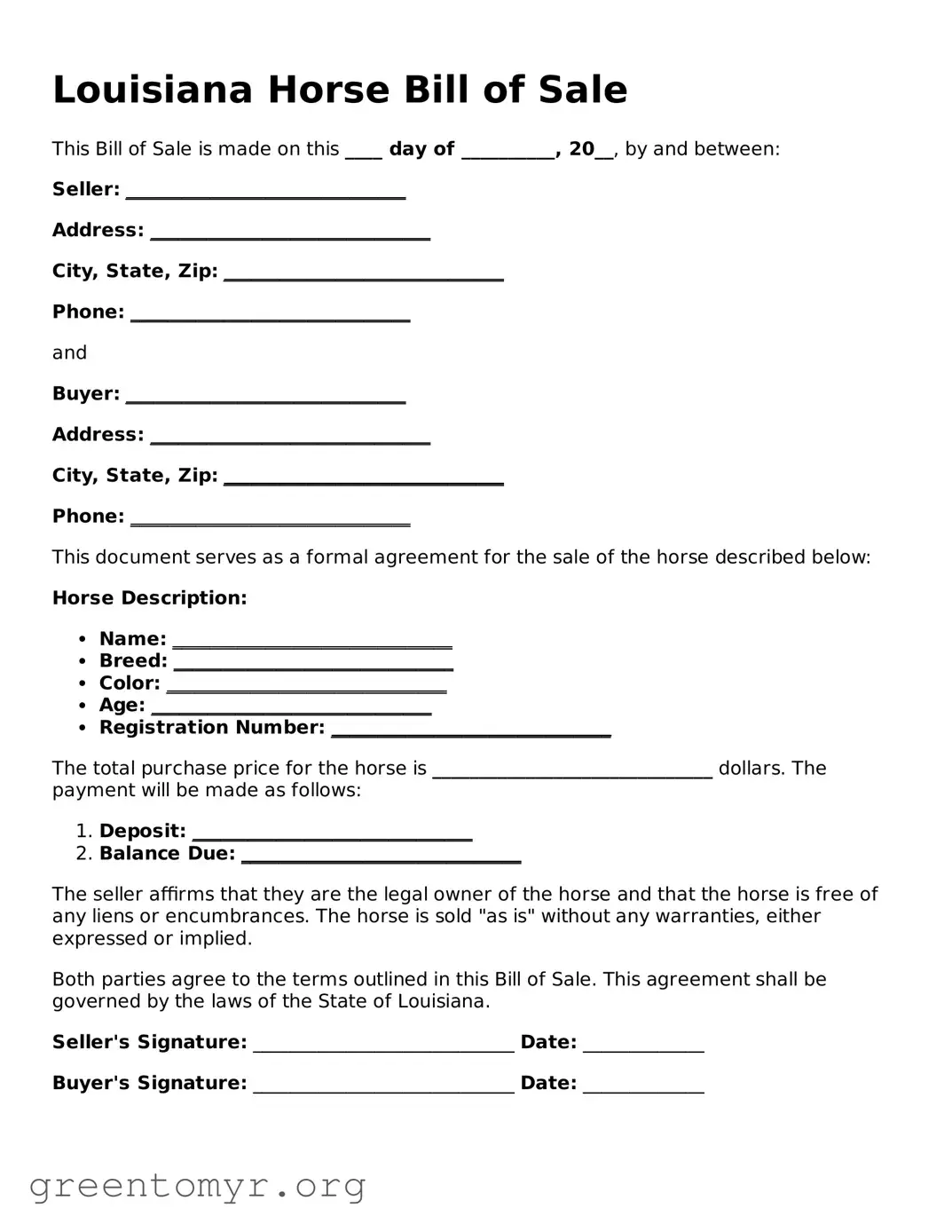
The Louisiana Horse Bill of Sale form serves as a crucial document in the transaction of buying or selling horses within the state. This form not only outlines the details of the horse being sold, such as its breed, age, and registration information, but it also provides essential information about the buyer and seller, including their names, addresses, and contact details. A well-completed bill of sale helps to establish clear ownership and can protect both parties in the event of disputes. Additionally, the form may include specific terms of the sale, such as payment methods and any warranties or guarantees related to the horse's health and soundness. Understanding the components of this form is vital for anyone involved in equine transactions, ensuring that the sale process is transparent and legally binding.
Louisiana Horse Bill of Sale
This Bill of Sale is made on this ____ day of __________, 20__, by and between:
Seller: ______________________________
Address: ______________________________
City, State, Zip: ______________________________
Phone: ______________________________
and
Buyer: ______________________________
Address: ______________________________
City, State, Zip: ______________________________
Phone: ______________________________
This document serves as a formal agreement for the sale of the horse described below:
Horse Description:
The total purchase price for the horse is ______________________________ dollars. The payment will be made as follows:
The seller affirms that they are the legal owner of the horse and that the horse is free of any liens or encumbrances. The horse is sold "as is" without any warranties, either expressed or implied.
Both parties agree to the terms outlined in this Bill of Sale. This agreement shall be governed by the laws of the State of Louisiana.
Seller's Signature: ____________________________ Date: _____________
Buyer's Signature: ____________________________ Date: _____________
| Fact Name | Description |
|---|---|
| Purpose | The Louisiana Horse Bill of Sale form is used to document the sale and transfer of ownership of a horse. |
| Governing Law | This form is governed by the Louisiana Civil Code, specifically related to the sale of personal property. |
| Parties Involved | The form requires information about both the seller and the buyer, including names and addresses. |
| Horse Description | A detailed description of the horse is necessary, including breed, age, color, and any identifying marks. |
| Purchase Price | The total purchase price must be clearly stated to avoid any disputes later on. |
| Signatures | Both the seller and buyer must sign the document to make it legally binding. |
| Date of Sale | The date of the transaction should be included to establish when the ownership transfer occurs. |
| Additional Terms | Any additional terms or conditions related to the sale can be included, ensuring clarity for both parties. |
Filling out the Louisiana Horse Bill of Sale form is a straightforward process. This form serves as a record of the sale between the buyer and seller, ensuring both parties have a clear understanding of the transaction. Follow the steps below to complete the form accurately.
A Louisiana Horse Bill of Sale is a legal document used to transfer ownership of a horse from one party to another. This form provides essential details about the horse, the seller, and the buyer, ensuring that both parties have a clear record of the transaction. It serves as proof of ownership and can be useful for future reference, especially in cases of disputes or for registration purposes.
The Louisiana Horse Bill of Sale generally includes the following information:
This information helps ensure clarity and legal validity of the sale.
While a Horse Bill of Sale is not legally required in Louisiana, it is highly recommended. Having this document can protect both the buyer and seller by providing a clear record of the transaction. It can also be beneficial for registering the horse with breed associations or for other legal purposes.
Yes, you can create your own Horse Bill of Sale. However, it is important to ensure that it includes all necessary information to be legally binding. Many templates are available online, or you can consult with a legal professional to draft a document that meets your specific needs.
If disputes arise after the sale, the Horse Bill of Sale can serve as key evidence in resolving the issue. It is advisable to keep a copy of the signed document, as it outlines the terms of the sale and the condition of the horse at the time of transfer. In some cases, mediation or legal action may be necessary to resolve disputes.
A witness or notary is not required for a Horse Bill of Sale in Louisiana, but having one can add an extra layer of security to the transaction. A notary can help verify the identities of the parties involved and ensure that the document is executed properly. This can be particularly useful if any disputes arise in the future.
Filling out the Louisiana Horse Bill of Sale form can seem straightforward, but many people make common mistakes that can lead to issues down the line. One frequent error is failing to include all necessary details about the horse. This includes the horse's name, breed, age, color, and any identifying marks. Without this information, it may be difficult to prove ownership later.
Another mistake is neglecting to include the seller's and buyer's contact information. This information is crucial for both parties, especially if questions arise after the sale. Incomplete or incorrect contact details can lead to confusion or disputes, making it harder to resolve issues that may come up.
People often forget to specify the purchase price in the bill of sale. Leaving this blank or writing it ambiguously can create problems if there are disagreements about the transaction. A clear statement of the purchase price helps protect both the buyer and the seller by providing a documented agreement.
Additionally, some individuals overlook the importance of signatures. Both the buyer and the seller must sign the document for it to be valid. Without signatures, the bill of sale may not hold up in legal situations, which could complicate matters if ownership is contested.
Another common oversight is not dating the bill of sale. A date is essential because it establishes when the transfer of ownership occurred. This can be particularly important in cases where disputes arise regarding the horse's health or condition after the sale.
People sometimes make the mistake of not including any warranties or guarantees about the horse. If the seller is offering any assurances regarding the horse’s health or behavior, these should be clearly stated in the bill of sale. This protects the buyer from unexpected issues and clarifies what the seller is responsible for.
Some individuals fail to keep a copy of the signed bill of sale for their records. This is a critical step that can help both parties in the event of future disputes. Having a copy ensures that both the buyer and seller can refer back to the original agreement if necessary.
Lastly, many people do not consider the importance of consulting with a legal professional when completing the bill of sale. While the form may seem simple, legal nuances can arise, especially if the transaction involves significant sums of money or if the horse has a complicated history. Seeking advice can help ensure that the sale goes smoothly and that all legal requirements are met.
When completing a transaction involving the sale of a horse in Louisiana, several additional documents may be beneficial. These forms help clarify the terms of the sale and protect the interests of both the buyer and the seller. Below is a list of commonly used forms that accompany the Louisiana Horse Bill of Sale.
Using these forms can help facilitate a smoother transaction and provide necessary protections for both parties involved. It is always advisable to consult with a legal professional to ensure all documents are properly completed and tailored to your specific situation.
The Horse Bill of Sale form serves a specific purpose in documenting the sale of a horse. However, several other documents share similarities in function and importance. Here are nine documents that are akin to the Horse Bill of Sale:
When filling out the Louisiana Horse Bill of Sale form, it's important to be careful and thorough. Here’s a list of things you should and shouldn’t do to ensure the process goes smoothly.
By following these guidelines, you can help ensure a smooth transaction and protect both parties involved in the sale.
The Louisiana Horse Bill of Sale form is an important document for anyone involved in the buying or selling of horses in Louisiana. However, several misconceptions surround this form. Here are five common misunderstandings:
When it comes to buying or selling a horse in Louisiana, using a Horse Bill of Sale form is essential. Here are some key takeaways to consider:
Using the Horse Bill of Sale form properly can help ensure a smooth transaction and provide peace of mind for everyone involved.