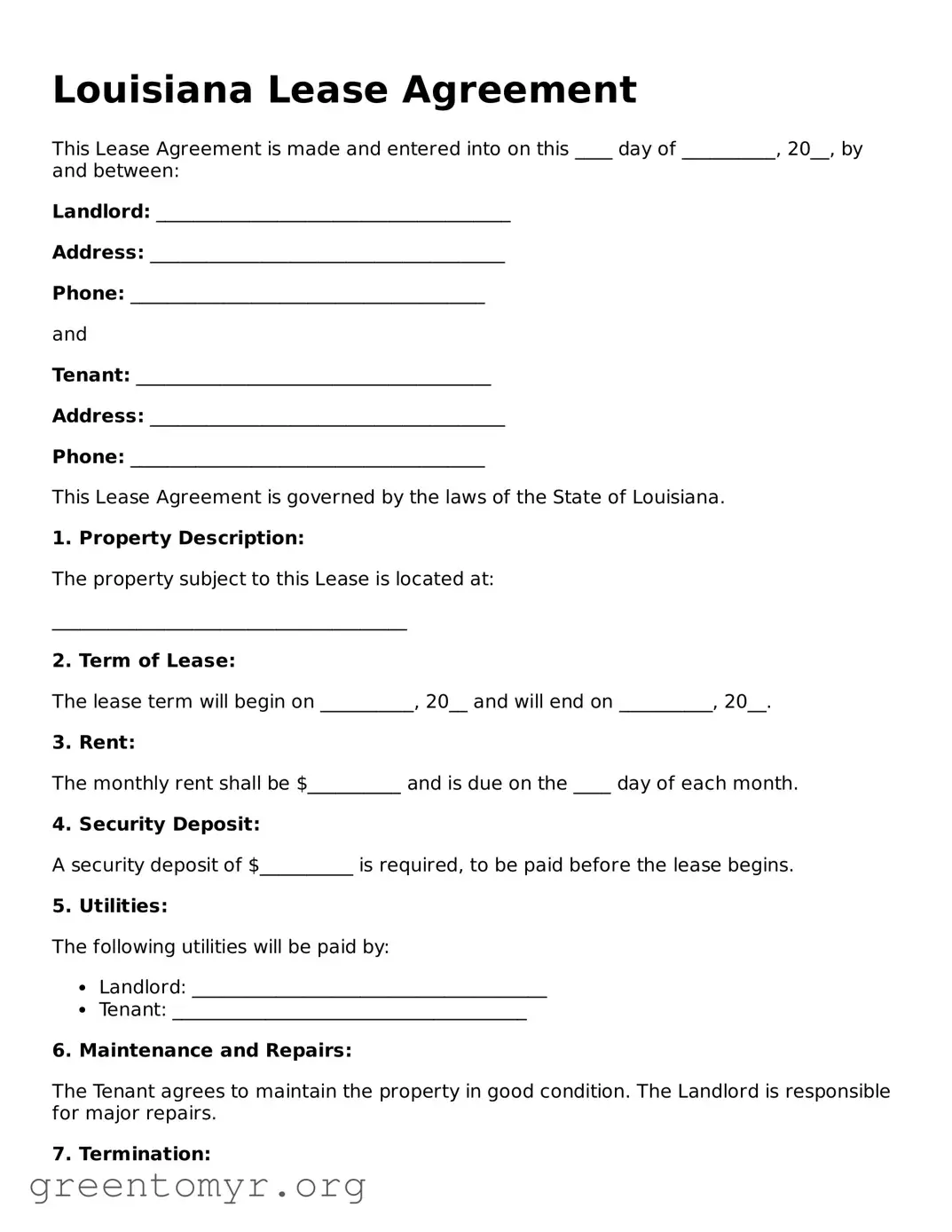
In the vibrant state of Louisiana, where the rich tapestry of culture meets the complexities of real estate, understanding the Louisiana Lease Agreement form is essential for both landlords and tenants. This document serves as a crucial framework for establishing the terms of a rental relationship, outlining the rights and responsibilities of each party involved. Key elements typically included in the lease agreement encompass the duration of the lease, rental payment details, and security deposit requirements. Additionally, provisions regarding maintenance responsibilities, pet policies, and termination conditions are often addressed, ensuring clarity and mutual understanding. By adhering to the guidelines set forth in this agreement, both landlords and tenants can foster a respectful and harmonious living arrangement, ultimately benefiting the broader community in which they reside.
Louisiana Lease Agreement
This Lease Agreement is made and entered into on this ____ day of __________, 20__, by and between:
Landlord: ______________________________________
Address: ______________________________________
Phone: ______________________________________
and
Tenant: ______________________________________
Address: ______________________________________
Phone: ______________________________________
This Lease Agreement is governed by the laws of the State of Louisiana.
1. Property Description:
The property subject to this Lease is located at:
______________________________________
2. Term of Lease:
The lease term will begin on __________, 20__ and will end on __________, 20__.
3. Rent:
The monthly rent shall be $__________ and is due on the ____ day of each month.
4. Security Deposit:
A security deposit of $__________ is required, to be paid before the lease begins.
5. Utilities:
The following utilities will be paid by:
6. Maintenance and Repairs:
The Tenant agrees to maintain the property in good condition. The Landlord is responsible for major repairs.
7. Termination:
Either party may terminate this lease by providing a written notice of ____ days.
8. Governing Law:
This agreement shall be governed by the laws of the State of Louisiana.
IN WITNESS WHEREOF, the parties have executed this Lease Agreement as of the date first above written.
Landlord Signature: ___________________________
Date: ___________________________
Tenant Signature: ___________________________
Date: ___________________________
| Fact Name | Description |
|---|---|
| Governing Law | The Louisiana Lease Agreement is governed by the Louisiana Civil Code, specifically Title 9, which covers leases. |
| Parties Involved | The lease agreement typically involves two parties: the lessor (landlord) and the lessee (tenant). |
| Property Description | The form requires a detailed description of the rental property, including the address and any specific features. |
| Lease Term | The duration of the lease must be clearly stated, whether it is a fixed-term lease or a month-to-month arrangement. |
| Rent Payment | The agreement specifies the amount of rent, payment due dates, and acceptable payment methods. |
| Security Deposit | Details regarding the security deposit, including the amount and conditions for its return, are included in the lease. |
| Maintenance Responsibilities | The lease outlines the responsibilities of both the landlord and tenant regarding property maintenance and repairs. |
| Termination Conditions | Conditions under which either party may terminate the lease are clearly defined, including notice requirements. |
Completing the Louisiana Lease Agreement form is an essential step in formalizing a rental arrangement. This document outlines the rights and responsibilities of both the landlord and the tenant. By filling out this form accurately, both parties can ensure clarity and prevent potential disputes in the future.
A Louisiana Lease Agreement form is a legal document that outlines the terms and conditions under which a landlord allows a tenant to occupy a property. This agreement typically includes details such as the duration of the lease, the amount of rent, payment due dates, and responsibilities for maintenance and repairs. Both parties must understand and agree to the stipulations laid out in the lease to ensure a smooth landlord-tenant relationship.
When drafting or reviewing a Louisiana Lease Agreement, several essential elements should be included:
Yes, lease agreements in Louisiana are governed by both state law and local ordinances. The Louisiana Civil Code provides the foundational legal framework for rental agreements. Key provisions include regulations on security deposits, eviction procedures, and the rights and responsibilities of both landlords and tenants. It is crucial for both parties to be aware of these laws to ensure compliance and protect their interests.
Terminating a Louisiana Lease Agreement requires careful consideration of the lease terms and applicable laws. Generally, tenants must provide written notice to the landlord, specifying the intent to vacate and adhering to the notice period outlined in the lease. For month-to-month agreements, a 30-day notice is typically required. Landlords must also follow legal procedures if they intend to terminate a lease, often requiring a valid reason, such as non-payment of rent or violation of lease terms. It is advisable to document all communications and keep copies of any notices sent or received.
Filling out a Louisiana Lease Agreement form can be straightforward, but many people make common mistakes that can lead to complications later on. One frequent error is failing to include the full names of all tenants. Each tenant’s name should be clearly stated to avoid confusion about who is responsible for the lease terms.
Another mistake involves not specifying the lease term. It’s essential to indicate whether the lease is month-to-month or for a fixed term. Omitting this detail can lead to misunderstandings regarding the duration of the rental agreement.
Some individuals neglect to detail the rental amount and payment terms. It’s vital to clearly state how much rent is due, when it is due, and acceptable payment methods. This clarity helps prevent disputes over payments in the future.
Additionally, failing to include information about security deposits is a common oversight. The lease should specify the amount of the deposit and the conditions under which it may be withheld. This information protects both the landlord and the tenant.
Another mistake is not addressing utilities in the lease. Clearly stating which utilities are included in the rent and which are the tenant's responsibility can avoid confusion later. This detail is crucial for budgeting and managing living expenses.
Some people forget to outline the rules regarding pets. If pets are allowed, it’s important to specify any restrictions or additional fees. Conversely, if pets are prohibited, that should be clearly stated to avoid potential conflicts.
Many individuals also overlook the need for a termination clause. This clause should explain how either party can end the lease agreement. Without it, tenants may find themselves unsure of their rights when it comes time to move out.
Lastly, failing to include the landlord's contact information can lead to communication issues. It’s essential for tenants to have a way to reach their landlord for maintenance requests or other concerns. Providing this information ensures smooth communication throughout the lease period.
When entering into a rental agreement in Louisiana, various forms and documents may accompany the Louisiana Lease Agreement. Each of these documents serves a specific purpose and helps clarify the rights and responsibilities of both landlords and tenants. Below is a list of commonly used forms that can enhance the leasing process.
Understanding these documents can help both landlords and tenants navigate the leasing process more effectively. By being well-informed, parties can ensure a smoother rental experience and protect their interests throughout the lease term.
When filling out the Louisiana Lease Agreement form, it is important to follow specific guidelines to ensure accuracy and compliance. Here are nine things to keep in mind:
When it comes to the Louisiana Lease Agreement form, many people hold misconceptions that can lead to confusion. Here are eight common misunderstandings:
Understanding these misconceptions can help both landlords and tenants navigate their agreements more effectively. Clear communication and knowledge of the law are key to a successful rental experience.
Filling out and using the Louisiana Lease Agreement form requires careful attention to detail. Here are some key takeaways to keep in mind: