In the Commonwealth of Massachusetts, the Motor Vehicle Crash Operator Report form serves as a crucial document for drivers involved in accidents. Completing this form is not just a matter of protocol; it is a legal requirement under M.G.L. Chapter 90, Section 26. Drivers must file a report within five days if any person is killed or injured, or if property damage exceeds $1,000. This form captures essential details about the crash, including the location, time, and vehicles involved. Sections guide the operator through various aspects, such as providing personal information, detailing the circumstances of the crash, and listing any witnesses. The report also requires a diagram of the incident, which helps visualize the events leading up to the crash. Furthermore, it is important for the operator to send copies of the completed report to the local police department, their insurance company, and the Registry of Motor Vehicles. Failing to comply with these requirements may lead to penalties, including the suspension of driving privileges. Understanding the form and its components is vital for ensuring that all necessary information is accurately reported and submitted in a timely manner.

Commonwealth of Massachusetts
Motor Vehicle Crash Operator Report
When should I complete a Crash Report?
M.G.L. Chapter 90, Section 26 requires a person who was operating a motor vehicle involved in a crash in which (i) any person was killed or (ii) injured or (iii) in which there was damage in excess of $1,000 to any one vehicle or other property, to complete and file a Crash Operator Report with the Registrar within five (5) days after such crash (unless the person is physically incapable of doing so due to incapacity). The person completing the report must also send a copy of the report to the police department having jurisdiction on the way where the crash occurred. If the operator is incapacitated but is not the vehicle’s owner, the owner is required to file the crash report within the five (5) days based on his/her knowledge and information obtained about the crash. The Registrar may require the owner or operator to supplement the report and he/ she can revoke or suspend the license of any person violating any provision of this legal requirement. A police department is required to accept a report filed by an owner or operator whose vehicle has been damaged in a crash in which another person unlawfully left the scene even if damage to the vehicle does not exceed $1,000.
How To Complete This Form
Please carefully complete all sections of this form that apply to your crash, circling the answer where appropriate. Illegible reports will be returned to you.
Section A: Crash Location
•Provide the city/town where the crash occurred, the date and time of the crash, and the number of vehicles involved.
•Complete section A1 or A2.
•Use official names of all locations, streets and landmarks.
•Use street name and route #, if applicable.
•Be as precise as possible when describing the location.
•Provide enough information to locate the crash to a specific point, not just a street or roadway.
Section B: Vehicle Yon Were Driving
•Provide information on your license and the vehicle you were driving.
•Use the codes provided to indicate the cause of the crash.
Section C: You and Your Passengers
•Provide information on you and your passengers at the time of the crash.
•Use the codes provided to indicate occupant information.
Section D: Other Vehicles Involved in the Crash
•Provide information on the other vehicle(s) and operator(s) involved in the crash.
•If more than one vehicle involved, please use additional form completing Section D only.
Section E:
•Provide information on the
•If more than one
Section F: Crash Conditions
•Use the codes provided to indicate the conditions at the time of the crash.
Section G: Crash Diagram
•Draw a diagram of how the crash occurred.
•On the diagram, Vehicle 1 represents your vehicle.
Section H: Witness Information
•List all the people who saw the crash but were not involved.
Section I: Property Damage Information
•Indicate all
Section J: Description of What Happened
•Describe the crash including events prior to the crash for your vehicles and all other vehicles.
Section K: Signature
•Please sign and print your name and indicate the date you completed the form.
Where to send completed reports:
Mail or deliver one copy to the local police department or state police in the city or town where the crash occurred.
Mail one copy to your Insurance Company.
Mail one copy to the RMV at the following address:
Registry of Motor Vehicles Crash Records
P.O. Box 55889 Boston, MA
CRASH102_1119
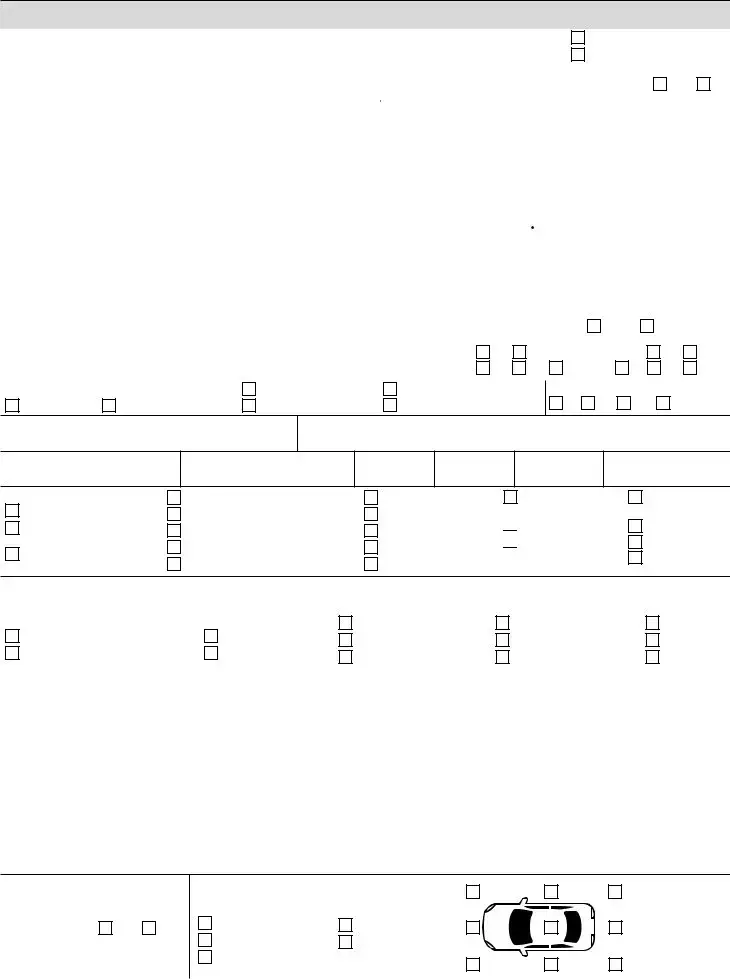
A. Crash Location
A1. City/Town Where Crash Occurred |
|
A2. Date of Crash |
|
|
|
|
A3. Time of Crash |
|
|
AM |
A4. # Vehicles Involved: |
|
|||||||||||||||||||||||||
|
|
|
|
|
|
|
|
|
|
|
|
|
|
|
|
|
|
|
|
|
|
|
|
|
|
|
PM |
|
|
|
|
|
|
|
|
|
|
|
|
|
|
|
|
|
|
|
|
|
|
|
|
|
|
|
|
|
|
|
|
|
|
|
|
|
|
|
|
|
|
|
|
|
|||
Please complete Section A1 or A2 below to indicate the location of the crash. If you need |
|
A5. Did the crash occur at an |
|
Yes |
No |
||||||||||||||||||||||||||||||||
additional space to describe the crash location, please use Section J on the last page of this form. |
intersection of two or more streets? |
||||||||||||||||||||||||||||||||||||
|
|
|
|
|
|
|
|||||||||||||||||||||||||||||||
If Yes. |
Step 1. Please indicate the route or roadway where |
If No. |
|
Step 1. Please |
indicate the route, roadway and address where the |
|
|||||||||||||||||||||||||||||||
you were travelling when the crash occurred: |
|
crash occurred: |
|
|
|
|
|
|
|
|
|
|
|
|
|
|
|
|
|
|
|
||||||||||||||||
|
|
|
|
|
|
|
|
|
|
|
|
|
|
|
|
|
|
|
|
|
|
|
|||||||||||||||
|
|
|
|
|
|
|
|
|
|
|
|
|
|
|
|
at Street or Address Number: |
|
|
|
|
|||||||||||||||||
|
|
|
|
|
|
|
|
The crash occurred on Route #: |
|
|
|
|
|
|
|
|
|
||||||||||||||||||||
|
|
|
|
|
|
|
|
on the Street/Roadway known as |
|
|
|
|
|
|
|
|
|
|
|
|
|
|
|
|
|
||||||||||||
Route# |
|
|
Name of Roadway/Street |
|
|
|
|
|
|
|
|
|
|
|
|
|
|
|
|
|
|||||||||||||||||
Step 2. What was the name (or names) of the intersecting streets? |
Step 2. Please provide as much of the following specific location information as possible: |
||||||||||||||||||||||||||||||||||||
|
|
|
|
|
|
|
|
The crash occurred |
|
|
|
(indicate direction as N/S/E/W) |
|
|
|
|
|
||||||||||||||||||||
|
|
|
|
|
|
|
|
(estimate number of feet) |
|
|
|
|
|
|
|
|
|
|
|||||||||||||||||||
|
|
|
|
|
|
|
of: |
a) Mile Marker number |
|
|
|
|
|
|
|
|
|
|
OR: b) Exit Number |
|
|
|
|
|
|
||||||||||||
Route# |
|
|
Name of Roadway/Street |
|
|
|
|
|
|
|
|
|
|
|
|
|
|
|
|
|
|||||||||||||||||
|
|
|
|
|
|
|
|
|
|
|
|
|
|
|
|
|
|||||||||||||||||||||
|
|
|
|
|
|
|
|
|
OR: c) Intersecting |
|
|
|
|
|
|
|
Route# Name of |
|
|
|
|
|
|
|
|
||||||||||||
|
|
|
|
|
|
|
|
|
Street/Roadway |
|
|
|
|
|
|
|
Roadway/Street |
|
|
|
|
|
|
|
|
||||||||||||
|
|
|
|
|
|
|
|
|
|
|
|
|
|
|
|
|
|
|
|
|
|
|
|
|
|
|
|
|
|
|
|
|
|
|
|
||
Route# |
|
|
Name of Roadway/Street |
|
|
OR: d) Landmark |
|
|
|
|
|
|
|
|
|
|
|
|
|
|
|
|
|
|
|
||||||||||||
|
|
|
|
|
|
|
|
|
|
|
|
|
|
|
|
|
|
|
|
|
|
|
|
|
|
|
|
||||||||||
|
|
|
|
|
|
|
|
|
|
|
|
|
|
|
|
|
|
|
|
|
|
|
|
|
|
|
|
|
|
|
|
|
|
|
|
|
|
B. Vehicle You Were Driving |
|
|
|
|
|
|
|
|
|
|
|
|
|
|
|
|
|
|
|
|
|
|
|
|
|
|
|
|
|
|
|
|
|
||||
|
|
|
|
|
|
|
|
|
|
|
|
|
|||||||||||||||||||||||||
B1. Number of occupants in vehicle (including yourself): |
|
|
B2. Was vehicle damage above $1000? |
Yes |
|
No |
|
|
|
|
|||||||||||||||||||||||||||
|
|
|
|
|
|
|
|
|
|
|
|
|
|
|
|
|
|||||||||||||||||||||
B3. Driver’s License Number |
B4. License State |
B5. DOB |
|
B6. Age |
B7. Sex |
|
|
M |
|
X |
B8. License Class |
D |
A |
||||||||||||||||||||||||
|
|
|
|
|
|
|
|
|
|
|
|
|
|
|
|
|
|
|
|
F |
|
U |
|
Unknown |
C |
B |
M |
||||||||||
|
|
|
|
|
|
|
|
|
|
|
|
|
|
|
|
|
|
|
|
|
|
|
|
|
|
|
|
|
|
|
|
|
|
|
|
|
|
B9. Commercial Driver’s License Endorsements |
P (Passenger transport) |
T (Doubles/Triples) |
|
H (Hazardous) |
X (Tank and Hazardous) |
N (Tank vehicles) |
S School Bus |
B11. Your Full Name (Last, First, Middle) |
B12. Street Address |
City |
|
B10. Vehicle Travel Direction
N |
S |
E |
W |
State |
|
|
Zip Code |
B13. Insurance Company
B14. Vehicle Registration #
B15. Reg. Type
B16. Reg. State
B17. Vehicle Year
B18. Vehicle Make
B19. Indicate your type of vehicle |
4 |
Bus (16 or more passengers) |
9 Truck tractor (bobtail) |
|||||
1 |
Passenger car |
5 |
Bus |
|
10 |
|||
2 |
Light truck (van, |
|
||||||
6 |
11 Tractor/doubles |
|
||||||
|
||||||||
7 |
12 Tractor/triples |
|
||||||
3 |
Motorcycle |
|
||||||
8 Truck/trailer |
|
13 Unknown heavy truck |
||||||
|
|
|
||||||
B20. Full Name of Vehicle Owner (Last, First, Middle) |
|
|
B21. Street Address |
City |
||||
|
||||||||
|
|
|
|
|
|
|
|
|
14 Motor home/ recreational vehicle
15 Moped
16 Low Speed
Vehicle
State
17 All terrain vehicle( ATV)
18Snowmobile
97Other
99Unknown
Zip Code
B22. What Was Your Vehicle Doing Prior to the Crash? |
|
5 Changing lanes |
|
8 Making |
|
|
11 Parked |
|||||||
1 Travelling straight ahead |
3 Turning right |
6 Entering traffic lane |
|
9 Overtaking/passing |
|
97 Other |
||||||||
2 Slowing or stopped |
|
|
4 Turning left |
|
|
|||||||||
|
|
7 Leaving traffic lane |
|
10 Backing |
|
|
|
99 Unknown |
||||||
|
|
|
|
|
|
|
|
|
|
|||||
|
|
|
|
|
|
|
||||||||
B23. Please Indicate the Sequence of Events as they occurred to YOUR Vehicle |
What happened first? |
Second? |
|
Third? |
|
Fourth? |
||||||||
by writing the corresponding number |
|
|
|
|
|
|
|
|
||||||
|
|
|
|
|
|
|
|
|
|
|
|
|
|
|
Collision with |
9 |
Railway vehicle |
|
25 |
Median barrier |
32 Crash cushion/ |
|
47 |
Jackknife |
|||||
1 Motor vehicle in traffic |
10 |
(train, engine) |
|
26 |
Ditch |
Impact attenuator |
40 Ran off road right |
48 |
Cargo/equipment loss |
|||||
2 Parked motor vehicle |
Other movable object |
27 |
Embankment/ |
33 Bridge |
41 Ran off road left |
|
|
or shift |
||||||
3 Pedestrian |
11 |
Unknown movable |
|
Sloping shoulder |
34 Bridge overhead |
42 Cross median/ |
|
49 |
Separation of units |
|||||
4 Cyclist |
|
object |
|
28 |
Highway traffic |
structure |
|
centerline |
|
50 |
Downhill runaway |
|||
5 Animal- deer |
20 |
Curb |
|
|
signpost |
35 Other fixed |
43 Overturn/rollover |
51 |
Other |
|||||
21 |
Tree |
|
29 |
Overhead sign |
object (wall, |
44 Equipment failure |
||||||||
6 Animal- other |
|
building, tunnel) |
52 |
Unknown |
||||||||||
22 |
Utility pole |
|
|
support |
36 Unknown fixed |
|
(blown tire, brakes, |
|||||||
7 Moped |
|
30 |
Fence |
|
etc) |
|
97 |
Other |
||||||
23 |
Light pole or other |
|
|
|||||||||||
8 Work zone |
31 |
Mailbox |
object |
45 Fire/explosion |
|
99 |
Unknown |
|||||||
|
post/support |
|
|
|
|
|||||||||
maintenance |
24 |
Guardrail |
|
|
|
|
|
46 Immersion |
|
|
|
|
||
equipment |
|
|
|
|
|
|
|
|
|
|||||
|
|
|
|
|
|
|
|
|
|
|
|
|||
B24. Was your |
|
|
|
Vehicle Towed |
Yes |
No |
|
from the Scene |
|||
|
|
||
Due to Damage? |
|
|
B25. Vehicle Damaged Area (check up to three) |
2 |
3 |
4 |
||
|
|
|
|||
0 None |
97 Other |
1 |
9 |
5 |
|
10 Undercarriage |
99 Unknown |
||||
|
|
|
|||
11 Totaled |
|
8 |
7 |
6 |
|
|
|
||||
CRASH102_1119
| Fact Name | Description |
|---|---|
| Legal Requirement | According to M.G.L. Chapter 90, Section 26, a crash report must be completed if there is a death, injury, or property damage exceeding $1,000. |
| Filing Deadline | The report must be filed with the Registrar within five days of the crash, unless the operator is physically incapable of doing so. |
| Police Notification | A copy of the report must also be sent to the police department that has jurisdiction over the area where the crash occurred. |
| Owner's Responsibility | If the operator is incapacitated and not the vehicle's owner, the owner must file the crash report based on their knowledge of the incident. |
| Supplemental Reporting | The Registrar may require additional information from the owner or operator and can revoke or suspend licenses for non-compliance. |
| Non-Motorist Reporting | Police departments must accept reports from owners or operators if another party unlawfully leaves the scene, regardless of damage amount. |
Filling out the Massachusetts Vehicle Accident Report form is an important step to ensure that all necessary information about the crash is documented. This form must be completed and submitted within five days of the accident. Following the steps below will help you accurately fill out the report.
Once the form is completed, it is essential to send copies to the appropriate parties. One copy should be delivered to the local police department or state police, another to your insurance company, and a third to the Registry of Motor Vehicles at the specified address.
In Massachusetts, if you are involved in a vehicle accident, you must complete a Crash Report if any of the following occur: someone is injured or killed, or there is property damage exceeding $1,000. This report must be filed with the Registrar within five days of the accident. If you are unable to do so due to physical incapacity, the vehicle owner must file the report based on their knowledge of the incident. It’s essential to comply with this requirement, as failure to do so could lead to license suspension or revocation.
Completing the Crash Report requires careful attention to detail. Start by filling out the sections that apply to your specific accident. Key areas include:
Make sure your handwriting is clear; illegible reports will be returned. After completing the form, send copies to your local police department, your insurance company, and the Registry of Motor Vehicles.
If another driver flees the scene of the accident, you still need to file a Crash Report. Massachusetts law requires that you report the incident to the police, even if the damage is below $1,000. The police department is obligated to accept your report, which helps in documenting the incident and may assist in any potential claims with your insurance.
Failing to file a Crash Report when required can lead to serious consequences. The Registrar has the authority to suspend or revoke your driver's license if you do not comply with the reporting requirements. Additionally, not filing could complicate any insurance claims or legal proceedings related to the accident. It’s always best to ensure that the report is completed and submitted on time to avoid these potential issues.
Filling out the Massachusetts Vehicle Accident Report form can be a daunting task, and many people make mistakes that could complicate the process. One common error is not providing enough detail about the crash location. It's essential to include the exact city or town, the date and time, and specific street names or landmarks. Vague descriptions can lead to confusion and may cause the report to be returned.
Another frequent mistake involves skipping sections that may seem irrelevant. Every part of the form is important, including information about passengers and other vehicles involved. Omitting details about other parties can lead to delays and misunderstandings. It’s better to provide too much information than too little.
Many individuals also fail to use the correct codes when indicating the cause of the crash or conditions at the time. The form includes specific codes for various scenarios, and using them correctly is crucial. Mislabeling can misrepresent the situation and may affect any claims or legal proceedings that follow.
Another mistake is neglecting to sign and date the report. A signature is required to validate the information provided. Without it, the report may not be accepted, leading to further complications. Always double-check that you have signed and printed your name before submitting the form.
People often overlook the requirement to send copies of the report to the appropriate parties, such as the local police department and your insurance company. Failing to do this can lead to issues with documentation and may affect your insurance claims. Ensure that you have sent all necessary copies within the required timeframe.
Lastly, many individuals do not keep a copy of the completed report for their records. It’s important to retain a copy for your own reference. This can be invaluable if questions arise later or if further information is needed. Keeping organized records helps in managing any follow-up actions that may be necessary.
When involved in a vehicle accident in Massachusetts, several forms and documents may be necessary in addition to the Motor Vehicle Crash Operator Report. Understanding these documents can help ensure that all required information is properly submitted and that you comply with state regulations.
Being aware of these additional documents can help you navigate the aftermath of a vehicle accident more effectively. Each plays a role in ensuring that all aspects of the incident are documented and that you receive the support and compensation you need.
Police Report: Similar to the MA Vehicle Accident Report, a police report documents the details of an accident. It includes information about the parties involved, witness statements, and the officer's observations. Both reports serve as official records for insurance claims and legal proceedings.
Insurance Claim Form: This document is used to report an accident to an insurance company. Like the MA Vehicle Accident Report, it requires details about the incident, damages, and involved parties. Both forms aim to facilitate the claims process and ensure accurate information is provided.
Incident Report: Often used in various contexts, an incident report captures the specifics of an event, including accidents. It shares similarities with the MA Vehicle Accident Report in that it outlines what occurred, who was involved, and any resulting damages or injuries.
Medical Report: Following an accident, a medical report documents any injuries sustained. This report is similar to the MA Vehicle Accident Report in that it provides critical information for insurance claims and legal cases, focusing on the health impacts of the incident.
Property Damage Report: This document details damages to property resulting from an accident. It parallels the MA Vehicle Accident Report by requiring information on the extent of damage and involved parties, serving as a basis for compensation claims.
When filling out the Massachusetts Vehicle Accident Report form, it’s essential to follow specific guidelines to ensure your report is accurate and complete. Here are ten important dos and don’ts to keep in mind:
Many people believe that a report is only necessary for severe accidents. In reality, any crash resulting in injury, death, or property damage exceeding $1,000 mandates a report.
The law requires that the report be filed within five days of the accident. Delays can lead to penalties.
If the driver is incapacitated, the vehicle's owner must file the report based on their knowledge of the incident.
Even minor accidents can require a report if the damage exceeds $1,000 or if someone is injured.
Every section of the report should be completed as much as possible. Incomplete forms may be returned.
Police are required to accept reports from owners or operators, even if the damage is below the $1,000 threshold in certain situations.
In addition to filing with the police, you must send copies to your insurance company and the Registry of Motor Vehicles.
While it is important for insurance claims, the report also serves legal and regulatory functions.
Specific details about the crash, including a diagram, are essential for clarity and accuracy.
Violating the reporting requirements can lead to license revocation or suspension, impacting your driving record.
Key Takeaways for Filling Out the MA Vehicle Accident Report Form: