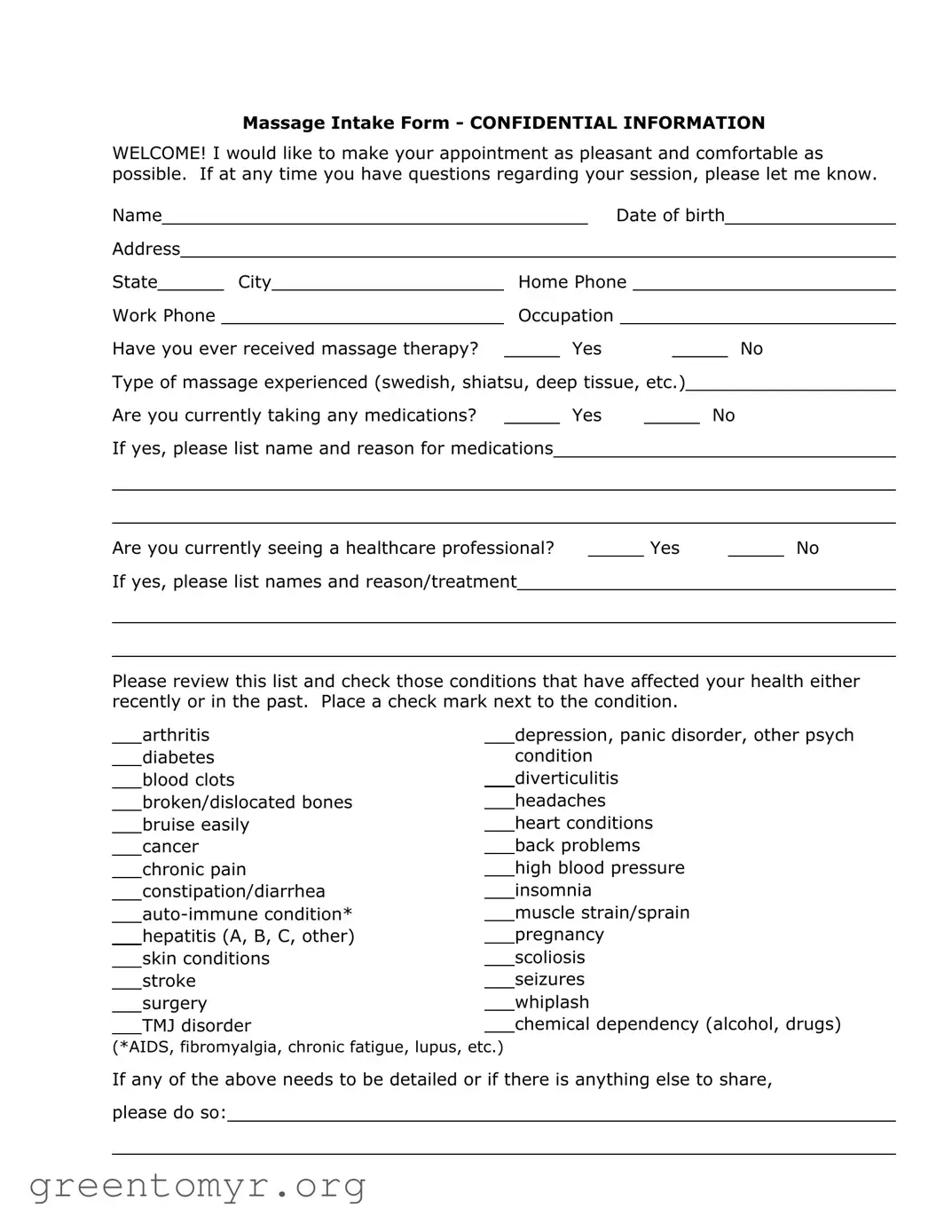
When preparing for a massage therapy session, the Massage Intake Form plays a crucial role in ensuring a safe and effective experience. This confidential document gathers essential information about the client, including their name, date of birth, and contact details. It also asks about previous massage therapy experiences and current medications, which helps the therapist understand any potential health concerns. The form includes a checklist of medical conditions, allowing clients to indicate any issues that may affect their treatment. Additionally, it addresses allergies and current physical discomforts, ensuring the therapist is fully informed. Clients are encouraged to share their goals and expectations for the session, fostering clear communication. Finally, the form outlines important policies regarding the nature of the therapy and the client's responsibilities, emphasizing the therapeutic intent of the massage. By thoroughly completing this form, clients contribute to a positive and personalized massage experience.

Massage Intake Form - CONFIDENTIAL INFORMATION
WELCOME! I would like to make your appointment as pleasant and comfortable as possible. If at any time you have questions regarding your session, please let me know.
Name |
|
|
|
|
|
Date of birth |
|
|||||
|
|
|
|
|
|
|
|
|
|
|
|
|
Address |
|
|
|
|
|
|
|
|
|
|||
State |
|
City |
Home Phone |
|
||||||||
|
|
|
|
|
|
|
|
|
|
|||
Work Phone |
|
|
Occupation |
|
|
|||||||
Have you ever received massage therapy? |
|
Yes |
|
No |
||||||||
Type of massage experienced (swedish, shiatsu, deep tissue, etc.)
Are you currently taking any medications? |
|
Yes |
|
No |
If yes, please list name and reason for medications
Are you currently seeing a healthcare professional? |
|
Yes |
|
No |
If yes, please list names and reason/treatment
Please review this list and check those conditions that have affected your health either recently or in the past. Place a check mark next to the condition.
arthritis diabetes blood clots broken/dislocated bones bruise easily
cancer chronic pain constipation/diarrhea
surgery TMJ disorder
(*AIDS, fibromyalgia, chronic fatigue, lupus, etc.)
depression, panic disorder, other psych condition
diverticulitis headaches heart conditions back problems high blood pressure insomnia
muscle strain/sprain pregnancy scoliosis seizures whiplash
chemical dependency (alcohol, drugs)
If any of the above needs to be detailed or if there is anything else to share,
please do so:
Do you have any of the following today:
skin rash |
|
cold/flu |
|
open cuts |
|
severe pain |
|
anything contagious |
|
injuries/bruises |
|
|
|||
Do you have any allergies to:
medications |
|
foods (nuts, etc.) |
environmental allergens (dust, pollen, fragrances)
reactions to skin care products
If any of the above are checked, please give details:
Are you wearing: |
|
contact lenses |
|
hearing aid |
|
hairpiece |
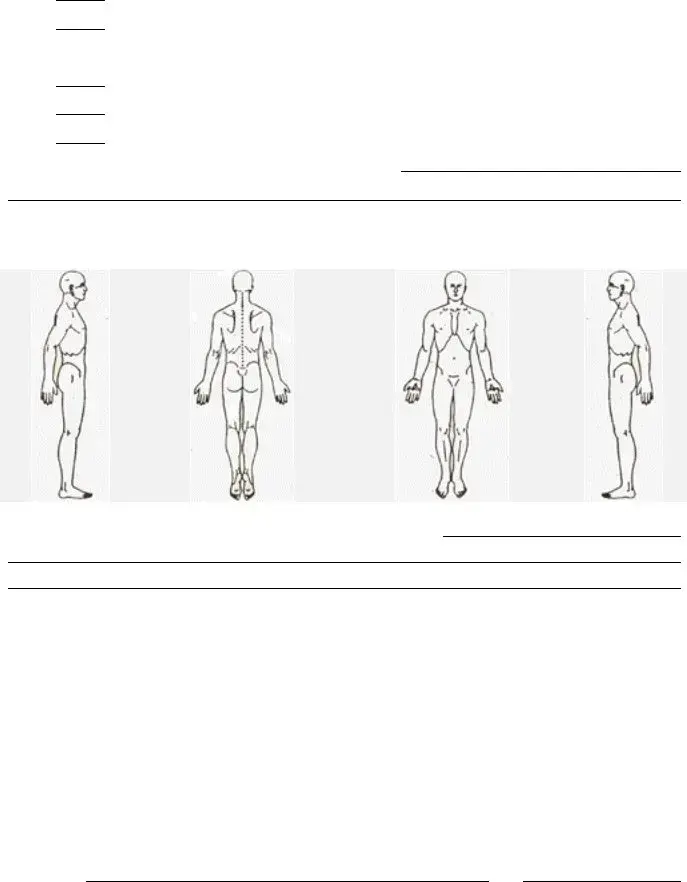
Please indicate with an (X), if any, the areas in which you are feeling discomfort:
What are your goals/expectations for this therapy session?
The following sometimes occurs during massage. They are normal responses to
relaxation. Trust your body to express what it needs to:
need to move or change position ! sighing, yawning, change in breathing
stomach gurgling ! emotional feelings and/or expression
movement of intestinal gas ! energy shifts ! falling asleep ! memories
Please read the following information and sign below:
1.I understand that although massage therapy can be very therapeutic, relaxing and reduce muscular tension, it is not a substitute for medical examination, diagnosis and treatment.
2.This is a therapeutic massage and any sexual remarks or advances will terminate the session and I will be liable for payment of the scheduled treatment.
3.Being that massage should not be done under certain medical conditions, I affirm that I have answered all questions pertaining to medical conditions truthfully.
Signature:Date
| Fact Name | Description |
|---|---|
| Confidentiality | The Massage Intake Form is designed to gather personal health information while ensuring confidentiality. Clients can trust that their responses will be kept private. |
| Health History | This form includes a comprehensive health history section. Clients are asked about past and current medical conditions, medications, and treatments, which helps therapists tailor their approach. |
| Allergy Information | Clients are prompted to disclose any allergies. This is crucial for ensuring safety during the massage, as certain products may trigger allergic reactions. |
| Goals for Therapy | The form encourages clients to articulate their goals and expectations for the session. This helps the therapist focus on the client’s specific needs and desired outcomes. |
| Legal Disclaimers | Clients must acknowledge that massage therapy is not a substitute for medical treatment. This disclaimer protects both the therapist and the client by clarifying the nature of the service. |
| State-Specific Regulations | In many states, the Massage Intake Form must comply with local laws governing massage therapy. For instance, California requires therapists to maintain client records for a minimum of seven years. |
Filling out the Massage Intake form is an important step to ensure a comfortable and effective experience during your massage therapy session. This form collects essential information about your health history and preferences, which helps the therapist tailor the session to your needs. Follow these steps to complete the form accurately.
The Massage Intake Form is designed to gather essential information about your health and preferences. This helps ensure that your massage therapy session is safe, effective, and tailored to your needs. Your comfort and well-being are the top priorities.
Yes, all information provided on the Massage Intake Form is confidential. It is used solely for the purpose of your treatment and will not be shared with anyone without your consent, except as required by law.
If you have a medical condition, it is important to disclose it on the form. This includes any current medications, treatments, or health concerns. Your therapist can then modify the massage to accommodate your needs and ensure your safety.
If you are seeing a healthcare professional, please indicate this on the form. You can also provide details about the treatment you are receiving. This information helps the therapist understand your overall health and any specific considerations for your massage.
Yes, disclosing any allergies is crucial. This includes allergies to medications, foods, and environmental allergens. If you have sensitivities to skin care products, please mention those as well. This information helps avoid any adverse reactions during your session.
The form allows you to indicate areas of discomfort. This information is vital for your therapist to focus on the right areas and adjust the pressure and techniques used during your massage. Clear communication about your discomfort enhances your experience.
Absolutely. The form includes a section for you to outline your goals and expectations for the session. Sharing what you hope to achieve—whether it's relaxation, pain relief, or stress reduction—helps the therapist tailor the session to meet your needs.
If you feel uncomfortable at any point during the session, you should communicate this to your therapist immediately. Your comfort is essential, and adjustments can be made to ensure a positive experience.
Yes, some normal responses to massage include sighing, yawning, changes in breathing, and even emotional feelings. These responses indicate relaxation and can vary from person to person. Trust your body to express what it needs.
Providing false information on the form can lead to complications during your massage. It may result in discomfort or even injury. It is essential to answer all questions truthfully to ensure a safe and effective therapy session.
Filling out a Massage Intake form is an essential step in ensuring a safe and effective therapy session. However, many individuals make common mistakes that can lead to misunderstandings or even complications during their treatment. Here are ten mistakes to watch out for when completing this important document.
One frequent error is not providing complete contact information. It’s crucial to include your home and work phone numbers, as well as your address. This information allows the therapist to reach you if there are any questions or concerns before your session.
Another mistake people often make is failing to disclose current medications. If you are taking any medications, it’s vital to list them along with the reasons for taking them. This information helps the therapist understand any potential interactions or contraindications that may arise during your massage.
Some individuals overlook the importance of detailing medical conditions. The form includes a checklist of health conditions that may affect your therapy. Skipping this section can lead to inappropriate techniques being used, which could exacerbate existing issues.
Additionally, many people forget to mention allergies. Whether you have allergies to medications, foods, or environmental factors, it’s essential to communicate these to your therapist. This ensures that they can provide a safe and comfortable environment tailored to your needs.
Another common oversight is not indicating areas of discomfort. Marking the areas where you feel pain or discomfort on the form allows the therapist to focus on those specific regions during your session, enhancing the overall effectiveness of the treatment.
Some individuals also neglect to specify their goals and expectations for the session. Sharing what you hope to achieve from the massage can help the therapist tailor the experience to meet your specific needs, whether it’s relaxation, pain relief, or stress reduction.
Many people make the mistake of not reviewing the form before signing. It’s important to read through your answers to ensure everything is accurate. This review can prevent any miscommunication and ensure that your therapist has the correct information.
Another mistake is ignoring the importance of past massage experiences. If you have received massage therapy before, sharing the types you’ve experienced can help your therapist understand your preferences and any techniques that may or may not work for you.
Some individuals might rush through the form, which can lead to incomplete answers. Taking your time to thoughtfully complete each section ensures that your therapist has a comprehensive understanding of your health history and current condition.
Lastly, failing to ask questions is a common mistake. If you have any uncertainties about the form or the massage process, do not hesitate to ask your therapist for clarification. This proactive approach helps create a comfortable and trusting environment for your session.
By being mindful of these common mistakes, you can help ensure that your massage therapy experience is both safe and beneficial. Taking the time to provide accurate and complete information is a vital step in your wellness journey.
When conducting a massage therapy session, several forms and documents complement the Massage Intake Form. Each document serves a specific purpose, ensuring that both the client and therapist have a clear understanding of the client's health and expectations. Below is a list of commonly used forms in this context.
Utilizing these forms alongside the Massage Intake Form enhances the therapeutic experience. They foster clear communication, ensure informed consent, and promote a safe environment for both the client and the therapist.
When filling out the Massage Intake form, it’s important to keep a few things in mind. Here’s a helpful list of what to do and what to avoid.
Following these guidelines can help ensure a safe and effective massage experience. Your health and comfort are the top priorities!
Misconceptions about the Massage Intake Form can lead to misunderstandings and discomfort during a therapy session. Here are six common misconceptions:
Addressing these misconceptions can enhance the overall experience and ensure that clients receive the best possible care during their massage therapy sessions.
Filling out the Massage Intake form is a crucial step in ensuring a safe and effective therapy session. Here are some key takeaways to keep in mind:
By keeping these points in mind, you can enhance your massage therapy experience and ensure that it is both safe and beneficial.