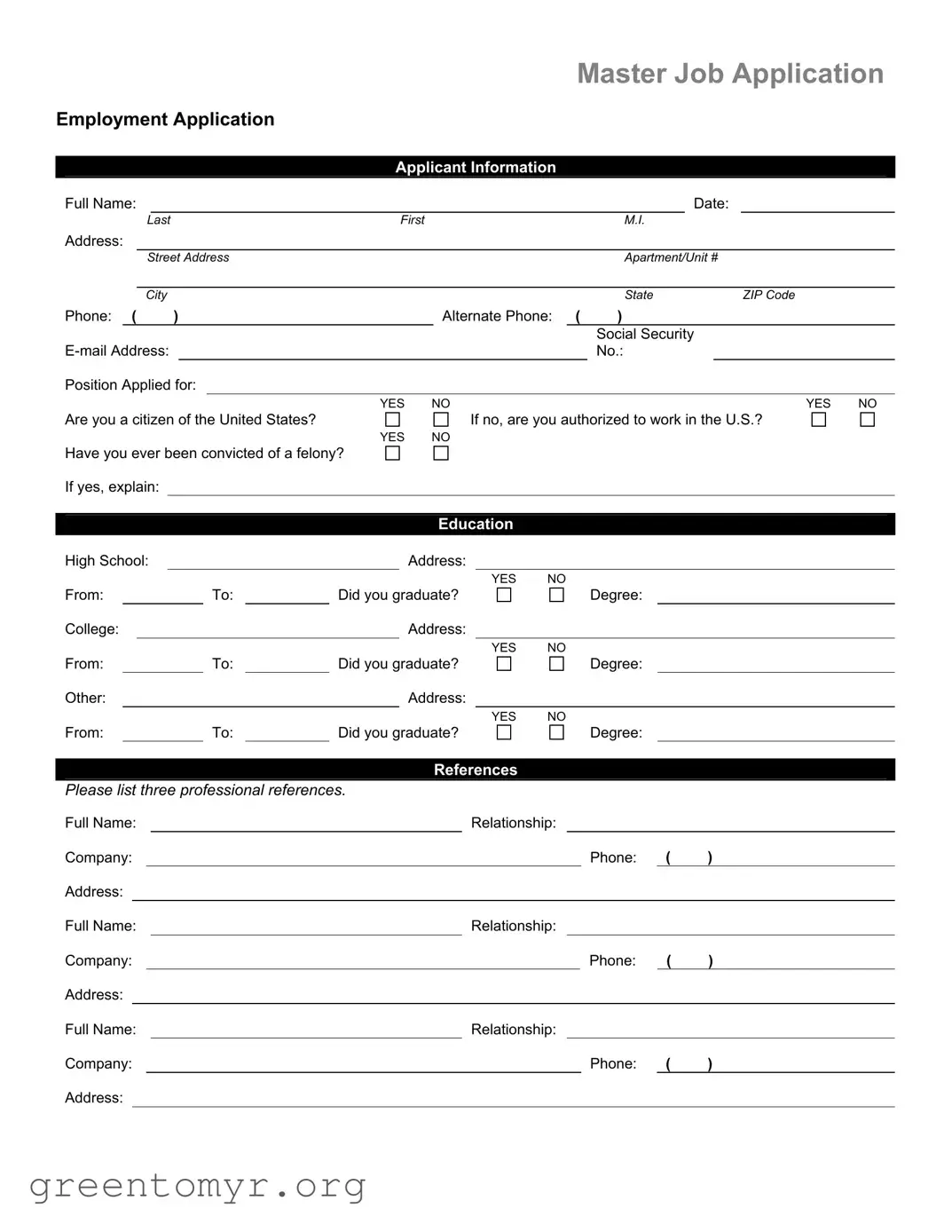
The Master Job Application form serves as a crucial tool for job seekers, capturing essential information that employers need to assess candidates effectively. This comprehensive document begins with the applicant's personal details, including full name, address, phone numbers, and email. It also prompts individuals to indicate the position they are applying for and confirm their citizenship status or work authorization in the United States. Following the personal information section, the form delves into educational background, where applicants can list their high school, college, and any additional educational experiences, along with graduation status. Additionally, the form requests professional references, allowing candidates to provide contacts who can vouch for their qualifications and work ethic. Previous employment history is another critical aspect, where applicants detail their past jobs, including company names, job titles, responsibilities, and reasons for leaving. Lastly, the form includes a section on military service, if applicable, and concludes with a disclaimer and signature line, ensuring the accuracy of the information provided. This structured format not only streamlines the application process for employers but also helps candidates present their qualifications in a clear and organized manner.
Master Job Application
Employment Application
Applicant Information
Full Name: |
|
|
|
Date: |
|
|
|
Last |
First |
M.I. |
|
||
Address: |
|
|
|
|
||
|
Street Address |
|
Apartment/Unit # |
|
||
|
|
|
|
|
||
|
City |
|
State |
ZIP Code |
||
Phone: ( |
) |
|
|
|
Alternate Phone: |
( |
) |
|
|
|
|
|
|
|
|
|
|
|
Social Security |
|
|
|
|
|
|
|
|
No.: |
|
|
||
Position Applied for: |
|
|
|
|
|
|
||||
|
|
|
|
YES |
NO |
|
|
YES |
NO |
|
Are you a citizen of the United States?
If no, are you authorized to work in the U.S.?
YES NO
Have you ever been convicted of a felony?
If yes, explain:
Education
High School: |
|
Address: |
YES NO
From: |
|
|
To: |
|
Did you graduate? |
|
College: |
|
|
|
|
|
Address: |
Degree:
YES NO
From: |
|
To: |
|
Did you graduate? |
|
Other: |
|
|
|
|
Address: |
Degree:
YES NO
From: |
|
To: |
|
Did you graduate? |
Degree:
|
|
|
|
References |
|
|
|||
Please list three professional references. |
|
|
|
|
|
|
|||
Full Name: |
|
Relationship: |
|
|
|||||
Company: |
|
|
|
|
Phone: |
( |
) |
||
Address: |
|
|
|
|
|
|
|
||
Full Name: |
|
|
Relationship: |
|
|
|
|||
Company: |
|
|
|
|
Phone: |
( |
) |
||
Address: |
|
|
|
|
|
|
|
||
Full Name: |
|
|
Relationship: |
|
|
|
|||
Company: |
|
|
|
|
Phone: |
( |
) |
||
Address: |
|
|
|
|
|
|
|
||

Previous Employment
Company: |
|
|
|
|
|
|
|
|
Phone: |
( |
|
) |
|
||||
Address: |
|
|
|
|
|
|
|
|
|
Supervisor: |
|
|
|
||||
Job Title: |
|
|
|
|
|
Starting Salary: $ |
|
|
Ending Salary: |
$ |
|||||||
|
|
|
|
|
|
|
|
|
|
|
|
|
|
|
|
|
|
Responsibilities: |
|
|
|
|
|
|
|
|
|
|
|
|
|
|
|||
|
|
|
|
|
|
|
|
|
|
|
|
||||||
From: |
|
|
To: |
|
Reason for Leaving: |
|
|
|
|
|
|
||||||
YES NO
May we contact your previous supervisor for a reference?
Company: |
|
|
|
|
|
|
|
|
Phone: |
( |
|
) |
|
||
Address: |
|
|
|
|
|
|
|
|
Supervisor: |
|
|
||||
Job Title: |
|
|
|
|
|
Starting Salary: $ |
|
|
Ending Salary: |
$ |
|||||
|
|
|
|
|
|
|
|
|
|
|
|
|
|
|
|
Responsibilities: |
|
|
|
|
|
|
|
|
|
|
|
|
|||
|
|
|
|
|
|
|
|
|
|
|
|||||
From: |
|
|
To: |
|
Reason for Leaving: |
|
|
|
|
|
|||||
YES NO
May we contact your previous supervisor for a reference?
Company: |
|
|
|
|
|
|
|
|
Phone: |
( |
|
) |
|
||||
Address: |
|
|
|
|
|
|
|
|
|
Supervisor: |
|
|
|
||||
Job Title: |
|
|
|
|
|
Starting Salary: $ |
|
|
Ending Salary: |
$ |
|||||||
|
|
|
|
|
|
|
|
|
|
|
|
|
|
|
|
|
|
Responsibilities: |
|
|
|
|
|
|
|
|
|
|
|
|
|
|
|||
|
|
|
|
|
|
|
|
|
|
|
|
||||||
From: |
|
|
To: |
|
Reason for Leaving: |
|
|
|
|
|
|
||||||
YES NO
May we contact your previous supervisor for a reference?
|
|
Military Service |
|
|
|
|||
Branch: |
|
|
|
From: |
|
To: |
|
|
Rank at Discharge: |
|
Type of Discharge: |
|
|
|
|
||
If other than honorable, explain:
Disclaimer and Signature
I certify that my answers are true and complete to the best of my knowledge.
If this application leads to employment, I understand that false or misleading information in my application or interview may result in my release.
Signature: |
|
Date: |
| Fact Name | Description |
|---|---|
| Full Name Requirement | The applicant must provide their full name, including first, last, and middle initial. |
| Contact Information | Applicants are required to provide their address, phone numbers, and email address. |
| Citizenship Status | Applicants must indicate if they are U.S. citizens or authorized to work in the U.S. |
| Criminal History Disclosure | Applicants must disclose any felony convictions, with an option to provide explanations. |
| Education Verification | Applicants need to list their educational background, including high school and any college degrees. |
| References Requirement | Three professional references must be provided, including their contact information and relationship to the applicant. |
| Previous Employment History | Applicants must detail their previous employment, including company names, job titles, and reasons for leaving. |
| Signature and Certification | Applicants must sign and date the application, certifying the truthfulness of the information provided. |
Filling out the Master Job Application form is an important step in the job application process. Make sure to provide accurate and complete information to help potential employers understand your qualifications and background. Follow these steps to ensure you fill out the form correctly.
You will need to provide several key pieces of information. This includes your full name, address, phone numbers, and email address. You must also indicate the position you are applying for. Additionally, the form requires details about your education, including high school and any college or other degrees you may have earned. You will also need to list your previous employment history, including company names, job titles, responsibilities, and reasons for leaving. Finally, you should provide three professional references with their contact information.
The application asks if you have ever been convicted of a felony. If you answer "yes," you will need to provide an explanation. It's important to be honest in this section. Employers often conduct background checks, and providing false information can lead to serious consequences. If you have concerns about your criminal history, consider discussing them with the employer during the interview process.
When listing your references, choose individuals who can speak positively about your professional abilities and work ethic. You should include three references, providing their full names, relationship to you, the company they work for, and their phone numbers. Make sure to inform your references that you are listing them and that they may be contacted. This will help them prepare to provide a strong recommendation on your behalf.
Once you submit your application, the hiring team will review it to determine if your qualifications match the position. If your application stands out, you may be contacted for an interview. Keep in mind that this process can take time, so be patient. If you do not hear back within a few weeks, it is acceptable to follow up with the employer to inquire about your application status.
Filling out a Master Job Application form can be daunting, and many applicants make common mistakes that could hinder their chances of getting hired. One frequent error is not providing complete information. When filling out sections like Applicant Information, it’s essential to include all requested details, such as your full name, address, and contact numbers. Omitting any of these can create confusion and may lead hiring managers to question your attention to detail.
Another mistake is failing to double-check for spelling and grammatical errors. A job application serves as a first impression, and typos can suggest a lack of professionalism. Take the time to review your application carefully. Reading it aloud or having someone else look it over can help catch mistakes that you might overlook.
Many applicants also neglect to explain gaps in employment. If there are periods where you were not working, it’s best to address these directly in the application. You can briefly mention what you were doing during that time, whether it was furthering your education, caring for family, or pursuing other interests. This transparency can build trust with potential employers.
Providing insufficient references is another common pitfall. The application requests three professional references, and many people list only one or two. It’s crucial to follow the instructions and provide all requested references. Choose individuals who can speak positively about your work ethic and skills, as they can significantly influence hiring decisions.
Some applicants forget to indicate whether they can be contacted for a reference by previous employers. This section is important. If you answer "no," it may raise red flags for employers. If there are valid reasons for not wanting them contacted, consider explaining that in the application or during an interview.
Additionally, applicants often overlook the importance of the Education section. Make sure to include all relevant educational experiences, even if you did not graduate. Specify the degrees earned and the dates attended. This information can help employers gauge your qualifications and commitment to learning.
Finally, many people fail to sign and date the application. This simple step is crucial, as it certifies that the information provided is accurate and complete. Without a signature, the application may be considered incomplete, which could lead to disqualification from the hiring process.
When applying for a job, the Master Job Application form is often accompanied by several other important documents. Each of these documents serves a unique purpose and can significantly enhance your application. Below is a list of forms that are commonly used alongside the Master Job Application.
In conclusion, submitting a comprehensive application package that includes the Master Job Application form and these additional documents can significantly improve your chances of landing an interview. Each document plays a crucial role in presenting your qualifications and making a positive impression on potential employers.
When filling out the Master Job Application form, attention to detail is crucial. Here are some guidelines to consider:
When applying for a job, many individuals encounter the Master Job Application form. Unfortunately, several misconceptions can lead to confusion. Here are four common misunderstandings:
Misconception 1: The form is only for people with extensive work experience.
This is not true. The Master Job Application form is designed for applicants at all stages of their careers. Whether you are a recent graduate or have years of experience, the form allows you to showcase your skills and qualifications.
Misconception 2: Providing a Social Security number is mandatory.
While the form includes a space for a Social Security number, it is not always required at the application stage. Many employers may request this information later in the hiring process, so it is essential to check the specific requirements of the employer.
Misconception 3: Only previous employment matters.
Some people believe that only past jobs count on the application. However, education, skills, and references are equally important. Employers look at the entire application to assess a candidate's suitability.
Misconception 4: Criminal history will automatically disqualify an applicant.
While having a felony conviction can impact hiring decisions, it does not necessarily disqualify someone from employment. Many employers consider the nature of the crime, how much time has passed, and the applicant's overall qualifications.
Understanding these misconceptions can help applicants approach the Master Job Application form with confidence. It is crucial to provide accurate information and present oneself positively, regardless of past experiences.
When filling out the Master Job Application form, it’s essential to approach the task with care and attention to detail. Here are some key takeaways to keep in mind: