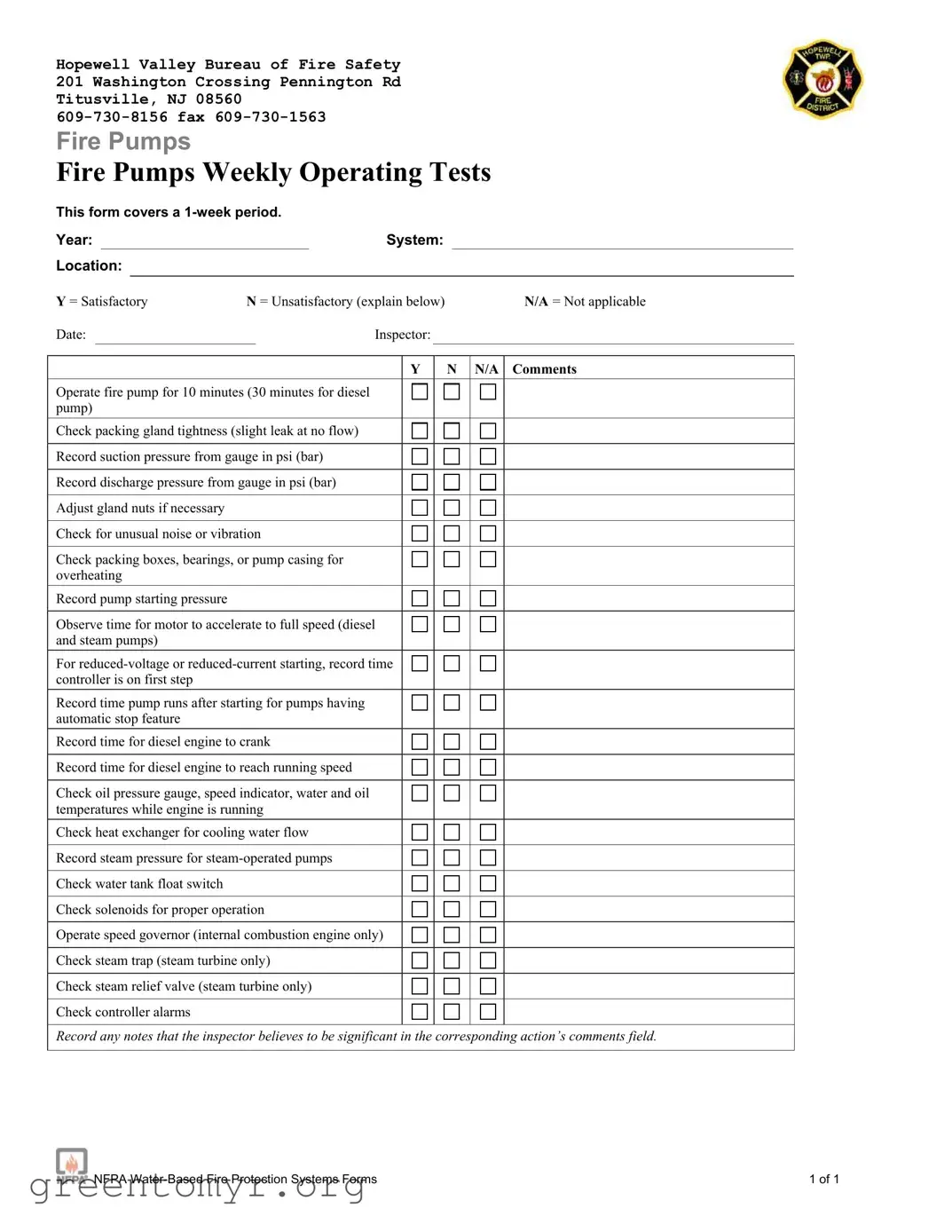
The Mechanical Pump Inspection form is a vital tool designed to ensure the safety and reliability of fire pumps within various systems. This form provides a structured approach to evaluating the performance of fire pumps over a one-week period, emphasizing the importance of regular maintenance and operational checks. It prompts inspectors to assess key operational parameters, including the duration of pump operation, pressure readings, and any unusual noises or vibrations. Additionally, it requires the recording of specific details such as suction and discharge pressures, oil pressure, and temperatures, which are critical for identifying potential issues before they escalate. The form also includes sections for checking components like packing glands, speed governors, and solenoids, ensuring that every aspect of the pump's functionality is thoroughly examined. By documenting findings and observations, inspectors can communicate any concerns effectively, fostering a proactive approach to fire safety. Ultimately, this form not only helps maintain compliance with safety regulations but also promotes the overall efficiency and longevity of fire protection systems.
Hopewell Valley Bureau of Fire Safety 201 Washington Crossing Pennington Rd Titusville, NJ 08560
Fire Pumps
Fire Pumps Weekly Operating Tests
This form covers a
Year:System:
Location:
Y = Satisfactory |
N = Unsatisfactory (explain below) |
N/A = Not applicable |
Date:Inspector:
YN N/A Comments
Operate fire pump for 10 minutes (30 minutes for diesel pump)
Check packing gland tightness (slight leak at no flow)
Record suction pressure from gauge in psi (bar)
Record discharge pressure from gauge in psi (bar)
Adjust gland nuts if necessary
Check for unusual noise or vibration
Check packing boxes, bearings, or pump casing for overheating
Record pump starting pressure
Observe time for motor to accelerate to full speed (diesel and steam pumps)
For
Record time pump runs after starting for pumps having automatic stop feature
Record time for diesel engine to crank
Record time for diesel engine to reach running speed
Check oil pressure gauge, speed indicator, water and oil temperatures while engine is running
Check heat exchanger for cooling water flow
Record steam pressure for
Check water tank float switch
Check solenoids for proper operation
Operate speed governor (internal combustion engine only)
Check steam trap (steam turbine only)
Check steam relief valve (steam turbine only)
Check controller alarms
Record any notes that the inspector believes to be significant in the corresponding action’s comments field.
NFPA |
1 of 1 |
| Fact Name | Description |
|---|---|
| Form Purpose | This form is designed to document weekly operating tests for fire pumps. |
| Location | The form is issued by the Hopewell Valley Bureau of Fire Safety in New Jersey. |
| Contact Information | The bureau can be reached at 609-730-8156, with a fax number of 609-730-1563. |
| Operating Time | Fire pumps must be operated for 10 minutes, while diesel pumps require 30 minutes. |
| Pressure Recording | Inspectors are required to record both suction and discharge pressure in psi or bar. |
| Inspection Criteria | Inspectors mark each test as satisfactory, unsatisfactory, or not applicable. |
| Temperature Checks | During operation, oil pressure, water, and oil temperatures must be monitored. |
| NFPA Compliance | This form is aligned with NFPA standards for water-based fire protection systems. |
| Comments Section | Inspectors can provide significant notes in the comments field for each action. |
| Governing Laws | The inspection is governed by New Jersey fire safety regulations and NFPA standards. |
Filling out the Mechanical Pump Inspection form is an important task that ensures fire safety equipment is functioning correctly. Once you have completed the form, it will provide a record of the inspection and any necessary actions that need to be taken. Here are the steps to fill out the form accurately:
The Mechanical Pump Inspection form is designed to ensure that fire pumps are operating correctly and safely. It provides a systematic way to document the performance of the pump over a one-week period, helping to identify any issues that may need attention.
The form should be filled out by a qualified inspector. This individual must have the necessary training and experience to assess the condition and performance of fire pumps accurately.
You will need to provide the following details:
Additionally, you will need to record the results of various tests and checks, noting whether each aspect is satisfactory, unsatisfactory, or not applicable.
The inspection should be conducted weekly. Regular checks help ensure that the fire pump is always ready for use in case of an emergency.
If you mark any item as unsatisfactory, you must provide a detailed explanation in the comments section. It’s crucial to address these issues promptly to ensure the fire pump remains operational and compliant with safety standards.
The inspection includes various tests, such as:
These tests help ensure the pump functions correctly and safely.
If a pump fails to meet the inspection criteria, it is essential to take immediate action. Notify the appropriate personnel to address the issue. Document the failure on the form and ensure follow-up inspections are scheduled until the problem is resolved.
This form is specifically tailored for fire pumps. While some aspects may be applicable to other types of pumps, it is recommended to use forms designed for those specific systems to ensure all relevant checks are covered.
Completed forms should be stored securely in compliance with your organization’s record-keeping policies. Ensure that they are easily accessible for future reference and audits.
Filling out the Mechanical Pump Inspection form is a critical task that ensures fire safety systems are functioning properly. However, there are common mistakes that people often make. One major error is neglecting to provide accurate dates. Without a clear date, it becomes difficult to track the inspection history, making it hard to identify patterns or recurring issues.
Another frequent oversight is failing to check the packing gland tightness properly. Inspectors may assume that a slight leak is acceptable, but any leak can indicate a bigger problem. It’s essential to document these findings accurately to ensure that necessary repairs are made in a timely manner.
In addition, many inspectors forget to record pressure readings from the gauges. These measurements are crucial for assessing the pump's performance. Without them, it’s challenging to determine if the pump is operating within the required parameters. This oversight can lead to undetected issues that may compromise safety.
Finally, some individuals overlook the importance of providing detailed comments in the form. Simply marking items as satisfactory or unsatisfactory is not enough. Comments help clarify any anomalies or concerns that might not be immediately obvious. By taking the time to explain observations, inspectors contribute to a more comprehensive understanding of the pump's condition.
When conducting inspections of mechanical pumps, several forms and documents can be essential for ensuring thorough and compliant evaluations. Each document serves a specific purpose, contributing to the overall safety and efficiency of fire protection systems. Below is a list of commonly used forms that accompany the Mechanical Pump Inspection form.
These documents work together to create a robust framework for the inspection and maintenance of mechanical pumps. By utilizing these forms, fire safety professionals can ensure that fire protection systems remain reliable and effective, ultimately safeguarding lives and property.
The Mechanical Pump Inspection form shares similarities with several other documents related to fire safety and equipment maintenance. Here’s a breakdown of those documents:
When filling out the Mechanical Pump Inspection form, attention to detail is crucial. Here are seven important dos and don'ts to keep in mind:
By following these guidelines, you can help ensure that the inspection process is thorough and effective, ultimately contributing to the safety and reliability of fire pump operations.
Misconceptions about the Mechanical Pump Inspection form can lead to confusion and improper maintenance of fire pumps. Here are eight common misunderstandings:
Understanding these misconceptions is essential for maintaining fire safety standards and ensuring that fire pumps operate effectively.
When filling out and using the Mechanical Pump Inspection form, keep the following key takeaways in mind: