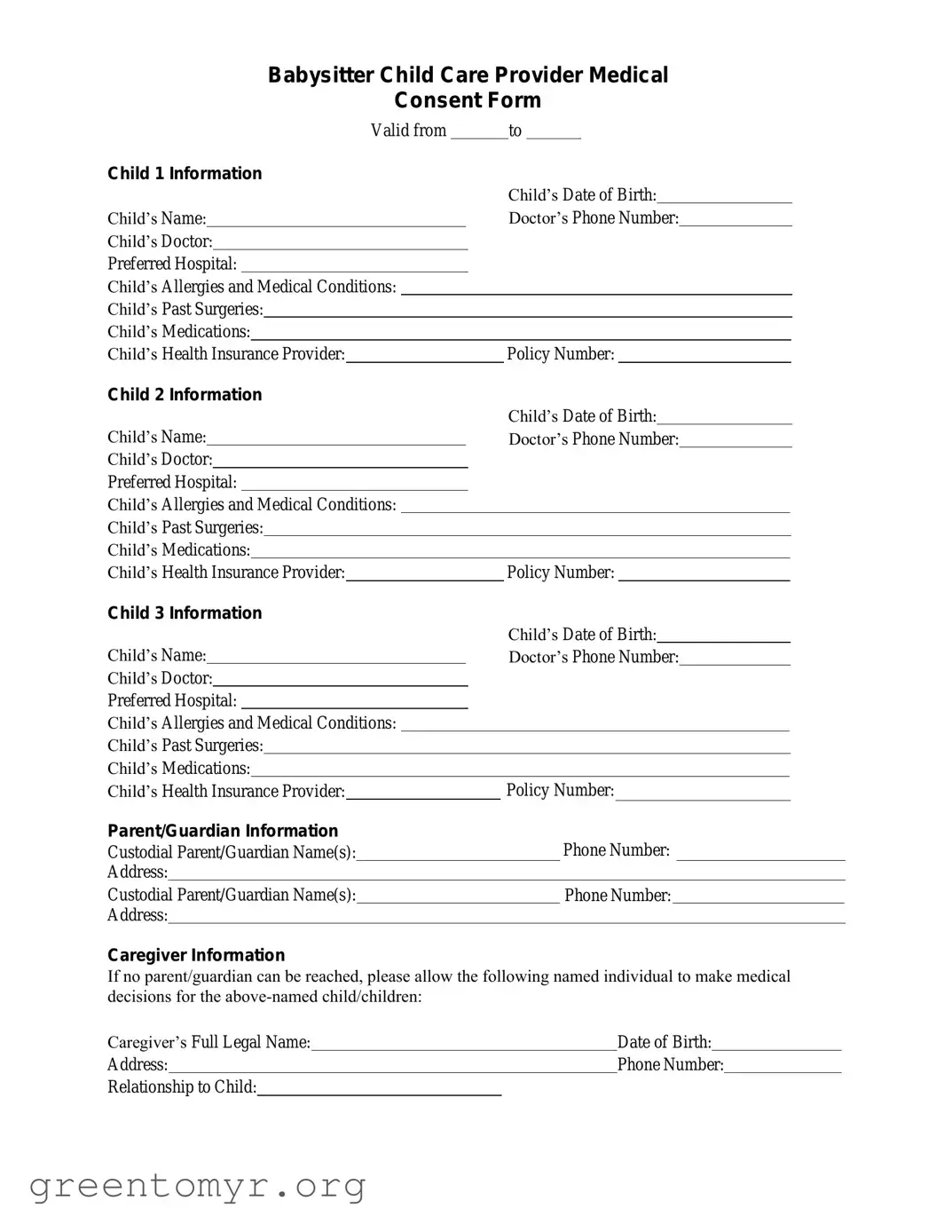
When entrusting your children to a babysitter or caregiver, ensuring their safety and well-being is paramount. A Medical Consent Babysitter form serves as a crucial document that empowers caregivers to make informed medical decisions on your behalf in case of an emergency. This form gathers essential information about your child, including their name, date of birth, allergies, medical conditions, and past surgeries. It also requests details about their healthcare provider, preferred hospital, and health insurance information. For families with multiple children, the form accommodates each child's specific medical needs. Additionally, it allows parents or guardians to designate a caregiver who can act in their stead, ensuring that prompt medical attention can be provided if necessary. By signing this form, you grant permission for the designated caregiver to share your child's medical information with emergency personnel and authorize critical medical interventions, such as the use of life-saving devices or ambulance transport. This proactive approach not only safeguards your child's health but also offers peace of mind for parents, knowing that their caregiver is prepared to act swiftly in times of need.
|
|
|
|
|
|
|
|
Babysitter Child Care Provider Medical |
|
||||||||||||||||||||
|
|
|
|
|
|
|
|
|
|
Consent Form |
|
||||||||||||||||||
|
|
|
|
|
|
|
|
|
|
Valid from |
|
|
|
to |
|
|
|
||||||||||||
Child 1 Information |
|
|
|
|
|
|
|
|
|
|
|
|
|
||||||||||||||||
|
|
|
|
|
|
|
|
|
|
|
|
|
|
|
|
|
|
Child’s Date of Birth: |
|
|
|||||||||
Child’s Name: |
|
|
Doctor’s Phone Number: |
|
|||||||||||||||||||||||||
|
|
|
|
|
|
|
|
|
|
|
|
|
|
|
|
|
|||||||||||||
Child’s Doctor: |
|
|
|
|
|
|
|
|
|
|
|
|
|
|
|
||||||||||||||
Preferred Hospital: |
|
|
|
|
|
|
|
|
|
|
|
|
|
|
|
||||||||||||||
Child’s Allergies and Medical Conditions: |
|
|
|
|
|
|
|
|
|
|
|
|
|
|
|||||||||||||||
Child’s Past Surgeries: |
|
|
|
|
|
|
|
|
|
|
|
|
|
|
|||||||||||||||
Child’s Medications: |
|
|
|
|
|
|
|
|
|
|
|
|
|
|
|||||||||||||||
Child’s Health Insurance Provider: |
|
|
Policy Number: |
|
|
||||||||||||||||||||||||
Child 2 Information |
|
|
|
|
|
|
|
|
|
|
|
|
|
||||||||||||||||
|
|
|
|
|
|
|
|
|
|
|
|
|
|
|
|
|
|
Child’s Date of Birth: |
|
|
|||||||||
Child’s Name: |
|
|
|
|
|
|
|
Doctor’s Phone Number: |
|
||||||||||||||||||||
Child’s Doctor: |
|
|
|
|
|
|
|
|
|
|
|
|
|
|
|
||||||||||||||
|
|
|
|
|
|
|
|
|
|
|
|
|
|||||||||||||||||
Preferred Hospital: |
|
|
|
|
|
|
|
|
|
|
|
|
|
|
|
||||||||||||||
Child’s Allergies and Medical Conditions: |
|
|
|
|
|
|
|
|
|
|
|
|
|
|
|||||||||||||||
Child’s Past Surgeries: |
|
|
|
|
|
|
|
|
|
|
|
|
|
|
|||||||||||||||
Child’s Medications: |
|
|
|
|
|
|
|
|
|
|
|
|
|
|
|||||||||||||||
Child’s Health Insurance Provider: |
|
|
Policy Number: |
|
|
||||||||||||||||||||||||
Child 3 Information |
|
|
|
|
|
|
|
|
|
|
|
|
|
||||||||||||||||
|
|
|
|
|
|
|
|
|
|
|
|
|
|
|
|
|
|
Child’s Date of Birth: |
|
|
|||||||||
Child’s Name: |
|
|
Doctor’s Phone Number: |
|
|||||||||||||||||||||||||
|
|
|
|
|
|
|
|
|
|
|
|
|
|
|
|
|
|
|
|
|
|
|
|
|
|||||
Child’s Doctor: |
|
|
|
|
|
|
|
|
|
|
|
|
|
|
|
||||||||||||||
|
|
|
|
|
|
|
|
|
|
|
|
|
|||||||||||||||||
Preferred Hospital: |
|
|
|
|
|
|
|
|
|
|
|
|
|
|
|
||||||||||||||
Child’s Allergies and Medical Conditions: |
|
|
|
|
|
|
|
|
|
|
|
|
|
|
|||||||||||||||
Child’s Past Surgeries: |
|
|
|
|
|
|
|
|
|
|
|
|
|
||||||||||||||||
Child’s Medications: |
|
|
|
|
|
|
|
|
|
|
|
|
|
|
|
||||||||||||||
Child’s Health Insurance Provider: |
|
|
Policy Number: |
|
|||||||||||||||||||||||||
Parent/Guardian Information |
|
|
|
|
|
|
|
|
|
|
|
|
|
||||||||||||||||
Custodial Parent/Guardian Name(s): |
|
|
|
|
Phone Number: |
|
|||||||||||||||||||||||
Address: |
|
|
|
|
|
|
|
|
|
|
|
|
|
|
|
||||||||||||||
Custodial Parent/Guardian Name(s): |
|
|
|
|
Phone Number: |
|
|||||||||||||||||||||||
Address: |
|
|
|
|
|
|
|
|
|
|
|
|
|
|
|
||||||||||||||
Caregiver Information
If no parent/guardian can be reached, please allow the following named individual to make medical decisions for the
Caregiver’s Full Legal Name: |
|
|
Date of Birth: |
|
|||
Address: |
|
|
Phone Number: |
||||
|
|
|
|
|
|
|
|
Relationship to Child: |
|
|
|
|
|
||

Minor Medical Consent |
|
In case of an emergency, I grant permission to |
to make medical decisions |
for my child/children until one parent/guardian can be reached. Medical decisions I authorize the above named individual to make include:
□ Sharing personal information about my child/children with emergency personnel. □ Authorizing use of
□ Authorizing use of an ambulance for transport. □ Other:
Parent/Guardian Name: |
|
Signature: |
|
Date: |
|
|
Witness Name: |
|
Signature: |
|
Date: |
|
|
Parent/Guardian Name: |
|
Signature: |
|
Date: |
|
|
Witness Name: |
|
Signature: |
|
Date: |
|
|
In case of an emergency, I agree to make medical decisions for the above named child/children until one parent/guardian can be reached.
Caregiver Name: |
|
Signature: |
Date: |
|
Witness: |
||
|
|
|
|
|
|
|
|
Witness Name: |
|
|
Signature: |
Date: |
|
|
|
|
|
|
|
|
|
|
|
| Fact Name | Description |
|---|---|
| Purpose of the Form | The Medical Consent Babysitter Form is designed to provide caregivers with the necessary authority to make medical decisions for children in the absence of a parent or guardian. This ensures that timely medical care can be administered in emergencies. |
| Child Information | The form requires detailed information about each child, including their name, date of birth, doctor’s contact information, allergies, medical conditions, past surgeries, medications, and health insurance details. This information is crucial for medical professionals in case of an emergency. |
| Emergency Contact | In the event that a parent or guardian cannot be reached, the form allows for the designation of a caregiver who can make medical decisions. This ensures that there is always someone authorized to act in the child's best interest. |
| Legal Considerations | State laws govern the use of medical consent forms. It is important to ensure that the form complies with local regulations, which may vary by state. Familiarity with these laws helps protect the rights of both the child and the caregiver. |
| Signatures Required | The form must be signed by the parent or guardian, as well as a witness, to validate the consent. This adds a layer of accountability and ensures that the document is legally binding in case of an emergency. |
Filling out the Medical Consent Babysitter form is essential for ensuring your child's safety in case of an emergency. This form provides important information to caregivers and medical personnel. Follow the steps below to complete the form accurately.
After completing the form, keep a copy for your records and provide the original to the caregiver. Ensure they understand the information contained in the form, as it may be needed in an emergency.
The Medical Consent Babysitter form serves as a vital document that allows caregivers to make medical decisions for children in the absence of a parent or guardian. This form ensures that essential medical information is readily available and that the designated caregiver has the authority to act in emergencies.
The form requires detailed information about each child, including:
Additionally, it collects information about the parent or guardian and any designated caregiver who can make medical decisions if needed.
Including a preferred hospital on the form is crucial because it helps medical personnel quickly direct the child to a facility that the parent or guardian trusts. This can save valuable time during emergencies, ensuring that the child receives appropriate care promptly.
If your child has allergies or medical conditions, it is essential to list them clearly on the form. This information will inform caregivers and medical professionals about any specific needs or precautions necessary during an emergency. Accurate documentation can prevent adverse reactions and ensure proper treatment.
Yes, the form allows you to designate a caregiver who can make medical decisions for your child if you cannot be reached. This individual should be someone you trust and who is familiar with your child's medical history and needs.
The caregiver can make several critical medical decisions, including:
It is important to clearly outline these permissions on the form to avoid confusion during emergencies.
To ensure the form is legally valid, both parents or guardians should sign it, along with a witness. These signatures confirm that the information provided is accurate and that consent has been granted. Keeping the form updated with current information is also essential for its validity.
If there are any changes to your child's medical information, such as new allergies, medications, or a change in doctor, it is crucial to update the Medical Consent Babysitter form immediately. Keeping this information current ensures that caregivers have the most accurate data available in an emergency.
The completed form should be kept in a readily accessible location. Parents or guardians should provide a copy to the designated caregiver and keep another copy at home. This ensures that the form can be quickly retrieved when needed, especially during emergencies.
Completing a Medical Consent Babysitter form is a critical task that requires attention to detail. However, many individuals make mistakes that can lead to complications in emergency situations. One common error is failing to provide complete information about the child’s medical history. This includes neglecting to list allergies, past surgeries, and current medications. Without this information, caregivers may not be able to make informed decisions regarding the child's health.
Another frequent mistake is not updating the contact information for parents or guardians. It is vital to ensure that phone numbers and addresses are current. In an emergency, outdated contact details can delay necessary medical interventions. Parents must double-check this information before submitting the form.
Some people overlook the importance of naming an authorized caregiver. If parents or guardians cannot be reached, the form should clearly specify who can make medical decisions for the child. Failing to do so can lead to confusion during critical moments when immediate decisions are needed.
In addition, individuals often forget to include the preferred hospital. This detail is essential, as it directs emergency personnel to the right facility, ensuring the child receives timely care. Leaving this field blank can lead to unnecessary delays in treatment.
Another mistake involves the lack of signatures. Both parents or guardians must sign the form, along with any witnesses. Omitting signatures can render the document invalid, complicating the situation when medical decisions need to be made.
Moreover, individuals sometimes neglect to specify the scope of medical decisions they authorize. It is crucial to clearly outline what decisions the caregiver is permitted to make, such as authorizing the use of life-saving medical devices or calling for an ambulance. Ambiguity in this area can lead to hesitance in emergencies.
Finally, failing to review the form before submission is a significant oversight. Parents should take the time to read through the entire document to ensure all information is accurate and complete. A quick review can prevent potential issues when it matters most.
When planning for the care of children, especially in situations where parents or guardians may not be readily available, several important documents often accompany the Medical Consent Babysitter form. These documents help ensure that caregivers have the necessary authority and information to make informed decisions regarding the health and safety of the children in their care. Below is a list of commonly used forms and documents that complement the Medical Consent Babysitter form.
Having these forms and documents organized and accessible not only streamlines communication between caregivers and parents or guardians but also enhances the overall safety and well-being of the child. Each document plays a vital role in ensuring that caregivers are well-equipped to handle various situations that may arise during their time with the children.
The Medical Consent Babysitter form serves a crucial role in ensuring that caregivers can make informed decisions about a child's health in emergencies. Several other documents share similar purposes, providing essential information and consent for medical care. Here are four documents that are comparable:
When filling out the Medical Consent Babysitter form, it is essential to ensure accuracy and clarity. Here are seven important dos and don'ts to keep in mind:
Understanding the Medical Consent Babysitter form can help parents and guardians ensure their children receive appropriate care in emergencies. However, several misconceptions exist about this form. Here are nine common misunderstandings:
Clarifying these misconceptions can help ensure that caregivers are prepared and that children receive timely medical attention when necessary.
Filling out the Medical Consent Babysitter form is an essential step for parents and guardians when arranging childcare. Here are key takeaways to consider: