Content Navigation

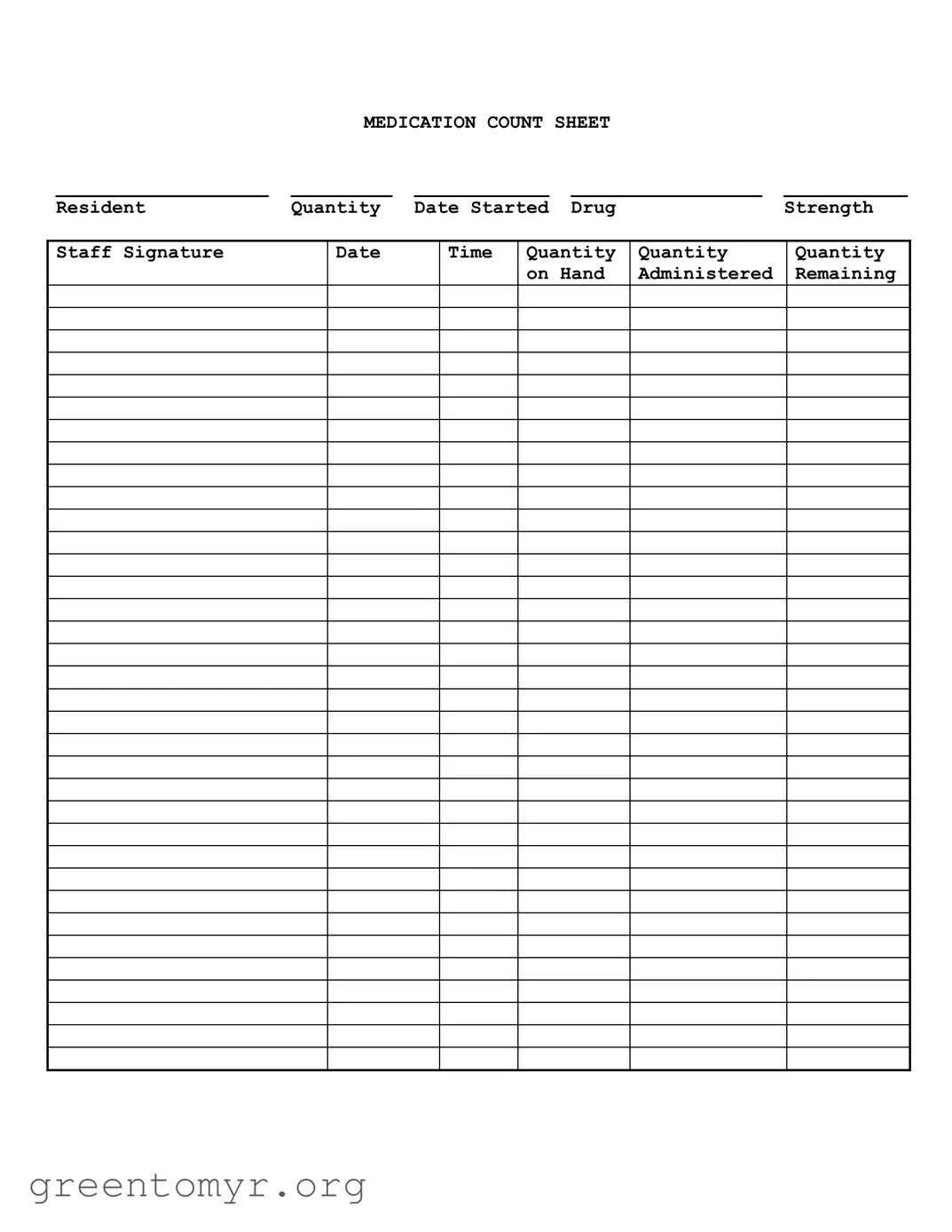
The Medication Count Sheet is a vital tool in the healthcare setting, ensuring accurate tracking and management of medication administered to residents. This form captures essential details, such as the resident's name, the specific drug being administered, and its strength. It also records the quantity of medication on hand, the quantity administered, and the remaining amount, providing a clear snapshot of medication inventory at any given time. Staff members must fill in the date and time of administration, along with their signatures, to maintain accountability and traceability. By documenting these aspects meticulously, the Medication Count Sheet not only helps prevent medication errors but also fosters a culture of safety and responsibility in patient care.

Medication Count Sheet Example


MEDICATION COUNT SHEET


___________________

_________

____________

_________________

___________

Resident

Quantity

Date Started

Drug

Strength

Staff Signature

Date

Time

Quantity

Quantity

Quantity

on Hand

Administered

Remaining


File Breakdown

Fact Name Description
Purpose The Medication Count Sheet is used to track the administration and inventory of medications for residents.
Required Information It includes essential details such as resident name, drug strength, quantity administered, and remaining quantity.
Staff Accountability Staff must sign the sheet to confirm the accuracy of the medication count and administration.
State-Specific Regulations In California, the governing law is Title 22, Section 87465, which mandates accurate medication records.
Frequency of Use The sheet should be completed each time medication is administered or counted to ensure real-time accuracy.

Guide to Using Medication Count Sheet

After you have gathered the necessary information, you can begin filling out the Medication Count Sheet form. This form is essential for tracking medication administration and ensuring proper inventory management. Follow these steps to complete the form accurately.

  1. Start by writing the resident's name at the top of the form.
  2. Fill in the quantity of medication available at the beginning of the count.
  3. Enter the date when the medication was started.
  4. Specify the name of the drug being administered.
  5. Indicate the strength of the medication.
  6. Have the staff member responsible sign the form in the designated area.
  7. Record the date and time of each medication administration.
  8. For each administration, fill in the quantity administered.
  9. Calculate and write the remaining quantity on hand after each administration.

Get Answers on Medication Count Sheet

What is the Medication Count Sheet form?

The Medication Count Sheet form is a document used to track the administration of medication to residents in a care facility. It helps ensure that the right amount of medication is given and that there are no discrepancies in the medication inventory.

What information is included on the form?

The form includes several key pieces of information:

  • Resident's name
  • Quantity of medication
  • Date the medication was started
  • Drug strength
  • Staff signature
  • Date and time of administration
  • Quantities administered and remaining

Who is responsible for filling out the Medication Count Sheet?

Staff members who administer medication are responsible for filling out the Medication Count Sheet. This includes nurses, nursing assistants, and any authorized personnel involved in medication management.

How often should the Medication Count Sheet be updated?

The Medication Count Sheet should be updated each time medication is administered. This ensures that the record is accurate and reflects the current status of medication on hand.

Why is it important to keep an accurate count of medication?

Keeping an accurate count of medication is crucial for several reasons:

  • It helps prevent medication errors.
  • It ensures residents receive the correct dosage.
  • It allows for accountability among staff members.
  • It aids in compliance with regulations and standards.

What should be done if there is a discrepancy in the medication count?

If a discrepancy is found, it should be reported immediately to a supervisor. An investigation may be conducted to determine the cause of the discrepancy, and appropriate actions will be taken to resolve the issue.

Can the Medication Count Sheet be used for all types of medications?

Yes, the Medication Count Sheet can be used for various types of medications, including prescription drugs, over-the-counter medications, and controlled substances. Each type of medication should be tracked appropriately to ensure safety.

Is training required for staff to use the Medication Count Sheet?

Yes, staff should receive training on how to properly use the Medication Count Sheet. Understanding the importance of accurate record-keeping and the correct procedures will help maintain the safety and well-being of residents.

Where should the completed Medication Count Sheets be stored?

Completed Medication Count Sheets should be stored in a secure location, such as a locked file cabinet or electronic system. Access should be limited to authorized personnel to protect residents' privacy and ensure compliance with regulations.

Common mistakes

When filling out the Medication Count Sheet form, many individuals make common mistakes that can lead to confusion and potential issues in medication management. One significant error is failing to accurately record the quantity on hand. This figure is crucial for ensuring that the correct amount of medication is available for each resident. Without precise documentation, staff may inadvertently administer incorrect doses, leading to serious health risks.

Another frequent mistake involves neglecting to update the date and time of administration. Each entry should reflect when the medication was given. Inaccurate timestamps can create discrepancies in the medication log, complicating tracking and accountability. This oversight can hinder the ability to monitor a resident's response to treatment effectively.

Staff members sometimes forget to include their signature on the form after administering medication. This step is essential for maintaining a clear chain of accountability. A missing signature can raise questions about who administered the medication and whether proper procedures were followed. This lack of documentation can also lead to complications during audits or inspections.

Lastly, individuals may miscalculate the remaining quantity after medication has been administered. Accurate calculations are vital for inventory management and ensuring that residents receive their medications as prescribed. Errors in this area can lead to shortages or overstocking, both of which can disrupt care and impact residents' health outcomes.

Documents used along the form

The Medication Count Sheet is an essential document used in healthcare settings to track medication administration and inventory. However, it is often accompanied by other forms and documents that support effective medication management and patient care. Below is a list of related documents frequently used alongside the Medication Count Sheet.

  • Medication Administration Record (MAR): This document provides a detailed log of all medications administered to a patient, including dosages and times. It serves as a vital record for healthcare providers to ensure proper medication management.
  • Patient Medication Profile: This profile includes a comprehensive overview of a patient’s medication history, allergies, and current prescriptions. It helps healthcare providers make informed decisions about treatment plans.
  • Controlled Substance Log: This log specifically tracks the use of controlled substances, documenting each transaction to ensure compliance with regulations. It is critical for preventing misuse and ensuring accountability.
  • Incident Report Form: In cases where medication errors occur, this form is used to document the incident. It helps identify areas for improvement and ensures that corrective actions are taken.
  • Medication Reconciliation Form: This document is used to compare a patient’s current medications against new prescriptions to avoid potential drug interactions and ensure continuity of care.
  • Prescription Order Form: This form is used by healthcare providers to prescribe new medications. It includes details about the medication, dosage, and administration instructions.
  • Pharmacy Communication Log: This log facilitates communication between healthcare providers and pharmacists regarding medication orders, changes, or clarifications needed for a patient’s treatment.
  • Medication Storage Inspection Checklist: This checklist ensures that medication storage areas meet safety and regulatory standards. It helps prevent medication spoilage and misuse.
  • Patient Consent Form: Before administering certain medications, healthcare providers may require patients to sign a consent form. This document confirms that the patient understands the treatment and potential side effects.

Each of these documents plays a crucial role in maintaining medication safety and ensuring that patients receive the best possible care. Proper use and management of these forms can significantly enhance communication among healthcare providers and contribute to better patient outcomes.

Similar forms

The Medication Count Sheet form is a critical document used in healthcare settings to track medication administration and inventory. Several other documents serve similar purposes in ensuring accurate medication management. Here are nine documents that share similarities with the Medication Count Sheet:

  • Medication Administration Record (MAR): This document logs each medication given to a patient, including the date, time, and dosage, ensuring accurate tracking of medication history.
  • Inventory Control Log: Used to monitor medication stock levels, this log helps in tracking quantities on hand and assists in reordering supplies.
  • Controlled Substance Log: Specifically for controlled substances, this log records the receipt, administration, and disposal of these medications to prevent misuse.
  • Medication Reconciliation Form: This form compares a patient’s current medications with new prescriptions to avoid errors and ensure continuity of care.
  • Patient Medication List: A comprehensive list of all medications a patient is taking, which aids healthcare providers in making informed decisions about treatment.
  • Prescription Order Form: This document outlines the medications prescribed by a physician, including dosage and administration instructions, serving as a basis for medication management.
  • Incident Report: When medication errors occur, this report documents the incident, which can help in identifying trends and improving practices.
  • Medication Dispensing Record: This record tracks medications dispensed by the pharmacy, ensuring accountability and accuracy in medication distribution.
  • Patient Care Plan: This document outlines the overall treatment strategy for a patient, including medication management as a key component of care.

Each of these documents plays a vital role in maintaining the integrity and safety of medication administration processes. Understanding their similarities can enhance overall medication management practices.

Dos and Don'ts

When filling out the Medication Count Sheet form, attention to detail is crucial. Here are important dos and don'ts to keep in mind:

  • Do fill in all required fields accurately, including resident name, drug strength, and quantity.
  • Do use clear and legible handwriting to avoid misunderstandings.
  • Do double-check the quantities before submitting the form.
  • Do sign and date the form to ensure accountability.
  • Don't leave any fields blank; incomplete forms can lead to errors.
  • Don't use abbreviations that may confuse others reviewing the form.
  • Don't forget to document any discrepancies immediately and report them to the appropriate personnel.

Following these guidelines helps maintain accurate medication records and ensures the safety of residents.

Misconceptions

There are several misconceptions surrounding the Medication Count Sheet form that can lead to confusion and improper use. Understanding these misconceptions is crucial for ensuring accurate medication management. Below are some common misunderstandings:

  • The Medication Count Sheet is only for controlled substances. Many believe this form is exclusively for tracking controlled medications. In reality, it can be used for any medication that requires careful monitoring.
  • Only nurses need to fill out the Medication Count Sheet. While nurses often manage this process, all staff involved in medication administration should be familiar with the form and its purpose.
  • Once filled out, the Medication Count Sheet does not need to be updated until the next shift. This is incorrect. The sheet should be updated in real-time to ensure accurate tracking of medication quantities.
  • The form is only necessary when there is a discrepancy. In fact, the Medication Count Sheet should be maintained consistently, regardless of whether discrepancies are noted, to provide a clear record of medication usage.
  • It is acceptable to leave out the date or staff signature. Omitting this information can lead to accountability issues. Each entry should be complete to maintain a reliable record.
  • The Medication Count Sheet is a one-time use document. This is a misconception. The form is intended to be used repeatedly, with entries made for each medication administration session.
  • All medications can be counted in the same way. Different medications may have specific requirements for counting and documentation. Understanding these nuances is essential for proper record-keeping.

By addressing these misconceptions, individuals involved in medication management can enhance their understanding and ensure compliance with best practices. Accurate documentation is vital for patient safety and effective healthcare delivery.

Key takeaways

When using the Medication Count Sheet form, it is essential to ensure accuracy and clarity. Here are some key takeaways to keep in mind:

  • Complete Information: Always fill in all required fields, including the resident's name, drug strength, and quantities. This ensures that everyone involved has the necessary information at their fingertips.
  • Regular Updates: Update the sheet every time medication is administered or received. This practice helps maintain an accurate record of what is on hand and what has been given.
  • Staff Signatures: Each entry should be signed by the staff member administering the medication. This adds a layer of accountability and traceability to the medication management process.
  • Review Periodically: Regularly review the Medication Count Sheet to identify any discrepancies. This can help prevent medication errors and ensure compliance with safety protocols.