Content Navigation

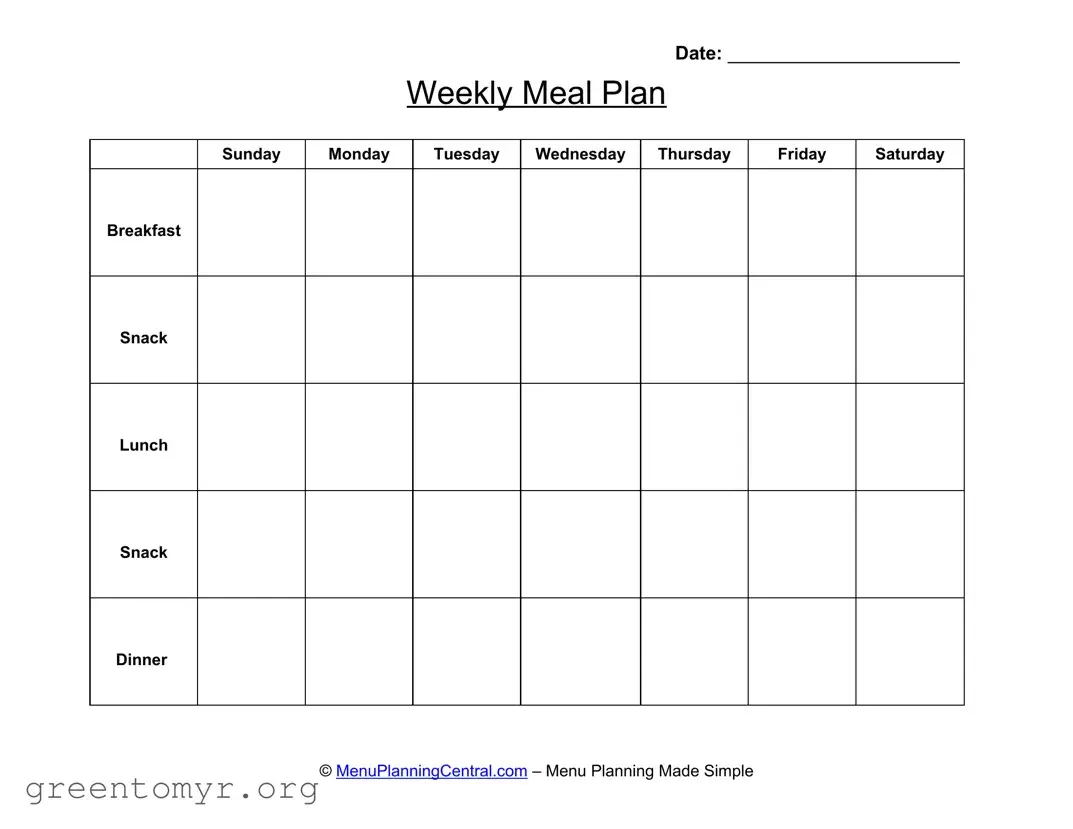
Meal planning can often feel overwhelming, but the Menu Planner form simplifies the process, allowing individuals and families to organize their weekly meals efficiently. This practical tool encourages users to outline their meals for each day of the week, from Sunday through Saturday. It includes designated spaces for breakfast, lunch, dinner, and snacks, ensuring that every meal is accounted for. By providing a structured layout, the form helps users visualize their dietary choices and promotes balanced eating habits. Whether you are looking to save time, reduce food waste, or maintain a healthy diet, the Menu Planner form serves as an essential guide in creating a thoughtful and well-rounded weekly meal plan.

Date: ______________________

Weekly Meal Plan

Sunday

Monday

Tuesday

Wednesday

Thursday

Friday

Saturday

Breakfast

Snack

Lunch

Snack

Dinner

©MenuPlanningCentral.com – Menu Planning Made Simple

File Breakdown

Fact Name Description
Date This section allows users to specify the date for the meal plan, ensuring organization and clarity.
Weekly Meal Plan The form includes designated spaces for each day of the week, promoting a structured approach to meal preparation.
Meal Categories Users can plan for three main meals: Breakfast, Lunch, and Dinner, along with snacks, providing a comprehensive overview of daily nutrition.
Flexibility The format allows for customization, enabling users to tailor their meal plans according to personal dietary needs and preferences.
Menu Planning Made Simple This phrase emphasizes the user-friendly nature of the form, encouraging individuals to engage in meal planning without feeling overwhelmed.
Governing Laws For state-specific forms, consult local health department regulations and guidelines that govern food safety and nutrition.

Guide to Using Menu Planner

Filling out the Menu Planner form is a straightforward process that allows you to organize your meals for the week. By following the steps below, you can ensure that you have a clear plan in place for each day, making meal preparation easier and more efficient.

  1. Start by writing the date at the top of the form in the designated space.
  2. Move to the Weekly Meal Plan section.
  3. For each day of the week, fill in the meals for Breakfast, Snack, Lunch, Snack, and Dinner.
  4. Begin with Sunday, and write down what you plan to eat for each meal.
  5. Continue this process for Monday through Saturday, ensuring that each meal is planned.

Once you have completed all the sections, review your meal plan to ensure it meets your dietary needs and preferences.

Get Answers on Menu Planner

What is the Menu Planner form?

The Menu Planner form is a tool designed to help individuals and families organize their meals for the week. By filling out this form, you can plan breakfast, snacks, lunch, and dinner for each day of the week. This not only streamlines meal preparation but also promotes healthier eating habits.

How do I use the Menu Planner form?

Using the Menu Planner form is straightforward. Simply follow these steps:

  1. Start by writing the date at the top of the form.
  2. For each day of the week, fill in your planned meals for breakfast, snacks, lunch, and dinner.
  3. Consider including a variety of foods to ensure balanced nutrition.
  4. Review your plan at the end of the week to see what worked and what didn’t, making adjustments as necessary for the following week.

Can I customize the Menu Planner form?

Absolutely! The Menu Planner form is designed to be flexible. You can add additional sections if needed, such as a grocery list or notes about dietary preferences. Feel free to modify it in a way that best suits your needs.

Why is meal planning important?

Meal planning offers several benefits:

  • It saves time during the week by reducing the need for last-minute meal decisions.
  • It can help you save money by minimizing food waste and ensuring you only buy what you need.
  • It encourages healthier eating habits by allowing you to prepare balanced meals in advance.

Is the Menu Planner form suitable for special diets?

Yes, the Menu Planner form can be adapted for various dietary needs. Whether you follow a vegetarian, vegan, gluten-free, or any other specific diet, you can tailor your meal choices accordingly. Just make sure to take your dietary restrictions into account when planning your meals.

How can I make the most of my Menu Planner form?

To maximize the effectiveness of your Menu Planner form, consider these tips:

  • Involve family members in the planning process to ensure everyone’s preferences are considered.
  • Plan meals that use similar ingredients to reduce waste.
  • Prepare meals in advance, such as batch cooking or prepping ingredients, to make weeknight dinners easier.

Where can I find the Menu Planner form?

The Menu Planner form can typically be found online through various health and wellness websites, or it may be provided by local community organizations. You can also create your own version using a simple document or spreadsheet application.

Common mistakes

Filling out the Menu Planner form can seem straightforward, but many people make common mistakes that can lead to confusion later. One frequent error is forgetting to fill in the date. Without a date, it becomes challenging to reference the meal plan in the future. Always start by writing the date at the top of the form.

Another mistake is overlooking the snack sections. Some individuals focus only on meals and neglect to plan for snacks. This can lead to unhealthy choices or skipped snacks altogether. Make sure to include snacks for each day to maintain a balanced diet.

People often fill in meals without considering their grocery list. If you don’t think about what ingredients you need while planning meals, you might end up with gaps in your pantry. Planning meals should go hand-in-hand with a shopping list to ensure you have everything you need.

Additionally, some forget to consider the preferences and dietary restrictions of everyone in the household. Ignoring these can lead to wasted food and unhappy family members. Take a moment to think about what everyone likes or needs to avoid. This will make mealtime more enjoyable for everyone.

Another common issue is not leaving enough space for notes or adjustments. Sometimes, plans change, and having a section for notes can help track what worked or didn’t work. This can be beneficial for future meal planning.

Lastly, many people neglect to review their meal plan before the week begins. A quick check can help identify any missing meals or ingredients. This step can save time and stress during the week. Taking a few minutes to review can make a big difference.

Documents used along the form

The Menu Planner form is a valuable tool for organizing meals throughout the week. However, it often works best in conjunction with several other documents that enhance meal planning and preparation. Below is a list of forms and documents commonly used alongside the Menu Planner.

  • Grocery List: This document helps you keep track of all the ingredients needed for your weekly meal plan. It ensures you have everything on hand when it's time to cook.
  • Recipe Cards: These cards contain detailed instructions for preparing specific dishes. They can be organized by meal type or cuisine, making it easy to find what you need.
  • Food Inventory: This form tracks what ingredients you already have at home. It prevents unnecessary purchases and helps reduce food waste.
  • Dietary Restrictions Form: This document outlines any dietary needs or allergies for family members. It ensures that everyone’s health and preferences are considered in meal planning.
  • Cooking Schedule: A cooking schedule can help allocate time for meal prep and cooking throughout the week. It makes it easier to manage busy days and ensures meals are ready on time.
  • Portion Control Guide: This guide helps you understand appropriate serving sizes. It can be especially useful for those looking to manage their diet or portion sizes.
  • Meal Prep Checklist: A checklist to ensure all necessary tasks are completed before cooking. This can include chopping vegetables, marinating proteins, or preheating the oven.
  • Feedback Form: After meals are served, this form collects input from family members about what they liked or disliked. It can guide future meal planning efforts.

Using these documents in tandem with the Menu Planner form can streamline your meal planning process. Together, they create a comprehensive system that makes cooking enjoyable and efficient.

Similar forms

  • Weekly Meal Planner: Similar to the Menu Planner form, this document helps individuals outline their meals for the week, providing a structured approach to meal preparation and grocery shopping.
  • Grocery List: This document complements the Menu Planner by listing all necessary ingredients based on the planned meals, ensuring nothing is overlooked when shopping.
  • Recipe Card: A recipe card provides detailed instructions for preparing specific dishes, which can be referenced alongside the Menu Planner for a comprehensive cooking guide.
  • Nutrition Tracker: This document allows individuals to monitor their daily nutritional intake, ensuring that the meals planned align with their dietary goals.
  • Food Diary: A food diary records what individuals actually consume, helping to compare planned meals with actual eating habits and make adjustments as needed.
  • Meal Prep Checklist: This checklist outlines the steps necessary for preparing meals in advance, ensuring that the Menu Planner is executed efficiently.
  • Calorie Counter: This document helps track the caloric content of meals planned in the Menu Planner, allowing for better management of dietary needs.
  • Shopping Budget Planner: This document assists in budgeting for groceries, ensuring that the meals planned do not exceed financial constraints.
  • Allergy and Intolerance Log: This log records any food allergies or intolerances, guiding meal planning to avoid adverse reactions.

Dos and Don'ts

Filling out the Menu Planner form can streamline your meal preparation and ensure you stay organized throughout the week. Here are some essential dos and don'ts to keep in mind:

  • Do plan your meals around your schedule. Consider your commitments for each day.
  • Do include a variety of food groups to ensure balanced nutrition.
  • Do write down snacks to avoid unhealthy last-minute choices.
  • Do check your pantry and fridge before planning to minimize food waste.
  • Don't forget to consider dietary restrictions for yourself and others.
  • Don't overcomplicate your meals. Simple recipes can be just as satisfying.
  • Don't leave any sections blank. Fill out every meal for the entire week.

By following these guidelines, you can create a thoughtful and effective meal plan that meets your needs and preferences.

Misconceptions

The Menu Planner form is a useful tool for organizing meals throughout the week. However, several misconceptions surround its purpose and functionality. Below is a list of common misunderstandings:

  • It is only for large families. Many believe that the Menu Planner form is only necessary for families with multiple members. In reality, it can benefit anyone looking to streamline their meal planning, regardless of family size.
  • It requires extensive cooking skills. Some think that using the Menu Planner form demands advanced culinary abilities. In truth, it is designed for all skill levels, including those who prefer simple, quick meals.
  • It is only for healthy eating. A misconception exists that the form is solely for planning healthy meals. Users can customize their meal plans to include any type of food they enjoy, whether it is healthy or indulgent.
  • It is too time-consuming. Many people assume that filling out the Menu Planner form takes a lot of time. In fact, it can be completed in just a few minutes and can save time in the long run.
  • It is only useful for dinner. Some think the form is limited to dinner planning. However, it covers all meals, including breakfast, lunch, and snacks, making it a comprehensive tool.
  • It is not flexible. A common belief is that once a meal plan is set, it cannot be changed. The Menu Planner form is adaptable, allowing users to modify their plans as needed.
  • It is only for special occasions. Some individuals believe that the Menu Planner form is only useful for events or gatherings. In reality, it can enhance everyday meal organization.
  • It is complicated to use. Many people think that the form is difficult to understand. On the contrary, it is straightforward and user-friendly, making meal planning accessible to everyone.

Understanding these misconceptions can help individuals better utilize the Menu Planner form to enhance their meal planning experience.

Key takeaways

When filling out and using the Menu Planner form, consider the following key takeaways to streamline your meal planning process:

  • Start with the Date: Clearly write the date at the top of the form. This helps keep your meal plans organized and relevant.
  • Utilize Each Day: Allocate specific meals for each day of the week. This includes breakfast, snacks, lunch, and dinner for Sunday through Saturday.
  • Plan Balanced Meals: Aim for a variety of food groups in each meal. This ensures nutritional balance and keeps meals interesting.
  • Consider Snacks: Don’t overlook the importance of snacks. Include them in your plan to maintain energy levels throughout the day.
  • Be Flexible: Allow room for adjustments. Life can be unpredictable, so having a flexible plan will help you stay on track.
  • Review Weekly: At the end of the week, review your meal plan. This can provide insights for future planning and help identify what worked well.

By following these takeaways, meal planning can become a more efficient and enjoyable process.