Content Navigation

The Military 1173 form plays a crucial role in the identification and benefits access for dependents of military personnel. This form is primarily used to issue identification cards to the dependents of active-duty members, as well as to those in the Reserve components who are on active duty for more than 30 days. It also serves retirees, Medal of Honor recipients, and certain disabled veterans, ensuring that they and their families can access essential services and support. The 1173 form is part of a broader system that includes other identification forms like the Common Access Card (CAC) for active-duty members and various versions of DD Form 2 for different categories of reserve and retired personnel. Understanding the nuances of the Military 1173 form is vital for dependents seeking to navigate the benefits and resources available to them. It is important to note that the form also distinguishes between dependents of active-duty members and those of reserve members not on active duty, providing clarity in eligibility for benefits. This comprehensive approach helps maintain the integrity of military identification and ensures that those who have served, along with their families, receive the recognition and support they deserve.
Military 1173 Example

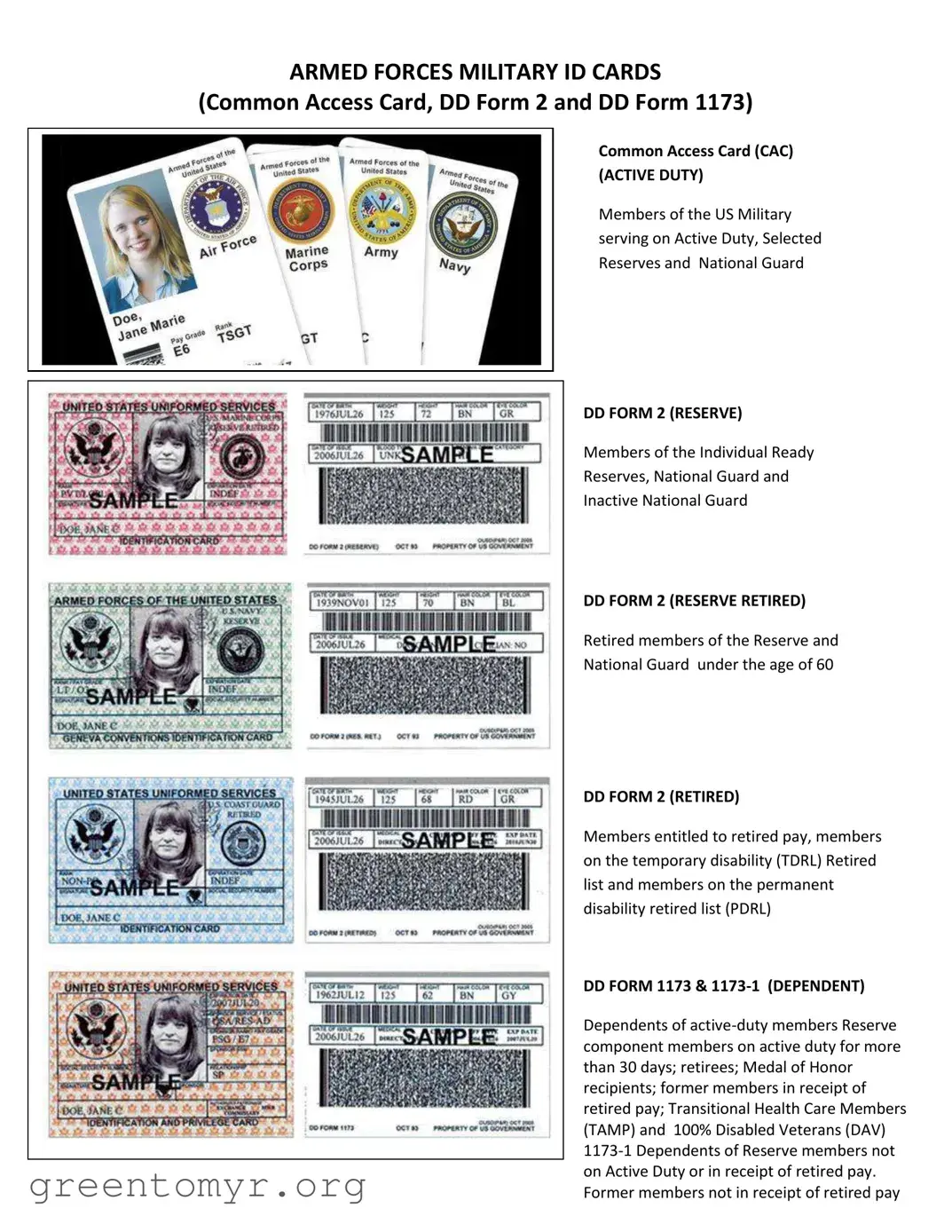
ARMED FORCES MILITARY ID CARDS

(COMMON ACCESS CARD, DD FORM 2 AND DD FORM 1173)

COMMON ACCESS CARD (CAC)

(ACTIVE DUTY)

Members of the US Military serving on Active Duty, Selected Reserves and National Guard

DD FORM 2 (RESERVE)

Members of the Individual Ready

Reserves, National Guard and

Inactive National Guard

DD FORM 2 (RESERVE RETIRED)

Retired members of the Reserve and

National Guard under the age of 60

DD FORM 2 (RETIRED)

Members entitled to retired pay, members on the temporary disability (TDRL) Retired list and members on the permanent disability retired list (PDRL)

DD FORM 1173 & 1173-1 (DEPENDENT)

Dependents of active-duty members Reserve component members on active duty for more than 30 days; retirees; Medal of Honor recipients; former members in receipt of retired pay; Transitional Health Care Members (TAMP) and 100% Disabled Veterans (DAV) 1173-1 Dependents of Reserve members not on Active Duty or in receipt of retired pay. Former members not in receipt of retired pay

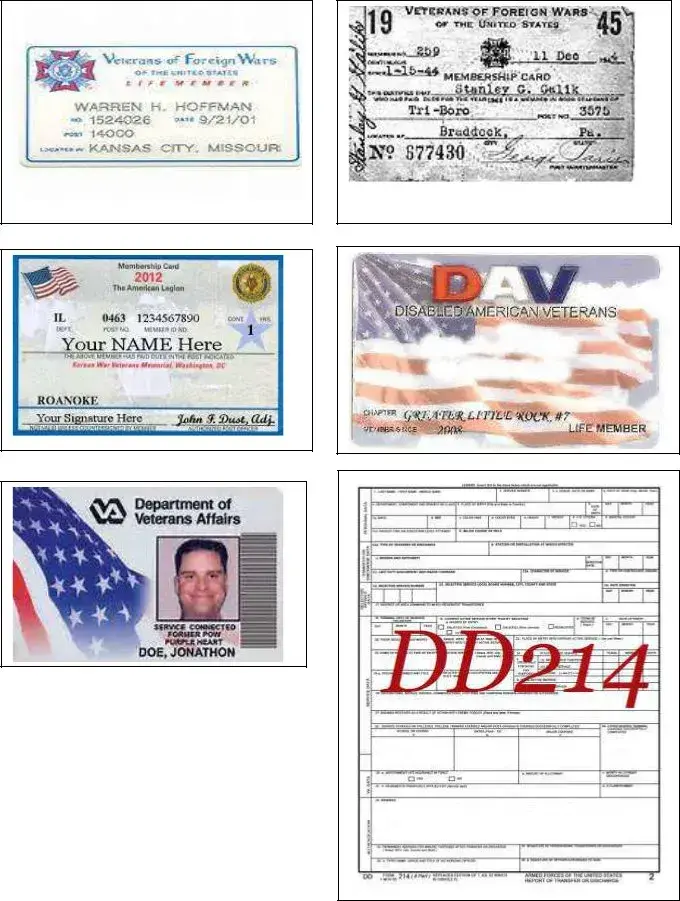
VFW, AMERICAN LEGION, VA AND DAV ID CARDS

EXAMPLE OF DD FORM 214

File Breakdown

Fact Name Details
Purpose of DD Form 1173 DD Form 1173 is used to issue identification cards to eligible dependents of military personnel.
Eligibility Criteria Dependents of active-duty members, retirees, and certain veterans qualify for this ID card.
Common Access Card (CAC) The CAC is issued to active-duty members and provides access to military facilities and services.
State-Specific Forms Some states may have additional forms for military dependents, governed by state military laws.
Transition Assistance Transitional Health Care Members (TAMP) are eligible for DD Form 1173, aiding their healthcare access.
Retired Members Retired members of the Reserve and National Guard under the age of 60 can also receive a DD Form 2.

Guide to Using Military 1173

Filling out the Military 1173 form is a straightforward process that requires accurate information. This form is essential for dependents of military members to obtain the necessary identification. Follow these steps to ensure you complete the form correctly.

  1. Start by downloading the Military 1173 form from the official military website or obtain a hard copy from your local military installation.
  2. Read the instructions carefully to understand what information is needed.
  3. In the first section, fill in the personal details of the military sponsor, including their full name, Social Security number, and branch of service.
  4. Next, provide the dependent's information. This includes the full name, date of birth, and relationship to the sponsor.
  5. Include the dependent’s Social Security number if applicable.
  6. In the next section, indicate whether the dependent is a spouse or child. Check the appropriate box.
  7. Complete any additional information requested, such as the address and contact details.
  8. Review the form for accuracy. Ensure all required fields are filled out completely.
  9. Sign and date the form at the bottom. The sponsor must also sign if applicable.
  10. Submit the completed form to the designated military ID card office or the appropriate authority as instructed.

Get Answers on Military 1173

What is the Military 1173 form?

The Military 1173 form is a document that provides identification for dependents of active-duty military members, certain retirees, and other eligible individuals. It is essential for accessing military benefits and services.

Who is eligible to receive a DD Form 1173?

Eligibility for the DD Form 1173 includes:

  • Dependents of active-duty military members.
  • Reserve component members on active duty for more than 30 days.
  • Retirees from the military.
  • Medal of Honor recipients.
  • Former members receiving retired pay.
  • Transitional Health Care Members (TAMP).
  • 100% Disabled Veterans (DAV).

What is the difference between DD Form 1173 and DD Form 1173-1?

DD Form 1173 is for dependents of active-duty members and certain retirees. In contrast, DD Form 1173-1 is specifically for dependents of Reserve members who are not on active duty or receiving retired pay. The distinction is important for accessing the right benefits.

How can I apply for a DD Form 1173?

To apply for a DD Form 1173, you need to visit a military ID card issuing facility. Bring the necessary documents, such as proof of relationship to the service member and identification. You may also need to complete an application form at the facility.

What documents do I need to provide when applying?

You will typically need to provide:

  • A valid form of identification (like a driver's license).
  • Proof of relationship to the service member (such as a marriage certificate or birth certificate).
  • Any other documents specified by the issuing facility.

How long is the DD Form 1173 valid?

The validity of the DD Form 1173 can vary. Generally, it remains valid as long as the dependent's eligibility status remains unchanged. If there are changes in the dependent's status, such as marriage or aging out of eligibility, a new form may be required.

Can I use the DD Form 1173 for medical services?

Yes, the DD Form 1173 can be used to access medical services within military treatment facilities. It serves as proof of eligibility for dependents to receive healthcare benefits under the military healthcare system.

Common mistakes

Filling out the Military 1173 form can be straightforward, but many make common mistakes that can delay processing. One frequent error is not providing accurate personal information. This includes incorrect names, Social Security numbers, or dates of birth. Even a small typo can lead to significant complications. Always double-check this information before submission.

Another mistake is failing to include all necessary documentation. The Military 1173 form requires specific supporting documents to verify eligibility. Omitting these documents can result in a denial of the application. Ensure that all required paperwork is attached and clearly labeled to avoid confusion.

Many applicants also overlook the importance of signatures. The form must be signed by the appropriate parties. An unsigned form will not be processed. Make sure to review the signature requirements and ensure all necessary signatures are provided before submitting the form.

Finally, some individuals submit the form without reviewing the instructions thoroughly. Each section of the Military 1173 form has specific requirements and guidelines. Ignoring these can lead to incomplete applications. Take the time to read through the instructions carefully to ensure compliance with all requirements.

Documents used along the form

The Military 1173 form is essential for verifying eligibility for military benefits and services. Alongside this form, several other documents often accompany it to ensure that members and their dependents receive the necessary support. Below is a list of related forms and documents that play a crucial role in the military identification process.

  • Common Access Card (CAC): This card is issued to active-duty members of the U.S. Military, Selected Reserves, and National Guard. It serves as a primary identification card and provides access to military installations and secure systems.
  • DD Form 2 (Reserve): This form is designated for members of the Individual Ready Reserves, National Guard, and Inactive National Guard. It signifies their reserve status and eligibility for certain benefits.
  • DD Form 2 (Retired): Issued to retired members of the military, this form is crucial for accessing benefits. It applies to those entitled to retired pay and those on temporary or permanent disability retired lists.
  • DD Form 214: This document serves as a certificate of release or discharge from active duty. It provides a summary of a service member's military history, including dates of service and type of discharge.
  • DD Form 1173-1: This form is specifically for dependents of reserve members who are not on active duty or receiving retired pay. It helps verify eligibility for benefits for these dependents.

Understanding these documents can streamline the process of accessing military benefits and services. Each form has its specific purpose and eligibility requirements, making it essential for service members and their families to be familiar with them.

Similar forms

The Military 1173 form is an important document for various members of the military community, particularly for dependents of active-duty personnel and other eligible individuals. Several other documents serve similar purposes, providing identification and access to benefits. Here’s a list of those documents and how they relate to the Military 1173 form:

  • Common Access Card (CAC): This card is issued to active-duty members, Selected Reserves, and National Guard personnel. Like the Military 1173, it serves as an identification and access tool, allowing members to access military installations and benefits.
  • DD Form 2 (Reserve): This form is for members of the Individual Ready Reserves, National Guard, and Inactive National Guard. Similar to the Military 1173, it provides identification and access to certain military benefits, although it is specific to reserve members.
  • DD Form 2 (Reserve Retired): This document is for retired members of the Reserve and National Guard who are under the age of 60. It functions similarly to the Military 1173 by providing identification and access to benefits for retired personnel.
  • DD Form 2 (Retired): This form is issued to members entitled to retired pay and those on disability retired lists. Like the Military 1173, it serves as proof of retired status and grants access to various benefits.
  • DD Form 1173 & 1173-1 (Dependent): The Military 1173 specifically covers dependents of active-duty members and certain retirees. This form provides identification and access to benefits for eligible dependents, making it similar in purpose.
  • 1173-1: This document is for dependents of Reserve members not on active duty or in receipt of retired pay. It functions similarly to the Military 1173 by providing identification for dependents in specific situations.
  • VFW ID Card: Issued by the Veterans of Foreign Wars, this card serves as identification for veterans and provides access to certain benefits. Like the Military 1173, it helps verify eligibility for various programs.
  • American Legion ID Card: This card is provided to members of the American Legion and serves as a form of identification, similar to the Military 1173, allowing access to benefits and services for veterans.
  • VA ID Card: Issued by the Department of Veterans Affairs, this card provides identification for veterans and allows access to VA benefits. It shares a similar purpose with the Military 1173 in verifying eligibility for services.
  • DAV ID Card: This card is issued by the Disabled American Veterans organization and serves to identify disabled veterans. Like the Military 1173, it provides access to specific benefits and services for its holders.

Each of these documents plays a crucial role in ensuring that military members, retirees, and their dependents can access necessary services and benefits. Understanding their similarities can help individuals navigate the military benefits landscape more effectively.

Dos and Don'ts

When filling out the Military 1173 form, it is crucial to approach the task with care and attention to detail. Here are some essential dos and don'ts to keep in mind:

  • Do read the instructions carefully before starting to fill out the form.
  • Do ensure that all personal information is accurate and up-to-date.
  • Do use blue or black ink when completing the form to ensure clarity.
  • Do double-check for any required signatures before submitting the form.
  • Don't leave any sections blank unless instructed to do so.
  • Don't use correction fluid or tape on the form; it can lead to confusion.
  • Don't forget to provide any necessary supporting documents that may be required.
  • Don't submit the form without making a copy for your records.

By following these guidelines, you can help ensure that your application process goes smoothly and efficiently.

Misconceptions

Here are six common misconceptions about the Military 1173 form:

  • Only active-duty members can use the 1173 form. Many believe that only active-duty service members are eligible. In fact, the form is also for dependents of active-duty members, retirees, and certain veterans.
  • The 1173 form is the same as the Common Access Card (CAC). While both are identification cards, the CAC is specifically for active-duty members, whereas the 1173 form is for dependents and certain veterans.
  • Dependents must be enrolled in DEERS to obtain the 1173 form. Some think that enrollment in the Defense Enrollment Eligibility Reporting System (DEERS) is unnecessary. However, dependents must be registered in DEERS to be eligible for the 1173 form.
  • The 1173 form is only for spouses and children. Many assume that dependents are limited to spouses and children. In reality, the form can also cover other eligible dependents, including parents or guardians in some cases.
  • Once issued, the 1173 form does not expire. Some people think the card is valid indefinitely. In truth, the 1173 form has an expiration date and must be renewed periodically.
  • All veterans are eligible for the 1173 form. There is a misconception that all veterans can obtain this form. However, eligibility is limited to specific categories, including those on active duty for more than 30 days and certain retirees.

Key takeaways

Filling out and using the Military 1173 form is essential for dependents of military personnel to access benefits and services. Here are key takeaways to consider:

  • Eligibility: The Military 1173 form is primarily for dependents of active-duty members, certain retirees, and specific categories of veterans.
  • Documentation Required: Gather necessary documents such as proof of relationship to the service member and identification before filling out the form.
  • Active Duty Dependents: Dependents of active-duty members must use the DD Form 1173 to obtain their military ID cards.
  • Reserve Component Members: Members of the Reserve components on active duty for more than 30 days also qualify for the Military 1173 form.
  • Medal of Honor Recipients: Dependents of Medal of Honor recipients are eligible to use this form for ID cards.
  • Transitional Health Care Members: The form is applicable for Transitional Health Care Members (TAMP) and 100% Disabled Veterans.
  • Form Variants: Be aware of the different versions of the form, such as the DD Form 1173-1, which is for dependents of Reserve members not on active duty.
  • Submission Process: After completing the form, submit it to the appropriate military ID card issuing facility for processing.
  • Renewal and Updates: Regularly check the status of your military ID and renew or update the information as necessary to maintain access to benefits.