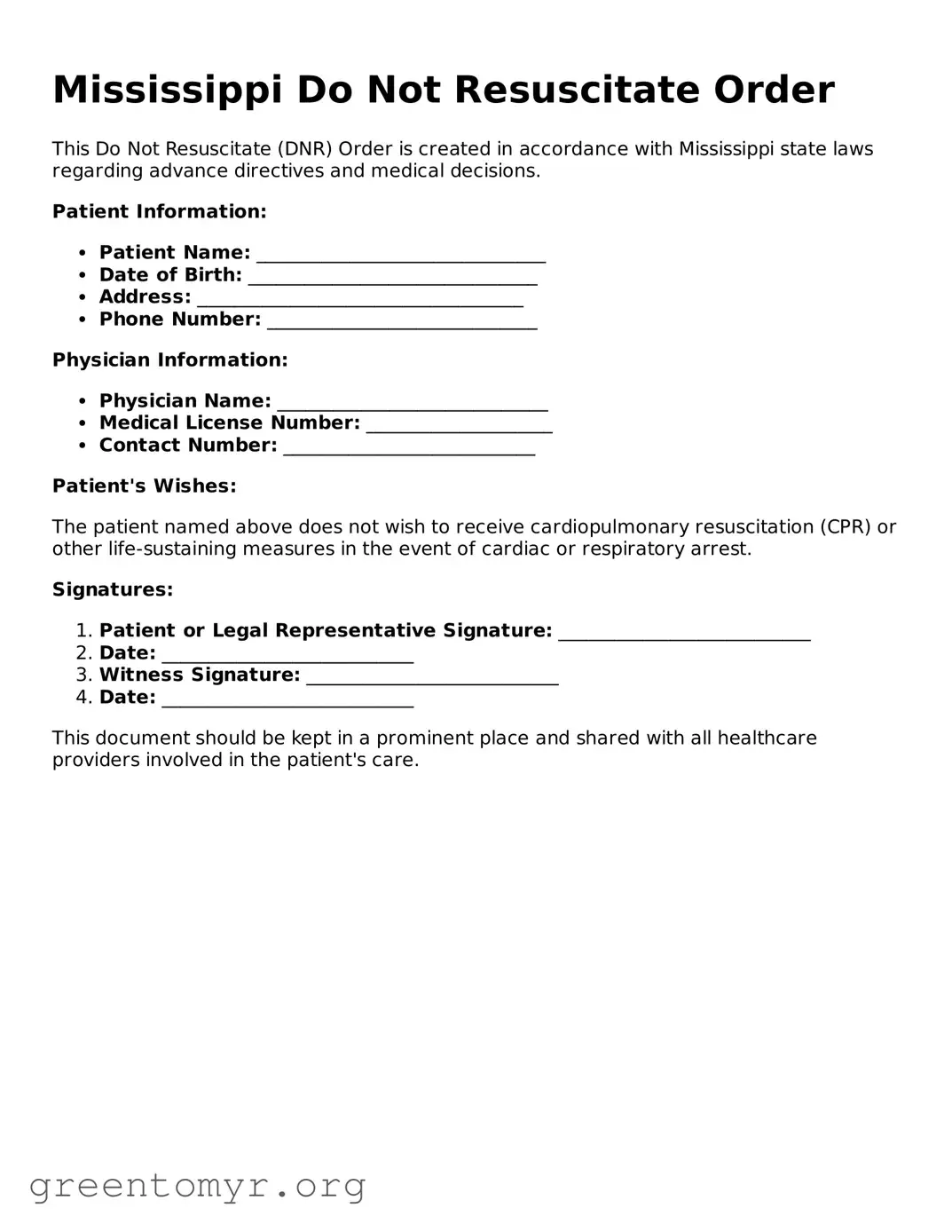
In Mississippi, the Do Not Resuscitate (DNR) Order form serves a vital role in healthcare decisions, allowing individuals to express their wishes regarding resuscitation efforts in the event of a medical emergency. This legally binding document is designed for those who prefer to forgo life-saving measures such as CPR or advanced cardiac life support. It is essential for patients with terminal illnesses or severe medical conditions who wish to maintain control over their end-of-life care. The form must be completed and signed by a qualified healthcare provider, ensuring that it reflects the patient's desires accurately. Additionally, it is crucial to keep this document readily accessible, as emergency medical personnel must be able to view it immediately in critical situations. Understanding the implications of a DNR Order can empower individuals to make informed choices about their healthcare, providing peace of mind to both patients and their families during difficult times.
Mississippi Do Not Resuscitate Order
This Do Not Resuscitate (DNR) Order is created in accordance with Mississippi state laws regarding advance directives and medical decisions.
Patient Information:
Physician Information:
Patient's Wishes:
The patient named above does not wish to receive cardiopulmonary resuscitation (CPR) or other life-sustaining measures in the event of cardiac or respiratory arrest.
Signatures:
This document should be kept in a prominent place and shared with all healthcare providers involved in the patient's care.
| Fact Name | Description |
|---|---|
| Definition | A Do Not Resuscitate (DNR) Order is a legal document that instructs medical personnel not to perform cardiopulmonary resuscitation (CPR) in the event of cardiac or respiratory arrest. |
| Governing Law | The Mississippi Do Not Resuscitate Order is governed by Mississippi Code Annotated § 41-41-211. |
| Eligibility | Individuals who are 18 years or older and are capable of making their own healthcare decisions can complete a DNR order. |
| Form Requirements | The DNR order must be signed by the patient or their legal representative and a physician. |
| Document Format | The DNR order should be printed on a bright pink form to ensure visibility and recognition by medical personnel. |
| Revocation | A DNR order can be revoked at any time by the patient or their representative, verbally or in writing. |
| Healthcare Provider Responsibility | Healthcare providers are required to honor a valid DNR order as long as it meets the state requirements. |
| Emergency Situations | In emergency situations, medical personnel will check for the presence of a DNR order before taking action. |
| Advance Directives | A DNR order is considered a type of advance directive, which outlines a person's preferences for medical treatment. |
Filling out the Mississippi Do Not Resuscitate Order form is an important step in ensuring your healthcare preferences are respected. Once the form is completed, it should be shared with your healthcare provider and kept in an easily accessible location. This will help ensure that your wishes are known and followed in a medical emergency.
A Do Not Resuscitate Order is a legal document that allows a person to refuse resuscitation in the event of a cardiac arrest or respiratory failure. In Mississippi, this order must be signed by a physician and is intended to ensure that a patient’s wishes regarding end-of-life care are respected.
Any adult who is capable of making healthcare decisions can request a DNR Order. This includes individuals who are terminally ill or have a condition that may lead to a cardiac arrest. Additionally, a legally authorized representative, such as a family member or power of attorney, can also request a DNR on behalf of an incapacitated person.
To obtain a DNR Order, you should follow these steps:
Yes, a DNR Order is valid across various healthcare settings in Mississippi, including hospitals, nursing homes, and at home. However, it is important to communicate your wishes to all healthcare providers involved in your care to ensure that the order is honored.
Yes, a DNR Order can be revoked at any time. You can do this verbally or in writing. It is advisable to inform your healthcare provider and family members of your decision to revoke the order to avoid any confusion during a medical emergency.
If you change your mind about having a DNR Order, you should notify your healthcare provider immediately. You can request to have the order revoked or modified. It is also important to ensure that any new decisions are documented properly to reflect your current wishes.
Filling out a Do Not Resuscitate (DNR) Order form can be a significant step for individuals wishing to communicate their healthcare preferences. However, mistakes can easily occur during this process. Understanding common errors can help ensure that the form accurately reflects a person’s wishes.
One frequent mistake is failing to provide all required personal information. The form typically requires the patient’s full name, date of birth, and other identifying details. Omitting any of this information can lead to confusion or even invalidate the order.
Another common error is neglecting to sign and date the form. A DNR Order is not legally binding without the patient’s signature, and the date is crucial for determining the order's validity. Without these, healthcare providers may not recognize the order when it is needed.
People often overlook the need for a witness signature. Many states, including Mississippi, require a witness to sign the DNR form. This step ensures that the decision was made voluntarily and without coercion. Failing to include a witness can lead to complications when the order is presented in a medical setting.
Misunderstanding the medical implications of a DNR order is another mistake. Some individuals may think that a DNR means they will receive no medical care at all. In reality, a DNR specifically addresses resuscitation efforts and does not prevent other forms of medical treatment.
Sometimes, people forget to communicate their wishes to family members or healthcare providers. A DNR order is only effective if those involved in the patient's care are aware of it. Discussing these decisions with loved ones can help prevent misunderstandings during critical moments.
Another issue arises when individuals use outdated forms. Laws and regulations can change, and it is essential to use the most current version of the DNR form. Using an outdated form may lead to confusion or rejection by medical personnel.
Some individuals may also fail to review the form after completing it. Changes in health status or personal preferences may warrant updates to the DNR order. Regularly revisiting the document ensures it remains aligned with the individual’s current wishes.
Additionally, people sometimes neglect to keep copies of the completed DNR form. Having multiple copies readily available can be crucial in emergencies. It is advisable to provide copies to family members, healthcare providers, and even keep one in a visible location at home.
Finally, misunderstanding the role of healthcare proxies can lead to complications. While a DNR order specifies wishes regarding resuscitation, a healthcare proxy may be needed to make broader medical decisions. Clarifying these roles can provide a more comprehensive approach to healthcare planning.
In addition to the Mississippi Do Not Resuscitate (DNR) Order form, there are several other important documents that can help ensure your healthcare wishes are respected. These forms work together to provide a clear picture of your medical preferences and can help guide healthcare providers in critical situations.
Having these documents in place can provide peace of mind for you and your loved ones. They ensure that your healthcare preferences are clear and respected, especially during challenging times. It’s always a good idea to discuss these documents with your family and healthcare providers to ensure everyone understands your wishes.
A Do Not Resuscitate (DNR) Order form is a critical document that outlines a patient's wishes regarding resuscitation efforts in the event of a medical emergency. Several other documents share similarities with the DNR form, primarily in their purpose of expressing healthcare preferences. Below are five documents that are comparable to a DNR Order:
When filling out the Mississippi Do Not Resuscitate Order form, it is essential to approach the process with care and attention to detail. Below is a list of five things you should and should not do during this important task.
Understanding the Mississippi Do Not Resuscitate (DNR) Order form can be confusing. Many people hold misconceptions about what this document entails and its implications. Here are nine common misconceptions, clarified for better understanding.
By addressing these misconceptions, individuals can make more informed decisions regarding their healthcare preferences. Understanding the DNR order is a vital part of planning for the future.
When considering the Mississippi Do Not Resuscitate Order form, it is essential to understand its purpose and implications. Here are some key takeaways to keep in mind:
These points can help guide individuals in making informed decisions regarding the Mississippi Do Not Resuscitate Order form.