In Mississippi, families seeking to homeschool their children must navigate specific legal requirements to ensure compliance with state laws. One critical component of this process is the Homeschool Letter of Intent form. This form serves as a formal notification to the local school district of a family's intention to educate their child at home. It typically requires essential information, including the names and ages of the children being homeschooled, as well as the educational curriculum that will be used. Parents must submit this letter within a certain timeframe, usually by the beginning of the school year, to avoid any legal complications. Understanding the nuances of this form is vital for parents to establish their homeschooling status and to protect their educational rights. Failure to submit the letter correctly or on time can lead to unnecessary complications, making it imperative for families to approach this requirement with diligence and care.
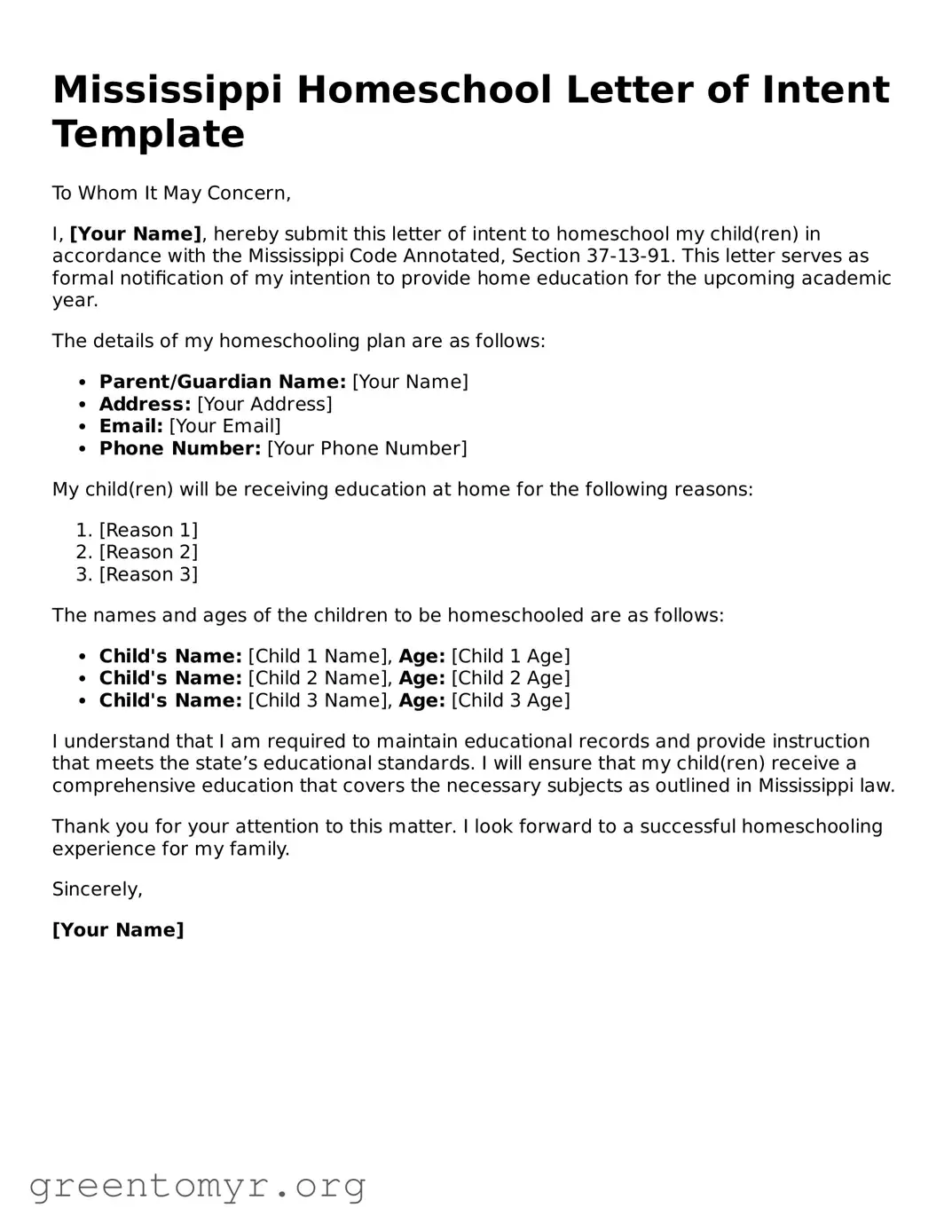
Mississippi Homeschool Letter of Intent Template
To Whom It May Concern,
I, [Your Name], hereby submit this letter of intent to homeschool my child(ren) in accordance with the Mississippi Code Annotated, Section 37-13-91. This letter serves as formal notification of my intention to provide home education for the upcoming academic year.
The details of my homeschooling plan are as follows:
My child(ren) will be receiving education at home for the following reasons:
The names and ages of the children to be homeschooled are as follows:
I understand that I am required to maintain educational records and provide instruction that meets the state’s educational standards. I will ensure that my child(ren) receive a comprehensive education that covers the necessary subjects as outlined in Mississippi law.
Thank you for your attention to this matter. I look forward to a successful homeschooling experience for my family.
Sincerely,
[Your Name]
| Fact Name | Description |
|---|---|
| Governing Law | The Mississippi Homeschool Letter of Intent is governed by Mississippi Code Annotated § 37-13-91, which outlines the requirements for homeschooling in the state. |
| Submission Deadline | Parents must submit the Letter of Intent to the local school district by September 15 each year or within 30 days of beginning homeschooling. |
| Content Requirements | The form must include the names and ages of the children being homeschooled, as well as the address of the home education program. |
| Annual Renewal | The Letter of Intent must be renewed annually to ensure compliance with state regulations regarding homeschooling. |
Once you have decided to homeschool your child in Mississippi, the next step is to complete the Homeschool Letter of Intent form. This form is a formal declaration to the state that you are choosing to educate your child at home. After submitting this letter, you will be able to move forward with your homeschooling journey.
After submitting the form, keep an eye on any correspondence from your school district. They may reach out to confirm receipt or provide additional instructions. This is an important part of ensuring that your homeschooling experience is compliant with state regulations.
The Mississippi Homeschool Letter of Intent is a formal document that parents or guardians must submit to the local school district to notify them of their intention to homeschool their children. This letter serves as a declaration of your choice to educate your child outside the traditional school system.
Any parent or guardian who wishes to homeschool their child in Mississippi must submit this letter. It is required for children who are of compulsory school age, which typically includes those between the ages of 6 and 17.
The Letter of Intent should be submitted at the beginning of the school year or when you decide to withdraw your child from a traditional school. It is advisable to send the letter at least 30 days before the start of the school year to ensure compliance with local regulations.
Your Letter of Intent should include the following information:
Providing accurate and complete information helps ensure a smooth process.
While there is no official format mandated by the state, it is essential to write the letter clearly and concisely. A simple, straightforward letter stating your intent to homeschool, along with the required information, will suffice. Ensure that you keep a copy for your records.
Yes, it is necessary to submit a new Letter of Intent each year. This annual notification keeps the school district informed of your homeschooling status and your child's educational progress.
Failing to submit the Letter of Intent may result in your child being considered truant. This could lead to legal consequences, including potential fines or requirements to enroll your child in a traditional school. It is crucial to adhere to the notification requirements to avoid any complications.
Yes, you can withdraw your child from school at any time during the school year. However, you should submit the Letter of Intent as soon as possible after the withdrawal. This will help you comply with the state's educational regulations and ensure that your child is officially recognized as homeschooled.
The Letter of Intent form is typically available on your local school district's website or the Mississippi Department of Education's website. You may also find sample letters online that can guide you in drafting your own. Always ensure that the document you use meets the requirements set forth by your local district.
Filling out the Mississippi Homeschool Letter of Intent form can be a straightforward process, but there are common mistakes that many people make. One frequent error is failing to provide all required information. The form typically asks for specific details such as the names of the students, their ages, and the address of the homeschooling family. Omitting any of this information can lead to delays or complications in the registration process.
Another mistake often encountered is not submitting the form on time. Mississippi law requires that the Letter of Intent be submitted by a certain date, usually before the start of the school year. Missing this deadline can result in the inability to legally homeschool for that academic year. It is crucial to be aware of the timeline and plan accordingly to avoid this pitfall.
In addition, some individuals may overlook the importance of keeping a copy of the submitted form. After sending the Letter of Intent, it is wise to retain a copy for personal records. This documentation can be invaluable should any questions arise about the homeschooling status or if proof of intent is needed in the future.
Lastly, many parents fail to familiarize themselves with the specific homeschooling laws and regulations in Mississippi. Each state has unique requirements, and understanding these can help ensure compliance. This knowledge not only aids in filling out the form correctly but also supports a smoother homeschooling experience overall.
When families decide to homeschool in Mississippi, they often need to complete various forms and documents in addition to the Homeschool Letter of Intent. These documents help ensure compliance with state regulations and provide a clear framework for educational planning. Below is a list of commonly used forms that may accompany the Homeschool Letter of Intent.
By preparing these documents alongside the Homeschool Letter of Intent, families can create a well-organized and effective homeschooling experience. Staying informed and organized helps ensure a successful educational journey for your child.
When filling out the Mississippi Homeschool Letter of Intent form, it is important to follow certain guidelines to ensure a smooth process. Here are five things to consider:
Misconceptions about the Mississippi Homeschool Letter of Intent form can lead to confusion for families considering homeschooling. Here are four common misconceptions clarified:
Here are key takeaways about filling out and using the Mississippi Homeschool Letter of Intent form: