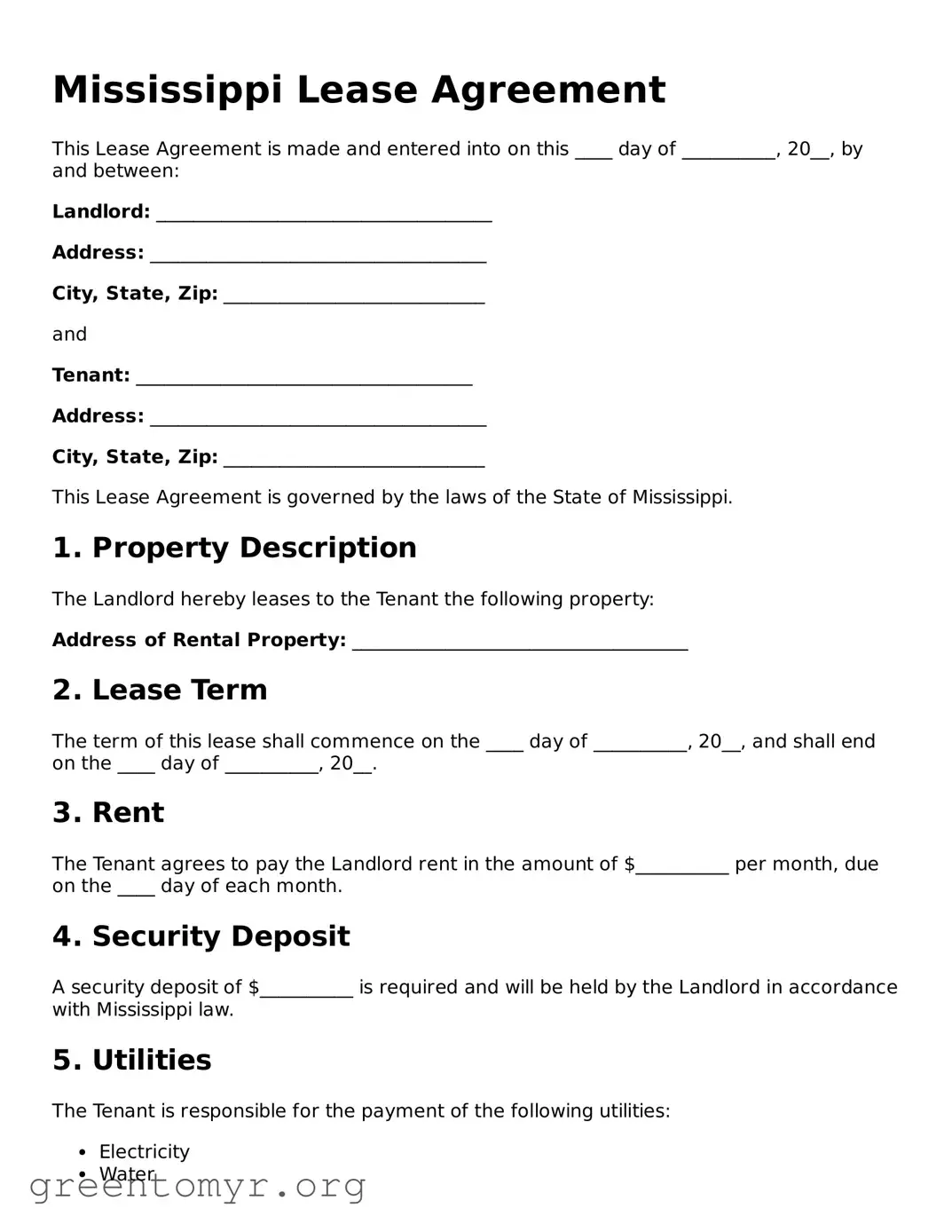
The Mississippi Lease Agreement form is a vital document for both landlords and tenants, serving as a clear outline of the terms and conditions governing the rental of residential or commercial properties. This form details essential aspects such as the duration of the lease, the amount of rent due, and the responsibilities of both parties regarding maintenance and repairs. It also addresses security deposits, late fees, and rules for terminating the lease, ensuring that everyone involved understands their rights and obligations. By providing a structured framework, the Mississippi Lease Agreement helps prevent misunderstandings and disputes, fostering a smoother rental experience. Whether you are a property owner looking to lease your space or a tenant seeking a new home, understanding this agreement is crucial for a successful rental relationship.
Mississippi Lease Agreement
This Lease Agreement is made and entered into on this ____ day of __________, 20__, by and between:
Landlord: ____________________________________
Address: ____________________________________
City, State, Zip: ____________________________
and
Tenant: ____________________________________
Address: ____________________________________
City, State, Zip: ____________________________
This Lease Agreement is governed by the laws of the State of Mississippi.
1. Property Description
The Landlord hereby leases to the Tenant the following property:
Address of Rental Property: ____________________________________
2. Lease Term
The term of this lease shall commence on the ____ day of __________, 20__, and shall end on the ____ day of __________, 20__.
3. Rent
The Tenant agrees to pay the Landlord rent in the amount of $__________ per month, due on the ____ day of each month.
4. Security Deposit
A security deposit of $__________ is required and will be held by the Landlord in accordance with Mississippi law.
5. Utilities
The Tenant is responsible for the payment of the following utilities:
6. Maintenance and Repairs
The Tenant shall maintain the property in good condition. The Landlord is responsible for major repairs unless damage is caused by the Tenant's negligence.
7. Termination
Either party may terminate this lease with a written notice of ____ days prior to the intended termination date.
8. Governing Law
This Lease Agreement shall be governed by the laws of the State of Mississippi.
9. Signatures
By signing below, both parties agree to the terms outlined in this Lease Agreement.
Landlord Signature: ___________________________ Date: _______________
Tenant Signature: ____________________________ Date: _______________
| Fact Name | Description |
|---|---|
| Purpose | The Mississippi Lease Agreement form is used to outline the terms and conditions of a rental agreement between a landlord and tenant. |
| Governing Laws | This agreement is governed by the laws of the State of Mississippi, specifically the Mississippi Code Title 89. |
| Duration | The lease can be established for a fixed term or on a month-to-month basis, depending on the agreement between the parties. |
| Security Deposit | The form typically includes provisions regarding the security deposit, which may not exceed one month's rent, as per Mississippi law. |
| Termination Notice | Notice requirements for terminating the lease vary based on the duration of the lease; a 30-day notice is generally required for month-to-month agreements. |
Filling out the Mississippi Lease Agreement form is a straightforward process. It’s important to complete each section accurately to ensure both parties understand their rights and responsibilities. Follow these steps carefully to fill out the form correctly.
Once the form is filled out, ensure that both the landlord and tenant retain a copy for their records. This will help in maintaining clarity throughout the lease period.
A Mississippi Lease Agreement is a legally binding document between a landlord and a tenant. It outlines the terms and conditions for renting a property in Mississippi. This agreement includes details such as the rental amount, lease duration, and responsibilities of both parties.
The key components typically include:
While a verbal agreement may be legally binding, a written lease agreement is highly recommended. A written document provides clarity and protects the rights of both parties. It serves as proof of the agreed-upon terms and can prevent misunderstandings.
If a tenant fails to pay rent, the landlord may initiate eviction proceedings. Before taking legal action, the landlord typically must provide a notice to the tenant, informing them of the overdue rent and giving them a chance to pay. Following the notice period, if payment is still not made, eviction may proceed.
In Mississippi, landlords must provide reasonable notice before entering a rental property, except in emergencies. Generally, 24 hours' notice is considered reasonable. This rule helps protect the tenant's right to privacy and ensures that the landlord respects their living space.
Tenants in Mississippi have the right to live in a safe and habitable environment. If repairs are needed, tenants should notify the landlord in writing. The landlord is obligated to address necessary repairs promptly. If the landlord fails to make repairs, tenants may have legal options, including withholding rent or reporting the issue to local authorities.
Yes, a lease agreement can be modified, but both parties must agree to the changes. Any modifications should be documented in writing and signed by both the landlord and tenant to ensure clarity and enforceability.
If a tenant wishes to terminate the lease early, they should first review the lease agreement for any specific terms regarding early termination. Generally, tenants must provide written notice to the landlord and may be required to pay a penalty or continue paying rent until the end of the lease term. Communication with the landlord is essential to discuss possible options.
Yes, Mississippi has specific laws that govern lease agreements. These laws cover various aspects, including security deposits, eviction procedures, and tenant rights. It is important for both landlords and tenants to familiarize themselves with these laws to ensure compliance and protect their rights.
Filling out a Mississippi Lease Agreement can be straightforward, but many people make common mistakes that can lead to confusion or legal issues. One frequent error is failing to include the full names of all tenants and landlords. It’s essential to list every individual involved in the lease to ensure that everyone is legally bound by the agreement. Missing names can create complications if disputes arise.
Another mistake is not specifying the rental property’s address clearly. The lease should include the complete address, including unit numbers if applicable. Omitting details can lead to misunderstandings about which property is being rented and can complicate any legal proceedings.
Many individuals overlook the importance of clearly defining the lease term. Whether it’s a month-to-month lease or a fixed-term lease, this information must be explicit. Leaving this section vague can create uncertainty about when the lease begins and ends, leading to potential conflicts.
People often forget to include the rent amount and payment due dates. This information is crucial for both landlords and tenants. Without it, tenants may not know how much to pay or when, and landlords may face challenges collecting rent on time.
Another common oversight is neglecting to outline the security deposit terms. The lease should specify the amount of the deposit, the conditions for its return, and any deductions that may be taken. Failing to clarify these terms can lead to disputes when tenants move out.
Some individuals do not address maintenance responsibilities in the lease. It’s important to clarify who is responsible for repairs and maintenance. This can prevent misunderstandings and ensure that both parties know their obligations.
Additionally, many people forget to include clauses regarding late fees or penalties for missed payments. Including these terms helps set clear expectations and can encourage timely rent payments.
Another mistake is not including the pet policy. If pets are allowed or prohibited, this should be clearly stated in the lease. Lack of clarity can lead to issues if a tenant brings in a pet without permission.
Lastly, individuals often neglect to read the entire lease before signing. It’s crucial to understand every term and condition in the agreement. Skipping this step can result in signing a document that contains unfavorable terms or obligations that the signer did not intend to accept.
When entering into a lease agreement in Mississippi, several additional documents may be necessary to ensure clarity and legal compliance. These forms help both landlords and tenants understand their rights and responsibilities. Below is a list of commonly used documents that often accompany the Mississippi Lease Agreement.
Having these documents prepared and understood can streamline the leasing process and foster a positive relationship between landlords and tenants. Clear communication and proper documentation are key to a successful rental experience.
When filling out the Mississippi Lease Agreement form, it is important to follow certain guidelines to ensure accuracy and compliance. Here are ten things you should and shouldn't do:
Understanding the Mississippi Lease Agreement form is essential for both landlords and tenants. However, several misconceptions can lead to confusion. Here are ten common misconceptions:
Being aware of these misconceptions can help both landlords and tenants navigate the leasing process more effectively. Clear communication and understanding of the lease agreement are crucial for a successful rental experience.
When filling out and using the Mississippi Lease Agreement form, keep the following key points in mind:
Taking these steps will help ensure that the lease agreement is clear and enforceable, providing protection for both the landlord and tenant.