Planning for the future can be a difficult yet necessary step in ensuring that your healthcare wishes are respected. In Mississippi, the Living Will form serves as a vital document that allows individuals to outline their preferences regarding medical treatment in the event they become unable to communicate their wishes due to illness or incapacitation. This form empowers you to express your desires about life-sustaining treatments, such as resuscitation efforts and artificial nutrition, thereby providing clarity to your loved ones and healthcare providers during emotionally challenging times. By completing a Living Will, you can alleviate the burden on family members who may otherwise face difficult decisions without knowing your preferences. Understanding the key components of this form, including the specific medical scenarios it addresses and the requirements for validity, is essential for ensuring that your wishes are honored. Taking the time to create a Living Will can offer peace of mind, knowing that your values and choices will guide your care when you are no longer able to voice them yourself.
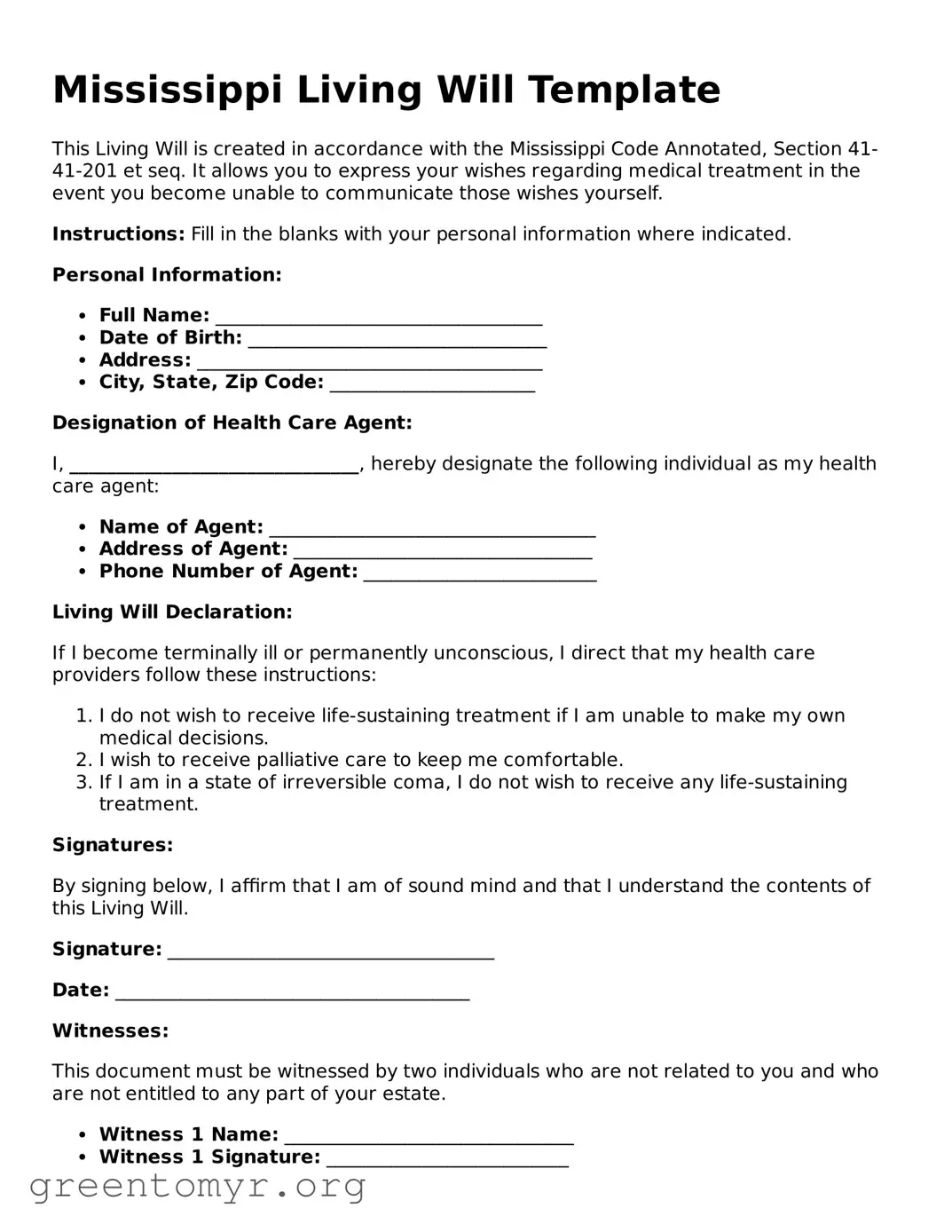
Mississippi Living Will Template
This Living Will is created in accordance with the Mississippi Code Annotated, Section 41-41-201 et seq. It allows you to express your wishes regarding medical treatment in the event you become unable to communicate those wishes yourself.
Instructions: Fill in the blanks with your personal information where indicated.
Personal Information:
Designation of Health Care Agent:
I, _______________________________, hereby designate the following individual as my health care agent:
Living Will Declaration:
If I become terminally ill or permanently unconscious, I direct that my health care providers follow these instructions:
Signatures:
By signing below, I affirm that I am of sound mind and that I understand the contents of this Living Will.
Signature: ___________________________________
Date: ______________________________________
Witnesses:
This document must be witnessed by two individuals who are not related to you and who are not entitled to any part of your estate.
| Fact Name | Details |
|---|---|
| Definition | A Mississippi Living Will is a legal document that allows individuals to express their wishes regarding medical treatment in the event they become unable to communicate those wishes themselves. |
| Governing Law | The Mississippi Living Will is governed by the Mississippi Code Annotated, Title 41, Chapter 41. |
| Eligibility | Any adult who is at least 18 years old and of sound mind can create a Living Will in Mississippi. |
| Witness Requirements | The document must be signed by the individual and witnessed by two individuals who are not related by blood or marriage and who will not benefit from the individual's estate. |
| Revocation | A Living Will can be revoked at any time by the individual, either verbally or in writing, as long as they are competent to do so. |
| Scope of Decisions | The Living Will typically addresses decisions about life-sustaining treatments, such as resuscitation, mechanical ventilation, and feeding tubes. |
| Health Care Proxy | While a Living Will outlines treatment preferences, it does not appoint a health care proxy. Individuals may choose to create a separate document for that purpose. |
| Legal Effect | Healthcare providers are required to honor the directives outlined in a Living Will, provided it meets all legal requirements. |
Completing a Mississippi Living Will form is an important step in expressing your healthcare preferences. After you fill out the form, it will be essential to share your wishes with your loved ones and healthcare providers to ensure that your decisions are respected when it matters most.
A Living Will is a legal document that allows you to express your wishes regarding medical treatment in the event that you become unable to communicate those wishes yourself. This document specifically addresses end-of-life care and outlines the types of medical interventions you do or do not want. In Mississippi, it is recognized under state law, giving it legal standing in medical situations.
Anyone over the age of 18 should consider creating a Living Will. It is especially important for individuals with chronic illnesses, those undergoing major surgeries, or anyone who wants to ensure their healthcare preferences are respected. Having this document in place can relieve family members from making difficult decisions during stressful times.
When drafting a Living Will, you should include specific instructions about your medical care preferences. Common elements to consider are:
Clearly stating your wishes can help ensure that your healthcare providers and loved ones understand your preferences.
Creating a Living Will in Mississippi involves a few straightforward steps:
Once completed, it’s wise to share copies with your healthcare provider and family members.
Yes, you can change or revoke your Living Will at any time, as long as you are mentally competent. To do so, you should create a new document that explicitly states your updated wishes or a statement that revokes the previous Living Will. Inform your healthcare provider and family members about any changes to ensure everyone is aware of your current preferences.
No, a Living Will and a Power of Attorney for Healthcare serve different purposes. A Living Will outlines your preferences for medical treatment, while a Power of Attorney for Healthcare designates someone to make healthcare decisions on your behalf if you are unable to do so. Many people choose to have both documents to ensure comprehensive planning for their healthcare needs.
Filling out a Mississippi Living Will form is an important step in planning for your future healthcare decisions. However, many individuals make mistakes that can lead to confusion or complications later on. Understanding these common errors can help ensure that your wishes are clearly communicated and respected.
One frequent mistake is failing to provide specific instructions regarding medical treatments. It’s essential to be clear about what types of life-sustaining treatments you want or do not want. Vague language can lead to misunderstandings among family members and healthcare providers. By being explicit about your preferences, you can help prevent any potential disputes.
Another common error is neglecting to sign and date the document properly. A Living Will must be signed in order to be valid. If the form is not dated, it can create uncertainty about when your wishes were documented. This can lead to complications if your healthcare decisions need to be made at a later date.
Additionally, some people forget to have their Living Will witnessed or notarized as required by Mississippi law. Without proper witnesses, the validity of the document may be questioned. It’s crucial to follow the legal requirements to ensure that your Living Will holds up when it’s needed most.
People also sometimes overlook the importance of discussing their Living Will with family members. While the document itself outlines your wishes, having conversations with loved ones can provide clarity and understanding. This dialogue can help ease any concerns they may have and ensure that everyone is on the same page regarding your healthcare preferences.
Finally, failing to review and update the Living Will regularly is a mistake that can have significant consequences. Life circumstances and personal beliefs can change over time, and it’s important to reflect those changes in your Living Will. Regularly revisiting the document ensures that it accurately represents your current wishes and intentions.
When preparing a Mississippi Living Will, it’s often helpful to consider additional documents that can support your healthcare decisions. These forms can provide clarity and ensure your wishes are respected. Below is a list of common documents that may be used alongside a Living Will.
Having these documents in place can help ensure that your healthcare wishes are clear and respected. It’s important to discuss these options with your loved ones and healthcare providers to make informed decisions that align with your values and preferences.
A Living Will is an important document that outlines your wishes regarding medical treatment in the event that you become unable to communicate. Here are nine other documents that serve similar purposes, each with its own unique focus:
When filling out the Mississippi Living Will form, it’s essential to follow certain guidelines to ensure your wishes are clearly communicated. Here’s a helpful list of dos and don’ts:
Understanding the Mississippi Living Will form is crucial for making informed decisions about your healthcare. Here are five common misconceptions about this important document.
This is not true. Anyone, regardless of age, can benefit from a Living Will. Unexpected medical situations can happen at any age, making it essential for everyone to have a plan in place.
While both documents deal with healthcare decisions, they serve different purposes. A Living Will outlines your wishes regarding medical treatment, while a Power of Attorney designates someone to make decisions on your behalf if you cannot.
This is a misconception. You can update or revoke your Living Will at any time, as long as you are mentally competent. Regularly reviewing your wishes is a good practice.
While healthcare providers generally respect Living Wills, they are not legally bound to do so in every circumstance. Understanding your rights and discussing your wishes with your healthcare team is important.
This is misleading. A Living Will can address various medical scenarios, including situations where you are unable to communicate your preferences due to illness or injury.
Clarifying these misconceptions can help ensure that your healthcare wishes are honored when it matters most. Take the time to educate yourself and create a Living Will that reflects your values and preferences.
Filling out a Mississippi Living Will form is an important step in ensuring that your healthcare wishes are respected in case you become unable to communicate them. Here are some key takeaways to consider:
By taking these steps, you can ensure that your healthcare preferences are known and honored, providing peace of mind for both you and your loved ones.