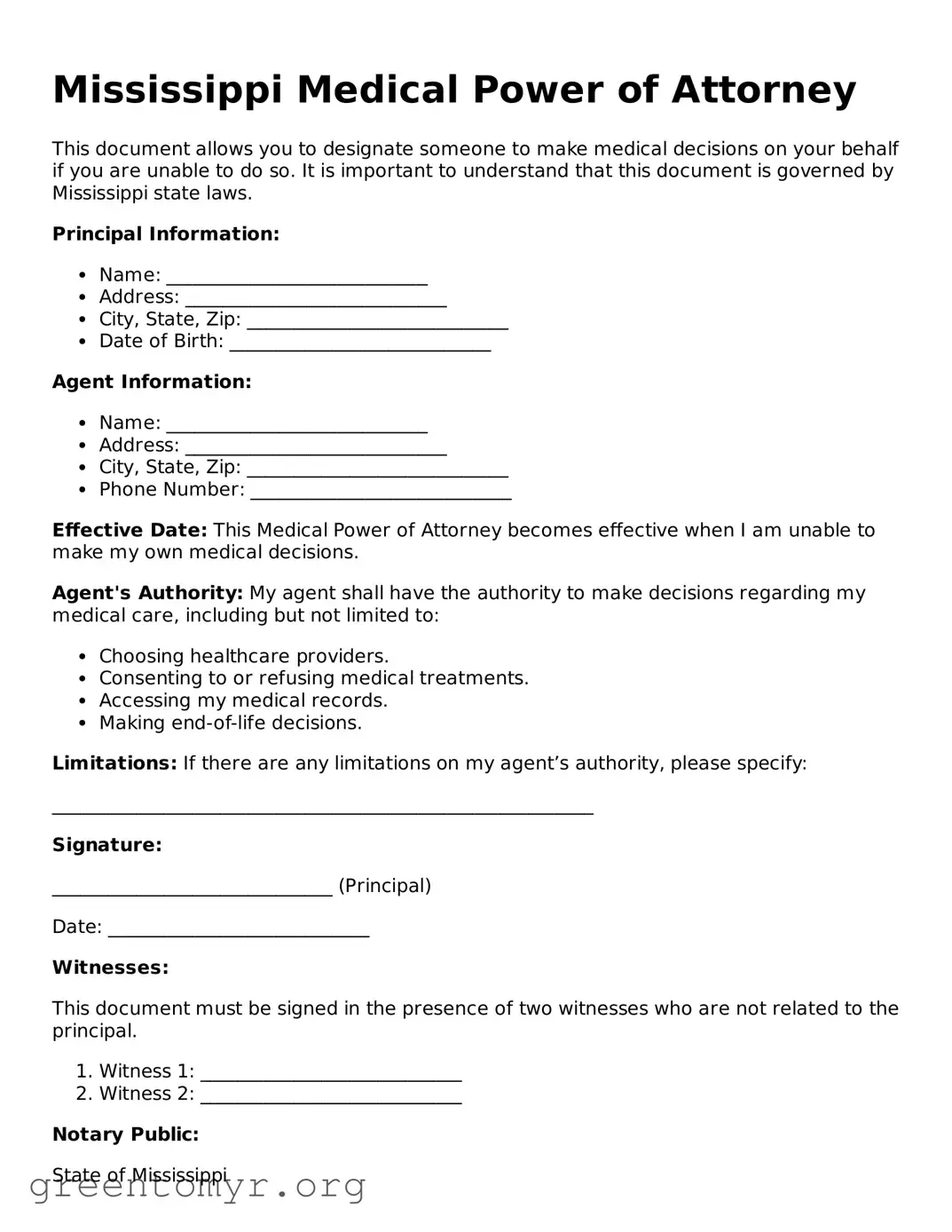
The Mississippi Medical Power of Attorney form serves as a crucial legal document that enables individuals to designate someone they trust to make medical decisions on their behalf in the event they become unable to do so. This form is essential for ensuring that personal health care preferences are respected, even when a person cannot communicate them directly. It allows the appointed agent, often a family member or close friend, to make decisions regarding medical treatment, surgical procedures, and end-of-life care. The document is particularly important in emergency situations or during prolonged illness when a patient may be incapacitated. Furthermore, the form must be completed according to Mississippi state laws to ensure its validity, which includes the requirement for the principal's signature and the presence of witnesses or a notary public. By clearly outlining an individual's wishes, the Mississippi Medical Power of Attorney form helps to alleviate the burden on loved ones during challenging times, while also providing peace of mind regarding medical care decisions.
Mississippi Medical Power of Attorney
This document allows you to designate someone to make medical decisions on your behalf if you are unable to do so. It is important to understand that this document is governed by Mississippi state laws.
Principal Information:
Agent Information:
Effective Date: This Medical Power of Attorney becomes effective when I am unable to make my own medical decisions.
Agent's Authority: My agent shall have the authority to make decisions regarding my medical care, including but not limited to:
Limitations: If there are any limitations on my agent’s authority, please specify:
__________________________________________________________
Signature:
______________________________ (Principal)
Date: ____________________________
Witnesses:
This document must be signed in the presence of two witnesses who are not related to the principal.
Notary Public:
State of Mississippi
County of ____________________________
Subscribed and sworn before me on this _____ day of __________, 20__.
______________________________ (Notary Public)
My commission expires: ____________________________
| Fact Name | Description |
|---|---|
| Definition | The Mississippi Medical Power of Attorney form allows individuals to designate another person to make medical decisions on their behalf if they become incapacitated. |
| Governing Law | This form is governed by the Mississippi Code Annotated, Title 41, Chapter 41. |
| Principal | The individual who creates the Medical Power of Attorney is referred to as the principal. |
| Agent | The person designated to make medical decisions is known as the agent or attorney-in-fact. |
| Signature Requirements | The form must be signed by the principal in the presence of two witnesses or a notary public. |
| Witness Eligibility | Witnesses must be at least 18 years old and cannot be the designated agent or related to the principal. |
| Revocation | The principal can revoke the Medical Power of Attorney at any time, as long as they are competent to do so. |
| Durability | This power of attorney is durable, meaning it remains in effect even if the principal becomes incapacitated. |
| Healthcare Decisions | The agent can make a wide range of healthcare decisions, including consent to or refusal of treatment. |
| Form Availability | The Mississippi Medical Power of Attorney form is available through various legal resources, including state government websites and legal aid organizations. |
Filling out the Mississippi Medical Power of Attorney form is a straightforward process. Once completed, this document will allow you to designate someone to make healthcare decisions on your behalf if you become unable to do so. Follow the steps below to ensure the form is filled out correctly.
A Medical Power of Attorney (MPOA) is a legal document that allows you to appoint someone to make healthcare decisions on your behalf if you become unable to do so. This person, known as your agent or proxy, will have the authority to make medical decisions based on your preferences and best interests.
In Mississippi, you can choose any competent adult to serve as your agent. This could be a family member, friend, or trusted individual. However, it is advisable to select someone who understands your values and wishes regarding medical treatment.
Your agent can make a variety of healthcare decisions, including:
It’s essential to communicate your preferences clearly to your agent to ensure they can act in accordance with your wishes.
To create an MPOA, follow these steps:
Once completed, keep the original document in a safe place and provide copies to your agent and healthcare providers.
Yes, you can revoke your MPOA at any time, as long as you are mentally competent. To do this, you should create a written notice stating that you are revoking the previous MPOA. Inform your agent and any healthcare providers about the revocation to ensure they are aware of the change.
While it is not legally required, having an MPOA is highly recommended. It ensures that your healthcare preferences are respected and that someone you trust can make decisions for you in case of an emergency. This can alleviate stress for your family during difficult times.
If you do not have an MPOA and become incapacitated, medical professionals may have to rely on state laws or a court-appointed guardian to make decisions on your behalf. This could lead to outcomes that may not align with your personal wishes or values.
Yes, you can include specific instructions regarding your healthcare preferences in your MPOA. This might cover your wishes about life support, organ donation, or other medical treatments. Clearly outlining your preferences can guide your agent in making decisions that reflect your values.
Creating a Medical Power of Attorney may involve minimal costs, especially if you choose to use online templates or forms. However, if you seek legal assistance, there may be fees for the attorney's services. It’s advisable to consider the importance of the document and choose the method that best suits your needs.
Filling out a Medical Power of Attorney form in Mississippi is an important step in ensuring your healthcare wishes are respected. However, many individuals make mistakes that can lead to complications down the road. One common error is failing to clearly identify the appointed agent. It is crucial to specify who will make medical decisions on your behalf. If the agent's name is vague or missing, healthcare providers may struggle to understand who is authorized to act for you.
Another frequent mistake is neglecting to discuss your wishes with the appointed agent. Simply designating someone as your agent does not guarantee they understand your preferences regarding medical treatment. It's essential to have an open conversation about your values and desires. This ensures that, in a time of crisis, your agent can make informed decisions that align with your beliefs.
Additionally, many people overlook the need for witnesses or notarization. In Mississippi, the law requires that the Medical Power of Attorney form be signed in the presence of two witnesses or notarized. Failing to meet these requirements can render the document invalid. Always check the specific guidelines to ensure your form is legally binding.
Lastly, individuals sometimes forget to update their Medical Power of Attorney as life circumstances change. Whether it’s a change in relationships or health status, it’s important to review and revise your document regularly. An outdated form can lead to confusion and may not reflect your current wishes. Keeping your Medical Power of Attorney up to date is vital for ensuring your healthcare decisions are honored.
When preparing a Mississippi Medical Power of Attorney, it is important to consider additional documents that can complement your healthcare planning. Each of these documents serves a specific purpose and can help ensure that your medical wishes are honored.
Having these documents in place can provide peace of mind and clarity for both you and your loved ones. It is essential to review and update them regularly to reflect your current wishes and circumstances.
The Medical Power of Attorney form is an important document that allows someone to make medical decisions on your behalf if you are unable to do so. There are several other documents that serve similar purposes. Here’s a list of those documents and how they relate to a Medical Power of Attorney:
When filling out the Mississippi Medical Power of Attorney form, it is important to be careful and thorough. Here are some guidelines to help you navigate this process effectively.
Many people have misunderstandings about the Mississippi Medical Power of Attorney form. These misconceptions can lead to confusion and poor decision-making during critical times. Here are five common misconceptions:
Many believe that a Medical Power of Attorney is only relevant when someone is nearing death. In reality, this document can be used any time a person is unable to make their own medical decisions, regardless of the situation.
Some think that a lawyer must draft the Medical Power of Attorney. However, individuals can create this document themselves, as long as they follow the state's guidelines. It’s important to ensure that the form is properly filled out and witnessed.
While many people choose family members as their agents, this is not a requirement. Anyone the principal trusts to make medical decisions can serve in this role, including friends or trusted colleagues.
Some individuals believe that once a Medical Power of Attorney is signed, it cannot be altered. In fact, the principal can revoke or modify the document at any time, as long as they are mentally competent to do so.
There is a common belief that agents have complete freedom to make decisions without considering the principal's wishes. However, the agent must act in accordance with the principal's preferences, as outlined in the document.
Understanding these misconceptions can help individuals make informed choices about their medical decisions and ensure that their wishes are respected.
When considering a Medical Power of Attorney in Mississippi, it’s important to understand the key aspects of the form and its implications. Here are nine essential takeaways:
Understanding these key points can help you navigate the process of creating and utilizing a Medical Power of Attorney effectively.