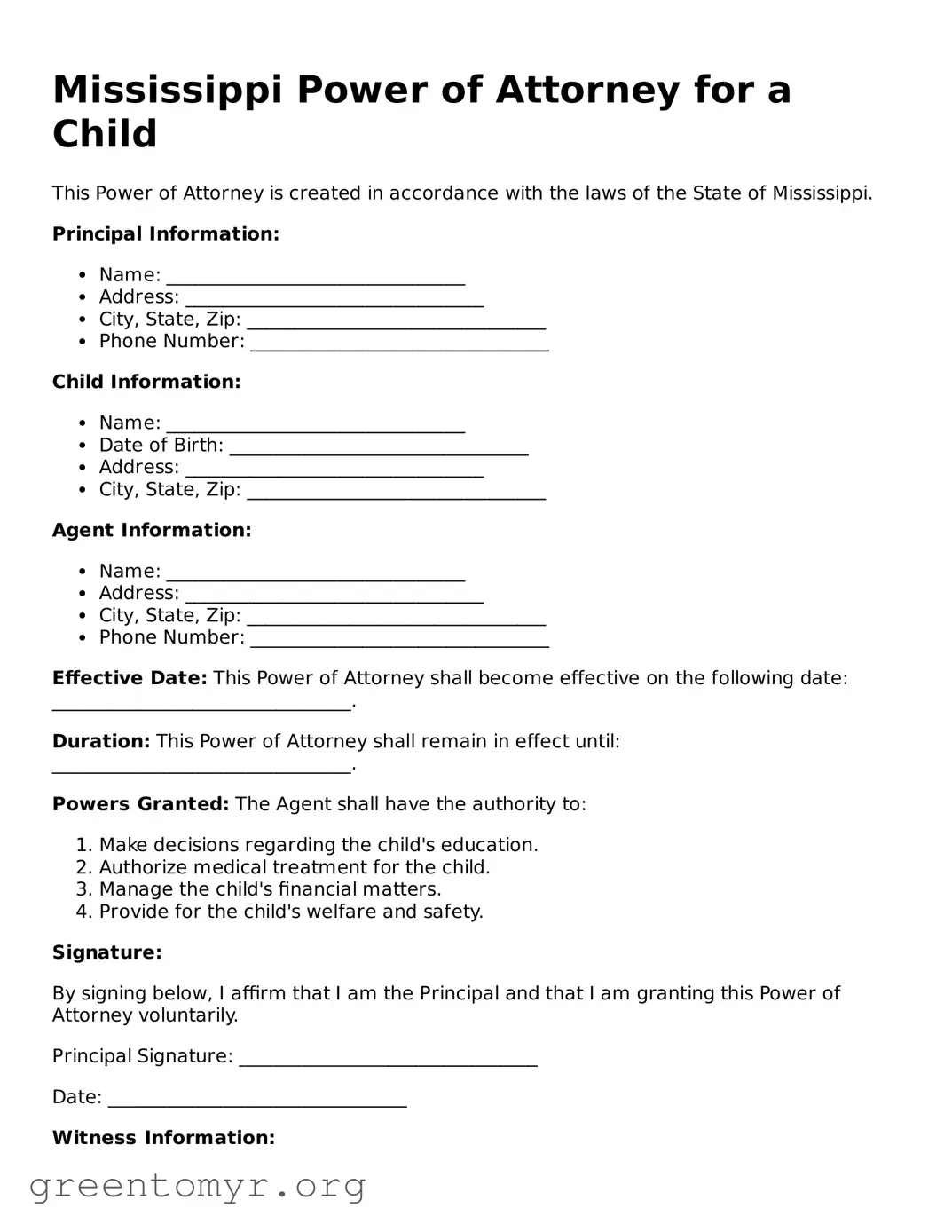
The Mississippi Power of Attorney for a Child form serves as a crucial legal document that empowers a designated individual to make decisions on behalf of a minor. This form is particularly beneficial for parents or guardians who may need to delegate authority temporarily due to various circumstances, such as travel, medical emergencies, or other personal commitments. By completing this form, a parent can grant specific powers, which may include the ability to make healthcare decisions, manage educational needs, or handle day-to-day activities for the child. It is essential to ensure that the form is filled out accurately and includes all necessary details to avoid any potential misunderstandings. The document should clearly identify both the child and the appointed agent, outlining the scope of authority granted. Additionally, the Mississippi Power of Attorney for a Child form requires the signatures of both the parent and a witness, ensuring that the arrangement is legally binding and recognized by authorities. Understanding the importance and implications of this form can provide peace of mind for parents while ensuring that their child’s needs are met in their absence.
Mississippi Power of Attorney for a Child
This Power of Attorney is created in accordance with the laws of the State of Mississippi.
Principal Information:
Child Information:
Agent Information:
Effective Date: This Power of Attorney shall become effective on the following date: ________________________________.
Duration: This Power of Attorney shall remain in effect until: ________________________________.
Powers Granted: The Agent shall have the authority to:
Signature:
By signing below, I affirm that I am the Principal and that I am granting this Power of Attorney voluntarily.
Principal Signature: ________________________________
Date: ________________________________
Witness Information:
Notary Public:
State of Mississippi
County of ________________________________
On this ____ day of ____________, 20___, before me, a Notary Public, personally appeared ________________________________, known to me to be the person whose name is subscribed to the foregoing instrument, and acknowledged that he/she executed the same.
Notary Signature: ________________________________
My commission expires: ________________________________
| Fact Name | Description |
|---|---|
| Definition | The Mississippi Power of Attorney for a Child form allows a parent or guardian to grant authority to another adult to make decisions for their child. |
| Governing Law | This form is governed by Mississippi Code Annotated § 93-13-1 et seq. |
| Duration | The power of attorney can be effective for a specified period or until revoked by the parent or guardian. |
| Eligibility | Any parent or legal guardian of a child can execute this form to designate another adult. |
| Decision-Making Authority | The designated adult can make decisions regarding the child's education, healthcare, and general welfare. |
| Limitations | The power of attorney does not allow the designated adult to make decisions about adoption or consent to marriage. |
| Revocation | A parent or guardian can revoke the power of attorney at any time by providing written notice. |
| Witness Requirements | The form must be signed in the presence of a notary public or two witnesses who are not related to the child. |
| Form Availability | The form can be obtained from legal aid organizations, online legal resources, or state government websites. |
| Importance | This form is crucial for ensuring that a child’s needs are met when parents or guardians are unavailable. |
Filling out the Mississippi Power of Attorney for a Child form is a straightforward process. It is essential to ensure that all information is accurate and complete to avoid any potential issues. Follow these steps carefully to fill out the form correctly.
Once you have filled out and signed the form, make copies for your records. It is advisable to provide a copy to the designated agent and keep one with the child’s important documents. This ensures that the power of attorney is readily accessible when needed.
A Mississippi Power of Attorney for a Child is a legal document that allows a parent or legal guardian to designate another adult to make decisions on behalf of their child. This can include decisions related to education, health care, and general welfare while the parent is unavailable.
The agent can be any responsible adult, such as a relative, friend, or neighbor. It is important to choose someone trustworthy who is willing to take on the responsibilities involved in caring for the child.
The Power of Attorney for a Child typically remains in effect until the specified expiration date in the document or until the parent or guardian revokes it. It can also end if the child reaches a certain age or if the parent returns to care for the child.
The agent can make a variety of decisions, including:
Yes, the document must be signed in the presence of a notary public to be legally valid. This adds an extra layer of authenticity and helps prevent any disputes regarding its legitimacy.
Yes, you can revoke the Power of Attorney at any time as long as you are of sound mind. It is advisable to do so in writing and notify the agent and any relevant institutions, such as schools or medical providers.
No, a Power of Attorney for a Child is temporary and allows for specific decision-making authority. Guardianship is a more permanent arrangement that involves a court process to appoint someone to care for a child.
Key elements to include are:
Forms can often be found online through legal websites, or you may consult with an attorney to create a customized document that meets your needs. Local government offices may also provide templates.
While legal advice is not required, it can be beneficial to ensure that the document meets all legal requirements and adequately addresses your specific situation. Consulting with an attorney can provide peace of mind and clarity.
Filling out the Mississippi Power of Attorney for a Child form can be a straightforward process, but mistakes can lead to complications. One common error occurs when individuals fail to include all necessary information about the child. It is essential to provide the child’s full name, date of birth, and any other identifying details. Omitting this information can create confusion regarding the child’s identity and may invalidate the document.
Another frequent mistake is not specifying the powers granted to the agent. The form allows for a range of responsibilities, such as making medical decisions or managing educational needs. If these powers are not clearly outlined, the agent may not have the authority to act in critical situations. This lack of clarity can hinder the agent’s ability to make timely decisions on behalf of the child.
People often overlook the importance of signatures. Both the parent or guardian granting the power and the agent must sign the document. Failing to obtain the necessary signatures can render the form ineffective. Additionally, witnesses may also be required, depending on the specific circumstances. Not adhering to these requirements can lead to legal challenges down the line.
Another mistake is neglecting to date the document. A Power of Attorney must be current to be valid. If the date is missing, it can raise questions about when the authority was granted. This can create complications if there are disputes regarding the timing of decisions made by the agent.
People sometimes forget to consider the duration of the Power of Attorney. It is important to specify how long the agent will have authority over the child. Without a clear end date, the agent may continue to have power longer than intended, leading to potential conflicts. Clarity on this point protects both the child and the agent.
Finally, many individuals do not keep copies of the completed form. After filling out the Power of Attorney, it is crucial to retain a copy for personal records. This ensures that both the parent and the agent have access to the document when needed. Losing track of the form can complicate matters, especially in urgent situations.
When creating a Power of Attorney for a Child in Mississippi, several other forms and documents may be necessary to ensure comprehensive legal authority and protection for the child. Below is a list of commonly used documents that can accompany the Power of Attorney for a Child form.
Each of these documents plays a vital role in ensuring that the Power of Attorney for a Child is effective and legally sound. Together, they create a framework that supports the child's well-being and ensures that the designated agent can act in the child's best interests.
The Power of Attorney for a Child form allows a parent or guardian to designate another individual to make decisions on behalf of a child. Several other documents serve similar purposes in different contexts. Here are seven documents that share similarities:
When filling out the Mississippi Power of Attorney for a Child form, it is important to follow specific guidelines to ensure the document is completed correctly. Here is a list of things you should and shouldn't do:
Following these guidelines will help ensure that the Power of Attorney for a Child form is valid and effective.
The Mississippi Power of Attorney for a Child form is an important legal document that allows a parent or legal guardian to designate another individual to make decisions on behalf of their child. However, several misconceptions surround this form that can lead to confusion. Below are some common misunderstandings:
Understanding these misconceptions can help parents make informed decisions about the Power of Attorney for a Child form, ensuring that their child's needs are met while they are unable to provide direct care.
When filling out and using the Mississippi Power of Attorney for a Child form, keep these key takeaways in mind: