In the state of Mississippi, the Transfer-on-Death Deed (TODD) serves as a vital tool for individuals looking to streamline the process of transferring real estate upon their death. This legal instrument allows property owners to designate beneficiaries who will automatically receive ownership of their property without the need for probate, simplifying what can often be a complex and lengthy process. By completing a TODD, individuals can maintain full control of their property during their lifetime, with the transfer occurring seamlessly upon their passing. The form requires specific information, including the legal description of the property and the names of the beneficiaries, ensuring clarity and preventing disputes. Furthermore, the TODD must be executed and recorded according to Mississippi law to be valid, making it essential for property owners to understand the requirements and implications of this deed. As estate planning becomes increasingly important in ensuring that one’s wishes are honored after death, the Transfer-on-Death Deed stands out as an accessible option for many Mississippians seeking to simplify their estate management.
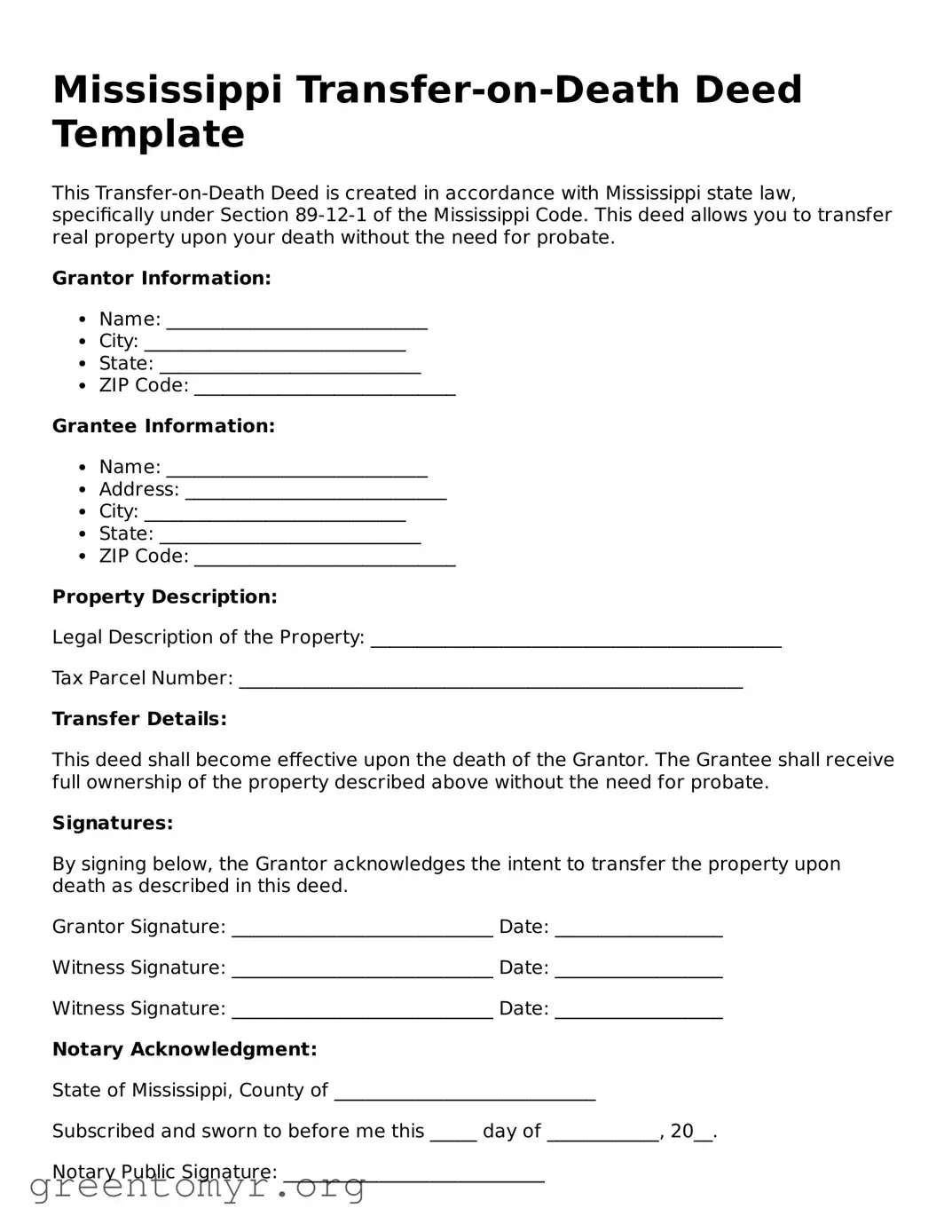
Mississippi Transfer-on-Death Deed Template
This Transfer-on-Death Deed is created in accordance with Mississippi state law, specifically under Section 89-12-1 of the Mississippi Code. This deed allows you to transfer real property upon your death without the need for probate.
Grantor Information:
Grantee Information:
Property Description:
Legal Description of the Property: ____________________________________________
Tax Parcel Number: ______________________________________________________
Transfer Details:
This deed shall become effective upon the death of the Grantor. The Grantee shall receive full ownership of the property described above without the need for probate.
Signatures:
By signing below, the Grantor acknowledges the intent to transfer the property upon death as described in this deed.
Grantor Signature: ____________________________ Date: __________________
Witness Signature: ____________________________ Date: __________________
Witness Signature: ____________________________ Date: __________________
Notary Acknowledgment:
State of Mississippi, County of ____________________________
Subscribed and sworn to before me this _____ day of ____________, 20__.
Notary Public Signature: ____________________________
My Commission Expires: ____________________________
| Fact Name | Details |
|---|---|
| Definition | A Transfer-on-Death Deed allows property owners in Mississippi to transfer real estate to beneficiaries upon their death without going through probate. |
| Governing Law | The Mississippi Transfer-on-Death Deed is governed by Mississippi Code Annotated § 91-30-1 through § 91-30-5. |
| Eligibility | Any individual who owns real property in Mississippi can create a Transfer-on-Death Deed. |
| Revocation | The deed can be revoked at any time before the death of the property owner by filing a revocation document. |
| Execution Requirements | The deed must be signed by the property owner and notarized to be valid. |
| Beneficiary Designation | Property owners can designate one or more beneficiaries, and they can also specify alternate beneficiaries. |
After obtaining the Mississippi Transfer-on-Death Deed form, it is important to complete it accurately to ensure that the transfer of property is executed as intended. This form allows for the transfer of real property to designated beneficiaries upon the death of the owner. Follow the steps below to fill out the form correctly.
A Transfer-on-Death (TOD) Deed in Mississippi allows property owners to designate a beneficiary who will automatically receive their property upon the owner's death. This deed provides a straightforward way to transfer real estate without going through the probate process. It is particularly useful for individuals who wish to ensure their property passes directly to their chosen heirs, minimizing complications and potential disputes after their passing.
To create a Transfer-on-Death Deed in Mississippi, follow these steps:
Yes, a Transfer-on-Death Deed can be revoked in Mississippi. To do so, the property owner must create a new deed that explicitly states the revocation or file a formal notice of revocation with the county land records office. It is important to ensure that the revocation is properly documented to avoid any confusion or disputes regarding the property transfer in the future.
While a Transfer-on-Death Deed offers many benefits, there are some important considerations to keep in mind:
Filling out a Transfer-on-Death (TOD) Deed in Mississippi can seem straightforward, but many individuals stumble over common pitfalls. One frequent mistake is failing to provide accurate property descriptions. A vague or incomplete description can lead to confusion or disputes later. It's essential to include the full legal description of the property, not just the address. This clarity ensures that the intended property is transferred without complications.
Another common error involves not signing the deed properly. Mississippi law requires that the deed be signed in the presence of a notary public. Neglecting this step can render the deed invalid. Ensuring that all signatures are correctly placed and that the notary’s acknowledgment is included is crucial for the deed’s legitimacy.
People often overlook the importance of naming beneficiaries clearly. If a beneficiary is not named or is ambiguously identified, it can lead to disputes among potential heirs. Be specific and clear when designating who will receive the property upon the owner’s passing. This specificity helps avoid potential family conflicts and legal challenges.
In addition to naming beneficiaries, many individuals forget to consider contingencies. What happens if the primary beneficiary predeceases the property owner? It’s vital to include alternative beneficiaries to ensure that the property is still transferred according to the owner’s wishes. This foresight can prevent complications and ensure a smoother transition.
Another mistake is neglecting to record the deed properly. After completing the TOD Deed, it must be filed with the appropriate county office. Failing to do so can mean the deed is not recognized, potentially leaving the property in limbo. Recording the deed promptly ensures that the transfer is legally recognized and that the property is protected.
Many people also underestimate the significance of understanding the implications of a TOD Deed. While it allows for a straightforward transfer of property, it does not eliminate the need for a will or other estate planning documents. Relying solely on a TOD Deed can lead to gaps in an overall estate plan, which can complicate matters for loved ones later on.
Lastly, individuals sometimes neglect to review their TOD Deed periodically. Life changes, such as marriage, divorce, or the birth of a child, may necessitate updates to the deed. Regularly reviewing and, if necessary, revising the deed ensures that it reflects current intentions and family dynamics, thus avoiding potential future disputes.
The Mississippi Transfer-on-Death Deed form allows property owners to transfer their real estate to beneficiaries upon their death, without the need for probate. When using this form, several other documents often accompany it to ensure a smooth transition of property ownership. Below are four commonly used forms and documents that can enhance the effectiveness of the Transfer-on-Death Deed.
Utilizing these documents alongside the Mississippi Transfer-on-Death Deed can provide clarity and security for property owners and their beneficiaries. It is essential to consider each form's purpose and how they interconnect to ensure a seamless transfer of assets.
When filling out the Mississippi Transfer-on-Death Deed form, it’s important to follow certain guidelines to ensure everything is completed correctly. Here are four things to do and not do:
Understanding the Mississippi Transfer-on-Death Deed form is crucial for effective estate planning. Here are five common misconceptions about this legal tool:
Being informed about these misconceptions can help you make better decisions regarding your estate planning needs.
When filling out and using the Mississippi Transfer-on-Death Deed form, consider the following key takeaways: