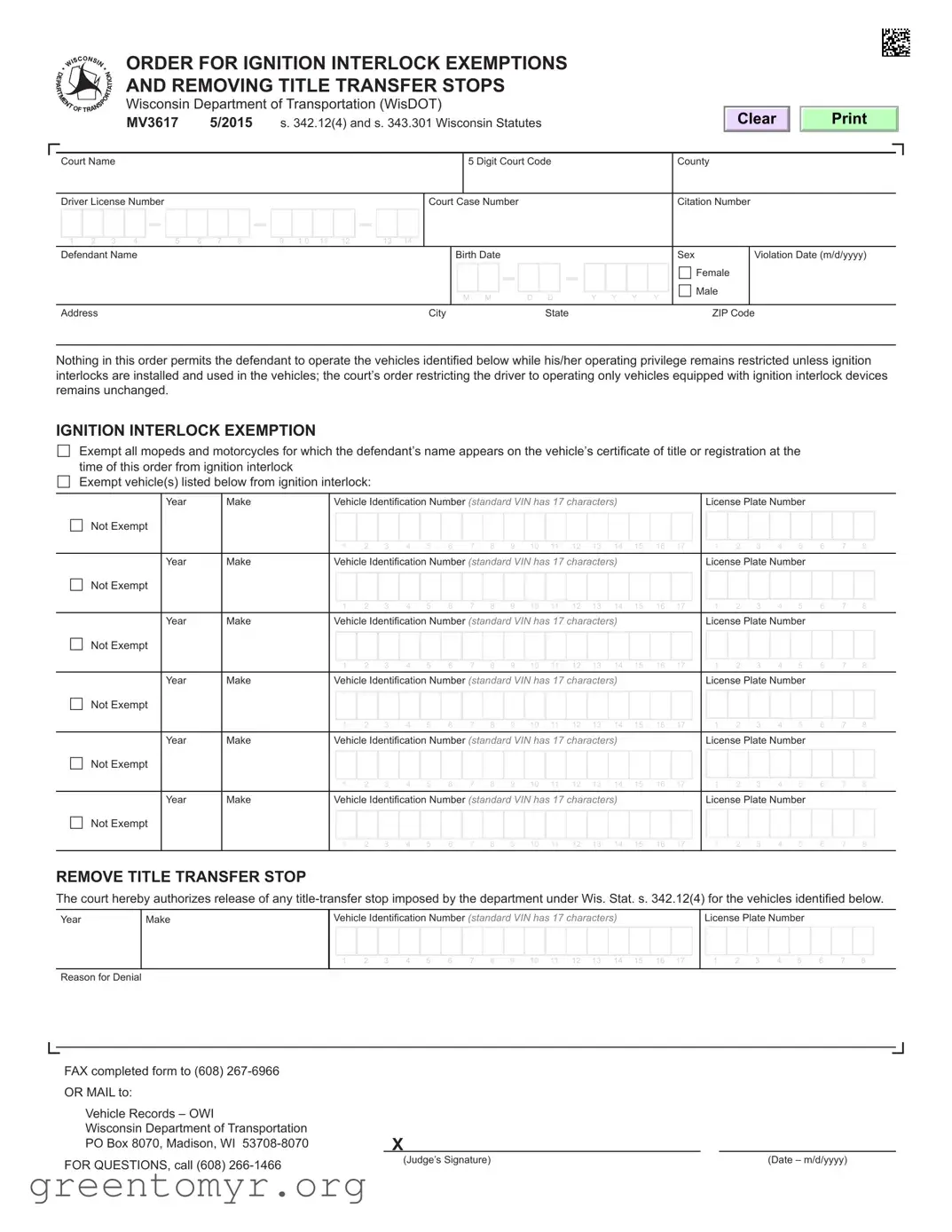
The MV3617 form plays a crucial role in the legal landscape of Wisconsin, specifically concerning the regulation of ignition interlock devices and the management of vehicle title transfers. This form, officially titled "Order for Ignition Interlock Exemptions and Removing Title Transfer Stops," is utilized by the Wisconsin Department of Transportation (WisDOT) and is governed by specific statutes. It enables courts to grant exemptions from ignition interlock requirements for certain vehicles, including mopeds and motorcycles, as long as they are registered in the defendant's name. Additionally, the form allows for the removal of title transfer stops imposed by the department, facilitating the transfer of vehicle ownership. Essential details captured on the form include the court's name, the defendant's information, and specific vehicle identifiers such as the Vehicle Identification Number (VIN) and license plate numbers. The form emphasizes that even with exemptions, the court's order restricting the operation of vehicles equipped with ignition interlocks remains in effect. Thus, the MV3617 form serves as a vital tool in balancing public safety concerns with individual rights and responsibilities in the context of driving privileges.

ORDER FOR IGNITION INTERLOCK EXEMPTIONS AND REMOVING TITLE TRANSFER STOPS
Wisconsin Department of Transportation (WisDOT)
MV3617 |
5/2015 |
s. 342.12(4) and s. 343.301 Wisconsin Statutes |
Clear
|
Court Name |
|
|
|
|
|
|
|
|
|
|
|
|
|
|
|
|
|
|
|
|
|
|
|
|
5 Digit Court Code |
|
|
|
|
|
|
County |
|
|||||||||||
|
|
|
|
|
|
|
|
|
|
|
|
|
|
|
|
|
|
|
|
|
|
|
|
|
|
|
|
|
|
|
|
||||||||||||||
|
|
|
|
|
|
|
|
|
|
|
|
|
|
|
|
|
|
|
|
|
|
|
|
|
|
|
|
|
|
|
|
|
|
|
|
|
|
|
|
|
|
|
|
|
|
|
Driver License Number |
|
|
|
|
|
|
|
|
|
|
|
|
|
|
|
|
|
Court Case Number |
|
|
|
|
|
|
|
|
|
|
Citation Number |
|
||||||||||||||
|
|
|
|
|
|
|
|
|
|
|
|
|
|
|
|
|
|
|
|
|
|
|
|
|
|
|
|
|
|
|
|
|
|
|
|
|
|
|
|
|
|
|
|
|
|
|
|
|
|
|
|
|
|
|
|
|
|
|
|
|
|
|
|
|
|
|
|
|
|
|
|
|
|
|
|
|
|
|
|
|
|
|
|
|
|
|
|
|
|
||
|
1 |
2 |
3 |
4 |
|
|
|
5 |
6 |
7 |
8 |
9 |
1 0 |
11 |
12 |
13 |
14 |
|
|
|
|
|
|
|
|
|
|
|
|
|
|
|
|
|
|
|
|
|
|||||||
|
Defendant Name |
|
|
|
|
|
|
|
|
|
|
|
|
|
|
|
|
|
|
Birth Date |
|
|
|
|
|
|
|
|
|
|
Sex |
|
Violation Date (m/d/yyyy) |
||||||||||||
|
|
|
|
|
|
|
|
|
|
|
|
|
|
|
|
|
|
|
|
|
|
|
|
|
|
|
|
|
|
|
|
|
|
|
|
|
|
|
|
|
|
|
Female |
|
|
|
|
|
|
|
|
|
|
|
|
|
|
|
|
|
|
|
|
|
|
|
|
|
|
|
|
|
|
|
|
|
|
|
|
|
|
|
|
|
|
Male |
|
|
|||
|
|
|
|
|
|
|
|
|
|
|
|
|
|
|
|
|
|
|
|
|
|
|
|
|
|
|
|
M M |
D D |
|
Y Y Y Y |
|
|
||||||||||||
|
Address |
|
|
|
|
|
|
|
|
|
|
|
|
|
|
|
|
|
|
|
|
|
|
City |
|
State |
|
|
|
|
|
|
ZIP Code |
||||||||||||
Nothing in this order permits the defendant to operate the vehicles identified below while his/her operating privilege remains restricted unless ignition interlocks are installed and used in the vehicles; the court’s order restricting the driver to operating only vehicles equipped with ignition interlock devices remains unchanged.
IGNITION INTERLOCK EXEMPTION
Exempt all mopeds and motorcycles for which the defendant’s name appears on the vehicle’s certificate of title or registration at the
time of this order from ignition interlock
Exempt vehicle(s) listed below from ignition interlock:
|
Year |
Make |
Vehicle Identification Number (standard VIN has 17 characters) |
|
|
|
|
License Plate Number |
|
|
|
|
|||||||||||||||||||
Not Exempt |
|
|
|
|
|
|
|
|
|
|
|
|
|
|
|
|
|
|
|
|
|
|
|
|
|
|
|
|
|
|
|
|
|
|
|
|
|
|
|
|
|
|
|
|
|
|
|
|
|
|
|
|
|
|
|
|
|
|
|
|
|||
|
|
|
|
|
|
|
|
|
|
|
|
|
|
|
|
|
|
|
|
|
|
|
|
|
|
|
|
|
|
|
|
|
|
|
|
|
|
|
|
|
|
|
|
|
|
|
|
|
|
|
|
|
|
|
|
|
|
|
|
|
|
|
|
|
|
|
|
1 |
2 |
3 |
4 |
5 |
6 |
7 |
8 |
9 |
10 |
11 |
12 |
13 |
14 |
15 |
16 |
17 |
|
|
1 2 3 4 5 |
6 |
7 |
8 |
|
||||
|
Year |
Make |
Vehicle Identification Number (standard VIN has 17 characters) |
|
|
|
|
License Plate Number |
|
|
|
|
|||||||||||||||||||
Not Exempt |
|
|
|
|
|
|
|
|
|
|
|
|
|
|
|
|
|
|
|
|
|
|
|
|
|
|
|
|
|
|
|
|
|
|
|
|
|
|
|
|
|
|
|
|
|
|
|
|
|
|
|
|
|
|
|
|
|
|
|
|
|||
|
|
|
|
|
|
|
|
|
|
|
|
|
|
|
|
|
|
|
|
|
|
|
|
|
|
|
|
|
|
|
|
|
|
|
|
|
|
|
|
|
|
|
|
|
|
|
|
|
|
|
|
|
|
|
|
|
|
|
|
|
|
|
|
|
|
|
|
1 |
2 |
3 |
4 |
5 |
6 |
7 |
8 |
9 |
10 |
11 |
12 |
13 |
14 |
15 |
16 |
17 |
|
|
1 2 3 4 5 |
6 |
7 |
8 |
|
||||
|
Year |
Make |
Vehicle Identification Number (standard VIN has 17 characters) |
|
|
|
|
License Plate Number |
|
|
|
|
|||||||||||||||||||
Not Exempt |
|
|
|
|
|
|
|
|
|
|
|
|
|
|
|
|
|
|
|
|
|
|
|
|
|
|
|
|
|
|
|
|
|
|
|
|
|
|
|
|
|
|
|
|
|
|
|
|
|
|
|
|
|
|
|
|
|
|
|
|
|||
|
|
|
|
|
|
|
|
|
|
|
|
|
|
|
|
|
|
|
|
|
|
|
|
|
|
|
|
|
|
|
|
|
|
|
|
|
|
|
|
|
|
|
|
|
|
|
|
|
|
|
|
|
|
|
|
|
|
|
|
|
|
|
|
|
|
|
|
1 |
2 |
3 |
4 |
5 |
6 |
7 |
8 |
9 |
10 |
11 |
12 |
13 |
14 |
15 |
16 |
17 |
|
|
1 2 3 4 5 |
6 |
7 |
8 |
|
||||
|
Year |
Make |
Vehicle Identification Number (standard VIN has 17 characters) |
|
|
|
|
License Plate Number |
|
|
|
|
|||||||||||||||||||
Not Exempt |
|
|
|
|
|
|
|
|
|
|
|
|
|
|
|
|
|
|
|
|
|
|
|
|
|
|
|
|
|
|
|
|
|
|
|
|
|
|
|
|
|
|
|
|
|
|
|
|
|
|
|
|
|
|
|
|
|
|
|
|
|||
|
|
|
|
|
|
|
|
|
|
|
|
|
|
|
|
|
|
|
|
|
|
|
|
|
|
|
|
|
|
|
|
|
|
|
|
|
|
|
|
|
|
|
|
|
|
|
|
|
|
|
|
|
|
|
|
|
|
|
|
|
|
|
|
|
|
|
|
1 |
2 |
3 |
4 |
5 |
6 |
7 |
8 |
9 |
10 |
11 |
12 |
13 |
14 |
15 |
16 |
17 |
|
|
1 2 3 4 5 |
6 |
7 |
8 |
|
||||
|
Year |
Make |
Vehicle Identification Number (standard VIN has 17 characters) |
|
|
|
|
License Plate Number |
|
|
|
|
|||||||||||||||||||
Not Exempt |
|
|
|
|
|
|
|
|
|
|
|
|
|
|
|
|
|
|
|
|
|
|
|
|
|
|
|
|
|
|
|
|
|
|
|
|
|
|
|
|
|
|
|
|
|
|
|
|
|
|
|
|
|
|
|
|
|
|
|
|
|||
|
|
|
|
|
|
|
|
|
|
|
|
|
|
|
|
|
|
|
|
|
|
|
|
|
|
|
|
|
|
|
|
|
|
|
|
|
|
|
|
|
|
|
|
|
|
|
|
|
|
|
|
|
|
|
|
|
|
|
|
|
|
|
|
|
|
|
|
1 |
2 |
3 |
4 |
5 |
6 |
7 |
8 |
9 |
10 |
11 |
12 |
13 |
14 |
15 |
16 |
17 |
|
|
1 2 3 4 5 |
6 |
7 |
8 |
|
||||
|
Year |
Make |
Vehicle Identification Number (standard VIN has 17 characters) |
|
|
|
|
License Plate Number |
|
|
|
|
|||||||||||||||||||
Not Exempt |
|
|
|
|
|
|
|
|
|
|
|
|
|
|
|
|
|
|
|
|
|
|
|
|
|
|
|
|
|
|
|
|
|
|
|
|
|
|
|
|
|
|
|
|
|
|
|
|
|
|
|
|
|
|
|
|
|
|
|
|
|||
|
|
|
|
|
|
|
|
|
|
|
|
|
|
|
|
|
|
|
|
|
|
|
|
|
|
|
|
|
|
|
|
|
|
|
|
|
|
|
|
|
|
|
|
|
|
|
|
|
|
|
|
|
|
|
|
|
|
|
|
|
|
|
|
|
|
|
|
1 |
2 |
3 |
4 |
5 |
6 |
7 |
8 |
9 |
10 |
11 |
12 |
13 |
14 |
15 |
16 |
17 |
|
|
1 2 3 4 5 |
6 |
7 |
8 |
|
||||
REMOVE TITLE TRANSFER STOP
The court hereby authorizes release of any
Year
Make
Vehicle Identification Number (standard VIN has 17 characters)
|
|
|
|
|
|
|
|
|
|
|
|
|
|
|
|
|
1 |
2 |
3 |
4 |
5 |
6 |
7 |
8 |
9 |
10 |
11 |
12 |
13 |
14 |
15 |
16 |
17 |
License Plate Number
|
|
|
|
|
|
|
|
1 |
2 |
3 |
4 |
5 |
6 |
7 |
8 |
Reason for Denial
FAX completed form to (608)
OR MAIL to:
Vehicle Records – OWI
Wisconsin Department of Transportation
PO Box 8070, Madison, WI
X |
|
|
FOR QUESTIONS, call (608) |
(Judge’s Signature) |
(Date – m/d/yyyy) |
|
|
| Fact Name | Details |
|---|---|
| Form Title | ORDER FOR IGNITION INTERLOCK EXEMPTIONS AND REMOVING TITLE TRANSFER STOPS |
| Form Number | MV3617 |
| Issuing Authority | Wisconsin Department of Transportation (WisDOT) |
| Last Updated | May 2015 |
| Governing Laws | Wisconsin Statutes s. 342.12(4) and s. 343.301 |
| Purpose | This form allows for exemptions from ignition interlock requirements and removes title transfer stops. |
| Defendant Restrictions | Defendants must still have ignition interlocks installed in vehicles while operating privileges are restricted. |
| Exemption Options | Defendants can request exemptions for mopeds, motorcycles, and specific vehicles. |
| Submission Methods | Completed forms can be faxed or mailed to the Vehicle Records – OWI at WisDOT. |
Completing the MV3617 form is an important step in the process of managing ignition interlock exemptions and title transfer stops. Once you have filled out the form correctly, you will need to submit it to the appropriate department for processing. Follow these steps to ensure you complete the form accurately.
The MV3617 form is an official document from the Wisconsin Department of Transportation. It is primarily used to request exemptions from ignition interlock requirements for specific vehicles. Additionally, it can be utilized to remove title transfer stops imposed under certain statutes. This form is essential for individuals seeking to navigate restrictions related to their driving privileges.
Individuals who have been ordered by a court to install ignition interlock devices in their vehicles may need to complete this form. It is particularly relevant for those who wish to exempt certain vehicles, such as mopeds or motorcycles, from the ignition interlock requirement. Furthermore, if someone has a title transfer stop on their vehicle, they may also need to use this form to request its removal.
The form requires detailed information, including:
Accurate information is crucial for processing the request efficiently.
The completed MV3617 form can be submitted in two ways. You can either fax it to the number provided on the form, which is (608) 267-6966, or mail it to the Vehicle Records – OWI at the Wisconsin Department of Transportation, PO Box 8070, Madison, WI 53708-8070. Choose the method that is most convenient for you.
Once the form is submitted, it will be reviewed by the appropriate department. If approved, the court will issue an order that reflects the exemptions or the removal of title transfer stops. It’s important to keep a copy of the submitted form for your records, as this will help in tracking the progress of your request.
If your request is denied, you may have the option to appeal the decision. The specific process for appealing will depend on the court’s guidelines and the reason for the denial. Generally, it is advisable to consult with a legal professional to understand your options and the best course of action to take.
Typically, there are no fees directly associated with submitting the MV3617 form itself. However, if there are any additional legal proceedings or appeals required, those may incur costs. It is wise to check with the court or legal counsel for any potential fees that might arise in your specific situation.
For more information about the MV3617 form, you can visit the Wisconsin Department of Transportation's official website. Additionally, you can contact their office directly at (608) 266-1466 for any questions or clarifications you may need regarding the form and its processes.
Completing the MV3617 form can be a straightforward process, but many individuals make common mistakes that can lead to delays or complications. One prevalent error is failing to provide complete information in the required fields. For instance, leaving out the court name or court code can hinder the processing of the form, as these details are essential for proper identification of the case.
Another mistake often seen is incorrect formatting of the Driver License Number or Vehicle Identification Number (VIN). The VIN should consist of exactly 17 characters. If someone mistakenly enters fewer or more characters, it can cause confusion and result in a rejection of the form. It’s crucial to double-check these numbers to ensure accuracy.
Many people also overlook the importance of marking the correct options in the exemption section. For instance, failing to check the box for whether all mopeds and motorcycles are exempt can lead to misunderstandings about what vehicles are subject to ignition interlock requirements. Clear choices must be made to avoid any ambiguity.
Additionally, some individuals neglect to provide the complete address, including the city, state, and ZIP code. This information is vital for correspondence and processing. Incomplete addresses can lead to delays in receiving important notifications or updates regarding the case.
Another common oversight is not signing and dating the form. The judge’s signature is crucial, but the absence of a date can create issues with the timeline of the request. It is important to ensure that both the signature and the date are present to validate the form.
Moreover, individuals sometimes forget to include all relevant vehicle details in the exemption section. Each vehicle's year, make, VIN, and license plate number must be accurately listed. Missing or incorrect details can lead to the denial of the exemption request.
People also frequently fail to follow the submission instructions properly. Whether faxing or mailing, ensuring the form is sent to the correct address is critical. Misaddressing the submission can result in significant delays, as the form may not reach the appropriate department.
Lastly, not retaining a copy of the submitted form can be a significant mistake. Keeping a copy is essential for personal records and for reference in case there are any follow-up questions or issues regarding the submission. This simple step can save time and trouble in the future.
When dealing with the Mv3617 form, there are several other documents that may be necessary to complete the process effectively. Each of these documents serves a specific purpose and can help ensure compliance with legal requirements. Below is a list of commonly used forms that may accompany the Mv3617.
Having these forms ready can streamline the process and reduce potential delays. It is essential to ensure all documents are filled out accurately and submitted in a timely manner. This proactive approach can help avoid complications down the line.
When filling out the MV3617 form, it's important to follow certain guidelines to ensure your submission is accurate and complete. Here are seven things to do and avoid:
Following these steps will help facilitate a smoother process for your MV3617 form submission.
Understanding the MV3617 form can be challenging, especially with the various misconceptions that surround it. Here are six common myths and the facts that debunk them:
This is not true. The form does not permit individuals to operate vehicles without ignition interlocks if their driving privileges are restricted. The court’s order remains in effect until all conditions are met.
While it may seem that only specific vehicles qualify, the form allows exemptions for all mopeds and motorcycles registered in the defendant's name, as well as other vehicles listed on the form.
Submitting the form does not guarantee the removal of title transfer stops. The court must authorize this action, and it is only applicable to the vehicles identified in the form.
There are specific timelines and conditions under which the MV3617 form must be submitted. Failing to adhere to these can lead to further legal complications.
This is incorrect. Ignition interlocks remain mandatory unless explicitly exempted by the court order specified on the form. Compliance is essential.
In reality, the details provided on the MV3617 form are sensitive. They are treated as confidential information and should be handled accordingly to protect the individual's privacy.
Here are key takeaways for filling out and using the MV3617 form: