Content Navigation

The NC 242 form serves as a crucial tool for taxpayers in North Carolina who wish to contest a proposed assessment, denial of refund, or adjustment issued by the Department of Revenue. By filing this form, individuals or entities can formally request a departmental review of the tax-related notices they have received. The form requires essential personal and entity information, including names, Social Security numbers, and contact details. Taxpayers must clearly articulate their reasons for the objection, providing specific details about the notice in question, such as the notice number and relevant dates. It is important to attach any supporting documentation that substantiates the objection. The form must be submitted within 45 days of receiving the notice, whether it was mailed or delivered in person. This procedural step is the first in the appeals process, ensuring that taxpayers have a structured means to challenge tax decisions they believe are incorrect. Understanding the components and requirements of the NC 242 form is essential for anyone navigating the complexities of tax disputes in North Carolina.
Nc 242 Example

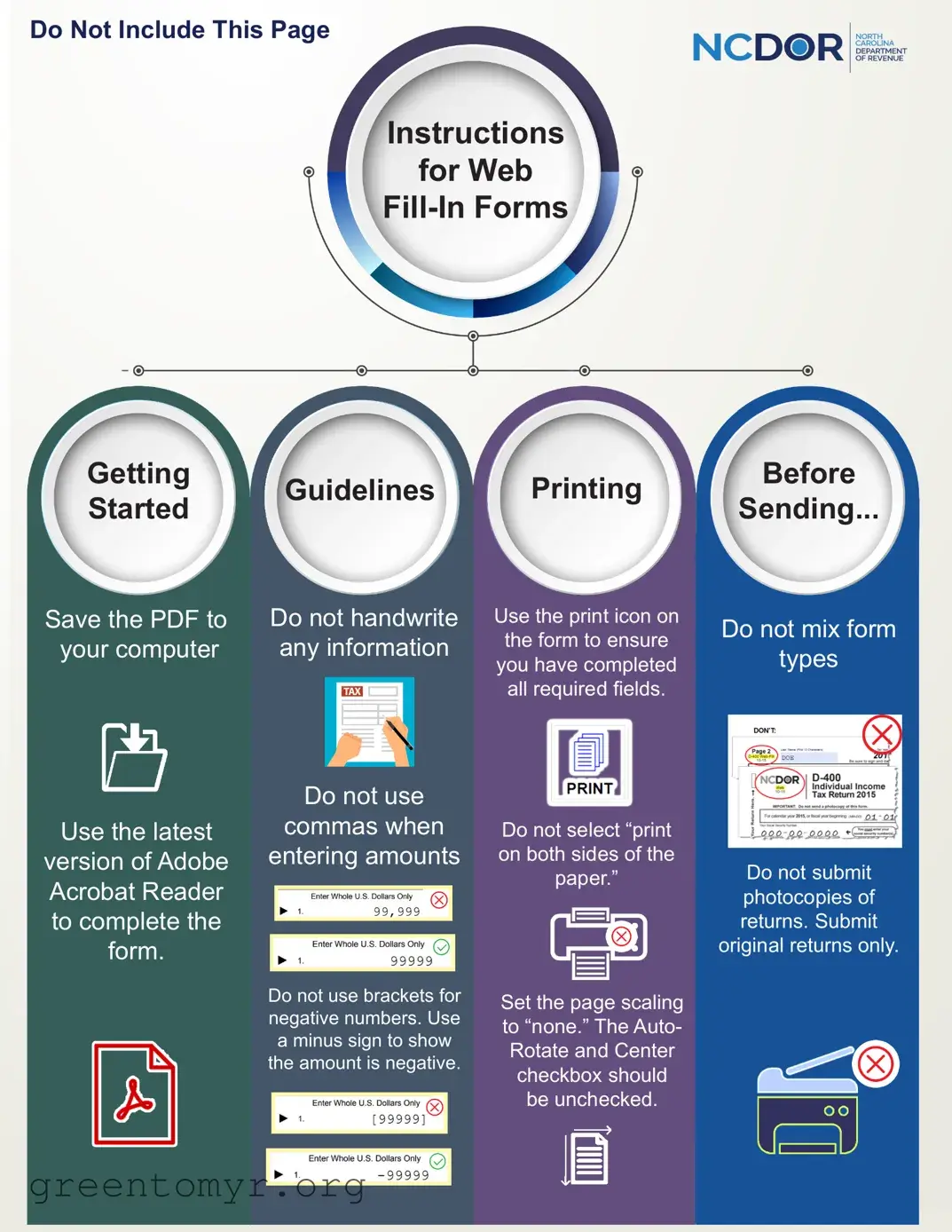
Do Not Include This Page
Instructions
for Web
Fill-In Forms
Getting
Started
Save the PDF to
your computer
Use the latest
version of Adobe
Acrobat Reader
to complete the
form.
Guidelines
Do not handwrite
any information
Do not use
commas when
entering amounts
Do not use brackets for
negative numbers. Use
a minus sign to show
the amount is negative.
Printing
Use the print icon on
the form to ensure
you have completed
all required elds.
Do not select “print
on both sides of the
paper.”
Set the page scaling
to
“none.” The Auto-
Rotate and Center
checkbox should
be unchecked.
Before
Sending...
Do not mix form
types
Do not submit
photocopies of
returns. Submit
original returns only.
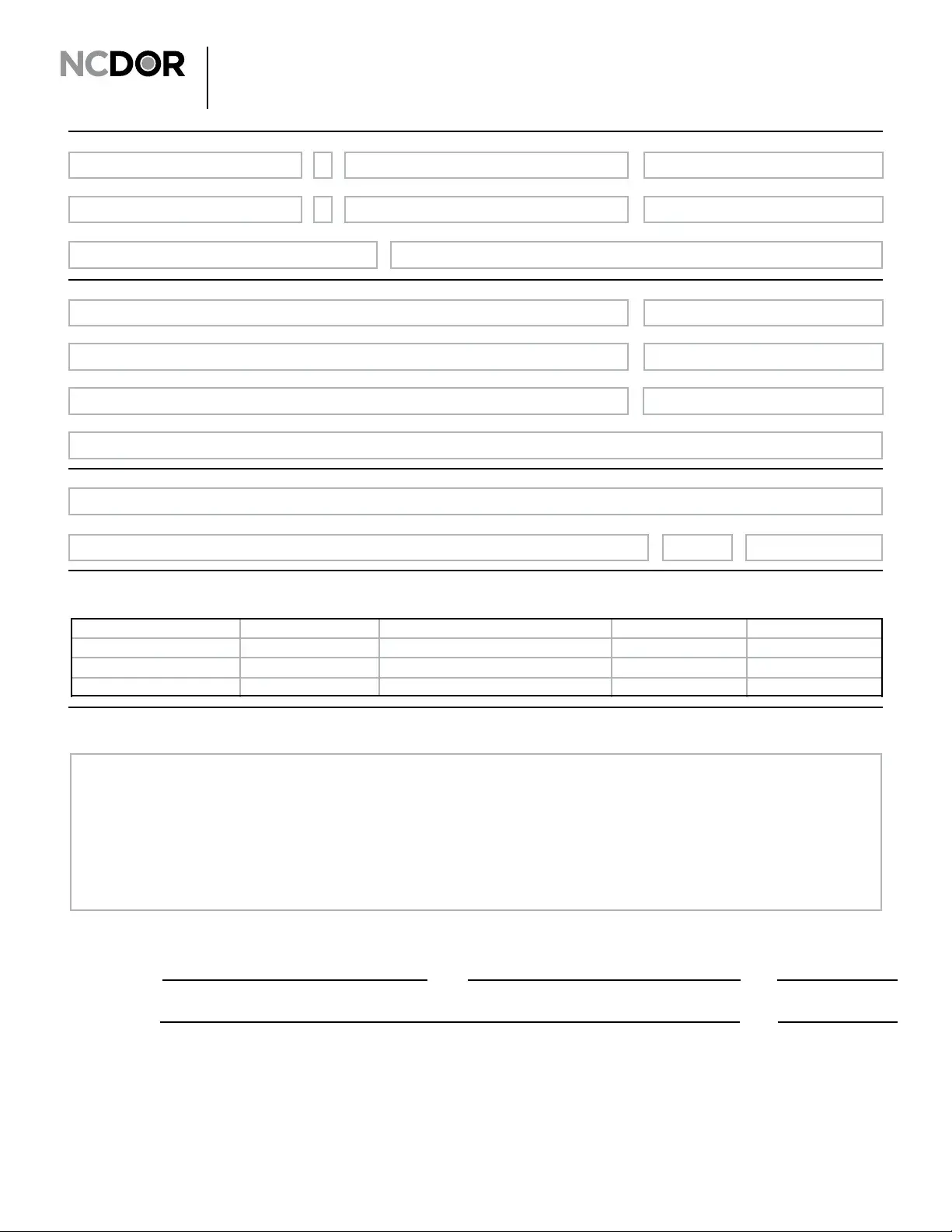
Objection and Request for Departmental Review
NC-242
Web-Fill
9-25
Individual’s First Name Individual’s Last Name M.I.
Spouse’s First Name (If joint return led) Spouse’s Last Name (If joint return led)M.I.
Entity’s Legal Name
Entity’s Trade Name
Individual’s Phone Number
Contact Person’s Name
Individual’s Social Security Number
Spouse’s Social Security Number (If joint return led)
Entity’s Federal Employer ID Number
Account Number/NCDOR ID
Contact Person’s Phone Number
If you object to a proposed assessment, proposed adjustment, or proposed denial of refund, you must request a Departmental review of the proposed
action as the rst step in the appeals process. To request a review, complete this form and mail it, along with all supporting documentation, to
the address shown below. This form may be used for any State or local tax administered by the Department of Revenue. The request for review
must be led with the Department within 45 days after the following: (1) the date the Notice of the Proposed Assessment, Proposed Denial of
Refund, or Proposed Adjustment was mailed by the Department, or (2) the date the Notice of Proposed Assessment, Proposed Denial of Refund,
or Proposed Adjustment was personally delivered by a Department employee.
MAIL TO: North Carolina Department of Revenue, Customer Service Division,
P.O. Box 471, Raleigh, NC 27602-0471
Taxpayer Signature: Date:
Signature of
Power of Attorney:
Title:
A preparer cannot sign Form NC-242 for the taxpayer unless a power of attorney (Form GEN-58) has been established.
Date:
Mailing Address
City Zip CodeState
Use the space below to state in detail your specic objections to the Notice of Proposed Assessment, Notice of Proposed Denial of Refund, or Notice
of Proposed Adjustment. (Attach additional pages if necessary. Attach all supporting documentation to your request for Departmental review.)
Reason for Objection and Request for Departmental Review (Provide the requested information about the notice(s) that you are
requesting the Department to review. Important: Attach a copy of the notice(s) of proposed assessment, proposed denial of refund, or proposed adjustment.)
Period Beginning Period Ending Notice Number Tax TypeDate of Notice
Individual’s Email Address
Contact Person’s Email Address
4
PRINT
CLEAR

File Breakdown

Fact Name Description
Form Purpose The NC 242 form is used to object to a proposed assessment, proposed denial of refund, or proposed adjustment regarding state or local taxes administered by the North Carolina Department of Revenue.
Filing Deadline A request for departmental review must be filed within 45 days of the date the notice was mailed or personally delivered by a Department employee.
Required Information The form requires personal details, including names, Social Security numbers, and contact information, as well as the specific reason for the objection and relevant notice details.
Supporting Documentation Taxpayers must attach all supporting documentation to the request for departmental review, including copies of the notice being contested.
Governing Law The NC 242 form is governed by North Carolina General Statutes related to taxation and the administrative procedures of the North Carolina Department of Revenue.

Guide to Using Nc 242

Filling out the NC 242 form is an important step in the process of requesting a review of a proposed assessment, denial of refund, or adjustment. Make sure to gather all necessary information and documentation before starting. Follow these steps carefully to ensure your form is completed correctly.

  1. Begin by entering the individual’s first name and middle initial in the designated fields.
  2. Next, fill in the individual’s last name and their social security number.
  3. If you are filing a joint return, provide your spouse’s first name, middle initial, last name, and social security number.
  4. Enter the individual phone number for contact purposes.
  5. If applicable, fill in the entity’s legal name and trade name.
  6. Provide the entity’s federal employer ID number and account number/NCDOR ID.
  7. List the entity contact person and their phone number.
  8. Fill in the street address, city, state, and zip code for the entity.
  9. In the section for the reason for objection, provide detailed information about the notice you are requesting the Department to review. Be sure to attach a copy of the relevant notice(s).
  10. Enter the notice number, date of notice, tax type, period beginning, and period ending.
  11. Use the space provided to state your specific objections to the notice. If you need more space, attach additional pages and include all supporting documentation.
  12. Sign the form in the taxpayer signature section and include your title and date.
  13. If a representative is signing, they must also sign and date the form. Ensure a Power of Attorney accompanies the request if applicable.

After completing the form, gather all supporting documents and mail everything to the North Carolina Department of Revenue at the specified address. Remember to do this within 45 days of receiving the notice to ensure your request is considered.

Get Answers on Nc 242

What is the NC 242 form used for?

The NC 242 form, titled "Objection and Request for Departmental Review," is used by taxpayers in North Carolina to formally object to a proposed assessment, proposed denial of refund, or proposed adjustment issued by the Department of Revenue. This form initiates the appeals process, allowing taxpayers to request a review of the Department's decision.

Who should complete the NC 242 form?

Any individual or entity that has received a notice from the North Carolina Department of Revenue regarding a proposed assessment, denial of refund, or adjustment should complete the NC 242 form. If a joint return was filed, both individuals should provide their information on the form.

What information is required on the NC 242 form?

When completing the NC 242 form, you must provide the following information:

  • Your first name, middle initial, last name, and Social Security number.
  • If applicable, your spouse’s first name, middle initial, last name, and Social Security number.
  • Your phone number and, if relevant, the entity's legal name, trade name, and Federal Employer ID Number.
  • The account number or NCDOR ID, as well as the contact person's information for the entity.
  • The reason for your objection, including details about the notice you are contesting.
  • Any supporting documentation related to your objection.

How long do I have to file the NC 242 form?

You must file the NC 242 form within 45 days of receiving the notice you are contesting. This deadline applies to both notices mailed by the Department and those delivered in person by a Department employee. Missing this deadline may limit your ability to appeal the Department's decision.

Where do I send the completed NC 242 form?

Once you have completed the NC 242 form and gathered all necessary documentation, mail it to the following address:

North Carolina Department of Revenue, Customer Interaction Center, P.O. Box 471, Raleigh, NC 27602-0471.

What should I do if I have a representative signing the form on my behalf?

If a taxpayer’s representative signs the NC 242 form, it is essential to include a Power of Attorney with your request. This document grants the representative the authority to act on your behalf in this matter.

Can I attach additional pages to the NC 242 form?

Yes, if you need more space to state your objections or provide supporting information, you may attach additional pages to the NC 242 form. Ensure that all supporting documentation is included with your submission to facilitate a thorough review by the Department.

Common mistakes

Filling out the NC 242 form correctly is crucial for a successful request for departmental review. However, many individuals make common mistakes that can hinder their application. One frequent error is failing to provide complete personal information. This includes the individual's first and last names, Social Security number, and contact details. Incomplete information can delay the processing of the request or even lead to rejection.

Another mistake is neglecting to include the spouse's information when filing a joint return. If the form is submitted without the spouse’s first and last names, as well as their Social Security number, it can create complications. This oversight may result in the Department of Revenue being unable to verify the joint return, which can adversely affect the review process.

Individuals often overlook the importance of attaching the relevant notices. The form explicitly states that copies of the proposed assessment, denial of refund, or adjustment must accompany the request. Failing to include these documents can lead to a lack of context for the objection and may result in a dismissal of the request.

Another common error involves the section where taxpayers must detail their specific objections. Many people provide vague or insufficient explanations, which do not adequately convey their reasons for requesting a review. Clear and detailed objections are essential for the Department to understand the taxpayer's position and to process the request effectively.

Lastly, individuals sometimes forget to sign the form or have their representative sign without including the necessary Power of Attorney documentation. Both signatures are critical to validate the request. Without these signatures, the Department may not accept the request, causing further delays in the review process.

Documents used along the form

When dealing with tax assessments and disputes, various forms and documents often accompany the NC 242 form. Each of these documents plays a crucial role in the process of appealing a tax decision or requesting a review. Understanding these forms can help taxpayers navigate their responsibilities and rights more effectively.

  • Power of Attorney (Form NC-POA): This document allows a taxpayer to designate someone else, typically a tax professional, to represent them in dealings with the North Carolina Department of Revenue. It must accompany the NC 242 form if a representative signs it.
  • Notice of Proposed Assessment: This is the initial notification from the Department of Revenue, indicating that the state believes additional taxes are owed. It provides details about the assessment and the basis for it.
  • Notice of Proposed Denial of Refund: Issued when a taxpayer's request for a refund has been denied. This notice outlines the reasons for the denial and is crucial for understanding the grounds for objection.
  • Notice of Proposed Adjustment: This document informs the taxpayer of any changes made to their tax return or account. It details the adjustments and can be contested through the NC 242 form.
  • Supporting Documentation: This includes any additional paperwork that substantiates a taxpayer's objections. Examples might be receipts, prior correspondence, or financial statements that support the case for a review.
  • Tax Return Copies: Copies of the relevant tax returns may be required to provide context to the Department of Revenue regarding the taxpayer's financial situation and previous filings.
  • Affidavit or Declaration: In some cases, a sworn statement may be necessary to provide evidence or clarify specific points in the objection process.
  • Correspondence Records: Keeping a record of all communications with the Department of Revenue is essential. This includes letters, emails, and notes from phone calls, which can help establish a timeline and context for the objection.
  • Payment Records: If any payments have been made related to the disputed assessment, documentation of these transactions can be important in demonstrating compliance or challenging the amounts owed.

Each of these documents serves a specific purpose in the appeals process and can significantly impact the outcome of a taxpayer's request for review. Being thorough and organized with these forms can enhance the chances of a favorable resolution.

Similar forms

The NC 242 form, titled "Objection and Request for Departmental Review," serves a specific purpose in the realm of tax disputes in North Carolina. Several other documents share similarities with the NC 242, particularly in their function of addressing grievances or requests for review regarding tax assessments or decisions. Below are six documents that are comparable to the NC 242 form, along with a brief explanation of how they relate to it.

  • IRS Form 843: This form is used to claim a refund or request an abatement of certain taxes. Like the NC 242, it allows taxpayers to present objections to a tax decision made by the IRS, facilitating a review process.
  • IRS Form 911: This document is a request for Taxpayer Advocate Service assistance. Similar to the NC 242, it is intended for taxpayers who are experiencing difficulties with the IRS and need help resolving issues related to their tax situation.
  • State Tax Appeal Form: Many states have specific forms for appealing property tax assessments. These forms, like the NC 242, enable individuals to contest decisions made by local tax authorities, initiating a review process to potentially adjust their tax obligations.
  • NC Form D-400: This is the North Carolina Individual Income Tax Return. While primarily a tax return, it can also include sections for taxpayers to express concerns about their tax assessments, paralleling the objection process outlined in the NC 242.
  • IRS Form 1040X: This is the Amended U.S. Individual Income Tax Return. Taxpayers use it to correct errors on their original returns, similar to how the NC 242 allows individuals to address and contest errors in tax assessments.
  • NC Form NC-4: This is the Employee’s Withholding Allowance Certificate. Although it primarily focuses on withholding allowances, it can also be used to adjust withholding based on disputes about income or tax assessments, reflecting a similar review mechanism as seen in the NC 242.

Each of these documents plays a vital role in ensuring that taxpayers can effectively communicate their objections and seek resolutions regarding tax-related issues. Understanding their similarities can help individuals navigate the often complex landscape of tax appeals and reviews.

Dos and Don'ts

When filling out the NC 242 form, consider the following do's and don'ts:

  • Do provide accurate personal information, including your name and Social Security Number.
  • Do attach copies of all relevant notices and supporting documentation.
  • Do ensure the form is signed by the taxpayer or their authorized representative.
  • Do submit the form within 45 days of receiving the notice.
  • Don't leave any required fields blank; incomplete forms may delay processing.
  • Don't forget to include your contact information for follow-up.
  • Don't submit the form without reviewing it for errors.
  • Don't ignore the submission deadline, as it is crucial for your appeal.

Misconceptions

Here are four common misconceptions about the NC 242 form:

  • Misconception 1: The NC 242 form is only for individuals.
  • This form can be used by both individuals and entities. Whether you are filing as a person or a business, the process remains the same.

  • Misconception 2: You can submit the NC 242 form without any supporting documents.
  • Supporting documentation is crucial. You must attach any relevant notices and evidence to strengthen your case for review.

  • Misconception 3: There is no deadline for submitting the NC 242 form.
  • There is a strict 45-day deadline to file this form after receiving your notice. Missing this deadline can jeopardize your appeal.

  • Misconception 4: You don't need a Power of Attorney if someone else is submitting the form on your behalf.
  • If a representative signs the form, you must include a Power of Attorney. This ensures that they have the authority to act on your behalf.

Key takeaways

Filling out the NC 242 form is a crucial step for individuals or entities wishing to contest a proposed tax action. Here are key takeaways to keep in mind:

  • Eligibility: The NC 242 form can be used for any state or local tax administered by the North Carolina Department of Revenue.
  • Timeliness: Submit the form within 45 days of receiving the notice to ensure your request is considered.
  • Required Information: Fill in personal details, including names, Social Security numbers, and contact information for both the individual and any spouse if a joint return is filed.
  • Specificity: Clearly state your objections in detail, and attach any supporting documentation to strengthen your case.
  • Attachments: Include a copy of the notice you are contesting, such as the proposed assessment or denial of refund.
  • Signature Requirement: Ensure the form is signed by the taxpayer or their representative. If a representative signs, include a Power of Attorney.
  • Mailing Instructions: Send the completed form and documentation to the specified address for the North Carolina Department of Revenue.
  • Follow-Up: After submission, keep a record of your request and any correspondence for future reference.

By adhering to these guidelines, individuals and entities can effectively navigate the process of contesting tax actions in North Carolina.