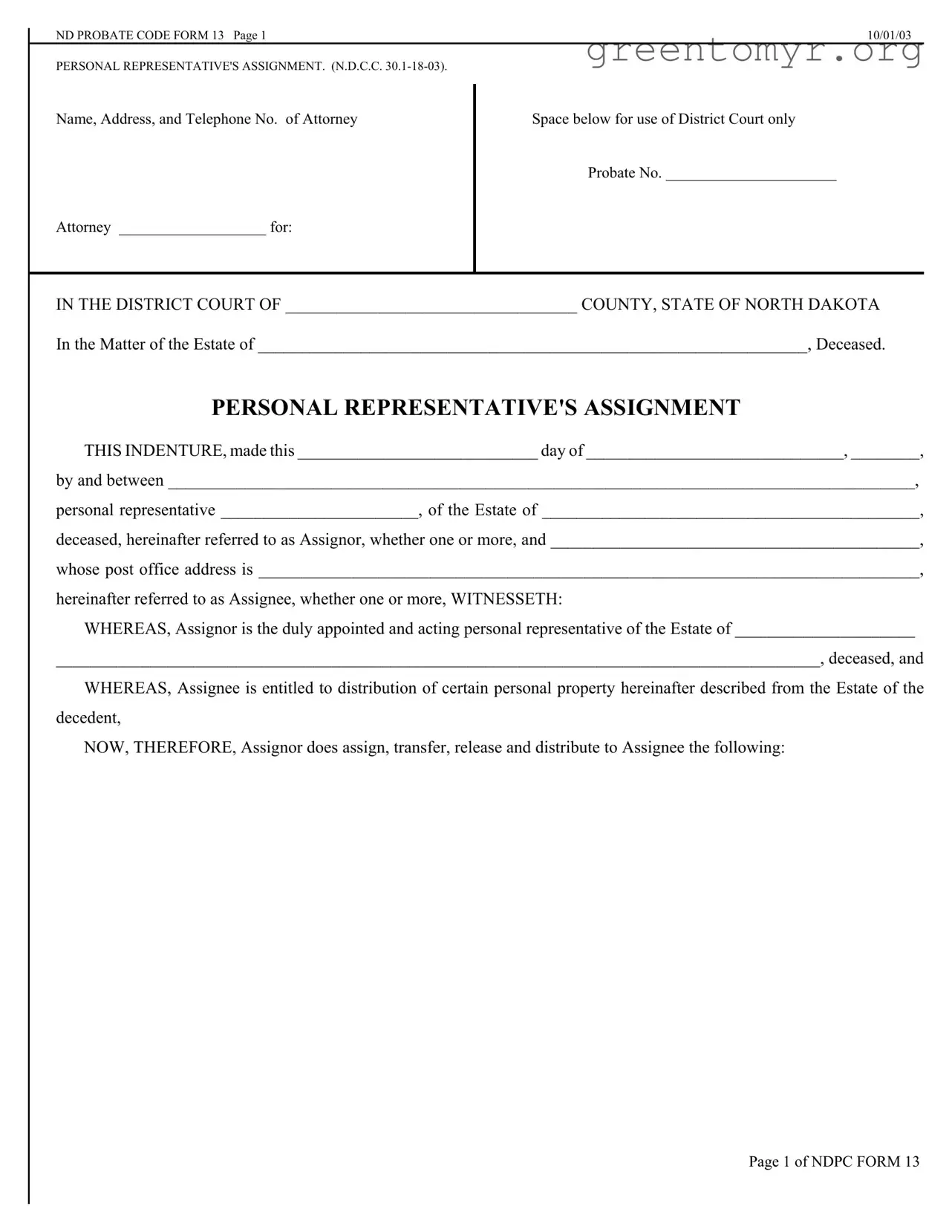
The NDPC 13 form, also known as the Personal Representative's Assignment, plays a crucial role in the probate process in North Dakota. It facilitates the transfer of specific personal property from a deceased person's estate to designated individuals or entities. This form is essential for personal representatives, who are responsible for managing the estate, as it formally documents the assignment of property to the beneficiaries. The form includes spaces for important information such as the name, address, and contact details of the attorney involved, as well as the probate number assigned by the district court. Additionally, it outlines the relationship between the personal representative, referred to as the Assignor, and the individual or entity receiving the property, known as the Assignee. The NDPC 13 form must be signed and notarized to ensure its validity, making it a key document in the estate distribution process. Understanding how to properly complete and file this form is vital for anyone involved in estate management in North Dakota.

ND PROBATE CODE FORM 13 Page 1 |
10/01/03 |
PERSONAL REPRESENTATIVE'S ASSIGNMENT. (N.D.C.C.
Name, Address, and Telephone No. of Attorney
Space below for use of District Court only
Probate No. ______________________
Attorney ___________________ for:
IN THE DISTRICT COURT OF __________________________________ COUNTY, STATE OF NORTH DAKOTA
In the Matter of the Estate of ________________________________________________________________, Deceased.
PERSONAL REPRESENTATIVE'S ASSIGNMENT
THIS INDENTURE, made this ____________________________ day of ______________________________, ________,
by and between _______________________________________________________________________________________,
personal representative _______________________, of the Estate of ____________________________________________,
deceased, hereinafter referred to as Assignor, whether one or more, and ___________________________________________,
whose post office address is _____________________________________________________________________________,
hereinafter referred to as Assignee, whether one or more, WITNESSETH:
WHEREAS, Assignor is the duly appointed and acting personal representative of the Estate of _____________________
_________________________________________________________________________________________, deceased, and
WHEREAS, Assignee is entitled to distribution of certain personal property hereinafter described from the Estate of the decedent,
NOW, THEREFORE, Assignor does assign, transfer, release and distribute to Assignee the following:
Page 1 of NDPC FORM 13

ND PROBATE CODE FORM 13 Page 2 |
|
10/01/03 |
PERSONAL REPRESENTATIVE'S ASSIGNMENT. (N.D.C.C. |
|
|
WITNESS, the hand of the Assignor: |
_____________________________________________ |
|
|
|
_____________________________________________ |
|
|
Personal Representative ____________________ of the |
|
|
Estate of _____________________________________, |
|
|
Deceased |
STATE OF NORTH DAKOTA |
} |
|
}ss.
County of ____________________ }
The foregoing instrument was acknowledged before me this __________________________________________, day of
____________________________________, ________, by ___________________________________________________,
personal representative______ of the estate of ______________________________________________________, deceased.
|
____________________________________________ |
|
Notary Public |
|
_________________________, County, North Dakota |
(Seal) |
My commission expires:_________________________ |
Page 2of NDPC FORM 13
| Fact Name | Details |
|---|---|
| Purpose | The NDPC 13 form is used for the assignment of personal property from an estate by the personal representative. |
| Governing Law | This form is governed by the North Dakota Century Code (N.D.C.C.) § 30.1-18-03. |
| Parties Involved | The form involves two main parties: the Assignor (personal representative) and the Assignee (individual receiving property). |
| Signature Requirement | The personal representative must sign the form to validate the assignment of property. |
| Acknowledgment | A notary public must acknowledge the document to ensure its legal standing. |
| Estate Information | The form requires specific details about the deceased, including their name and estate information. |
| Date of Execution | The form must include the date of execution, which is the date when the assignment is made. |
Filling out the NDPC 13 form is an important step in managing the estate of a deceased individual. This form helps facilitate the assignment of certain personal property to the rightful party. Follow the steps below to ensure that the form is completed accurately and efficiently.
The NDPC 13 form, also known as the Personal Representative's Assignment, is a legal document used in North Dakota probate proceedings. It serves to officially assign certain personal property from the estate of a deceased individual to an heir or beneficiary. This form is essential for ensuring that the distribution of the estate's assets is documented and legally recognized.
The form must be completed by the personal representative of the estate, who is the individual appointed by the court to manage the estate's affairs. This person is responsible for ensuring that the decedent's wishes are honored and that assets are distributed correctly. The assignee, or beneficiary, who will receive the property, also needs to be identified in the form.
When filling out the NDPC 13 form, the following information is typically required:
After completing the NDPC 13 form, the personal representative must sign it in the presence of a notary public. The notary will then acknowledge the signature, which adds a layer of authenticity to the document. Once notarized, the form should be filed with the district court handling the probate case to ensure it becomes part of the official estate records.
If the NDPC 13 form is not completed, the distribution of personal property from the estate may be delayed. Without this assignment, beneficiaries may face difficulties in claiming their inheritance. It's crucial to ensure that all required forms are filled out accurately and submitted on time to avoid complications in the probate process.
Yes, if changes need to be made after the NDPC 13 form has been submitted, it may be possible to amend it. However, this typically requires additional documentation and possibly a court hearing. It's advisable to consult with a legal professional to understand the best course of action for making any amendments.
Filling out the NDPC 13 form can be a straightforward process, but many people make common mistakes that can lead to delays or complications. One frequent error is failing to provide complete information. Each section of the form requires specific details, such as the names of the personal representative and the estate. Leaving out even a small piece of information can create confusion and may require additional steps to correct.
Another mistake often seen is not signing the document in the appropriate places. The form requires signatures from the personal representative and a notary public. If either signature is missing, the form may not be considered valid. It’s essential to double-check that all required signatures are present before submitting the form.
People also sometimes neglect to include the correct probate number. This number is crucial as it identifies the case in the court system. Without it, the court may struggle to locate the relevant files, leading to unnecessary delays. Always ensure that the probate number is accurate and clearly written.
Additionally, individuals may use outdated versions of the form. The NDPC 13 form can be updated periodically, and using an old version could result in the submission being rejected. It is wise to obtain the latest version from an official source to ensure compliance with current requirements.
Lastly, many applicants overlook the importance of reviewing the completed form before submission. Errors in spelling, grammar, or formatting might seem minor, but they can affect the form's clarity and professionalism. Taking a moment to review the document can save time and prevent potential issues down the line.
The NDPC 13 form, also known as the Personal Representative's Assignment, plays a crucial role in the probate process in North Dakota. Alongside this form, there are several other documents that are often utilized to ensure a smooth and lawful administration of an estate. Below is a list of these commonly used forms and documents, each serving a specific purpose in the probate process.
Understanding these documents is vital for anyone involved in the probate process. Each form plays a unique role in ensuring that the deceased's wishes are honored and that the estate is settled properly. It is advisable to consult with a legal professional to navigate these requirements effectively.
The NDPC 13 form, known as the Personal Representative's Assignment, serves a specific function in estate management. It establishes the transfer of certain rights or properties from the estate of a deceased individual to an assignee. Several other legal documents share similar purposes or structures. Below is a list of ten such documents, each accompanied by a brief explanation of how they relate to the NDPC 13 form.
When filling out the NDPC 13 form, it’s crucial to approach the task with care. Here are five things you should and shouldn’t do to ensure a smooth process.
By following these guidelines, you can help ensure that your form is processed efficiently and correctly. Remember, attention to detail is key!
Here are six misconceptions about the NDPC 13 form:
Filling out the NDPC 13 form, also known as the Personal Representative's Assignment, is an important step in managing an estate in North Dakota. Here are some key takeaways to help you navigate this process effectively:
By following these key points, you can ensure that the NDPC 13 form is filled out correctly and serves its intended purpose in the estate management process.