When it comes to buying or selling personal property in Nebraska, having a Bill of Sale form is essential. This document serves as a written record of the transaction, providing both the buyer and seller with important details about the sale. It typically includes information such as the names and addresses of both parties, a description of the item being sold, the sale price, and the date of the transaction. Additionally, the Bill of Sale can offer protection for both parties by clearly outlining the terms of the sale, which can help prevent misunderstandings or disputes down the line. Whether you’re selling a vehicle, a piece of equipment, or any other personal item, using a Bill of Sale form can make the process smoother and more secure. In Nebraska, this form is especially important, as it may also be required for registering certain items with state authorities. Understanding how to properly fill out and utilize this form can help ensure a successful transaction.
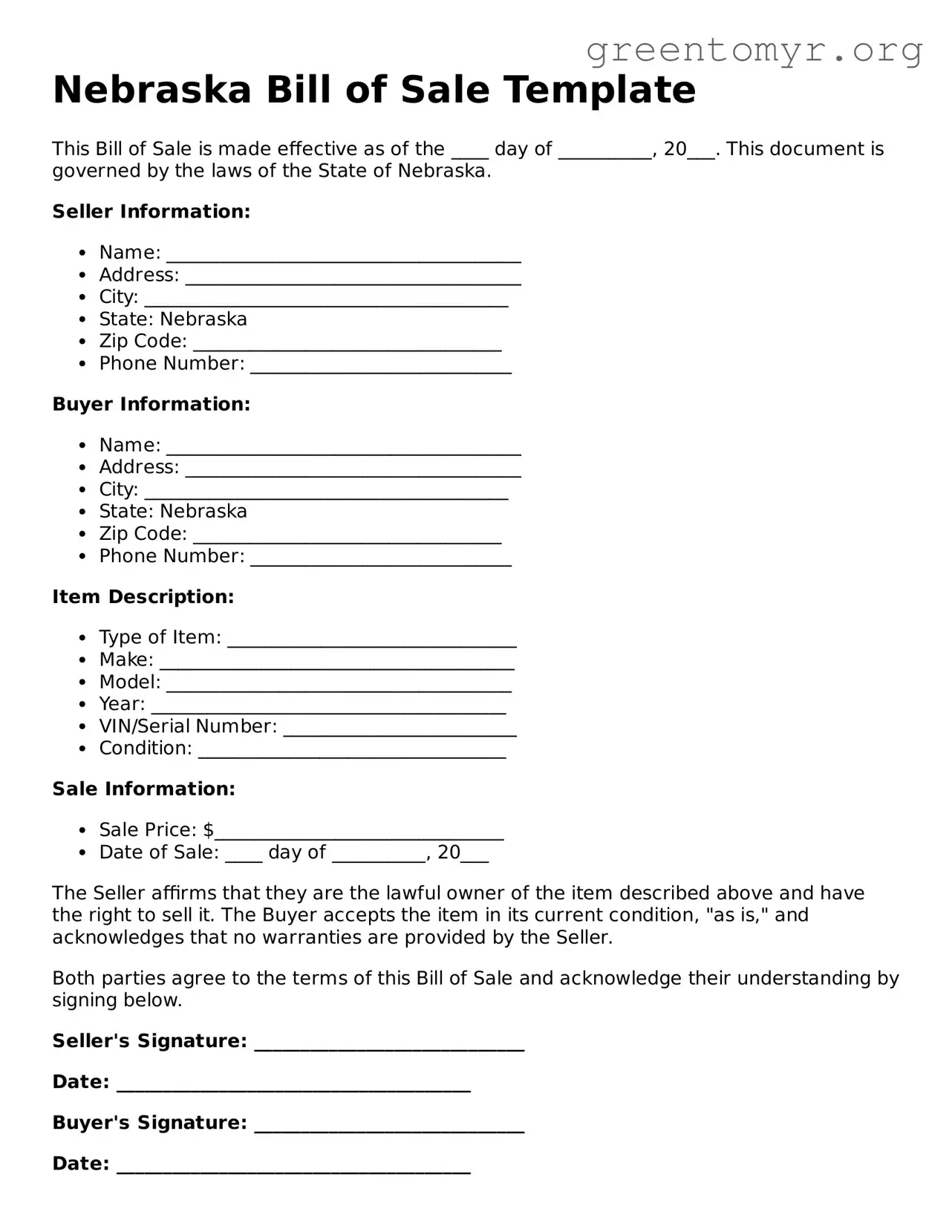
Nebraska Bill of Sale Template
This Bill of Sale is made effective as of the ____ day of __________, 20___. This document is governed by the laws of the State of Nebraska.
Seller Information:
Buyer Information:
Item Description:
Sale Information:
The Seller affirms that they are the lawful owner of the item described above and have the right to sell it. The Buyer accepts the item in its current condition, "as is," and acknowledges that no warranties are provided by the Seller.
Both parties agree to the terms of this Bill of Sale and acknowledge their understanding by signing below.
Seller's Signature: _____________________________
Date: ______________________________________
Buyer's Signature: _____________________________
Date: ______________________________________
| Fact Name | Description |
|---|---|
| Purpose | The Nebraska Bill of Sale form is used to document the transfer of ownership of personal property from one individual to another. |
| Types of Property | This form can be used for various types of personal property, including vehicles, boats, and equipment. |
| Governing Law | The Bill of Sale in Nebraska is governed by the Nebraska Revised Statutes, specifically under Chapter 36. |
| Notarization | While notarization is not always required, having the form notarized can provide additional legal protection and verification of the transaction. |
| Information Required | The form typically requires details such as the names and addresses of the buyer and seller, a description of the property, and the sale price. |
| Record Keeping | It is advisable for both parties to keep a copy of the completed Bill of Sale for their records, as it serves as proof of the transaction. |
After gathering the necessary information, you will be ready to fill out the Nebraska Bill of Sale form. This document serves as a record of the transaction between the buyer and seller. It is important to complete the form accurately to ensure that both parties have a clear understanding of the sale.
Once completed, the form should be kept in a safe place by both parties. It is advisable to make copies for your records, as this document may be needed for future reference.
A Nebraska Bill of Sale form is a legal document that records the transfer of ownership of personal property from one party to another. It serves as proof of the transaction and includes details such as the buyer's and seller's information, a description of the item being sold, and the sale price.
You need a Bill of Sale in Nebraska when you sell or buy personal property, especially items like vehicles, boats, or trailers. While it is not always required by law, having a Bill of Sale can protect both parties by providing a written record of the transaction.
The Nebraska Bill of Sale should include the following information:
No, notarization is not required for a Bill of Sale in Nebraska. However, having the document notarized can add an extra layer of authenticity and may be helpful if disputes arise later.
Yes, you can use a generic Bill of Sale form in Nebraska as long as it includes all necessary information. However, using a state-specific form can help ensure that you meet all legal requirements and avoid any potential issues.
A Bill of Sale protects the buyer by providing proof of purchase, which can be useful for registration or warranty purposes. For the seller, it serves as evidence that they have transferred ownership, helping to prevent future claims on the item.
You can obtain a Nebraska Bill of Sale form from various sources. These include:
Make sure to choose a reliable source to ensure the form meets Nebraska's legal standards.
Filling out a Nebraska Bill of Sale form is a straightforward process, but mistakes can easily occur. Understanding these common errors can help ensure that your document is completed correctly. One frequent mistake is failing to include all necessary information about the buyer and seller. It’s essential to provide full names, addresses, and contact information for both parties. Omitting any of this information can lead to confusion or disputes later on.
Another common error is neglecting to describe the item being sold in detail. A vague description can lead to misunderstandings about what is being transferred. It’s advisable to include specifics such as the make, model, year, and Vehicle Identification Number (VIN) for vehicles. For other items, include any relevant details that clearly identify the item.
Many people forget to specify the sale price. This is a crucial element of the Bill of Sale, as it establishes the terms of the transaction. Without a clear sale price, it can be challenging to prove the value of the item or the legitimacy of the transaction. Always ensure that this information is clearly stated.
Additionally, some individuals overlook the importance of signatures. Both the buyer and seller must sign the document for it to be legally binding. Without these signatures, the Bill of Sale may not hold up in court or during any disputes. Make sure to check that all necessary parties have signed before finalizing the document.
Another mistake is not dating the Bill of Sale. The date of the transaction is significant, as it marks when the ownership transfer takes place. If a dispute arises later, having a clear date can help clarify the timeline of events. Always include the date prominently on the form.
People often fail to keep copies of the completed Bill of Sale. After signing, both parties should retain a copy for their records. This documentation can be crucial if any issues arise in the future. It serves as proof of the transaction and can provide clarity if questions come up later.
Finally, some individuals do not check local laws regarding Bill of Sale requirements. While Nebraska has specific guidelines, it’s essential to be aware of any additional local regulations that may apply. Understanding these requirements can help ensure that the Bill of Sale is valid and enforceable.
A Bill of Sale is an important document that helps facilitate the transfer of ownership for personal property in Nebraska. However, several other forms and documents are often used in conjunction with the Bill of Sale to ensure a smooth transaction. Here are some common forms you might encounter:
Using these additional forms can help clarify the terms of the sale and protect both parties involved. Always consider consulting with a professional to ensure all necessary documents are completed correctly.
A Bill of Sale is a legal document that serves as proof of the transfer of ownership of personal property. It shares similarities with several other documents. Here’s a list of seven documents that are comparable to a Bill of Sale:
When filling out the Nebraska Bill of Sale form, there are important dos and don'ts to keep in mind. Following these guidelines can help ensure that your transaction goes smoothly and is legally sound.
By following these simple guidelines, you can help protect yourself and ensure that the sale is properly documented.
Many people believe that a Bill of Sale is exclusively for vehicle transactions. In reality, this document is applicable to a wide range of personal property sales, including boats, trailers, electronics, and furniture.
While notarization is not always required, having a Bill of Sale notarized can provide additional legal protection. It serves as proof that both parties agreed to the terms, which can be helpful in disputes.
Some individuals confuse a Bill of Sale with a title transfer. The Bill of Sale is a record of the transaction, while the title transfer officially changes ownership of the property. Both documents may be necessary for a complete sale.
Many think that a Bill of Sale is only relevant for transactions between individuals. However, businesses also use this document for sales, providing a clear record of the transaction for both parties.
Some buyers believe that a Bill of Sale offers no protection. In fact, it serves as a legal record of the transaction, detailing the condition of the item and any warranties, which can be crucial if issues arise later.
When filling out and using the Nebraska Bill of Sale form, there are several important points to keep in mind. Here are five key takeaways: