When it comes to renting a property in Nebraska, having a well-structured lease agreement is essential for both landlords and tenants. This legal document outlines the terms and conditions of the rental arrangement, providing clarity and protection for all parties involved. A Nebraska Lease Agreement typically includes critical aspects such as the duration of the lease, the amount of rent due, and the payment schedule. It also specifies the responsibilities of both landlords and tenants, including maintenance obligations and rules regarding pets or alterations to the property. Additionally, the agreement often covers the security deposit amount and the conditions under which it may be withheld. By addressing these key elements, the Nebraska Lease Agreement helps to prevent misunderstandings and disputes, ensuring a smoother rental experience for everyone involved.
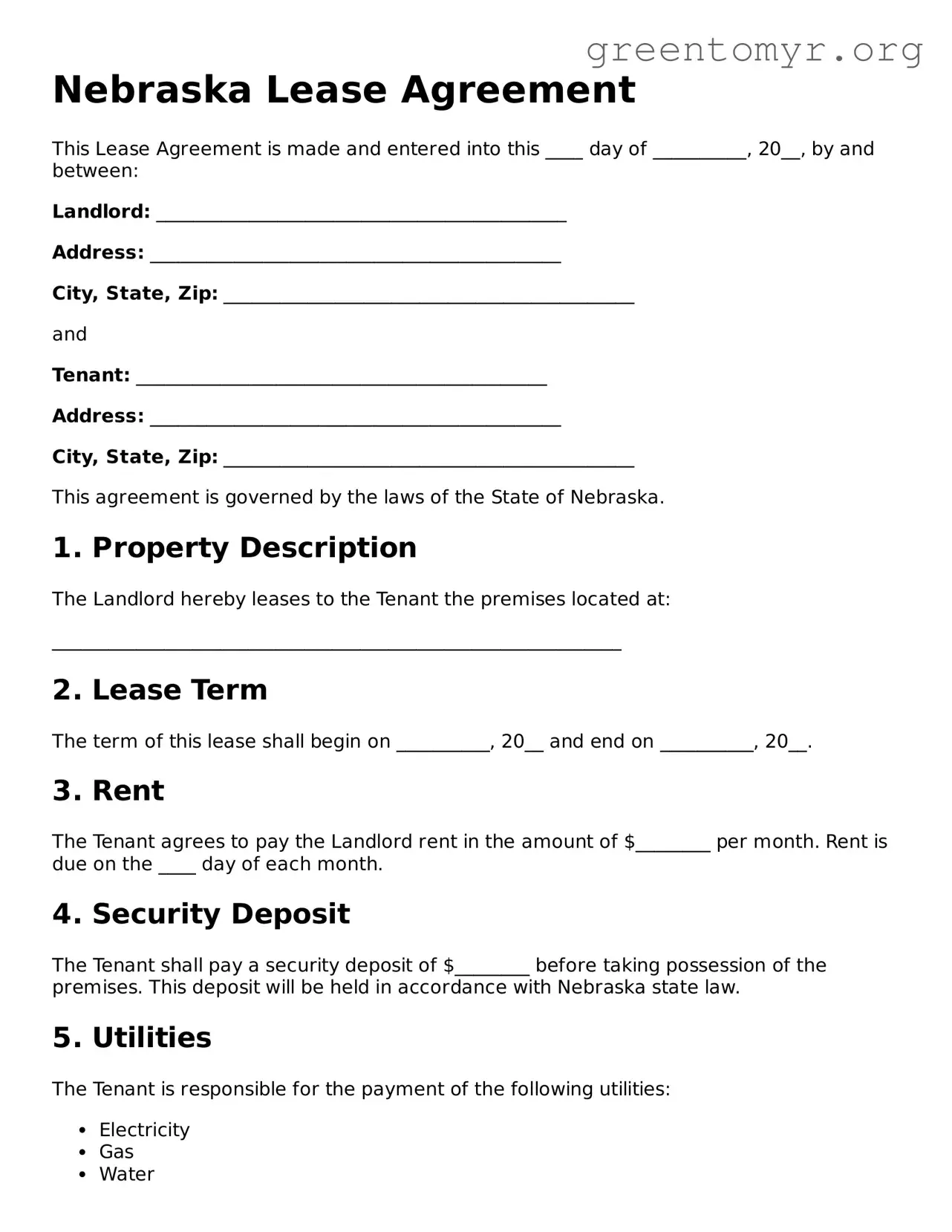
Nebraska Lease Agreement
This Lease Agreement is made and entered into this ____ day of __________, 20__, by and between:
Landlord: ____________________________________________
Address: ____________________________________________
City, State, Zip: ____________________________________________
and
Tenant: ____________________________________________
Address: ____________________________________________
City, State, Zip: ____________________________________________
This agreement is governed by the laws of the State of Nebraska.
1. Property Description
The Landlord hereby leases to the Tenant the premises located at:
_____________________________________________________________
2. Lease Term
The term of this lease shall begin on __________, 20__ and end on __________, 20__.
3. Rent
The Tenant agrees to pay the Landlord rent in the amount of $________ per month. Rent is due on the ____ day of each month.
4. Security Deposit
The Tenant shall pay a security deposit of $________ before taking possession of the premises. This deposit will be held in accordance with Nebraska state law.
5. Utilities
The Tenant is responsible for the payment of the following utilities:
6. Maintenance and Repairs
The Tenant agrees to maintain the premises in good condition and report any needed repairs to the Landlord promptly.
7. Use of Premises
The premises shall be used solely for residential purposes. The Tenant shall not engage in any unlawful activities on the property.
8. Termination
Either party may terminate this lease by providing written notice at least ____ days prior to the intended termination date.
9. Signatures
By signing below, both parties agree to the terms of this Lease Agreement:
Landlord Signature: _______________________________ Date: __________
Tenant Signature: _______________________________ Date: __________
This Lease Agreement is binding upon both parties and their respective heirs, executors, administrators, and assigns.
| Fact Name | Description |
|---|---|
| Governing Law | The Nebraska Lease Agreement is governed by the Nebraska Revised Statutes, particularly sections relating to landlord-tenant laws. |
| Parties Involved | The agreement typically involves two parties: the landlord (lessor) and the tenant (lessee). |
| Property Description | The lease must clearly describe the rental property, including its address and any specific details that define the premises. |
| Lease Duration | The duration of the lease can vary, with options for fixed-term leases or month-to-month agreements. |
| Rent Payment Terms | The agreement should outline the amount of rent due, payment methods, and the date when rent is to be paid each month. |
| Security Deposit | Landlords may require a security deposit, and Nebraska law limits the amount to one month's rent for most residential leases. |
| Termination Clause | The lease should include terms for termination, specifying notice periods required by either party to end the agreement. |
Filling out the Nebraska Lease Agreement form is an important step in establishing a rental relationship. This document outlines the terms and conditions agreed upon by both the landlord and tenant. Completing the form accurately ensures that both parties understand their rights and responsibilities. Follow these steps to fill out the form correctly.
A Nebraska Lease Agreement form is a legal document that outlines the terms and conditions under which a landlord allows a tenant to rent a residential or commercial property in Nebraska. This agreement typically includes details such as the rental amount, duration of the lease, responsibilities of both parties, and rules regarding the use of the property. It serves to protect the rights of both the landlord and the tenant by clearly stating their obligations.
When creating a Nebraska Lease Agreement, several key elements should be included to ensure clarity and legality. These elements typically consist of:
In Nebraska, lease agreements can vary in length. The most common duration is one year, but leases can also be month-to-month or for shorter or longer periods, depending on the needs of the landlord and tenant. A month-to-month lease allows for more flexibility, as either party can terminate the agreement with proper notice, usually 30 days. It is important to choose a lease term that works for both parties.
If a tenant wishes to break the lease before the agreed-upon end date, they may face certain consequences. Generally, the lease will outline the process for early termination, which may include:
It is essential for tenants to review the lease agreement carefully and communicate with the landlord to understand the specific terms related to early termination.
Yes, a Nebraska Lease Agreement can be modified if both the landlord and tenant agree to the changes. Any modifications should be documented in writing and signed by both parties to ensure clarity and enforceability. Common modifications may include changes to the rent amount, lease duration, or specific rules regarding the property. It is advisable to keep a copy of the modified lease for future reference.
Filling out a lease agreement can feel daunting, especially when it comes to the Nebraska Lease Agreement form. One common mistake is not providing accurate information about the property. Landlords and tenants should ensure that the address, unit number, and other identifying details are correct. An incorrect address can lead to confusion and complications later on.
Another frequent error is neglecting to include all necessary parties. The lease should clearly identify all tenants and landlords involved in the agreement. Omitting a name can create legal issues, as it may leave out someone who has rights or responsibilities under the lease.
Many people also overlook the importance of understanding the lease terms. It’s essential to read through all clauses carefully. Misinterpreting a term or condition can lead to misunderstandings about rent due dates, maintenance responsibilities, or penalties for late payments.
In addition, failing to specify the lease duration is a common oversight. A lease should clearly state whether it is a month-to-month agreement or a fixed-term lease. Without this clarity, both parties may have different expectations regarding the length of the rental arrangement.
Another mistake is not documenting the security deposit details. The lease should outline the amount of the security deposit, the conditions for its return, and any deductions that may be made. This information helps protect both the tenant and the landlord.
Some individuals forget to address maintenance responsibilities in the lease. It’s important to clarify who is responsible for repairs and upkeep of the property. This can prevent disputes and ensure that both parties know their obligations.
Inaccurate or incomplete signatures can also cause issues. All parties must sign the lease for it to be legally binding. Missing signatures or incorrect dates can render the agreement invalid, leading to potential disputes.
Lastly, failing to keep a copy of the signed lease is a mistake many make. Both landlords and tenants should retain a copy of the signed agreement for their records. This can be invaluable if questions arise about the terms of the lease in the future.
When entering into a lease agreement in Nebraska, several other forms and documents may be needed to ensure a smooth process. Each of these documents serves a specific purpose and helps clarify the responsibilities of both landlords and tenants.
Understanding these documents can help both landlords and tenants navigate the leasing process more effectively. Proper documentation is key to a successful rental experience.
A Lease Agreement is a crucial document in real estate transactions, but it shares similarities with various other legal documents. Understanding these similarities can help clarify the roles and functions of each document. Here’s a list of ten documents that are similar to a Lease Agreement:
Each of these documents plays a vital role in property transactions, ensuring that all parties understand their rights and responsibilities. Familiarity with them can enhance your understanding of leasing dynamics.
When filling out the Nebraska Lease Agreement form, it is important to be careful and thorough. Here are some guidelines to help you navigate the process.
When it comes to lease agreements, particularly in Nebraska, several misconceptions can lead to confusion for both landlords and tenants. Understanding the facts can help ensure a smoother leasing experience. Here are seven common misconceptions:
By addressing these misconceptions, both landlords and tenants can engage in more informed discussions and foster a better rental relationship. Understanding the terms of a lease agreement is crucial for protecting rights and responsibilities.
When filling out and using the Nebraska Lease Agreement form, it is essential to understand the following key points:
By adhering to these key points, both landlords and tenants can ensure a smoother leasing process and reduce potential disputes.