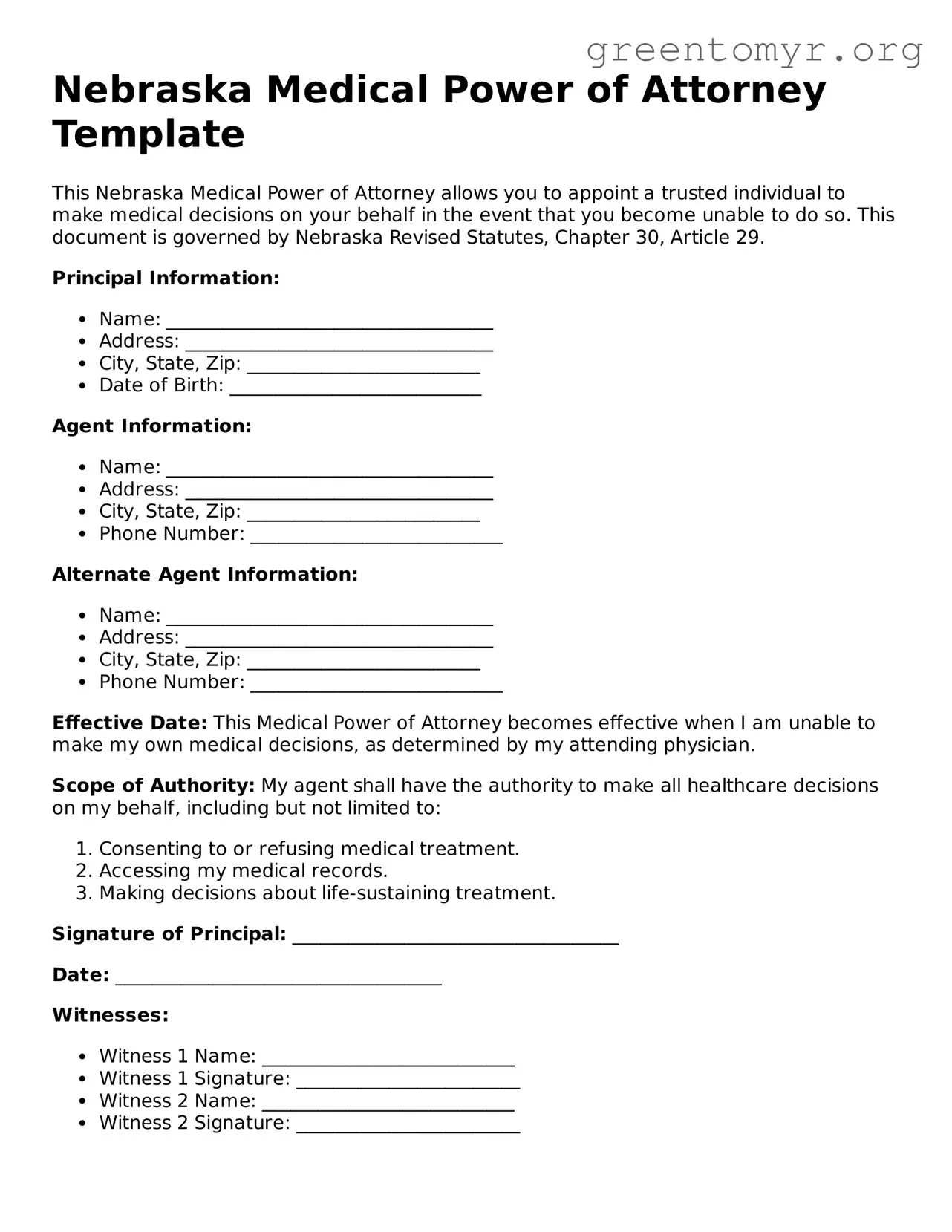
The Nebraska Medical Power of Attorney form serves as a crucial legal document that empowers individuals to designate a trusted person to make healthcare decisions on their behalf in the event they become incapacitated. This form is essential for ensuring that one's medical preferences are honored when they are unable to communicate their wishes. Key aspects of the form include the appointment of an agent, the specification of the agent's authority, and the inclusion of any specific healthcare instructions that the principal wishes to convey. Additionally, the form requires the signatures of the principal and witnesses to validate its legitimacy. It is important to note that this document can be tailored to reflect personal values and beliefs regarding medical treatment, thereby providing peace of mind to individuals and their families. By understanding the significance and components of the Nebraska Medical Power of Attorney, individuals can take proactive steps to safeguard their healthcare choices and ensure that their desires are respected during critical moments.
Nebraska Medical Power of Attorney Template
This Nebraska Medical Power of Attorney allows you to appoint a trusted individual to make medical decisions on your behalf in the event that you become unable to do so. This document is governed by Nebraska Revised Statutes, Chapter 30, Article 29.
Principal Information:
Agent Information:
Alternate Agent Information:
Effective Date: This Medical Power of Attorney becomes effective when I am unable to make my own medical decisions, as determined by my attending physician.
Scope of Authority: My agent shall have the authority to make all healthcare decisions on my behalf, including but not limited to:
Signature of Principal: ___________________________________
Date: ___________________________________
Witnesses:
This document must be signed in the presence of two witnesses who are not related to you by blood or marriage, and who are not entitled to any part of your estate. It is advisable to keep a copy of this document with your medical records and provide copies to your appointed agent and healthcare providers.
| Fact Name | Description |
|---|---|
| Purpose | The Nebraska Medical Power of Attorney form allows individuals to appoint someone to make medical decisions on their behalf if they become unable to do so. |
| Governing Law | This form is governed by the Nebraska Revised Statutes, specifically sections 30-3401 to 30-3434. |
| Eligibility | Any adult resident of Nebraska can create a Medical Power of Attorney, as long as they are of sound mind. |
| Agent Selection | The individual creating the form (the principal) can choose anyone as their agent, except for certain healthcare providers involved in their care. |
| Signature Requirements | The form must be signed by the principal and witnessed by two individuals or notarized to be valid. |
| Revocation | The principal can revoke the Medical Power of Attorney at any time, as long as they are mentally competent to do so. |
Completing the Nebraska Medical Power of Attorney form is an important step in ensuring that your healthcare preferences are respected. After filling out the form, it will need to be signed and witnessed according to Nebraska law. This ensures that your designated agent can make medical decisions on your behalf when you are unable to do so.
A Nebraska Medical Power of Attorney is a legal document that allows you to designate someone to make medical decisions on your behalf if you become unable to do so. This ensures that your healthcare preferences are respected even if you cannot communicate them yourself.
You can choose any competent adult to be your agent. This can be a family member, friend, or trusted individual. However, it is important to choose someone who understands your values and wishes regarding medical treatment.
To complete the Nebraska Medical Power of Attorney form, follow these steps:
Yes, the Nebraska Medical Power of Attorney must be signed in the presence of either two witnesses or a notary public. Witnesses cannot be related to you or have a financial interest in your estate.
Yes, you can revoke your Medical Power of Attorney at any time. To do this, you should notify your agent and any healthcare providers in writing. You may also want to complete a new form to ensure your wishes are clear.
The Medical Power of Attorney takes effect when your physician determines that you are unable to make your own medical decisions. You can specify in the document if you want it to take effect immediately or under certain conditions.
If you do not have a Medical Power of Attorney, medical decisions may be made by family members or appointed guardians, which may not align with your wishes. It is advisable to create this document to ensure your preferences are honored.
Yes, you can include specific instructions regarding your medical treatment and end-of-life care. This can help guide your agent in making decisions that reflect your values and preferences.
While many states recognize out-of-state Medical Powers of Attorney, it is best to check the specific laws in the state where you reside or may receive medical care. Some states may require a local document to ensure compliance with their regulations.
Keep your Medical Power of Attorney in a safe but accessible place. Inform your agent and close family members where it is located. You may also want to provide copies to your healthcare providers to ensure they have the necessary information when needed.
Filling out a Nebraska Medical Power of Attorney form is an important task that allows individuals to designate someone to make medical decisions on their behalf if they become unable to do so. However, many people make common mistakes that can lead to confusion or complications later on. Understanding these pitfalls can help ensure that your wishes are clearly communicated.
One frequent mistake is not choosing the right agent. The person you designate should be someone you trust completely, as they will have significant authority over your healthcare decisions. It’s essential to discuss your wishes with them beforehand. Failing to have this conversation can lead to misunderstandings and decisions that may not align with your values.
Another common error is not being specific enough about your healthcare preferences. While the form allows for general instructions, including specific wishes regarding treatment options can provide clearer guidance for your agent. For example, if you have strong feelings about life-sustaining treatments, be sure to articulate those preferences clearly.
People often overlook the importance of signing and dating the document correctly. In Nebraska, the form must be signed in the presence of two witnesses or a notary public. Neglecting this step can render the document invalid. Ensure that your witnesses are not related to you and are not your healthcare providers, as this can also invalidate the form.
Another mistake is failing to update the document when circumstances change. Life events such as marriage, divorce, or the death of your chosen agent can necessitate a revision of your Medical Power of Attorney. Keeping the document current ensures that your healthcare decisions are always in line with your current situation.
Lastly, many individuals forget to provide copies of the completed form to their healthcare providers and family members. It’s crucial that the people involved in your care are aware of your wishes and have access to the document. Without this communication, your intentions might not be honored during a critical time.
By being aware of these common mistakes, you can take steps to avoid them and ensure that your Nebraska Medical Power of Attorney form accurately reflects your wishes. Remember, this document is a vital part of your healthcare planning, and taking the time to complete it correctly is essential for your peace of mind.
The Nebraska Medical Power of Attorney form is a crucial document that allows individuals to designate someone to make healthcare decisions on their behalf in case they become incapacitated. Alongside this form, several other documents may be utilized to ensure comprehensive planning for medical and legal needs. Below is a list of other forms and documents that are often used in conjunction with the Nebraska Medical Power of Attorney.
Utilizing these documents in conjunction with the Nebraska Medical Power of Attorney can provide a comprehensive approach to healthcare planning. Each document serves a unique purpose, ensuring that an individual’s medical and legal preferences are respected and upheld during critical times.
A Medical Power of Attorney (MPOA) is a crucial document that allows individuals to designate someone to make healthcare decisions on their behalf when they are unable to do so. Several other legal documents serve similar purposes or complement the MPOA in various ways. Here are four such documents:
When filling out the Nebraska Medical Power of Attorney form, it's essential to approach the task with care. Here are some important do's and don'ts to consider.
Many people have misunderstandings about the Nebraska Medical Power of Attorney form. Here are seven common misconceptions:
Understanding these misconceptions can help individuals make informed decisions about their healthcare and ensure their wishes are respected.
Filling out and using the Nebraska Medical Power of Attorney form is an important step in ensuring that your healthcare wishes are respected. Here are some key takeaways to keep in mind:
By following these key points, you can create a Medical Power of Attorney that aligns with your healthcare preferences and provides peace of mind for you and your loved ones.