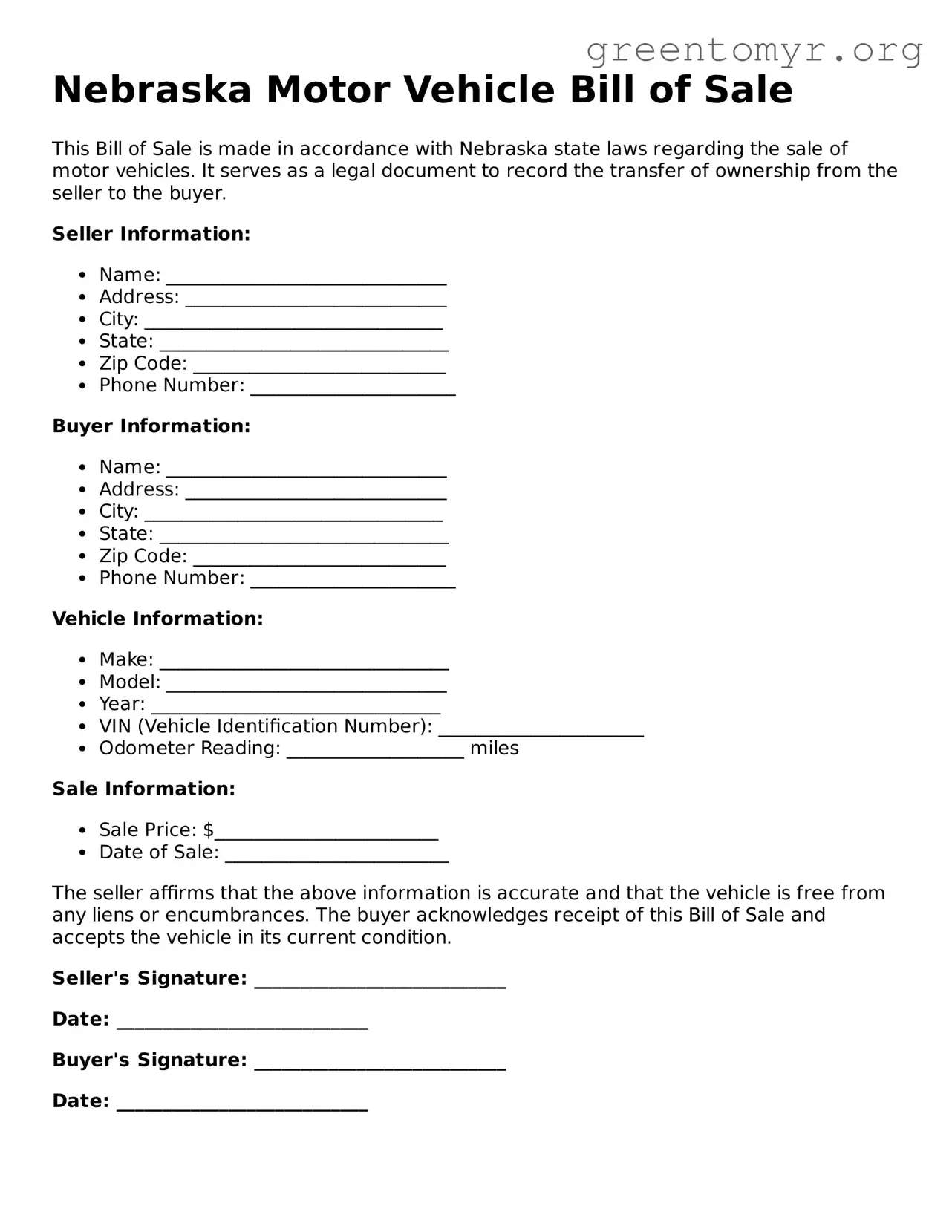
The Nebraska Motor Vehicle Bill of Sale form serves as a crucial document in the process of transferring ownership of a vehicle. This form captures essential information about both the buyer and the seller, including their names, addresses, and contact details. It also details the vehicle itself, providing specifics such as the make, model, year, and Vehicle Identification Number (VIN). Additionally, the bill of sale outlines the sale price and any terms related to the transaction, ensuring clarity for both parties involved. By documenting the sale, this form not only protects the interests of the buyer and seller but also facilitates the registration process with the Nebraska Department of Motor Vehicles. Understanding the components of this form can help ensure a smooth and legally sound transfer of ownership, making it an important tool for anyone involved in buying or selling a vehicle in Nebraska.
Nebraska Motor Vehicle Bill of Sale
This Bill of Sale is made in accordance with Nebraska state laws regarding the sale of motor vehicles. It serves as a legal document to record the transfer of ownership from the seller to the buyer.
Seller Information:
Buyer Information:
Vehicle Information:
Sale Information:
The seller affirms that the above information is accurate and that the vehicle is free from any liens or encumbrances. The buyer acknowledges receipt of this Bill of Sale and accepts the vehicle in its current condition.
Seller's Signature: ___________________________
Date: ___________________________
Buyer's Signature: ___________________________
Date: ___________________________
| Fact Name | Description |
|---|---|
| Purpose | The Nebraska Motor Vehicle Bill of Sale form is used to document the sale or transfer of a motor vehicle between a seller and a buyer. |
| Governing Law | This form is governed by Nebraska Revised Statutes, specifically § 60-501 through § 60-505. |
| Required Information | The form requires details such as the vehicle's make, model, year, VIN, sale price, and the names and addresses of both parties. |
| Signatures | Both the seller and buyer must sign the form to validate the transaction, ensuring both parties agree to the terms of the sale. |
Once you have the Nebraska Motor Vehicle Bill of Sale form in hand, you’ll need to fill it out carefully. This document will serve as a record of the sale and provide important information for both the buyer and the seller. Follow these steps to complete the form accurately.
The Nebraska Motor Vehicle Bill of Sale is a legal document used to transfer ownership of a vehicle from one party to another. It serves as proof of the transaction and includes essential details about the vehicle and the buyer and seller.
The Bill of Sale should include the following information:
No, a Bill of Sale in Nebraska does not need to be notarized. However, having it notarized can provide an extra layer of security and authenticity to the transaction.
Yes, you can use a generic Bill of Sale form as long as it includes all necessary information specific to the vehicle and the transaction. However, using a Nebraska-specific form can help ensure compliance with local requirements.
If the vehicle is being given as a gift, the Bill of Sale should still be completed. It should indicate that the vehicle is a gift and include a zero-dollar sale price. This helps clarify the transaction for registration purposes.
You can obtain a Bill of Sale form from various sources, including online templates, local DMV offices, or legal stationery stores. Ensure that the form meets Nebraska's requirements.
After the transaction, both the buyer and seller should keep a copy of the Bill of Sale for their records. The buyer will need it for vehicle registration and title transfer.
If any issues arise after the sale, such as disputes over the condition of the vehicle or unpaid liens, the Bill of Sale can serve as evidence of the agreement. It is important to keep all communication and documentation related to the transaction.
Once a Bill of Sale is signed, it is generally considered a binding agreement. However, if both parties agree to cancel the sale, they can draft a cancellation agreement. It is advisable to document this agreement in writing.
Filling out the Nebraska Motor Vehicle Bill of Sale form can seem straightforward, but many people make common mistakes that can lead to complications later on. Understanding these pitfalls can save time and frustration. Here are eight mistakes to watch out for when completing this important document.
One frequent error is incomplete information. Buyers and sellers often forget to fill in all required fields, such as the vehicle identification number (VIN), make, model, and year of the vehicle. Omitting any of this information can create issues when registering the vehicle or transferring ownership.
Another common mistake is incorrect VIN entry. The VIN is crucial for identifying the vehicle. A simple typo can lead to significant problems, including difficulties in registering the vehicle or even legal issues. Always double-check the VIN against the vehicle’s title or registration.
People often overlook the date of the sale. This date is important for both parties, as it establishes when the ownership transfer occurs. Without a clear date, disputes may arise regarding when responsibilities and liabilities shift from the seller to the buyer.
Failing to include the purchase price is another mistake. The sale price is not just a number; it’s essential for tax purposes and future reference. Leaving this blank or entering an incorrect amount can lead to complications with the Nebraska Department of Motor Vehicles.
Some individuals forget to sign the document. Both the buyer and seller must sign the Bill of Sale for it to be valid. Without signatures, the document holds no legal weight, which can cause issues during the vehicle registration process.
Another common oversight is not providing a copy of the Bill of Sale to both parties. After signing, it’s wise for both the buyer and seller to keep a copy for their records. This can be beneficial if any disputes arise in the future.
People sometimes make the mistake of not understanding the local regulations regarding vehicle sales. Each state has its own requirements, and Nebraska is no exception. Familiarizing oneself with state laws can help ensure that the sale goes smoothly and complies with all legal obligations.
Lastly, some individuals fail to verify the seller’s identity or ownership of the vehicle. It’s essential to ensure that the person selling the vehicle is indeed the rightful owner. This can prevent potential fraud and ensure that the transaction is legitimate.
By being aware of these common mistakes, individuals can navigate the Nebraska Motor Vehicle Bill of Sale process more effectively. Taking the time to complete the form accurately can lead to a smoother transaction and peace of mind for both buyers and sellers.
When completing a vehicle transaction in Nebraska, several forms and documents may accompany the Motor Vehicle Bill of Sale. Each document serves a specific purpose in ensuring a smooth transfer of ownership and compliance with state regulations. Below is a list of commonly used documents.
Each of these documents plays a crucial role in facilitating a legal and efficient vehicle transaction. Ensuring that all necessary paperwork is completed accurately will help avoid any potential issues in the future.
The Motor Vehicle Bill of Sale form is important for documenting the sale of a vehicle. It shares similarities with several other documents that serve similar purposes in various transactions. Here are five such documents:
When filling out the Nebraska Motor Vehicle Bill of Sale form, it’s important to ensure that all information is accurate and complete. Here are some essential do's and don'ts to keep in mind:
When dealing with the Nebraska Motor Vehicle Bill of Sale form, several misconceptions can lead to confusion. Here are seven common misunderstandings:
Many people believe that a Bill of Sale is optional for vehicle sales. However, it is highly recommended to have one to document the transaction and protect both parties.
Some assume that notarization is required for the Bill of Sale to be valid. In Nebraska, notarization is not mandatory, but it can add an extra layer of security.
This is a common belief, but both the buyer and seller should sign the document to ensure that both parties agree to the terms of the sale.
Some individuals think that they can leave out details on the Bill of Sale. In reality, providing complete and accurate information is crucial for the form's effectiveness.
Even if a vehicle is given as a gift, having a Bill of Sale can help clarify ownership and prevent future disputes.
While signing the Bill of Sale is an important step, the buyer must also complete the title transfer process with the Nebraska Department of Motor Vehicles.
Some people think any generic Bill of Sale will work. However, using the specific Nebraska form ensures compliance with state laws and requirements.
When filling out and using the Nebraska Motor Vehicle Bill of Sale form, it is important to keep several key points in mind. Below are essential takeaways to ensure a smooth transaction.
By keeping these points in mind, you can navigate the process of completing and using the Nebraska Motor Vehicle Bill of Sale form with confidence.