Content Navigation

In Nebraska, the Power of Attorney form serves as a crucial legal document that empowers individuals to designate someone else to make decisions on their behalf. This form can be particularly important in situations where a person may be unable to manage their own affairs due to illness, absence, or incapacity. The designated individual, often referred to as the agent or attorney-in-fact, can be granted a wide range of powers, from managing financial transactions to making healthcare decisions. It is essential to understand the different types of Power of Attorney available, such as general, limited, and durable, as each serves distinct purposes and comes with varying levels of authority. Furthermore, the document must adhere to specific requirements set forth by Nebraska law to ensure its validity. By carefully considering the implications of granting this power and choosing a trustworthy agent, individuals can secure peace of mind knowing that their interests will be protected, even in challenging circumstances.

Nebraska Power of Attorney Example

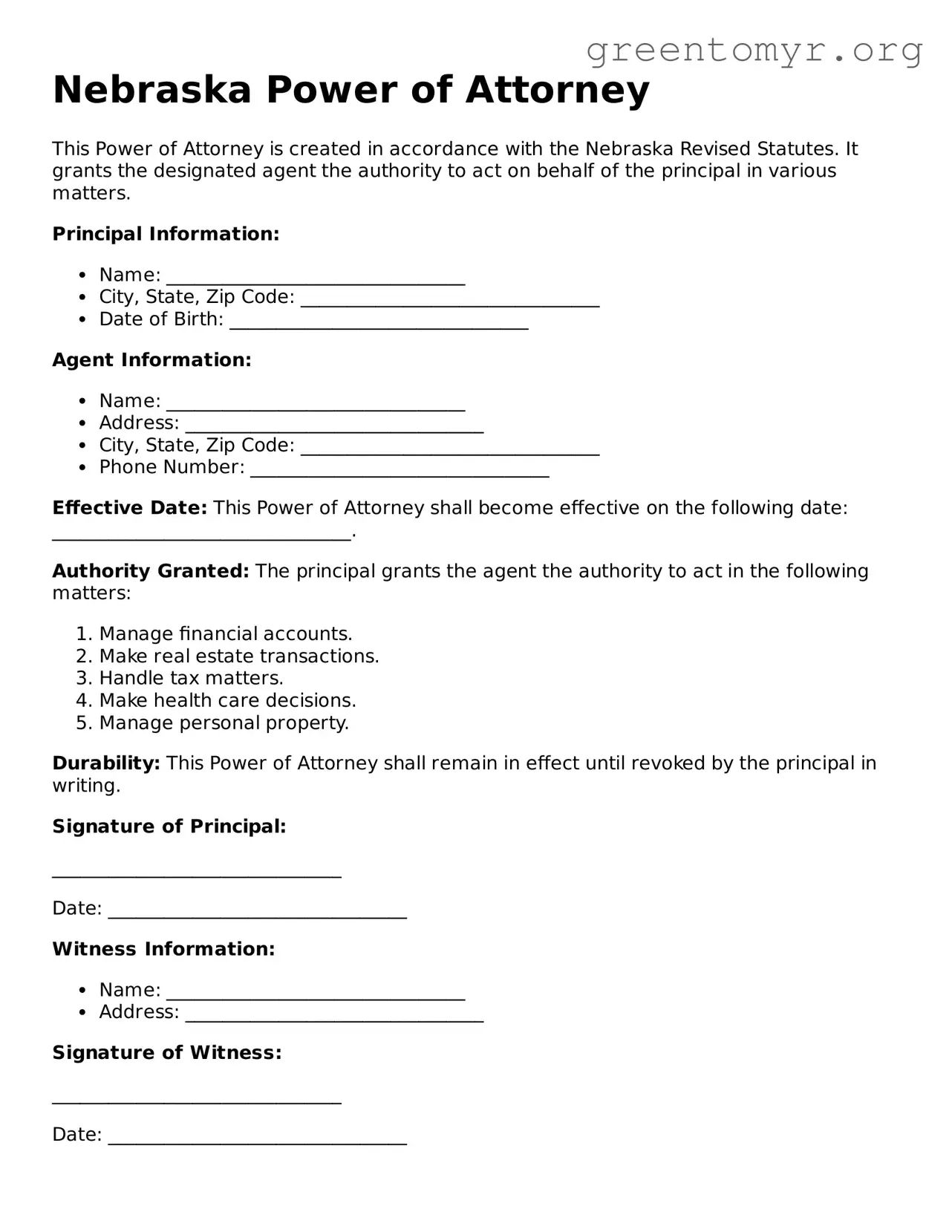
Nebraska Power of Attorney

This Power of Attorney is created in accordance with the Nebraska Revised Statutes. It grants the designated agent the authority to act on behalf of the principal in various matters.

Principal Information:

  • Name: ________________________________
  • City, State, Zip Code: ________________________________
  • Date of Birth: ________________________________

Agent Information:

  • Name: ________________________________
  • Address: ________________________________
  • City, State, Zip Code: ________________________________
  • Phone Number: ________________________________

Effective Date: This Power of Attorney shall become effective on the following date: ________________________________.

Authority Granted: The principal grants the agent the authority to act in the following matters:

  1. Manage financial accounts.
  2. Make real estate transactions.
  3. Handle tax matters.
  4. Make health care decisions.
  5. Manage personal property.

Durability: This Power of Attorney shall remain in effect until revoked by the principal in writing.

Signature of Principal:

_______________________________

Date: ________________________________

Witness Information:

  • Name: ________________________________
  • Address: ________________________________

Signature of Witness:

_______________________________

Date: ________________________________

This document should be reviewed and possibly notarized to ensure its validity under Nebraska law.

PDF Form Features

Fact Name Description
Definition A Nebraska Power of Attorney form allows an individual (the principal) to designate another person (the agent) to make decisions on their behalf.
Governing Law This form is governed by the Nebraska Revised Statutes, specifically Section 30-4001 through 30-4028.
Types There are different types of Power of Attorney forms in Nebraska, including General, Durable, and Medical Power of Attorney.
Durability A Durable Power of Attorney remains effective even if the principal becomes incapacitated, ensuring continuous representation.
Revocation The principal can revoke the Power of Attorney at any time, as long as they are mentally competent to do so.

Guide to Using Nebraska Power of Attorney

Filling out the Nebraska Power of Attorney form is a straightforward process. After completing the form, you will need to ensure it is signed and dated correctly. The next steps involve having the document notarized and possibly filing it with the appropriate county office, depending on your needs.

  1. Obtain the Nebraska Power of Attorney form. You can find it online or request a copy from a legal office.
  2. Begin by entering your name and address in the designated area. This identifies you as the principal.
  3. Next, provide the name and address of the person you are appointing as your attorney-in-fact. This person will act on your behalf.
  4. Clearly specify the powers you wish to grant. You can choose general powers or limit them to specific tasks.
  5. Include the date when the powers will start. You may choose to have them effective immediately or at a later date.
  6. Sign and date the form in the appropriate section. Ensure your signature matches the name you provided at the top.
  7. Have the document notarized. A notary public will verify your identity and witness your signature.
  8. Make copies of the signed and notarized document for your records and for the attorney-in-fact.
  9. If required, file the form with the appropriate county office to ensure it is recognized as valid.

Get Answers on Nebraska Power of Attorney

What is a Power of Attorney in Nebraska?

A Power of Attorney (POA) in Nebraska is a legal document that allows one person, known as the principal, to appoint another person, called the agent or attorney-in-fact, to make decisions on their behalf. This can include financial matters, healthcare decisions, or other personal affairs. The principal must be of sound mind when creating the document, and the agent must act in the best interest of the principal.

What types of Power of Attorney are available in Nebraska?

In Nebraska, there are several types of Power of Attorney forms, including:

  • General Power of Attorney: Grants broad powers to the agent to act on behalf of the principal in various matters.
  • Limited Power of Attorney: Restricts the agent's authority to specific tasks or situations, such as selling a property or managing a bank account.
  • Durable Power of Attorney: Remains effective even if the principal becomes incapacitated. This is crucial for long-term planning.
  • Healthcare Power of Attorney: Specifically authorizes the agent to make medical decisions for the principal if they are unable to do so themselves.

How do I create a Power of Attorney in Nebraska?

To create a Power of Attorney in Nebraska, follow these steps:

  1. Choose the type of Power of Attorney that suits your needs.
  2. Complete the appropriate form, ensuring that all necessary information is included, such as the names of the principal and agent, and the specific powers granted.
  3. Sign the document in the presence of a notary public. This step is essential for the document to be legally binding.
  4. Provide copies of the signed document to the agent and any relevant institutions or individuals.

Can I revoke a Power of Attorney in Nebraska?

Yes, a Power of Attorney can be revoked at any time by the principal, as long as they are mentally competent. To revoke a POA, the principal should:

  • Prepare a written notice of revocation, clearly stating the intention to revoke the Power of Attorney.
  • Sign and date the notice.
  • Notify the agent and any institutions or individuals that were provided with the original Power of Attorney.

It is advisable to keep a copy of the revocation for personal records.

Common mistakes

Filling out the Nebraska Power of Attorney form can be a straightforward process, but many people make common mistakes that can lead to complications later. One frequent error is not specifying the powers granted. When individuals leave this section vague, it can create confusion about what the agent is allowed to do. Clearly outlining the powers ensures that the agent knows their responsibilities and can act accordingly.

Another common mistake is failing to date the document. Without a date, it can be difficult to determine when the Power of Attorney becomes effective. This oversight can lead to disputes or challenges regarding the validity of the document. Always remember to include the date at the time of signing.

People often overlook the need for witnesses or notarization. In Nebraska, the Power of Attorney form must be signed in the presence of a notary public or two witnesses. Neglecting this requirement can render the document invalid. Taking the time to have the form properly witnessed or notarized can save a lot of trouble in the future.

In addition, many individuals forget to inform their chosen agent about their role. It’s essential that the agent is aware and willing to accept the responsibilities outlined in the Power of Attorney. If the agent is not informed, they may not be prepared to act when needed, which can lead to delays or issues when decisions must be made.

Another mistake is using outdated forms. Laws can change, and using an old version of the Power of Attorney form may not comply with current legal standards. Always ensure that you are using the most recent form available to avoid any potential legal problems.

Lastly, people sometimes fail to keep copies of the completed form. After filling out the Power of Attorney, it’s important to provide copies to the agent and any relevant institutions, such as banks or healthcare providers. Keeping copies ensures that everyone involved has access to the necessary documentation when needed.

Documents used along the form

When preparing a Power of Attorney in Nebraska, several other forms and documents may be beneficial to ensure comprehensive legal coverage. Each of these documents serves a unique purpose and can enhance the effectiveness of your Power of Attorney.

  • Advance Directive: This document outlines your healthcare preferences in case you become unable to communicate your wishes. It often includes a living will and a healthcare proxy.
  • Durable Power of Attorney: Similar to a standard Power of Attorney, this document remains effective even if you become incapacitated, allowing your agent to make decisions on your behalf.
  • Financial Power of Attorney: This specific type of Power of Attorney focuses solely on financial matters, granting your agent authority to handle banking, investments, and other financial transactions.
  • Living Trust: A living trust helps manage your assets during your lifetime and can facilitate the transfer of your estate after death, often avoiding probate.
  • Will: A will outlines how you want your assets distributed after your death. It is an essential document for estate planning.
  • HIPAA Release Form: This form allows designated individuals access to your medical records and health information, ensuring they can make informed decisions about your care.
  • Property Deed: If you own real estate, a property deed may be necessary to transfer ownership or designate how property will be handled in your absence.
  • Guardianship Documents: If you have minor children, these documents appoint a guardian to care for them in case of your incapacity or death.
  • Affidavit of Domicile: This document can help establish your legal residence for various purposes, including tax and estate matters.

Using these documents in conjunction with your Power of Attorney can provide clarity and ensure that your wishes are honored. Always consider consulting with a professional to ensure that your documents meet your specific needs and comply with Nebraska law.

Similar forms

  • Living Will: A living will outlines an individual's preferences regarding medical treatment in the event they become unable to communicate. Like a Power of Attorney, it is a legal document that expresses personal wishes, but it specifically focuses on healthcare decisions.
  • Healthcare Proxy: This document designates someone to make medical decisions on behalf of an individual if they are incapacitated. Similar to a Power of Attorney, it grants authority to another person, but it is limited to healthcare matters.
  • Durable Power of Attorney: This is a specific type of Power of Attorney that remains effective even if the individual becomes incapacitated. It shares the same purpose of granting authority to act on behalf of another but emphasizes the durability of the authority granted.
  • Financial Power of Attorney: This document allows an individual to designate someone to manage their financial affairs. While a general Power of Attorney can cover various areas, a Financial Power of Attorney is specifically focused on financial matters.
  • Trust: A trust is a legal arrangement where one party holds property for the benefit of another. Similar to a Power of Attorney, it involves the transfer of authority, but it typically manages assets and property rather than decision-making authority.
  • Will: A will is a legal document that outlines how a person's assets will be distributed after their death. While a Power of Attorney is effective during a person's life, a will takes effect upon death, serving a different purpose but still involving the management of an individual’s affairs.

Dos and Don'ts

When filling out the Nebraska Power of Attorney form, it's important to keep certain best practices in mind. Here’s a straightforward list of things you should and shouldn't do:

  • Do read the entire form carefully before filling it out.
  • Do clearly identify the person you are appointing as your agent.
  • Do specify the powers you are granting to your agent.
  • Do sign the form in front of a notary public.
  • Don't leave any sections blank unless instructed to do so.
  • Don't appoint someone who may have conflicting interests.
  • Don't forget to date the form when you sign it.
  • Don't assume that verbal agreements will suffice; written consent is essential.

Misconceptions

When dealing with a Nebraska Power of Attorney form, several misconceptions can lead to confusion. Understanding these common misunderstandings can help individuals make informed decisions. Here are five misconceptions:

  1. All Power of Attorney forms are the same.

    Many believe that Power of Attorney forms are interchangeable across states. In reality, each state has its own requirements and regulations. The Nebraska Power of Attorney form is specifically designed to comply with Nebraska laws, making it essential to use the correct version for your state.

  2. A Power of Attorney is only for financial matters.

    Some individuals think that a Power of Attorney can only be used for financial decisions. However, this form can also grant authority for health care decisions, property management, and other specific tasks. It is crucial to specify the powers granted within the document.

  3. A Power of Attorney is permanent and cannot be revoked.

    This misconception leads many to believe that once a Power of Attorney is established, it cannot be changed. In fact, the principal (the person granting authority) can revoke or modify the Power of Attorney at any time, as long as they are mentally competent.

  4. Only lawyers can create a Power of Attorney.

    While it is advisable to seek legal counsel, it is not mandatory. Individuals can create a Power of Attorney on their own using the appropriate Nebraska form. However, guidance from a legal expert can help ensure that all legal requirements are met.

  5. Once signed, the Power of Attorney is effective immediately.

    Many assume that a Power of Attorney takes effect as soon as it is signed. In Nebraska, the principal can choose to make the document effective immediately or specify that it only becomes effective upon a certain event, such as incapacitation.

Key takeaways

Filling out and using the Nebraska Power of Attorney form can be straightforward if you keep a few key points in mind. Here are some essential takeaways to help you navigate the process:

  • The Power of Attorney form allows you to designate someone to make decisions on your behalf, especially when you are unable to do so.
  • Choose your agent carefully. This person should be trustworthy and capable of handling your affairs responsibly.
  • Specify the powers you want to grant. You can limit your agent’s authority to certain areas, such as financial matters or healthcare decisions.
  • Ensure the form is signed and dated in front of a notary public. This adds a layer of validity to the document.
  • Consider discussing your decisions with your agent beforehand. Open communication can prevent misunderstandings later on.
  • Keep copies of the completed form in a safe place and provide a copy to your agent and any relevant institutions.
  • Review the document periodically. Life circumstances change, and you may need to update your Power of Attorney to reflect those changes.
  • Understand that the Power of Attorney can be revoked at any time, as long as you are mentally competent to do so.

By keeping these points in mind, you can ensure that your Power of Attorney is effective and serves your needs well.