In the realm of real estate transactions, the Nebraska Real Estate Purchase Agreement form serves as a crucial document that outlines the terms and conditions under which a property is bought and sold. This form encapsulates essential elements such as the purchase price, the property description, and the closing date, providing clarity and structure to the agreement between buyer and seller. It also details contingencies, which are conditions that must be met for the sale to proceed, and specifies the responsibilities of each party, including disclosures and inspections. Furthermore, the agreement often addresses earnest money, a deposit made to demonstrate the buyer's commitment, and outlines the consequences of default, ensuring both parties understand their rights and obligations. By providing a comprehensive framework, the Nebraska Real Estate Purchase Agreement not only facilitates smoother transactions but also helps to mitigate disputes that may arise during the buying process.
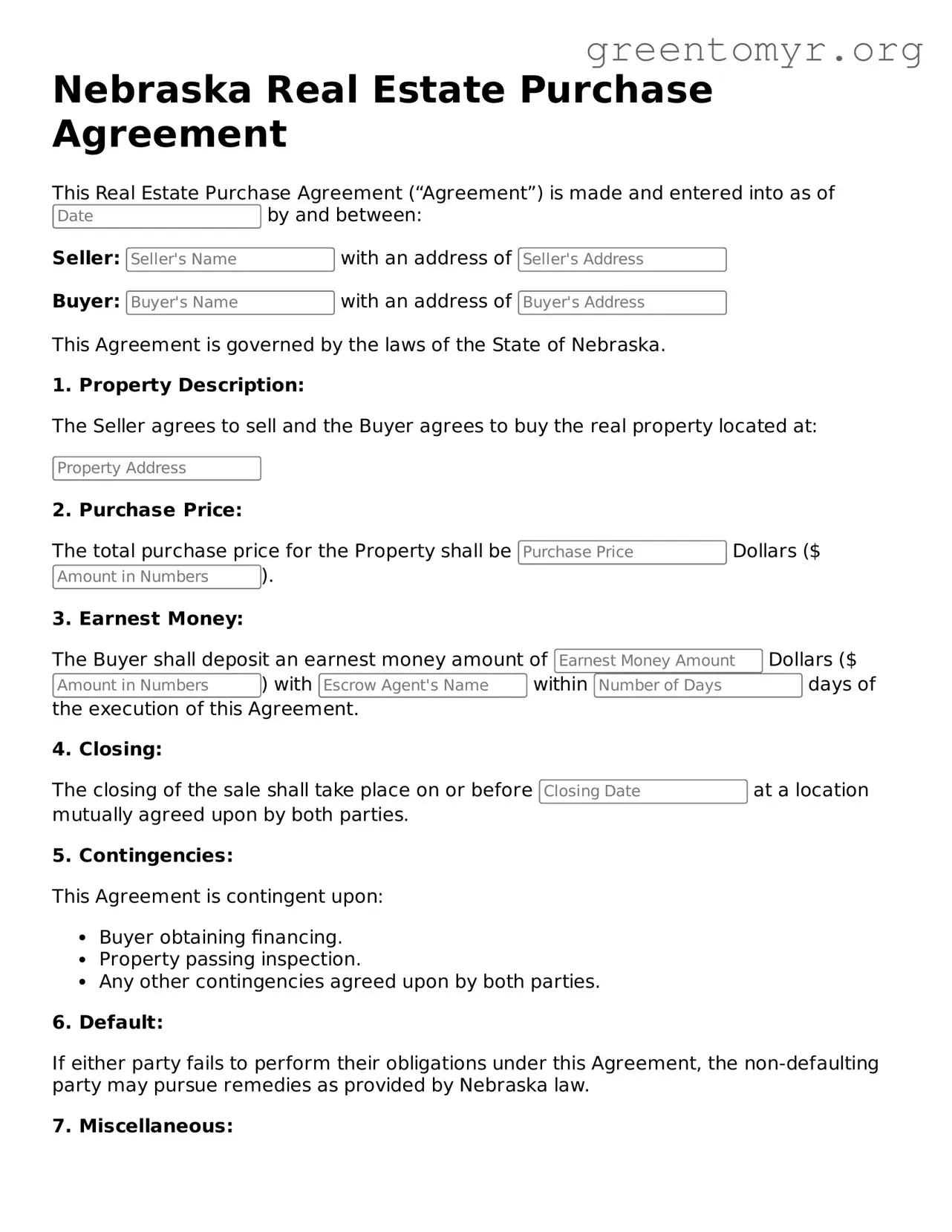
Nebraska Real Estate Purchase Agreement
This Real Estate Purchase Agreement (“Agreement”) is made and entered into as of by and between:
Seller: with an address of
Buyer: with an address of
This Agreement is governed by the laws of the State of Nebraska.
1. Property Description:
The Seller agrees to sell and the Buyer agrees to buy the real property located at:
2. Purchase Price:
The total purchase price for the Property shall be Dollars ($).
3. Earnest Money:
The Buyer shall deposit an earnest money amount of Dollars ($) with within days of the execution of this Agreement.
4. Closing:
The closing of the sale shall take place on or before at a location mutually agreed upon by both parties.
5. Contingencies:
This Agreement is contingent upon:
6. Default:
If either party fails to perform their obligations under this Agreement, the non-defaulting party may pursue remedies as provided by Nebraska law.
7. Miscellaneous:
This Agreement constitutes the entire understanding between the parties. Any amendments must be in writing and signed by both parties.
IN WITNESS WHEREOF, the parties have executed this Agreement as of the date first above written.
Seller's Signature: ___________________________ Date: _______________
Buyer's Signature: ___________________________ Date: _______________
| Fact Name | Description |
|---|---|
| Governing Law | The Nebraska Real Estate Purchase Agreement is governed by the laws of the State of Nebraska. |
| Purpose | This form is used to outline the terms and conditions of a real estate transaction between a buyer and a seller. |
| Essential Elements | Key components include the purchase price, property description, and closing date. |
| Legal Requirement | While not mandated by law, using a standardized form helps ensure that all necessary legal elements are included. |
Once you have the Nebraska Real Estate Purchase Agreement form in hand, you will need to carefully complete it to ensure that all necessary information is accurately provided. This document is crucial in formalizing the agreement between the buyer and seller regarding the sale of property. Following the steps below will help you navigate the process of filling out the form effectively.
The Nebraska Real Estate Purchase Agreement is a legal document used when a buyer and seller agree to the terms of a property sale in Nebraska. This agreement outlines the specifics of the transaction, including the purchase price, financing details, and any contingencies that must be met before the sale can be finalized. It serves to protect both parties by clearly stating their obligations and expectations.
A well-crafted Nebraska Real Estate Purchase Agreement typically includes the following key elements:
While it's not legally required to have a real estate agent to complete a Nebraska Real Estate Purchase Agreement, many people find it beneficial. Agents bring expertise in negotiations and can help navigate the complexities of real estate transactions. They can also ensure that all necessary terms are included and that the agreement complies with state laws.
If a buyer decides to back out of the agreement after signing, the consequences can vary based on the terms outlined in the contract. Typically, if the buyer has not met the contingencies specified in the agreement, they may forfeit their earnest money. However, if the buyer has a valid reason under the contingencies (like failing to secure financing), they may be able to walk away without penalties.
Changes to a signed Nebraska Real Estate Purchase Agreement can be made through an amendment. Both parties must agree to the changes, and it’s essential to document them in writing. This amendment should be signed by both the buyer and the seller to ensure it is legally binding. Verbal agreements or informal notes are generally not enforceable.
Yes, once signed by both parties, the Nebraska Real Estate Purchase Agreement becomes a legally binding document. This means that both the buyer and seller are obligated to fulfill the terms outlined in the agreement. If either party fails to comply, the other may have the right to pursue legal remedies, including seeking damages or specific performance.
Using a standard form for the Nebraska Real Estate Purchase Agreement is common practice. Many real estate agents and attorneys provide templates that comply with state laws. However, it’s crucial to ensure that any standard form you use is tailored to your specific transaction and includes all necessary details to avoid potential disputes.
If questions arise regarding the Nebraska Real Estate Purchase Agreement, it is advisable to seek professional guidance. Consulting a real estate attorney or a licensed real estate agent can provide clarity and ensure that you understand your rights and obligations. They can also help you navigate any complexities specific to your situation.
Filling out the Nebraska Real Estate Purchase Agreement can be a daunting task, especially for first-time buyers or sellers. Mistakes can easily occur, leading to delays or complications in the transaction. One common error is failing to include all necessary parties in the agreement. It’s essential to ensure that every individual or entity involved in the transaction is listed. Omitting a party can create confusion and may even jeopardize the enforceability of the contract.
Another frequent mistake is not specifying the purchase price clearly. While it may seem straightforward, vague terms or incorrect figures can lead to disputes later on. Buyers and sellers should double-check the numbers and ensure that the purchase price is clearly stated. Additionally, including any earnest money deposit amounts is crucial. This deposit shows the buyer’s commitment and can be a point of contention if not documented properly.
People often overlook the importance of including contingencies in the agreement. Contingencies are conditions that must be met for the sale to proceed, such as financing or inspection requirements. Failing to outline these can leave buyers vulnerable, as they may find themselves obligated to purchase a property that does not meet their expectations or needs. Clearly defined contingencies protect both parties and help ensure a smoother transaction.
Another area where mistakes frequently occur is in the description of the property. A precise and accurate description is vital to avoid misunderstandings. This includes not only the address but also any specific details about the property, such as boundaries or included fixtures. If the property description is vague or incorrect, it could lead to legal disputes or issues with title transfer.
Lastly, many individuals neglect to read the entire agreement before signing. This oversight can lead to unexpected obligations or rights that the signer may not fully understand. It’s crucial to review all terms and conditions carefully. Taking the time to read the agreement thoroughly can prevent misunderstandings and ensure that both parties are on the same page.
When engaging in a real estate transaction in Nebraska, several forms and documents may accompany the Nebraska Real Estate Purchase Agreement. Each of these documents serves a specific purpose and helps ensure that all parties understand their rights and obligations. Below is a list of commonly used forms in conjunction with the purchase agreement.
Understanding these documents can help facilitate a smoother real estate transaction. Each form plays a vital role in protecting the interests of both buyers and sellers, contributing to a successful closing process.
When filling out the Nebraska Real Estate Purchase Agreement form, it is essential to approach the task with care and attention to detail. Below are some important dos and don'ts to consider to ensure the process goes smoothly.
By adhering to these guidelines, you can help ensure that your Real Estate Purchase Agreement is completed correctly and effectively.
Understanding the Nebraska Real Estate Purchase Agreement form is crucial for anyone involved in real estate transactions. However, several misconceptions can lead to confusion. Here are five common misconceptions:
When filling out and using the Nebraska Real Estate Purchase Agreement form, it is essential to understand the key components and processes involved. Here are some important takeaways:
By keeping these takeaways in mind, individuals can navigate the Nebraska Real Estate Purchase Agreement process with greater confidence and clarity.