When renting a home in Nebraska, a Residential Lease Agreement is an essential document that outlines the rights and responsibilities of both landlords and tenants. This agreement serves as a legal contract that details key aspects such as the rental amount, payment due dates, and the duration of the lease. Additionally, it covers important topics like security deposits, maintenance responsibilities, and rules regarding pets or smoking. Understanding this form is crucial for ensuring a smooth rental experience, as it helps prevent misunderstandings and disputes. By clearly stating the terms of occupancy, both parties can feel secure in their commitments and expectations. Whether you are a seasoned landlord or a first-time renter, familiarizing yourself with the Nebraska Residential Lease Agreement will empower you to navigate the rental process with confidence.
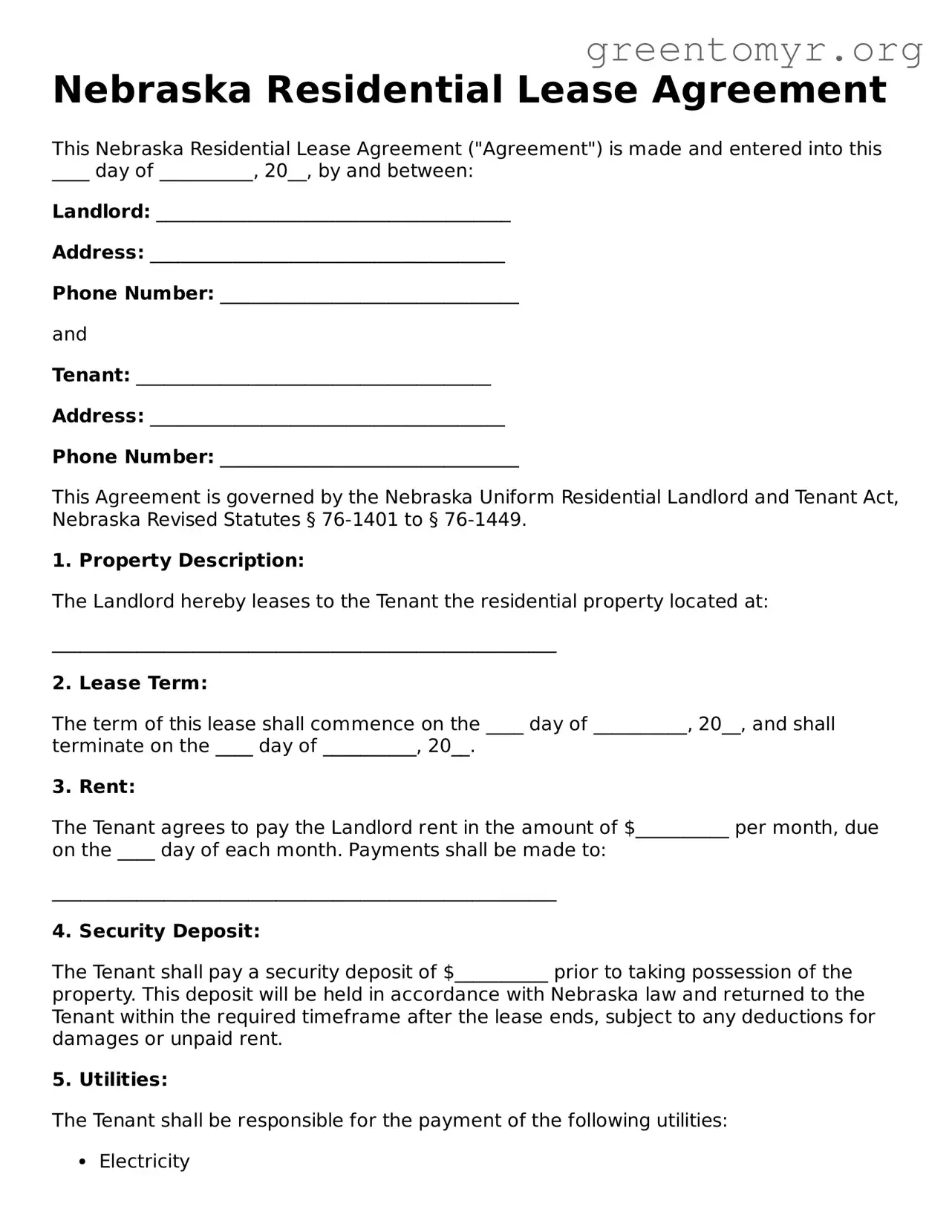
Nebraska Residential Lease Agreement
This Nebraska Residential Lease Agreement ("Agreement") is made and entered into this ____ day of __________, 20__, by and between:
Landlord: ______________________________________
Address: ______________________________________
Phone Number: ________________________________
and
Tenant: ______________________________________
Address: ______________________________________
Phone Number: ________________________________
This Agreement is governed by the Nebraska Uniform Residential Landlord and Tenant Act, Nebraska Revised Statutes § 76-1401 to § 76-1449.
1. Property Description:
The Landlord hereby leases to the Tenant the residential property located at:
______________________________________________________
2. Lease Term:
The term of this lease shall commence on the ____ day of __________, 20__, and shall terminate on the ____ day of __________, 20__.
3. Rent:
The Tenant agrees to pay the Landlord rent in the amount of $__________ per month, due on the ____ day of each month. Payments shall be made to:
______________________________________________________
4. Security Deposit:
The Tenant shall pay a security deposit of $__________ prior to taking possession of the property. This deposit will be held in accordance with Nebraska law and returned to the Tenant within the required timeframe after the lease ends, subject to any deductions for damages or unpaid rent.
5. Utilities:
The Tenant shall be responsible for the payment of the following utilities:
6. Maintenance and Repairs:
The Tenant agrees to maintain the property in a clean and sanitary condition. The Landlord shall be responsible for repairs to the property, except for damages caused by the Tenant's negligence or misuse.
7. Pets:
[ ] Pets are allowed with prior written consent from the Landlord.
[ ] No pets are allowed on the premises.
8. Termination:
Either party may terminate this Agreement at the end of the lease term by providing written notice at least ____ days prior to the termination date.
9. Governing Law:
This Agreement shall be governed by the laws of the State of Nebraska.
10. Signatures:
By signing below, both parties agree to the terms and conditions of this Nebraska Residential Lease Agreement.
Landlord Signature: ________________________________ Date: _______________
Tenant Signature: ________________________________ Date: _______________
| Fact Name | Details |
|---|---|
| Governing Law | The Nebraska Residential Lease Agreement is governed by Nebraska Revised Statutes, specifically Chapter 76. |
| Parties Involved | The agreement typically involves a landlord and a tenant, both of whom must be clearly identified. |
| Lease Duration | The lease can be for a fixed term or month-to-month, depending on the agreement between the parties. |
| Security Deposit | Landlords may require a security deposit, which is usually capped at one month's rent in Nebraska. |
| Rent Payment | The lease should specify the amount of rent, payment due date, and acceptable payment methods. |
| Maintenance Responsibilities | Typically, the landlord is responsible for maintaining the property, while tenants must keep their unit clean and report issues. |
| Termination Notice | For month-to-month leases, either party must provide a written notice of at least 30 days to terminate the agreement. |
Filling out the Nebraska Residential Lease Agreement form requires careful attention to detail. Each section of the form must be completed accurately to ensure clarity between the landlord and tenant. Below are the steps to guide you through the process.
After completing these steps, review the form for any errors or omissions before finalizing it. Both parties should retain a copy for their records.
A Nebraska Residential Lease Agreement is a legal document that outlines the terms and conditions under which a landlord rents property to a tenant. This agreement serves to protect the rights of both parties and provides clarity on various aspects of the rental arrangement.
The lease agreement typically includes the following key elements:
Lease terms in Nebraska can vary widely. Common durations include one year, six months, or month-to-month agreements. The specific term should be clearly stated in the lease agreement to avoid misunderstandings.
A security deposit is a sum of money paid by the tenant to the landlord to cover potential damages or unpaid rent. In Nebraska, the security deposit cannot exceed one month's rent unless the lease specifies otherwise. The landlord must return the deposit within 14 days after the tenant moves out, minus any deductions for damages or unpaid rent.
Generally, a landlord must provide reasonable notice before entering the rental property, typically 24 hours. Exceptions may apply in emergencies, such as a fire or flood. It's important for both parties to understand the terms regarding entry in the lease agreement.
If a tenant wishes to break the lease early, they may face penalties, such as losing their security deposit or being responsible for remaining rent payments until a new tenant is found. Tenants should review the lease terms regarding early termination and consider discussing their situation with the landlord.
Yes, Nebraska has specific laws that govern residential leases. These laws cover various aspects, including security deposits, eviction processes, and tenant rights. It is advisable for both landlords and tenants to familiarize themselves with these laws to ensure compliance and protect their rights.
If a tenant experiences issues with the lease, such as maintenance problems or disputes with the landlord, they should first attempt to resolve the matter directly with the landlord. If that fails, tenants may seek assistance from local housing authorities or legal aid organizations for guidance on their rights and options.
While verbal agreements can be legally binding, having a written lease agreement is highly recommended. A written document provides clear evidence of the terms agreed upon and can help prevent disputes in the future. It is essential for both landlords and tenants to keep a copy of the signed lease for their records.
Filling out the Nebraska Residential Lease Agreement form can be a straightforward process, yet many individuals stumble upon common pitfalls that can lead to misunderstandings or legal complications. One frequent mistake is neglecting to include all necessary tenant and landlord information. This includes full names, addresses, and contact details. Omitting even a single piece of information can cause issues down the line, especially if communication becomes necessary.
Another common error involves failing to specify the rental property address accurately. It may seem trivial, but a vague or incorrect address can lead to confusion about the location of the rental unit. This can create problems for both parties, especially in terms of legal notices or disputes that may arise later.
Many individuals also overlook the importance of detailing the lease term. Whether it's a month-to-month arrangement or a fixed-term lease, clarity is crucial. Not specifying the start and end dates can leave room for misinterpretation, potentially leading to disputes about when the lease actually begins and ends.
Additionally, some people forget to outline the rent amount and payment schedule. It’s essential to state how much rent is due, when it should be paid, and the acceptable methods of payment. Inconsistent or unclear payment terms can lead to missed payments or disputes over what was agreed upon.
Security deposits often create confusion as well. Failing to specify the amount of the security deposit, the conditions under which it may be withheld, or the timeline for its return can lead to misunderstandings. Clarity on this point helps ensure that both parties are on the same page regarding expectations and responsibilities.
Another mistake is not including any rules or restrictions related to the property. This could encompass pet policies, smoking regulations, or noise restrictions. Clearly outlining these rules in the lease can prevent conflicts and foster a harmonious living environment.
Some individuals neglect to address maintenance responsibilities. It’s important to clarify who is responsible for repairs and maintenance, whether it’s the landlord or the tenant. This can help avoid disputes over who should take care of issues that arise during the lease term.
Moreover, many overlook the significance of including a clause for termination of the lease. This clause should outline the conditions under which either party may terminate the agreement. Without it, both parties may find themselves in a difficult situation if they wish to end the lease early.
People also often fail to read the entire lease agreement before signing. This can lead to agreeing to terms that were not fully understood. Taking the time to review the document can help ensure that all parties are aware of their rights and obligations.
Finally, not keeping a copy of the signed lease can be a costly mistake. Both the tenant and landlord should retain a copy for their records. This ensures that if any disputes arise, there is a reference point to clarify what was agreed upon.
When entering into a rental agreement in Nebraska, several additional forms and documents may be necessary to ensure a smooth and legally sound process. These documents help clarify the responsibilities of both landlords and tenants, as well as provide essential information regarding the rental property.
Utilizing these forms and documents can help both landlords and tenants navigate their rental relationship more effectively. Clarity and communication are essential in ensuring that everyone understands their rights and responsibilities.
Filling out the Nebraska Residential Lease Agreement form can be a straightforward process if you know what to do and what to avoid. Here are some essential tips to guide you.
By following these guidelines, you can navigate the lease agreement process with confidence and clarity. A well-prepared tenant is a happy tenant.
When it comes to the Nebraska Residential Lease Agreement form, several misconceptions can lead to confusion for both landlords and tenants. Understanding these misconceptions can help ensure a smoother rental experience. Here’s a list of common misunderstandings:
Many people believe that all lease agreements are identical. In reality, each lease can vary significantly based on the terms negotiated between the landlord and tenant.
Some tenants think that a verbal agreement is enough. However, having a written lease is crucial as it provides clear evidence of the terms agreed upon.
It’s a common belief that security deposits cannot be refunded. In Nebraska, tenants can receive their deposits back, minus any allowable deductions for damages or unpaid rent.
Many tenants assume landlords have unrestricted access to their rental units. However, landlords must provide reasonable notice before entering, except in emergencies.
Some landlords think they can modify lease terms at will. Changes typically require mutual agreement from both parties to be enforceable.
While landlords are generally responsible for major repairs, tenants may also have obligations to maintain the property and report issues promptly.
Tenants often believe that late fees are standard. However, late fees must be explicitly stated in the lease agreement to be enforceable.
It’s a common misconception that pets are permitted in all rental properties. Many landlords have specific pet policies that must be adhered to.
Some individuals think that lease agreements are informal and not legally binding. In fact, a properly executed lease is a legal contract that both parties must follow.
By addressing these misconceptions, both landlords and tenants can navigate the rental process more effectively and avoid potential disputes.
When filling out and using the Nebraska Residential Lease Agreement form, it is essential to keep several key points in mind. This ensures that both landlords and tenants understand their rights and responsibilities. Below are important takeaways regarding the process:
By keeping these takeaways in mind, both landlords and tenants can navigate the leasing process more effectively.