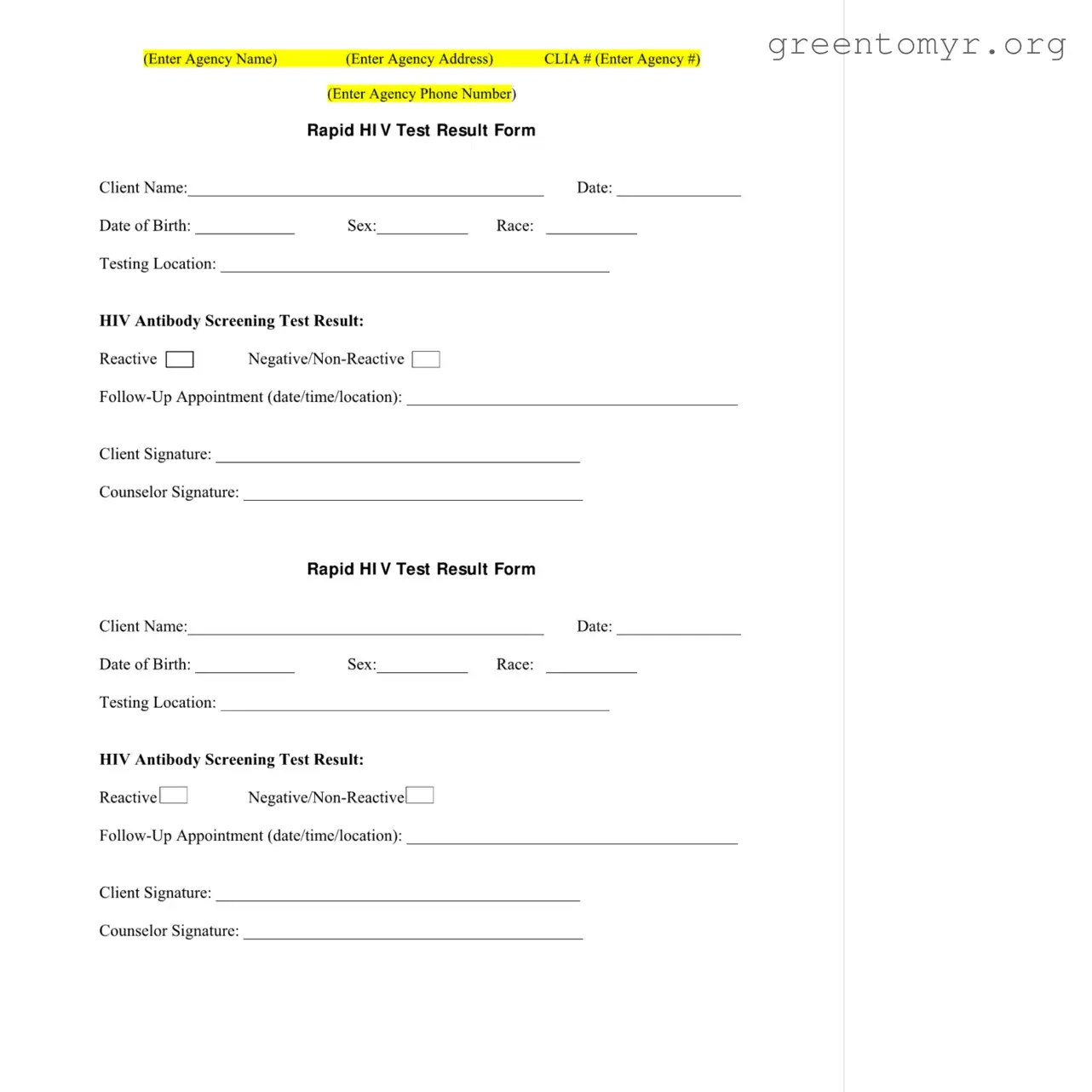
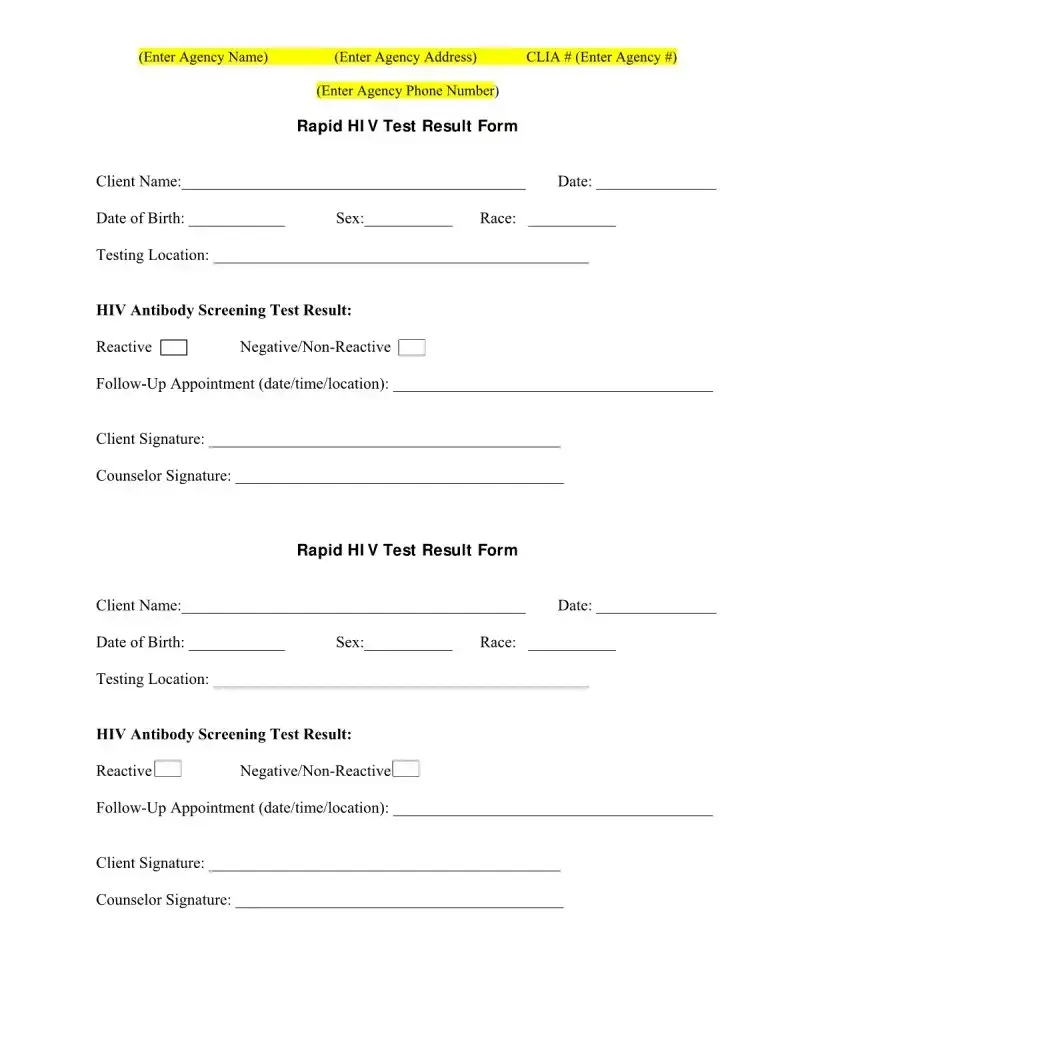
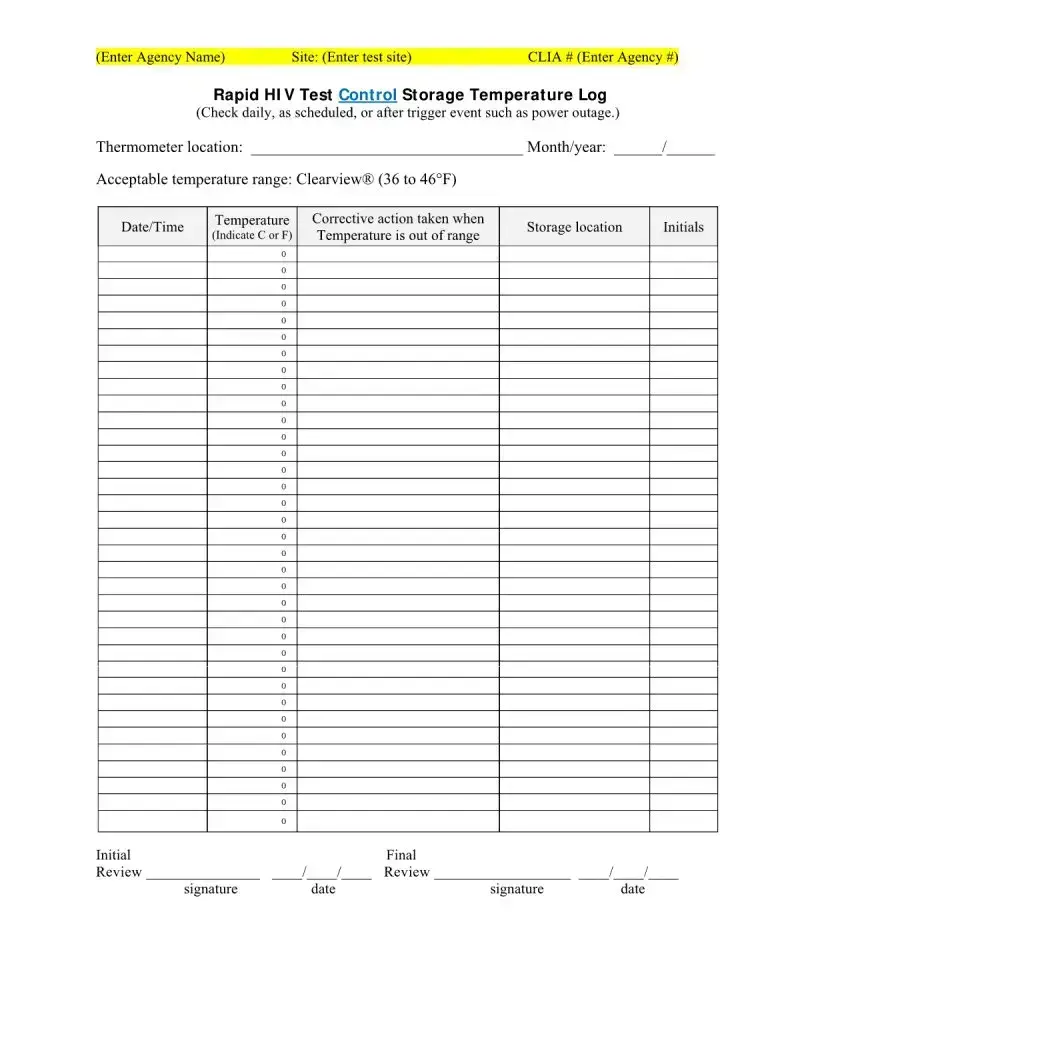
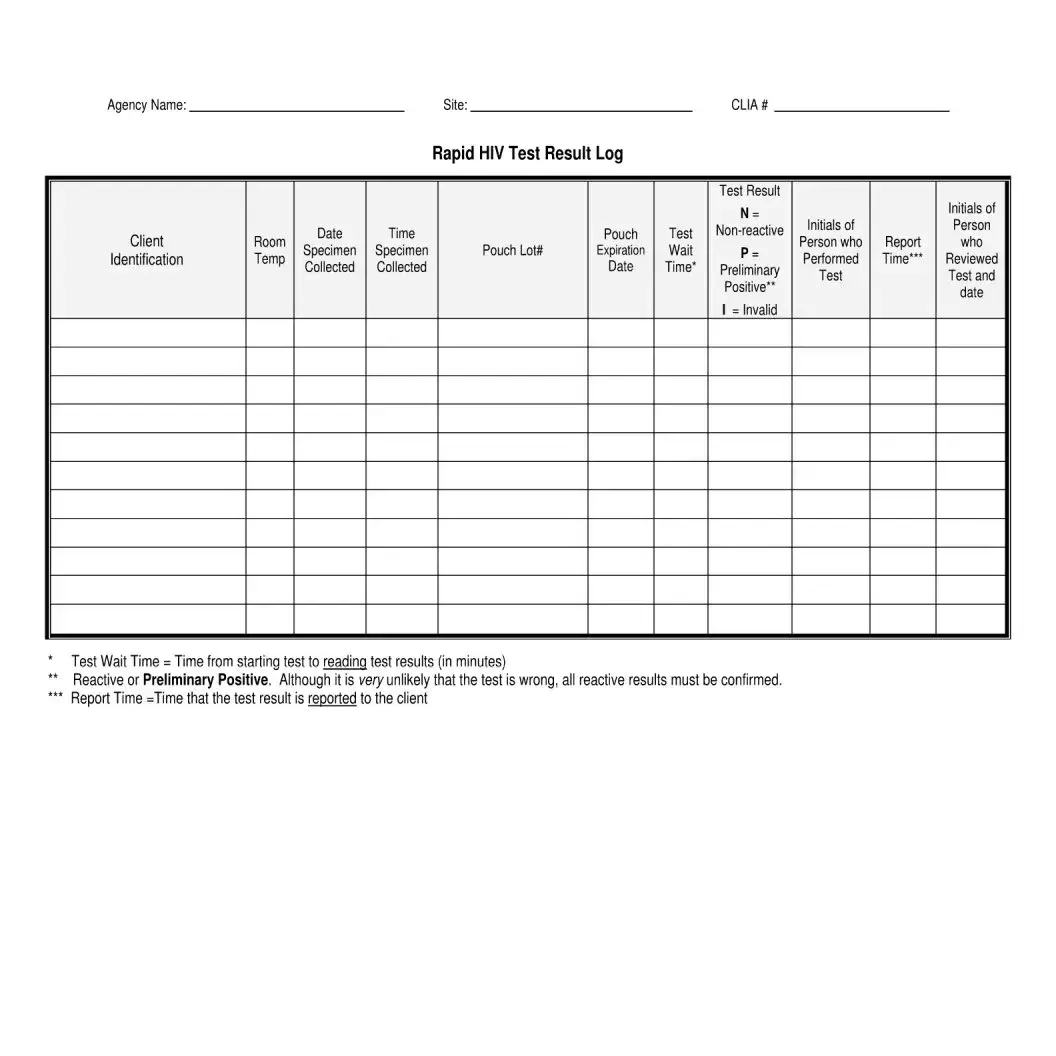
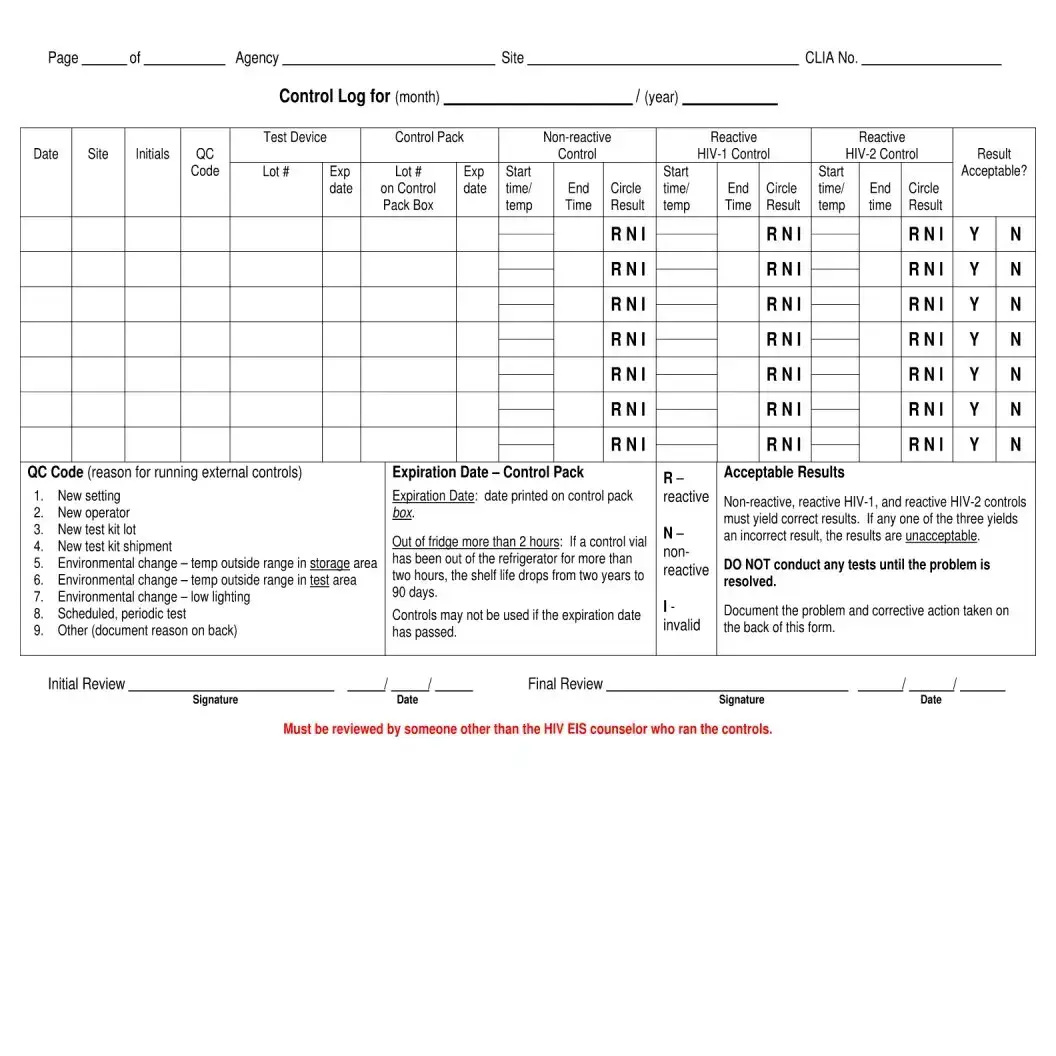
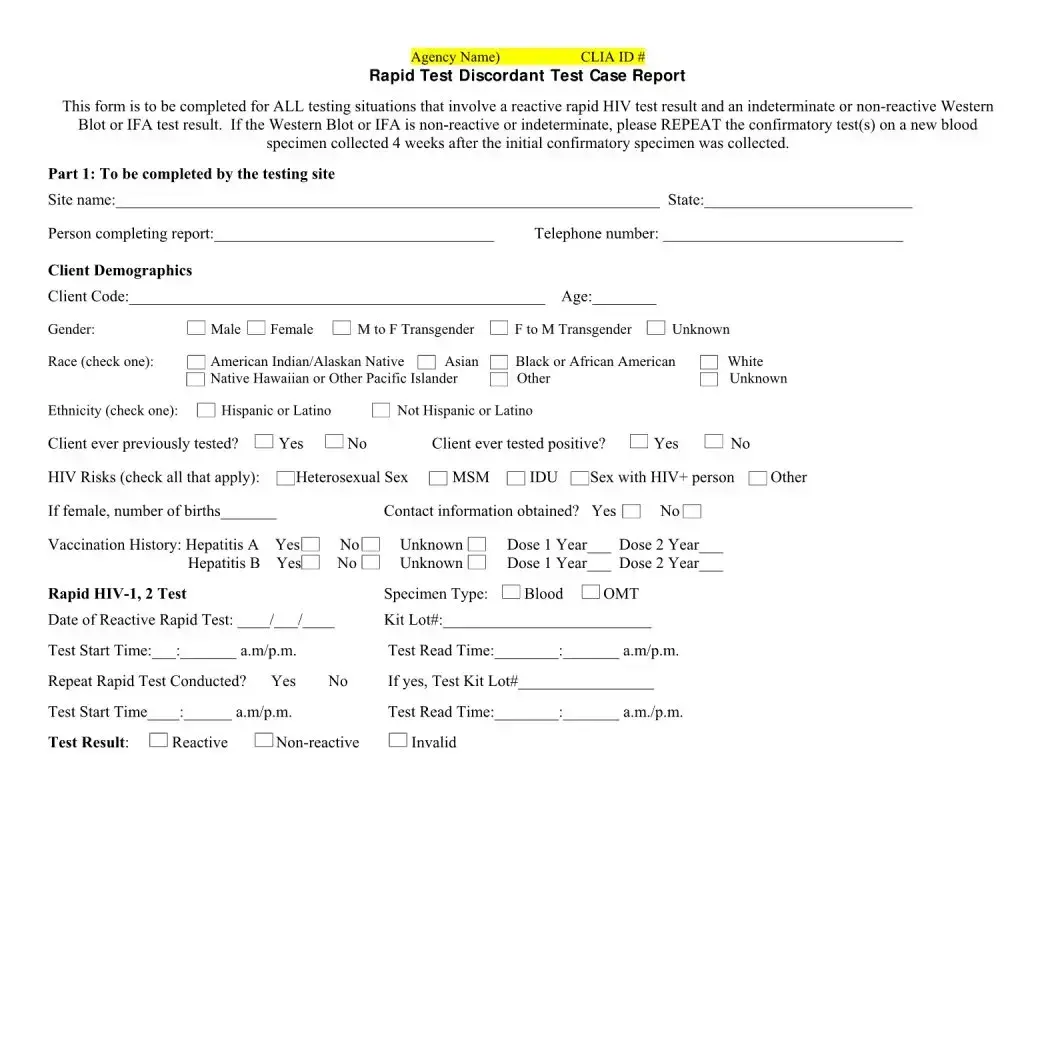
When it comes to understanding the Negative HIV Test Form, it's essential to recognize its key components and the role it plays in the testing process. This form serves as a crucial document for individuals undergoing HIV testing, capturing important details such as the client's name, date of birth, and the testing location. It indicates the outcome of the HIV antibody screening, clearly stating whether the result is reactive or negative/non-reactive. Additionally, it provides a space for follow-up appointments, ensuring that clients are informed about the next steps in their healthcare journey. The form also includes sections for signatures from both the client and the counselor, which helps to confirm that the information has been accurately conveyed and understood. Beyond the test results, the document may feature temperature logs for both the test devices and controls, ensuring that proper storage conditions are maintained. This meticulous record-keeping is vital for the integrity of the testing process, as it ensures that tests are performed under optimal conditions. Understanding these elements is important for both clients and healthcare providers, as it promotes transparency and trust in the testing process.

| Fact Name | Description | Governing Law(s) |
|---|---|---|
| Client Information | The form requires essential client details, including name, date of birth, sex, and race. | State Health Department Regulations |
| Test Result Reporting | Results from the HIV antibody screening test must be clearly marked as either reactive or negative/non-reactive. | CDC Guidelines for HIV Testing |
| Follow-Up Appointment | A section is designated for scheduling a follow-up appointment, ensuring clients receive necessary care. | State Health Care Access Laws |
| Storage Temperature Log | Testing devices must be stored within specific temperature ranges, documented daily or after significant events. | CLIA Regulations |
| Signature Requirements | Both the client and the counselor must sign the form, confirming that the information is accurate and complete. | State Informed Consent Laws |
Filling out the Negative HIV Test form is an important step in documenting the results of the test. Once you have completed the form, it will be processed by the testing agency, and you will receive further instructions regarding your health and any necessary follow-up appointments.
The Negative HIV Test form is used to document the results of an HIV antibody screening test. It provides essential information about the client's testing details, including their name, date of birth, race, and the testing location. The form serves as an official record indicating that the client tested negative for HIV.
The form requires several key pieces of information, including:
A Negative or Non-Reactive result indicates that the test did not detect HIV antibodies in the client's blood. This generally means that the client is not infected with HIV at the time of testing. However, it is important to note that if there has been recent exposure to HIV, retesting may be necessary after a certain period.
If you receive a Reactive result, it is crucial to follow up with a healthcare provider for further testing. Reactive results are not definitive for HIV infection; they require confirmation through additional testing. The form will include information about the follow-up appointment for this purpose.
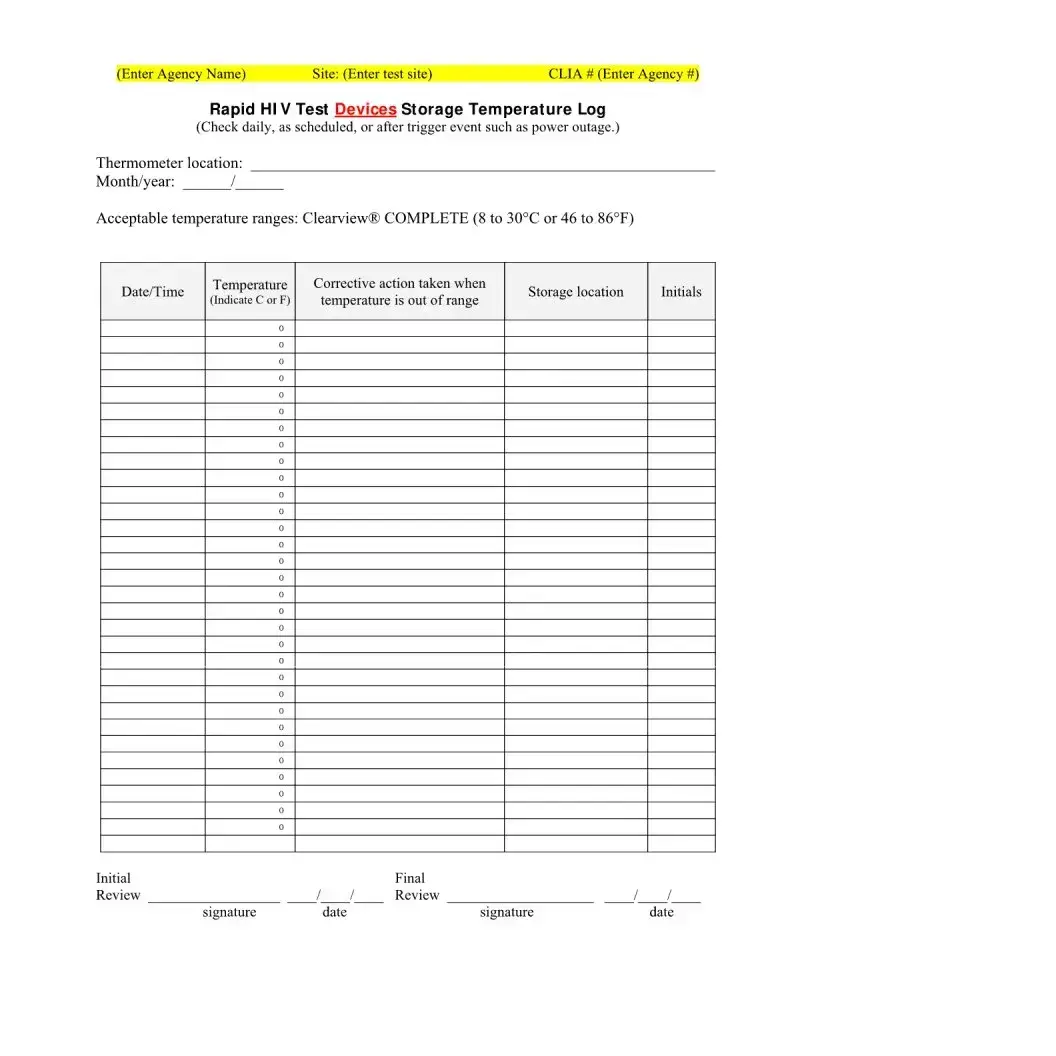
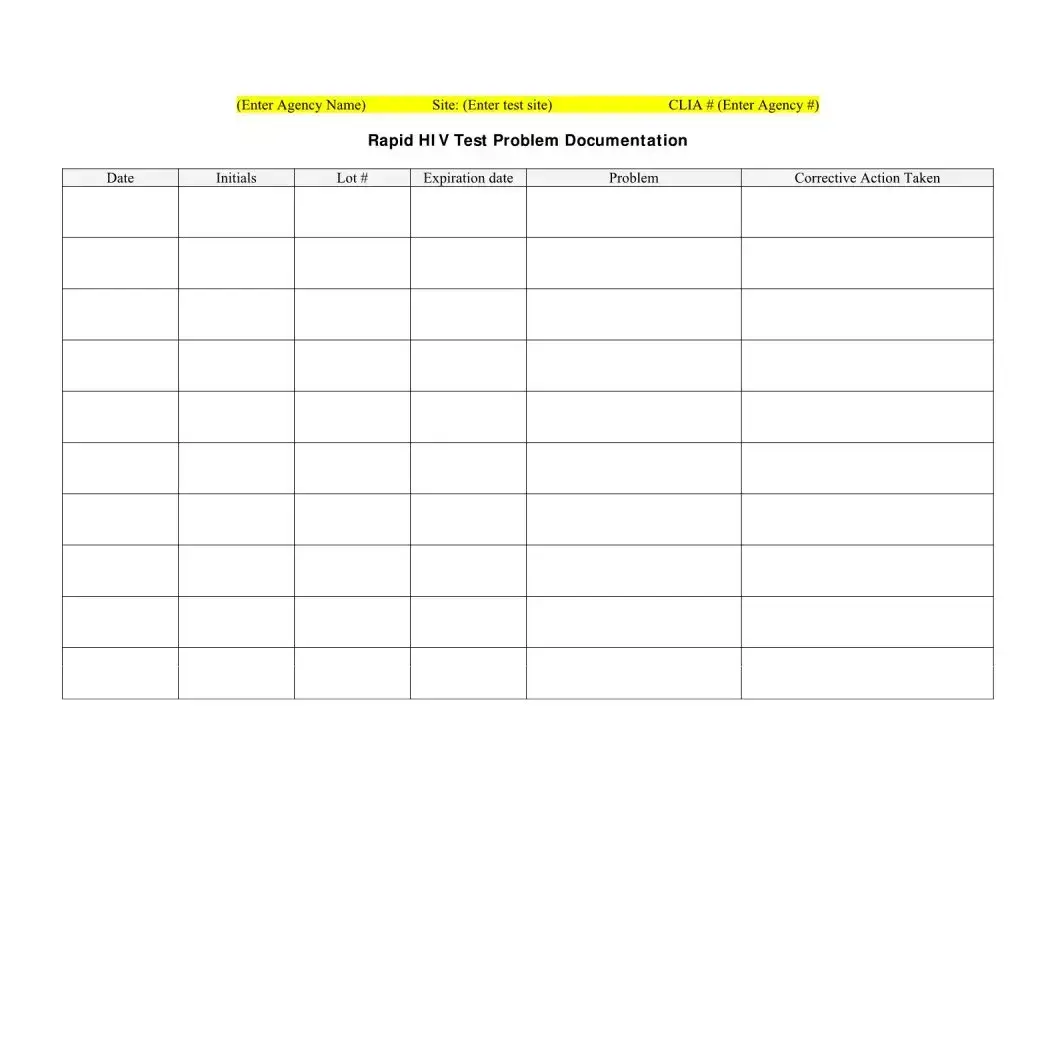
The storage temperature for rapid HIV test devices is monitored daily or after specific events, such as a power outage. A temperature log is maintained, indicating the date, time, and temperature readings. If the temperature falls outside the acceptable range (8 to 30°C or 46 to 86°F for Clearview® COMPLETE), corrective actions must be taken and documented.
If the storage temperature is out of range, immediate corrective actions should be taken. This may include adjusting the storage conditions or relocating the test devices to a suitable environment. It is important to document the corrective actions in the temperature log.
The follow-up appointment is essential for discussing test results and any further necessary actions. For clients with a Reactive result, this appointment will involve confirmatory testing. Even for those with a Negative result, follow-up can provide additional support and resources regarding HIV prevention and health care.
The test result is reported to the client at a specified time, noted on the form. This ensures transparency and allows the client to receive their results in a timely manner. The person who performed the test and the individual who reviewed the test results will also be documented for accountability.
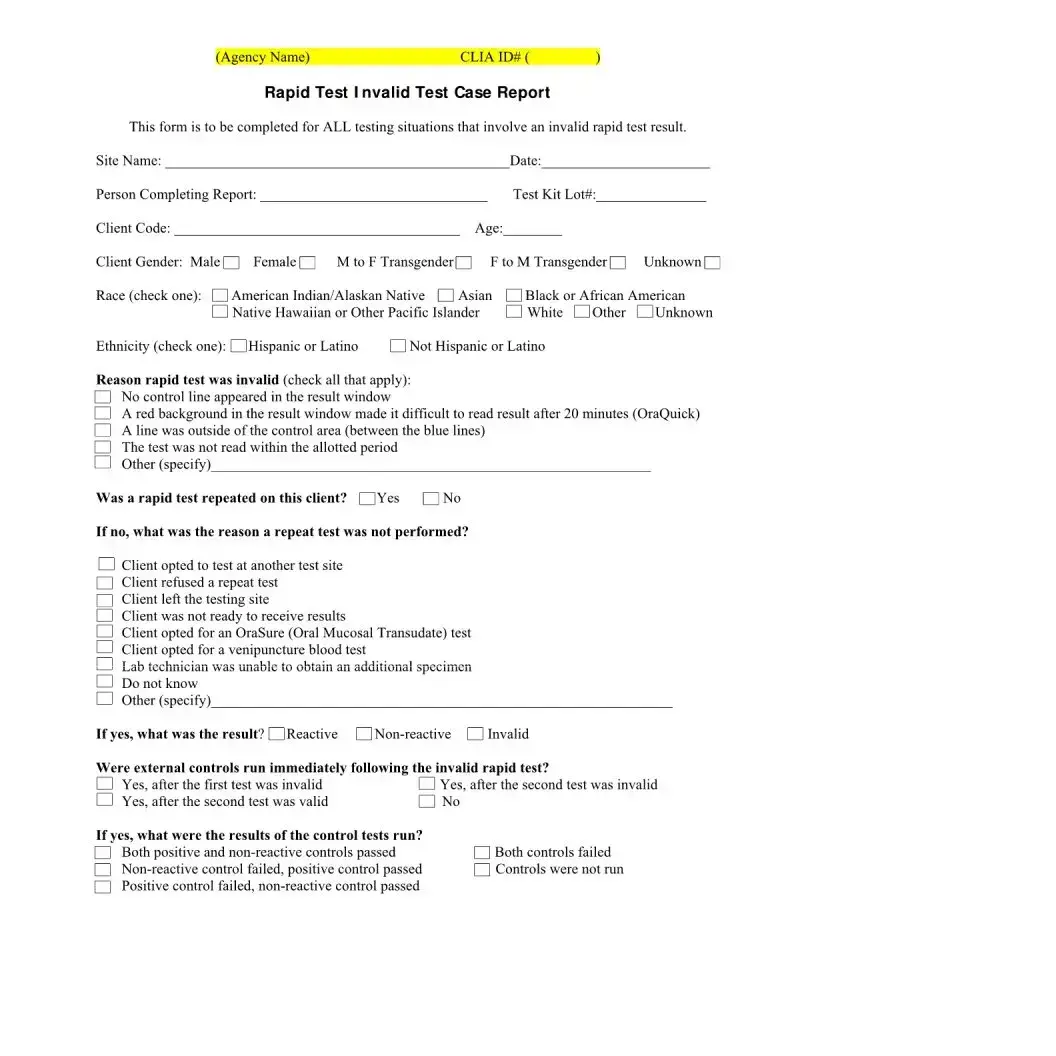
If the test result is marked as invalid, it indicates that the test could not be interpreted correctly. In this case, the client will need to undergo retesting. The invalid result should be documented on the form, and appropriate steps should be taken to ensure accurate testing in a subsequent attempt.
Filling out the Negative HIV Test form may seem straightforward, but many individuals make common mistakes that can lead to confusion or delays. One frequent error is not providing complete personal information. Clients often forget to include their full names or dates of birth. This information is crucial for accurate record-keeping and ensuring that the results are correctly attributed to the right person.
Another mistake involves the date section. Some people write the wrong date or format it incorrectly. This can lead to complications, especially if the results need to be verified later. Always double-check the date to ensure it aligns with the testing date.
Many individuals also overlook the importance of specifying the testing location. This detail helps in tracking where the test was administered, which is essential for both the agency and the client. Leaving this section blank can create unnecessary complications down the line.
In the section for the HIV Antibody Screening Test Result, clients sometimes misinterpret the options. Marking the wrong box, whether it’s “Reactive” or “Negative/Non-Reactive,” can lead to significant misunderstandings. It's vital to read the instructions carefully and ensure that the correct option is selected.
Additionally, clients may forget to schedule a follow-up appointment. This oversight can hinder access to further testing or counseling that may be necessary. Always make sure to fill in the date, time, and location for any follow-up appointments.
Another common error is not signing the form. Both the client and the counselor need to provide their signatures to validate the document. A missing signature can render the form incomplete and may delay the processing of results.
Some people neglect to check the storage temperature logs for the test devices. This is a critical part of ensuring the accuracy of the test results. Failing to record the temperature can lead to questions about the reliability of the test.
Moreover, individuals may forget to note the initial review and final review signatures. This step is essential for maintaining the integrity of the testing process. Without these signatures, the form may lack necessary verification.
Lastly, clients sometimes fail to understand the importance of the report time. This detail is crucial for tracking when results are communicated. If this information is missing, it can create confusion regarding the timing of the results.
When individuals undergo HIV testing, several documents often accompany the Negative HIV Test form. Each of these forms serves a specific purpose in ensuring that the testing process is thorough, accurate, and compliant with regulations. Below is a list of commonly used forms and documents related to HIV testing.
These forms and documents play a vital role in the HIV testing process, ensuring that clients receive the necessary support and information. By understanding the purpose of each document, clients can navigate their testing experience with greater confidence and clarity.
Medical Test Result Form: Similar to the Negative HIV Test form, this document provides essential information about a patient's test results, including their name, date of birth, and the specific test conducted. Both forms require signatures from both the client and the healthcare provider.
Consent Form for Medical Testing: Like the Negative HIV Test form, this document ensures that the client understands the testing process and consents to it. It often includes personal details and may require a signature to confirm consent.
Follow-Up Appointment Confirmation: This document outlines the details of any follow-up appointments related to the test results. Similar to the Negative HIV Test form, it includes the client's name and the date and time of the appointment.
Patient Information Sheet: This form gathers demographic and medical history information from the client. It is comparable to the Negative HIV Test form in that it collects personal data necessary for proper testing and follow-up.
Laboratory Test Request Form: This document is used to request specific tests from a laboratory. It shares similarities with the Negative HIV Test form by including client details and the type of test being performed.
Test Result Notification Letter: This letter communicates the results of a medical test to the patient. It is akin to the Negative HIV Test form, as both documents aim to inform the client about their health status.
Quality Control Log: Used to track the storage conditions of testing materials, this log is similar in that it ensures the accuracy of test results, like those documented in the Negative HIV Test form.
Patient Referral Form: This document is used to refer a patient to another healthcare provider for further evaluation. It is similar to the Negative HIV Test form because it may also include personal information and details about the reason for referral.
Emergency Contact Form: This form collects emergency contact information for clients. Like the Negative HIV Test form, it ensures that critical information is readily available for healthcare providers.
Insurance Information Form: This document gathers details about a patient's insurance coverage. It parallels the Negative HIV Test form by collecting necessary information to facilitate testing and billing processes.
When filling out the Negative HIV Test form, there are important guidelines to follow. Here is a list of things you should and shouldn't do:
Understanding the Negative HIV Test form is crucial for those seeking clarity about their health status. Here are some common misconceptions surrounding this important document:
Being informed about these misconceptions can help you make better decisions regarding your health and testing options. Always consult with a healthcare professional for personalized advice.
When filling out and utilizing the Negative HIV Test form, it is essential to keep several key points in mind to ensure accuracy and compliance. Below are important takeaways to consider:
By paying close attention to these details, you can help ensure that the Negative HIV Test form is filled out correctly and serves its intended purpose effectively.