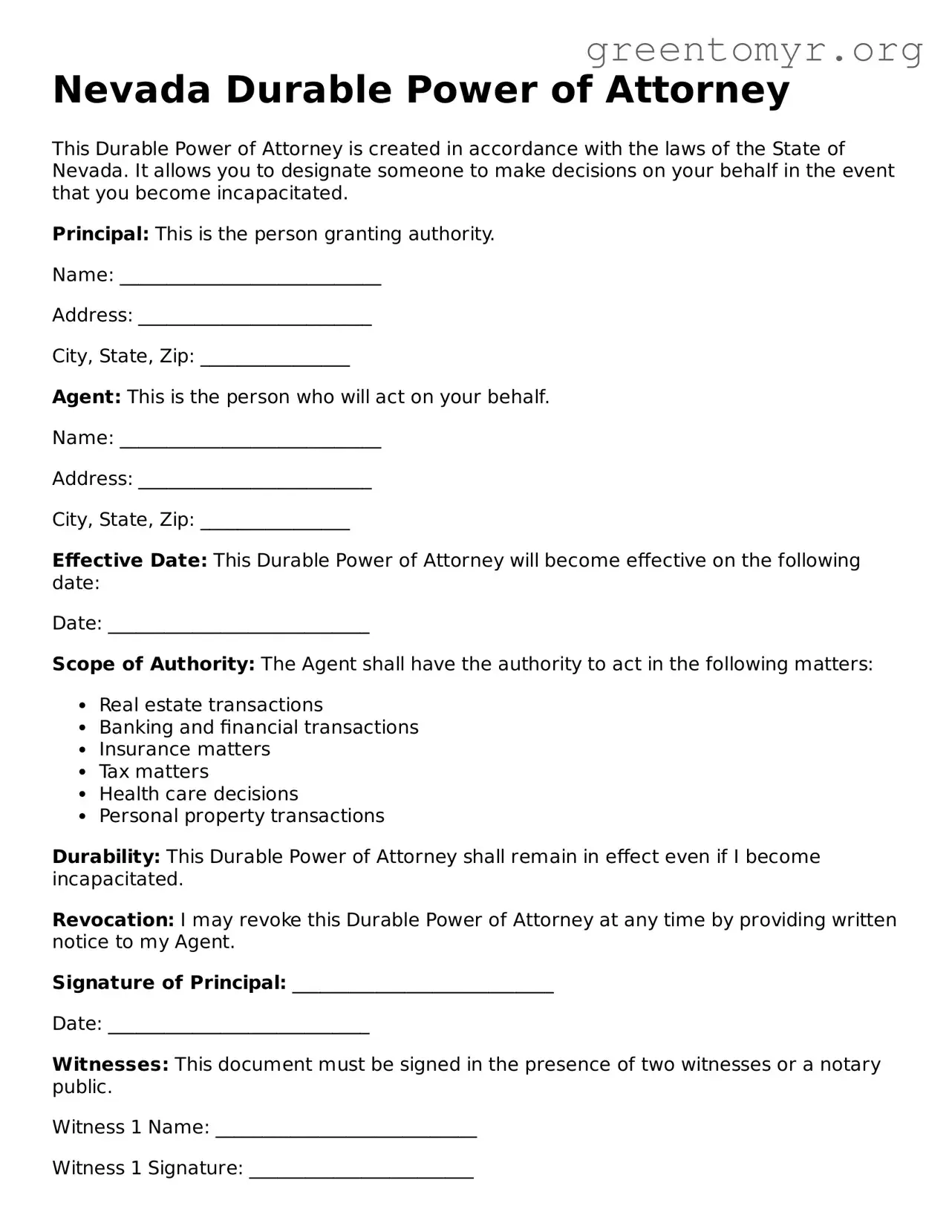
The Nevada Durable Power of Attorney form is a crucial legal document that allows individuals to designate someone they trust to make financial and legal decisions on their behalf when they are unable to do so themselves. This form is particularly significant because it remains effective even if the person who created it becomes incapacitated. In Nevada, the durable power of attorney can cover a wide range of matters, including managing bank accounts, handling real estate transactions, and making investment decisions. It is essential for individuals to choose their agents wisely, as these representatives will have the authority to act in their best interest. Additionally, the form must be signed in accordance with state laws, ensuring that it is legally binding and recognized by financial institutions and other entities. Understanding the implications and responsibilities associated with this document is vital for anyone considering its use, as it can provide peace of mind and security in times of uncertainty.
Nevada Durable Power of Attorney
This Durable Power of Attorney is created in accordance with the laws of the State of Nevada. It allows you to designate someone to make decisions on your behalf in the event that you become incapacitated.
Principal: This is the person granting authority.
Name: ____________________________
Address: _________________________
City, State, Zip: ________________
Agent: This is the person who will act on your behalf.
Name: ____________________________
Address: _________________________
City, State, Zip: ________________
Effective Date: This Durable Power of Attorney will become effective on the following date:
Date: ____________________________
Scope of Authority: The Agent shall have the authority to act in the following matters:
Durability: This Durable Power of Attorney shall remain in effect even if I become incapacitated.
Revocation: I may revoke this Durable Power of Attorney at any time by providing written notice to my Agent.
Signature of Principal: ____________________________
Date: ____________________________
Witnesses: This document must be signed in the presence of two witnesses or a notary public.
Witness 1 Name: ____________________________
Witness 1 Signature: ________________________
Date: ____________________________
Witness 2 Name: ____________________________
Witness 2 Signature: ________________________
Date: ____________________________
Notary Public: If notarized, complete the following:
State of Nevada, County of ________________
Subscribed and sworn to before me this _____ day of __________, 20__.
Notary Signature: ________________________
My commission expires: ____________________
| Fact Name | Details |
|---|---|
| Definition | A Durable Power of Attorney allows an individual to appoint someone else to manage their financial and legal affairs, even if they become incapacitated. |
| Governing Law | The Nevada Durable Power of Attorney is governed by Nevada Revised Statutes (NRS) Chapter 162A. |
| Durability | This form remains effective even if the principal becomes incapacitated, which distinguishes it from a regular power of attorney. |
| Principal | The individual who creates the Durable Power of Attorney is referred to as the principal. |
| Agent | The person appointed to act on behalf of the principal is known as the agent or attorney-in-fact. |
| Signing Requirements | The form must be signed by the principal and acknowledged before a notary public or witnessed by two individuals. |
| Revocation | The principal can revoke the Durable Power of Attorney at any time, as long as they are competent. |
| Limitations | While broad powers can be granted, certain actions, such as making a will, cannot be delegated through this form. |
| Health Care Decisions | This form does not cover health care decisions; a separate advance directive is required for medical matters. |
Filling out the Nevada Durable Power of Attorney form is an important step in ensuring your wishes are respected. After completing the form, it will need to be signed and witnessed to make it legally binding.
A Durable Power of Attorney (DPOA) in Nevada is a legal document that allows an individual, known as the principal, to designate another person, referred to as the agent or attorney-in-fact, to make decisions on their behalf. This power remains effective even if the principal becomes incapacitated. It can cover a wide range of decisions, including financial matters and healthcare choices.
Creating a DPOA is essential for ensuring that your financial and healthcare decisions are managed according to your wishes if you become unable to make those decisions yourself. It provides peace of mind, knowing that a trusted individual will handle your affairs. Additionally, it can help avoid potential legal complications and disputes among family members.
In Nevada, you can appoint anyone as your agent, provided they are at least 18 years old and capable of managing your affairs. Common choices include family members, close friends, or trusted advisors. It is crucial to select someone who understands your values and preferences, as they will be responsible for making significant decisions on your behalf.
You have the flexibility to grant a wide range of powers to your agent, including:
It is important to specify the powers you wish to grant in the DPOA document to ensure your agent acts in accordance with your wishes.
To create a DPOA in Nevada, follow these steps:
Once completed, provide copies to your agent and any relevant institutions, such as banks or healthcare providers.
Yes, you can revoke your DPOA at any time as long as you are mentally competent. To do so, you must create a written revocation document and notify your agent and any institutions that have a copy of the original DPOA. It is advisable to formally destroy any copies of the original document to prevent confusion.
A Durable Power of Attorney created in Nevada is generally valid in other states, but laws vary. Some states may have specific requirements for DPOA documents. It is wise to review the laws of your new state or consult with a local attorney to ensure that your DPOA remains effective after your move.
Filling out a Durable Power of Attorney (DPOA) form in Nevada can be straightforward, but mistakes can lead to complications. One common error is not clearly identifying the agent. The agent is the person who will make decisions on your behalf. If the agent's name is misspelled or if their contact information is incomplete, it may cause delays or confusion when the document is needed.
Another frequent mistake is failing to specify the powers granted. The form allows you to choose what authority you want to give your agent. If you leave this section vague or unchecked, your agent may not have the necessary power to act in your best interest. It’s important to be clear about what decisions your agent can make, whether it’s financial, medical, or both.
People often overlook the need for witnesses or notarization. In Nevada, a DPOA must be signed in the presence of a notary public or two witnesses. If this step is skipped, the form may not be valid. Always ensure that you follow the requirements for signing to avoid issues later.
Another mistake involves not updating the DPOA when circumstances change. Life events such as marriage, divorce, or the death of an agent can affect your DPOA. It’s crucial to review and update your document regularly to ensure it reflects your current wishes and situation.
Lastly, many individuals fail to communicate their wishes with their chosen agent. Once the DPOA is completed, discussing your decisions and preferences with your agent is essential. This conversation helps ensure that they understand your values and can act accordingly when the time comes. Without this communication, even a well-drafted DPOA may not serve its intended purpose.
A Nevada Durable Power of Attorney (DPOA) is a crucial document that allows an individual to designate someone to make financial or medical decisions on their behalf if they become incapacitated. However, it is often beneficial to have additional documents in place to ensure comprehensive planning. Here are four other forms and documents that are commonly used alongside a Nevada Durable Power of Attorney.
Having these documents in place alongside a Nevada Durable Power of Attorney can provide peace of mind and ensure that an individual's wishes are respected in various circumstances. Proper estate planning is essential for protecting personal and financial interests.
The Durable Power of Attorney (DPOA) is an important legal document that allows one person to act on behalf of another in financial or legal matters. Several other documents serve similar purposes, providing authority and guidance in various situations. Below is a list of seven documents that share similarities with the DPOA:
When filling out the Nevada Durable Power of Attorney form, it's essential to follow specific guidelines to ensure the document is valid and meets your needs. Here are six things you should and shouldn't do:
Understanding the Nevada Durable Power of Attorney form is crucial for anyone considering this legal document. However, several misconceptions can lead to confusion. Here are eight common misconceptions explained:
By addressing these misconceptions, individuals can make informed decisions about establishing a Durable Power of Attorney in Nevada.
When considering a Durable Power of Attorney (DPOA) in Nevada, it is important to understand its implications and how to effectively use the form. Here are some key takeaways: