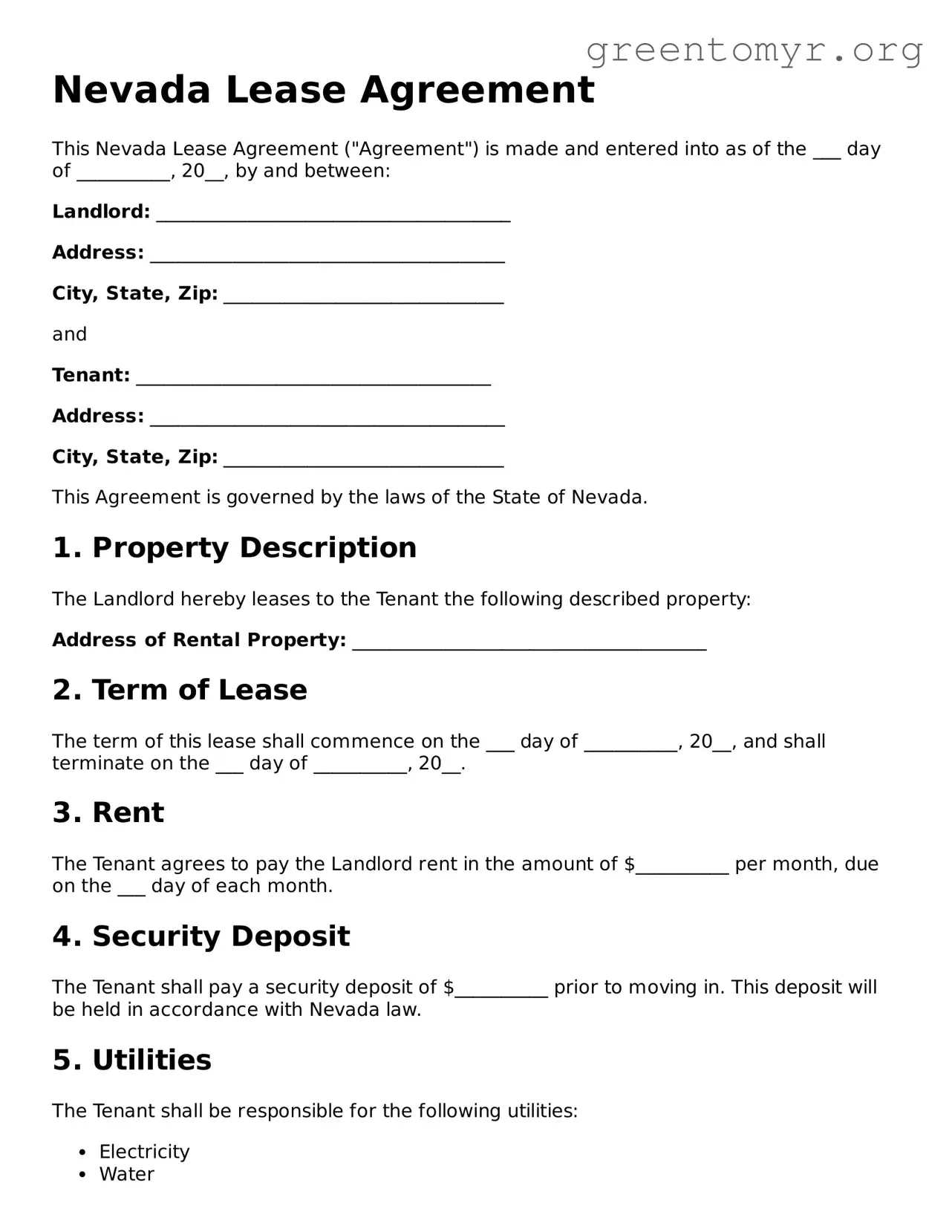
The Nevada Lease Agreement form serves as a crucial document in the rental process, establishing the terms and conditions between landlords and tenants. This legally binding contract outlines essential elements such as the duration of the lease, rental payment details, security deposit requirements, and maintenance responsibilities. It also specifies the rights and obligations of both parties, ensuring clarity and reducing the potential for disputes. Additional provisions may include rules regarding pets, subletting, and property alterations, which can significantly impact the living experience. Understanding this form is vital for both landlords and tenants, as it protects their interests and promotes a harmonious rental relationship. The Nevada Lease Agreement thus not only facilitates the leasing process but also serves as a reference point throughout the tenancy, ensuring that both parties adhere to the agreed-upon terms.
Nevada Lease Agreement
This Nevada Lease Agreement ("Agreement") is made and entered into as of the ___ day of __________, 20__, by and between:
Landlord: ______________________________________
Address: ______________________________________
City, State, Zip: ______________________________
and
Tenant: ______________________________________
Address: ______________________________________
City, State, Zip: ______________________________
This Agreement is governed by the laws of the State of Nevada.
1. Property Description
The Landlord hereby leases to the Tenant the following described property:
Address of Rental Property: ______________________________________
2. Term of Lease
The term of this lease shall commence on the ___ day of __________, 20__, and shall terminate on the ___ day of __________, 20__.
3. Rent
The Tenant agrees to pay the Landlord rent in the amount of $__________ per month, due on the ___ day of each month.
4. Security Deposit
The Tenant shall pay a security deposit of $__________ prior to moving in. This deposit will be held in accordance with Nevada law.
5. Utilities
The Tenant shall be responsible for the following utilities:
6. Maintenance and Repairs
The Tenant agrees to maintain the property in good condition and to promptly notify the Landlord of any needed repairs.
7. Termination
Either party may terminate this Agreement by providing a written notice of ___ days.
8. Governing Law
This Agreement shall be governed by the laws of the State of Nevada.
9. Signatures
By signing below, both parties agree to the terms outlined in this Lease Agreement.
Landlord Signature: ___________________________ Date: _______________
Tenant Signature: ____________________________ Date: _______________
| Fact Name | Details |
|---|---|
| Governing Law | The Nevada Lease Agreement is governed by Nevada state law, specifically NRS Chapter 118A. |
| Types of Lease | This form can be used for residential leases, including apartments, houses, and condos. |
| Duration | Leases can be for a fixed term, typically one year, or on a month-to-month basis. |
| Security Deposit | Landlords may require a security deposit, which is usually equal to one month's rent. |
| Notice Period | For month-to-month leases, a 30-day notice is required for termination by either party. |
| Maintenance Responsibilities | The lease should outline who is responsible for maintenance and repairs of the property. |
| Rent Payment | The agreement specifies when and how rent is to be paid, including acceptable payment methods. |
| Late Fees | Landlords may charge late fees if rent is not paid on time, subject to state regulations. |
| Tenant Rights | Tenants have rights protected under Nevada law, including the right to a habitable living environment. |
| Modifications | Any modifications to the lease must be made in writing and agreed upon by both parties. |
Filling out the Nevada Lease Agreement form is an important step in securing a rental property. It ensures that both the landlord and tenant understand their rights and responsibilities. Follow these steps carefully to complete the form accurately.
After filling out the form, review it for accuracy. It’s essential to keep a copy for your records. Both parties should also retain a signed version of the agreement for future reference.
A Nevada Lease Agreement is a legal document that outlines the terms and conditions between a landlord and tenant for renting residential or commercial property in Nevada. This agreement specifies the rights and responsibilities of both parties, including rent amount, duration of the lease, and maintenance obligations.
A typical Nevada Lease Agreement includes the following key components:
Lease terms in Nevada can vary widely. They typically range from six months to one year. However, landlords and tenants can agree on shorter or longer terms based on their needs. Month-to-month leases are also common, allowing for more flexibility.
Yes, landlords in Nevada often require a security deposit. This deposit is usually equal to one month's rent but can be higher depending on the agreement. The security deposit protects the landlord against damages or unpaid rent. Nevada law mandates that the deposit must be returned within 30 days after the lease ends, minus any deductions for damages.
If a tenant needs to break the lease early, they should review the lease agreement for any specific terms regarding early termination. Typically, tenants may be required to provide written notice and may face penalties, such as losing their security deposit or paying rent until a new tenant is found.
In general, landlords cannot raise the rent during the lease term unless the lease specifically allows for it. For month-to-month leases, landlords can increase rent but must provide proper notice, usually 30 days in Nevada.
Tenants in Nevada have several rights, including:
Understanding these rights can help tenants navigate their rental agreements effectively.
While verbal agreements can be enforceable, they are often difficult to prove. It is always advisable to have a written lease agreement to clearly outline the terms and protect both parties' interests.
If a tenant is facing eviction, they should review the eviction notice carefully. It is essential to understand the reason for the eviction and the timeline provided. Tenants can seek legal advice or assistance from local housing authorities to explore their options and rights.
A lease agreement can be terminated in several ways:
Following the correct procedures is crucial to ensure a smooth termination process.
Filling out a lease agreement can be daunting, especially in Nevada where specific rules apply. One common mistake is not providing accurate personal information. When tenants fail to include their full names, current addresses, or contact details, it can lead to confusion and potential disputes later. Always double-check that this information is correct and complete.
Another frequent error involves the lease term. Some people mistakenly leave this section blank or write vague terms. A lease should clearly state the start and end dates. Ambiguity can lead to misunderstandings about when the tenant is expected to move in or out.
Many individuals overlook the importance of detailing the rent amount. Some simply write “to be determined” or forget to include the payment schedule. This can create issues for both landlords and tenants. Clearly stating the monthly rent and when it is due helps prevent disputes over payments.
Security deposits are another area where mistakes often occur. Tenants sometimes neglect to specify the amount of the security deposit or the conditions under which it will be returned. This can lead to frustration when the lease ends. It’s crucial to outline these terms clearly in the agreement.
Another common oversight is failing to read and understand the lease terms. Some individuals sign the document without fully grasping their rights and responsibilities. This can lead to unexpected obligations or penalties. Take the time to review the entire agreement and ask questions if anything is unclear.
People also frequently forget to include the rules regarding maintenance and repairs. This section is vital as it outlines who is responsible for what. Without clear guidelines, tenants may assume the landlord will handle all repairs, leading to potential conflicts.
Lastly, many forget to include the signatures of all parties involved. A lease agreement is not legally binding unless it is signed by both the landlord and the tenant. Ensure that all required signatures are present to avoid any legal complications.
When entering into a rental agreement in Nevada, several additional documents may complement the Lease Agreement form. These documents help clarify the terms of the lease and protect the rights of both landlords and tenants. Below are four commonly used forms that are often associated with the Nevada Lease Agreement.
These documents are essential for establishing clear expectations and responsibilities between landlords and tenants. By utilizing them, both parties can foster a positive rental experience and minimize potential conflicts.
Rental Agreement: This document outlines the terms under which a tenant rents property from a landlord. Like a lease agreement, it specifies the duration of the rental, payment terms, and responsibilities of both parties.
Service Agreement: Similar to a lease, this document details the terms of service provided by one party to another. It includes payment terms and responsibilities, ensuring clarity in the relationship.
Purchase Agreement: This document is used when buying property. It shares similarities with a lease agreement in that it outlines terms, conditions, and obligations of both the buyer and seller.
Partnership Agreement: This document governs the relationship between business partners. Like a lease, it defines roles, responsibilities, and profit-sharing, ensuring all parties are on the same page.
Employment Contract: This document outlines the terms of employment between an employer and an employee. It resembles a lease agreement by detailing job responsibilities, payment, and duration of employment.
Loan Agreement: This document specifies the terms under which one party borrows money from another. Similar to a lease, it includes repayment terms and the responsibilities of both the lender and borrower.
Non-Disclosure Agreement (NDA): While primarily focused on confidentiality, this document shares similarities with a lease agreement in that it outlines obligations and restrictions imposed on the parties involved.
When filling out the Nevada Lease Agreement form, it is essential to approach the task with care. Here are some important dos and don'ts to consider:
When it comes to the Nevada Lease Agreement form, several misconceptions can lead to confusion. Here are some common misunderstandings:
All lease agreements are the same. Many people think that all lease agreements are interchangeable. In reality, each state has its own laws and requirements. The Nevada Lease Agreement is tailored to meet specific state regulations.
Only landlords need to sign the lease. Some believe that only the landlord's signature is necessary. Both the landlord and tenant must sign the lease for it to be valid.
Verbal agreements are sufficient. Many think a verbal agreement is enough. However, having a written lease protects both parties and provides clear terms.
Lease agreements cannot be modified. Some assume that once a lease is signed, it cannot be changed. In fact, both parties can agree to modifications, but they should be documented in writing.
Security deposits are optional. Many tenants believe that security deposits can be waived. In Nevada, landlords can require a security deposit, and it’s often a standard practice.
Lease terms are negotiable only before signing. Some think that once a lease is signed, the terms are set in stone. While negotiations are common before signing, tenants can discuss issues during the lease term as well.
All lease agreements protect tenants equally. Many assume that all leases offer the same level of protection. The Nevada Lease Agreement includes specific provisions that may differ from those in other states, providing unique protections and responsibilities.
Understanding these misconceptions can help both landlords and tenants navigate the leasing process more effectively.
When filling out and using the Nevada Lease Agreement form, there are several important considerations to keep in mind. Understanding these key takeaways can help ensure that both landlords and tenants are protected and informed.
By keeping these points in mind, both landlords and tenants can navigate the leasing process more effectively and minimize potential conflicts.