In Nevada, the Living Will form serves as a crucial document for individuals wishing to outline their healthcare preferences in the event they become unable to communicate their wishes. This form allows people to specify their desires regarding medical treatment, particularly in situations where they may face terminal illness or irreversible conditions. By clearly stating their preferences, individuals can ensure that their values and wishes are respected, even when they are unable to speak for themselves. The Living Will covers various aspects, including the types of medical interventions one does or does not want, such as life-sustaining treatments and palliative care options. It is important to understand that this document is not just a legal form; it is a reflection of personal beliefs and values about end-of-life care. Completing the Living Will can provide peace of mind, knowing that loved ones will have guidance during difficult times. Furthermore, it is advisable to discuss these wishes with family members and healthcare providers to ensure everyone is on the same page. By taking the time to create a Living Will, individuals can take control of their healthcare decisions and alleviate the burden on their families during emotionally challenging moments.
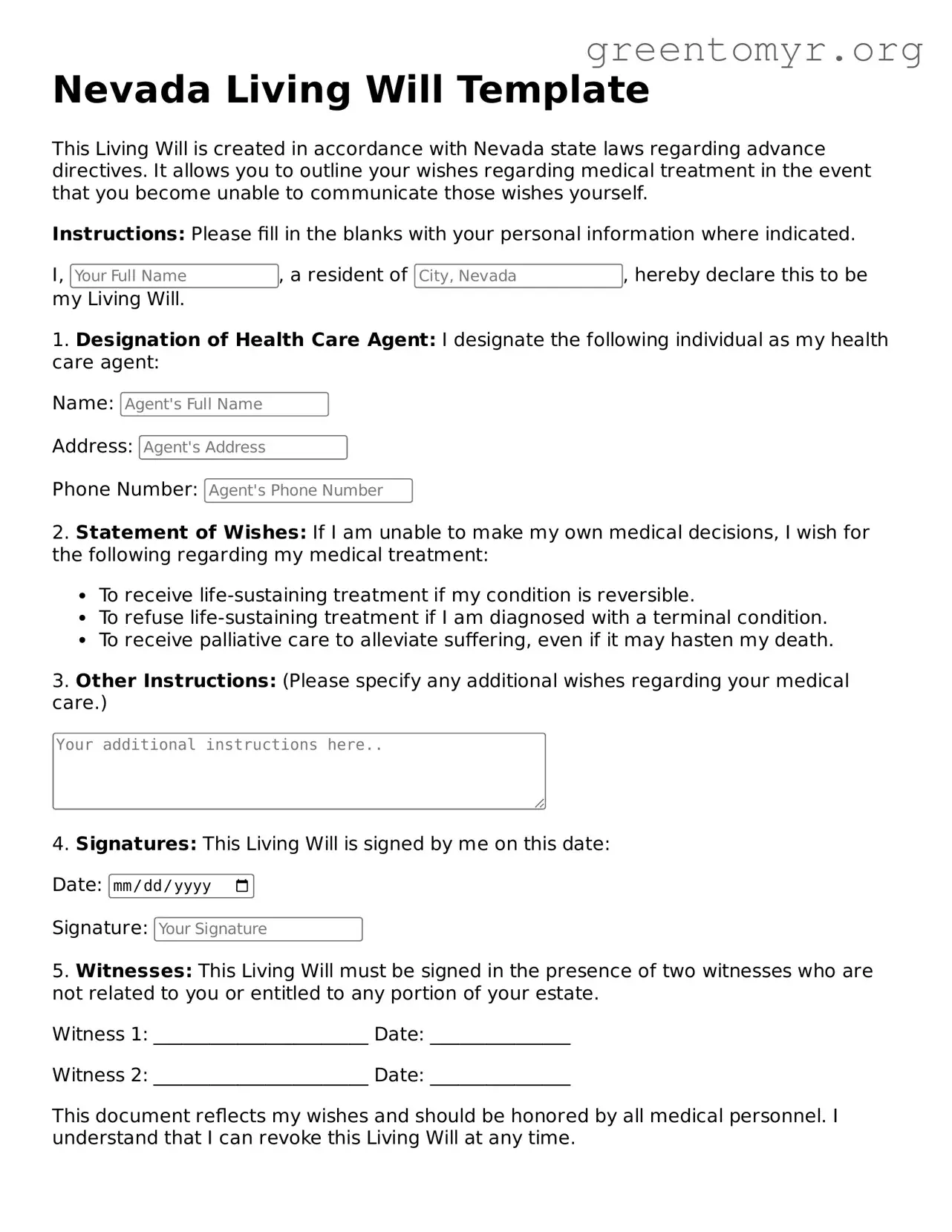
Nevada Living Will Template
This Living Will is created in accordance with Nevada state laws regarding advance directives. It allows you to outline your wishes regarding medical treatment in the event that you become unable to communicate those wishes yourself.
Instructions: Please fill in the blanks with your personal information where indicated.
I, , a resident of , hereby declare this to be my Living Will.
1. Designation of Health Care Agent: I designate the following individual as my health care agent:
Name:
Address:
Phone Number:
2. Statement of Wishes: If I am unable to make my own medical decisions, I wish for the following regarding my medical treatment:
3. Other Instructions: (Please specify any additional wishes regarding your medical care.)
4. Signatures: This Living Will is signed by me on this date:
Date:
Signature:
5. Witnesses: This Living Will must be signed in the presence of two witnesses who are not related to you or entitled to any portion of your estate.
Witness 1: _______________________ Date: _______________
Witness 2: _______________________ Date: _______________
This document reflects my wishes and should be honored by all medical personnel. I understand that I can revoke this Living Will at any time.
| Fact Name | Description |
|---|---|
| Definition | A Nevada Living Will is a legal document that outlines a person's wishes regarding medical treatment in the event they become unable to communicate those wishes. |
| Governing Law | The Nevada Living Will is governed by Nevada Revised Statutes (NRS) Chapter 449A. |
| Eligibility | Any adult person who is at least 18 years old can create a Living Will in Nevada. |
| Signature Requirements | The document must be signed by the individual and witnessed by two adults who are not related to the individual or beneficiaries of their estate. |
| Revocation | A Living Will can be revoked at any time by the individual, provided that they communicate their intent to revoke clearly. |
| Healthcare Proxy | While a Living Will outlines treatment preferences, it does not appoint a healthcare proxy. A separate document is needed for that purpose. |
| Use in Medical Situations | Healthcare providers must follow the directives in a Living Will when the individual is incapacitated and unable to express their wishes. |
Completing the Nevada Living Will form is an important step in ensuring your healthcare preferences are respected. Once you have filled out the form, it will need to be signed and witnessed to be legally valid. Here’s how to proceed with filling it out.
A Living Will is a legal document that allows individuals to outline their preferences regarding medical treatment in the event they become unable to communicate their wishes. This document specifically addresses end-of-life care, detailing what types of life-sustaining measures should or should not be taken if a person is terminally ill or in a persistent vegetative state.
Anyone over the age of 18 should consider creating a Living Will, especially those with serious medical conditions or those who wish to ensure their healthcare preferences are known. It is particularly important for individuals who want to avoid unwanted medical interventions during critical health situations.
A Living Will focuses specifically on medical treatment preferences in end-of-life situations. In contrast, a Durable Power of Attorney for Healthcare appoints someone to make healthcare decisions on your behalf if you are unable to do so. While both documents are important for healthcare planning, they serve different purposes.
To be valid in Nevada, a Living Will must meet the following criteria:
Yes, you can change or revoke your Living Will at any time as long as you are competent to make decisions. To revoke a Living Will, you can destroy the document or create a new one that explicitly states your intention to revoke the previous version. It is advisable to inform your healthcare providers of any changes.
If you do not have a Living Will, medical decisions may be made by your family members or legal representatives based on their understanding of your wishes. This can sometimes lead to conflicts or decisions that do not align with your personal values. Having a Living Will ensures that your specific preferences are known and followed.
Your Living Will should be kept in a safe yet accessible place. It is advisable to provide copies to your healthcare providers, family members, and anyone designated to make decisions on your behalf. Additionally, you may want to keep a copy with your important documents for easy access.
While a DNR order indicates your wish not to receive CPR in the event of cardiac arrest, it does not cover other aspects of medical treatment. A Living Will provides a broader scope of your healthcare preferences, including decisions about life-sustaining measures and other medical interventions. Therefore, having both documents can provide comprehensive guidance regarding your healthcare choices.
Completing a Nevada Living Will form can be a straightforward process, but individuals often make common mistakes that can lead to confusion or disputes later. One frequent error is failing to specify clear medical preferences. When individuals do not articulate their wishes regarding life-sustaining treatments, healthcare providers may struggle to understand their intentions.
Another mistake involves neglecting to sign the document properly. A Living Will must be signed by the individual creating it. If the signature is missing or improperly executed, the document may not be considered valid. Additionally, some people forget to date the form. Without a date, it can be challenging to determine the most current wishes of the individual.
Many individuals also overlook the importance of having witnesses. In Nevada, the Living Will must be signed in the presence of two witnesses who are not related to the individual or beneficiaries. Failing to include these witnesses can invalidate the document, leaving one’s wishes unfulfilled.
Another common issue is not reviewing the document periodically. Life circumstances and personal values can change over time. It is essential to revisit and update the Living Will to ensure it accurately reflects current desires. Individuals often forget to communicate these changes to their loved ones, which can lead to misunderstandings during critical moments.
Additionally, some people may not understand the difference between a Living Will and other advance directives. A Living Will specifically addresses end-of-life care, while a durable power of attorney for healthcare designates someone to make medical decisions on behalf of the individual. Confusing these documents can result in incomplete or conflicting directives.
Lastly, individuals sometimes fail to provide copies of their Living Will to relevant parties. It is crucial to share the document with healthcare providers, family members, and anyone designated as a decision-maker. Without access to the Living Will, there is a risk that one’s wishes may not be honored in a medical crisis.
A Nevada Living Will is an important document that outlines an individual's preferences regarding medical treatment in the event they become unable to communicate their wishes. While the Living Will serves a specific purpose, several other forms and documents can complement it to ensure comprehensive health care planning. Below are four commonly used documents that individuals may consider alongside a Living Will.
By considering these additional documents, individuals can create a more complete plan for their medical care preferences. Each document serves a unique purpose and can help ensure that an individual's wishes are respected in various health care situations.
Filling out a Nevada Living Will form is an important step in ensuring that your healthcare preferences are respected. Here are some key dos and don'ts to keep in mind:
By following these guidelines, you can help ensure that your Living Will accurately reflects your desires and provides clarity for your loved ones and healthcare professionals.
When it comes to creating a Living Will in Nevada, there are several misconceptions that can lead to confusion. Understanding these myths can help individuals make informed decisions about their healthcare preferences. Here are four common misconceptions:
Clearing up these misconceptions can empower individuals to take control of their healthcare decisions. A Living Will is an essential tool for expressing your wishes and ensuring they are respected, regardless of your age or current health status.
Filling out and using the Nevada Living Will form is an important step in planning for future medical care. Here are some key takeaways to keep in mind: