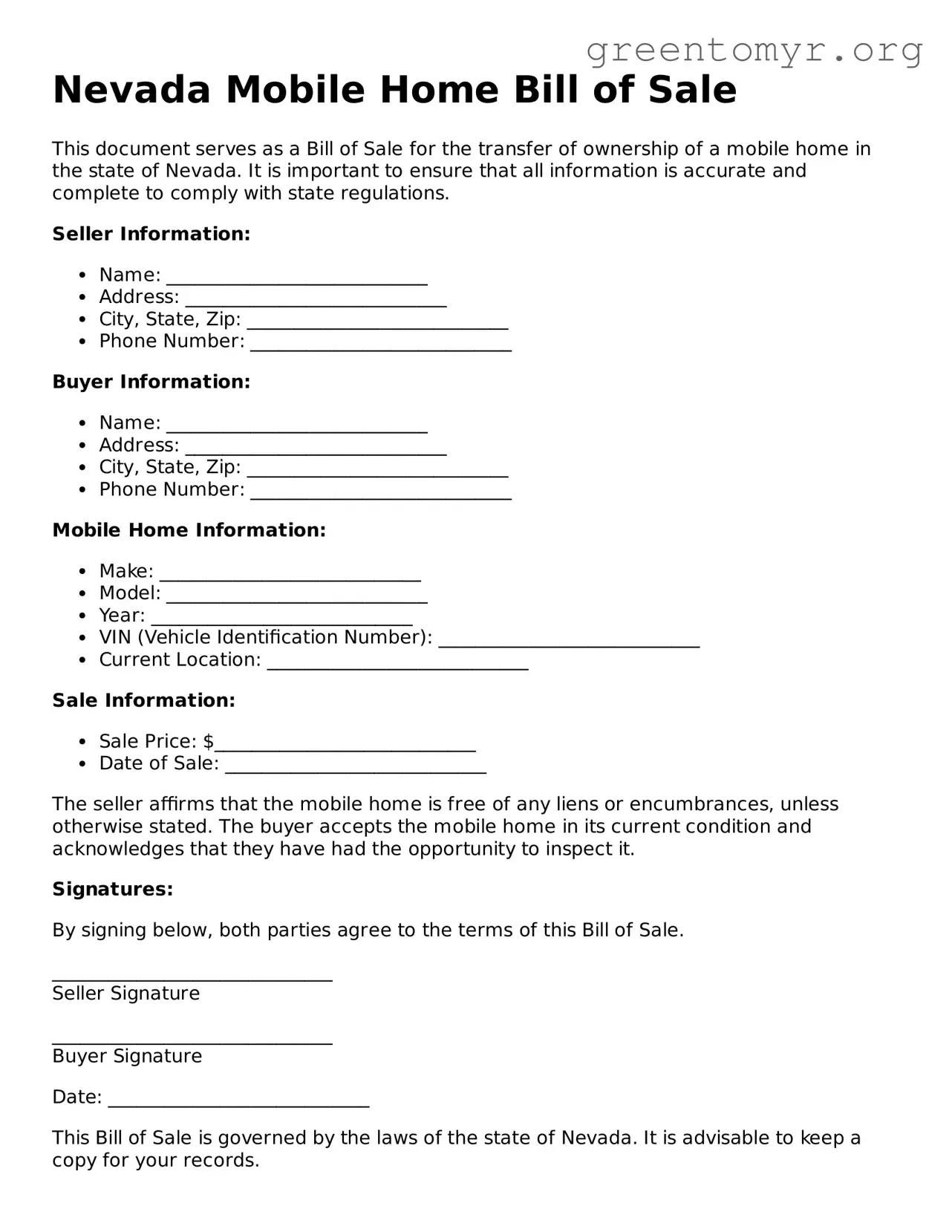
When it comes to buying or selling a mobile home in Nevada, having the right documentation is essential to ensure a smooth transaction. One crucial document in this process is the Nevada Mobile Home Bill of Sale form. This form serves as a legal record of the sale and includes important details about the mobile home, such as its make, model, year, and vehicle identification number (VIN). It also captures essential information about both the buyer and the seller, including their names, addresses, and signatures, which helps establish clear ownership transfer. Additionally, the form may outline any terms of the sale, such as the purchase price and any warranties or conditions attached to the mobile home. By utilizing this form, both parties can protect their interests and provide proof of the transaction, which can be particularly important for registration and title transfer purposes. Understanding the components of the Nevada Mobile Home Bill of Sale form is vital for anyone involved in the buying or selling process, as it helps facilitate a legally binding agreement and minimizes the potential for disputes down the line.
Nevada Mobile Home Bill of Sale
This document serves as a Bill of Sale for the transfer of ownership of a mobile home in the state of Nevada. It is important to ensure that all information is accurate and complete to comply with state regulations.
Seller Information:
Buyer Information:
Mobile Home Information:
Sale Information:
The seller affirms that the mobile home is free of any liens or encumbrances, unless otherwise stated. The buyer accepts the mobile home in its current condition and acknowledges that they have had the opportunity to inspect it.
Signatures:
By signing below, both parties agree to the terms of this Bill of Sale.
______________________________
Seller Signature
______________________________
Buyer Signature
Date: ____________________________
This Bill of Sale is governed by the laws of the state of Nevada. It is advisable to keep a copy for your records.
| Fact Name | Description |
|---|---|
| Purpose | The Nevada Mobile Home Bill of Sale form is used to document the sale of a mobile home between a seller and a buyer. |
| Governing Law | This form is governed by Nevada Revised Statutes (NRS) Chapter 482, which covers the sale and transfer of mobile homes. |
| Required Information | Essential details include the names and addresses of the buyer and seller, mobile home identification number, and sale price. |
| Signatures | Both the buyer and seller must sign the form to validate the transaction. |
| Notarization | While notarization is not mandatory, it is recommended for added legal protection. |
| Record Keeping | It is advisable for both parties to keep a copy of the completed Bill of Sale for their records. |
Completing the Nevada Mobile Home Bill of Sale form is an important step in the process of transferring ownership of a mobile home. After filling out the form, you will be able to present it to the appropriate authorities to finalize the sale and ensure that all legal requirements are met.
After completing these steps, ensure that both parties retain a copy of the signed form for their records. This will help in future reference and provide proof of the transaction.
The Nevada Mobile Home Bill of Sale form is a legal document that records the sale of a mobile home. It serves as proof of the transaction between the seller and the buyer. This form includes essential details such as the names of both parties, the description of the mobile home, the sale price, and the date of the transaction.
A Bill of Sale is important for several reasons:
The form should include the following information:
Yes, you will need the Bill of Sale to register your mobile home with the Nevada Department of Motor Vehicles (DMV). The document acts as proof of ownership, which is necessary for the registration process.
While you can create your own Bill of Sale, it’s advisable to use a standard form to ensure all required information is included. Using a template can help avoid mistakes that might cause issues later on.
Notarization is not required for a Bill of Sale in Nevada. However, having the document notarized can add an extra layer of protection and credibility, especially if there are disputes in the future.
If you lose your Bill of Sale, you can create a duplicate by contacting the seller (if possible) and filling out a new form. Ensure that both parties sign the new document to validate the transaction.
You can obtain a Nevada Mobile Home Bill of Sale form from various sources, including:
There are no fees specifically for the Bill of Sale itself. However, you may incur fees when registering the mobile home with the DMV or if you choose to have the document notarized.
When filling out the Nevada Mobile Home Bill of Sale form, many people make common mistakes that can lead to complications down the line. One frequent error is failing to provide complete information about the mobile home. It's essential to include the correct make, model, year, and Vehicle Identification Number (VIN). Missing any of these details can create confusion and hinder the transfer of ownership.
Another mistake is not accurately identifying the buyer and seller. Each party must provide their full legal names and addresses. Omitting this information can result in legal issues, especially if disputes arise later. Always double-check that the names are spelled correctly and that addresses are up to date.
Many individuals also overlook the importance of including the sale price. The form requires a clear statement of the amount paid for the mobile home. Leaving this blank or writing an ambiguous figure can lead to misunderstandings about the transaction.
Some people forget to sign the document. Both the buyer and seller must sign the Bill of Sale for it to be valid. Without signatures, the form holds no legal weight, which can complicate ownership transfer and registration.
Another common mistake is not dating the form. A date is crucial as it indicates when the transaction took place. This information can be important for tax purposes and future reference.
Additionally, individuals sometimes neglect to include any warranties or disclaimers. If the mobile home is sold "as is," this should be clearly stated on the form. Failing to mention this can lead to disputes regarding the condition of the home after the sale.
People may also forget to provide information about any liens or loans on the mobile home. If there are existing financial obligations, these must be disclosed to avoid legal repercussions later. Transparency is key in any sale.
Another error involves not keeping a copy of the completed form. After filling it out, both parties should retain a signed copy for their records. This serves as proof of the transaction and can be helpful if any issues arise in the future.
Lastly, some individuals rush through the process without reviewing the completed form. Taking a moment to go over all the details can prevent mistakes that might complicate the sale. A thorough review ensures that everything is accurate and complete.
When buying or selling a mobile home in Nevada, it’s important to have all the necessary paperwork in order. Along with the Mobile Home Bill of Sale, several other documents can help ensure a smooth transaction. Here are four commonly used forms that you might encounter.
Having these documents ready can simplify the process and protect everyone involved. It’s always wise to consult with a professional if you have questions about any paperwork related to mobile home transactions.
The Mobile Home Bill of Sale form shares similarities with several other documents. Each serves a specific purpose in the transfer of ownership or rights. Below are five documents that are comparable:
When filling out the Nevada Mobile Home Bill of Sale form, it is essential to follow specific guidelines to ensure accuracy and compliance. Here are five things to keep in mind:
By adhering to these guidelines, the process of transferring ownership of a mobile home can proceed smoothly.
Understanding the Nevada Mobile Home Bill of Sale form is crucial for anyone involved in the buying or selling of mobile homes. However, several misconceptions can lead to confusion. Here are eight common misunderstandings:
Addressing these misconceptions is vital for a smooth transaction. Ensuring that all parties understand the importance of the Bill of Sale can help prevent future legal issues.
When dealing with the Nevada Mobile Home Bill of Sale form, it’s essential to understand its importance and how to complete it correctly. Here are some key takeaways to consider:
By following these guidelines, you can facilitate a smooth and legally sound transaction when buying or selling a mobile home in Nevada.