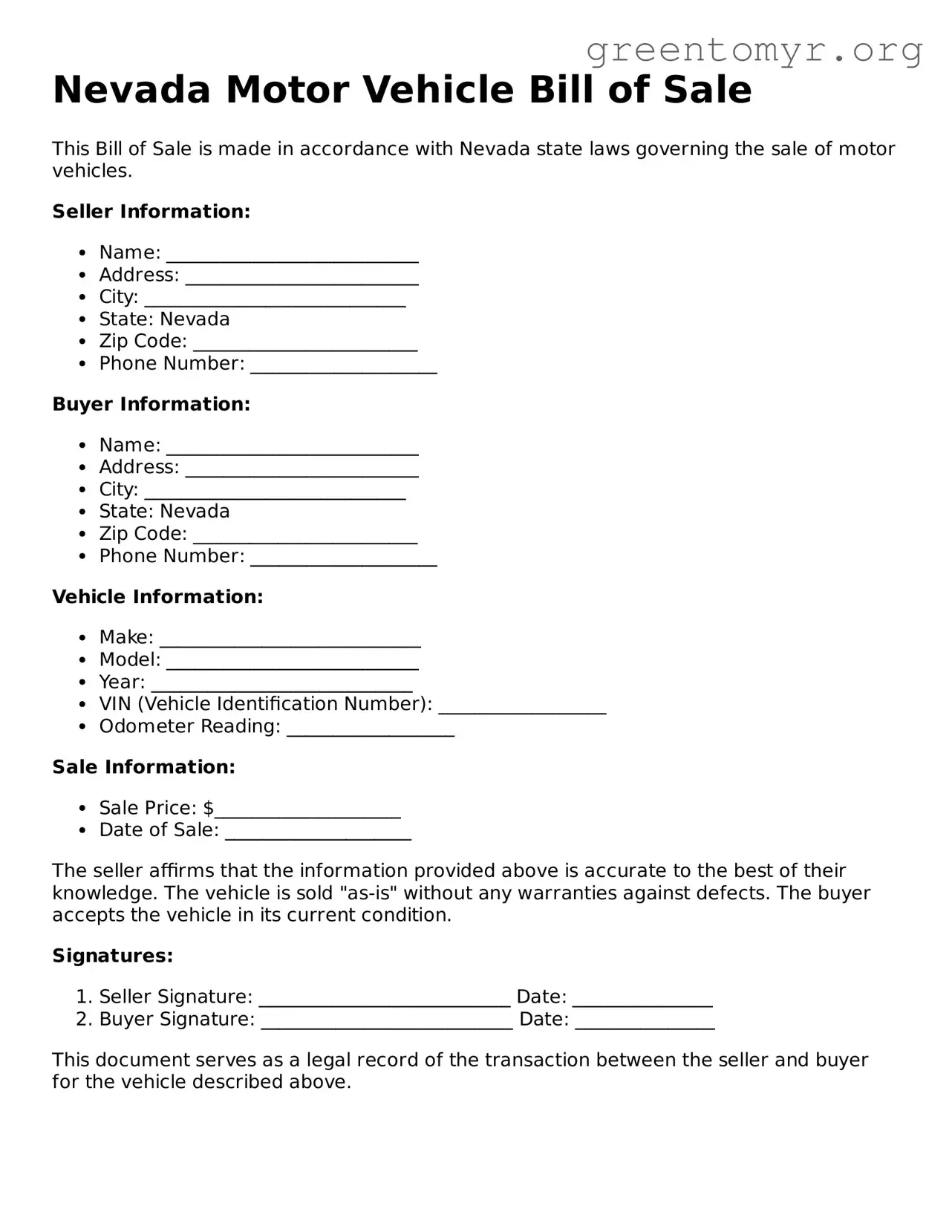
When engaging in the buying or selling of a motor vehicle in Nevada, understanding the importance of the Bill of Sale is crucial. This document serves as a legal record of the transaction, providing essential details that protect both the buyer and the seller. Typically, it includes information such as the vehicle's make, model, year, and Vehicle Identification Number (VIN), ensuring that both parties are clear about what is being sold. Additionally, the Bill of Sale outlines the purchase price and the date of the transaction, establishing a timeline that can be important for future reference. Signatures from both the buyer and the seller are required, signifying their agreement to the terms of the sale. In Nevada, this form is not just a formality; it plays a key role in transferring ownership and can be critical for registration and title purposes. Understanding the nuances of the Nevada Motor Vehicle Bill of Sale can help streamline the process, making it smoother and more secure for everyone involved.
Nevada Motor Vehicle Bill of Sale
This Bill of Sale is made in accordance with Nevada state laws governing the sale of motor vehicles.
Seller Information:
Buyer Information:
Vehicle Information:
Sale Information:
The seller affirms that the information provided above is accurate to the best of their knowledge. The vehicle is sold "as-is" without any warranties against defects. The buyer accepts the vehicle in its current condition.
Signatures:
This document serves as a legal record of the transaction between the seller and buyer for the vehicle described above.
| Fact Name | Description |
|---|---|
| Purpose | The Nevada Motor Vehicle Bill of Sale form is used to document the sale of a motor vehicle between a buyer and a seller. |
| Governing Law | This form is governed by Nevada Revised Statutes (NRS) Chapter 482, which covers motor vehicle registration and sales. |
| Required Information | It must include details such as the vehicle's make, model, year, VIN, and the sale price. |
| Seller's Information | The seller must provide their name, address, and signature to validate the transaction. |
| Buyer's Information | The buyer's name and address are also required to complete the form. |
| Date of Sale | The date when the sale takes place must be clearly indicated on the form. |
| Notarization | While notarization is not mandatory, having the form notarized can provide additional legal protection. |
| Record Keeping | Both the buyer and seller should keep a copy of the Bill of Sale for their records. |
| Transfer of Ownership | This form is essential for transferring ownership and registering the vehicle in the buyer's name. |
After obtaining the Nevada Motor Vehicle Bill of Sale form, you will need to provide specific information about the vehicle and the transaction. This document serves as a record of the sale and will be important for both the buyer and the seller. Follow these steps to complete the form accurately.
Once you have completed the form, make sure to keep a copy for your records. The buyer will need the original for their vehicle registration process.
A Nevada Motor Vehicle Bill of Sale is a legal document that records the sale of a vehicle between a buyer and a seller. This form serves as proof of the transaction and includes important details about the vehicle and the parties involved. It is essential for transferring ownership and can be used when registering the vehicle with the Nevada Department of Motor Vehicles (DMV).
The Bill of Sale should include the following information:
While a Bill of Sale is not legally required for every vehicle transaction in Nevada, it is highly recommended. Having this document can help protect both the buyer and seller by providing a clear record of the sale. It is especially important for private sales where no dealership is involved.
Yes, you can create your own Bill of Sale as long as it includes all the necessary information. However, using a standard form provided by the Nevada DMV or other reputable sources ensures that all required elements are covered. This can help avoid any issues during the registration process.
You can obtain a Bill of Sale form from various sources, including:
Make sure to choose a reliable source to ensure the form meets state requirements.
Notarization is not required for a Bill of Sale in Nevada. However, having the document notarized can provide an additional layer of security and authenticity, which may be beneficial in case of disputes or if the buyer needs to register the vehicle in another state.
After the sale, both the buyer and seller should keep a copy of the Bill of Sale for their records. The buyer will need it for vehicle registration and to prove ownership, while the seller may need it for tax purposes or to confirm the sale in case of future inquiries.
If any issues arise after the sale, such as disputes over the vehicle's condition or ownership, the Bill of Sale can serve as an important piece of evidence. It is crucial to keep a copy of the document and any related correspondence to help resolve any potential conflicts.
Completing the Nevada Motor Vehicle Bill of Sale form can seem straightforward, but there are common pitfalls that can lead to complications. One frequent mistake is neglecting to include the vehicle identification number (VIN). This number is crucial for identifying the vehicle and ensuring that the transaction is valid. Without it, the sale may be questioned, leading to potential disputes.
Another common error is failing to provide accurate information about the buyer and seller. Both parties must clearly print their names and addresses. Incomplete or incorrect details can result in delays or issues when registering the vehicle. Always double-check that all information is correct before submission.
Many individuals also overlook the importance of including the sale price. This detail is essential for both parties, as it establishes the value of the transaction for tax purposes. Omitting this information can lead to misunderstandings and complications down the line.
Additionally, some people forget to sign the form. Both the buyer and seller must provide their signatures to validate the transaction. Without signatures, the document is not legally binding, which can lead to significant issues if disputes arise later.
Another mistake is not dating the form. The date of the transaction is important for record-keeping and can affect the timeline for vehicle registration. Failing to include this can create confusion regarding when the sale took place.
It is also crucial to ensure that the form is filled out in its entirety. Leaving any sections blank can raise red flags during processing. Each field serves a purpose, and incomplete forms may be rejected, causing delays in ownership transfer.
Lastly, people often do not keep a copy of the completed Bill of Sale. This document serves as proof of the transaction and is important for both parties. Retaining a copy can help resolve any future disputes regarding the sale.
When completing a vehicle transaction in Nevada, several documents complement the Motor Vehicle Bill of Sale form. These forms help ensure a smooth transfer of ownership and provide necessary information for both the buyer and seller.
Having these documents ready can make the buying and selling process easier. They provide clarity and protect both parties involved in the transaction.
When filling out the Nevada Motor Vehicle Bill of Sale form, it's important to follow certain guidelines to ensure the process goes smoothly. Here’s a helpful list of dos and don’ts:
By following these guidelines, you can help ensure that the transaction is completed properly and that both parties are protected.
When it comes to the Nevada Motor Vehicle Bill of Sale form, several misconceptions often arise. Understanding the truth behind these can help ensure a smooth transaction when buying or selling a vehicle. Below are seven common misconceptions explained.
Being informed about these misconceptions can help both buyers and sellers navigate the vehicle transaction process in Nevada more effectively.
When filling out and using the Nevada Motor Vehicle Bill of Sale form, there are several important points to keep in mind. The following key takeaways can help ensure a smooth transaction:
By following these guidelines, individuals can ensure that their transaction is properly documented and legally recognized in Nevada.