In the realm of landlord-tenant relationships, understanding the Nevada Notice to Quit form is essential for both parties involved. This legal document serves as a formal notification from a landlord to a tenant, indicating the intent to terminate a lease agreement. It outlines the specific reasons for the termination, which may include non-payment of rent, lease violations, or other breaches of the rental agreement. The Notice to Quit must adhere to Nevada's legal requirements, including the appropriate notice period, which varies depending on the reason for termination. By utilizing this form correctly, landlords can ensure they follow the proper procedures while tenants gain clarity on their rights and responsibilities. Familiarity with the Notice to Quit not only promotes transparency but also helps prevent potential disputes, fostering a more amicable resolution to tenancy issues.
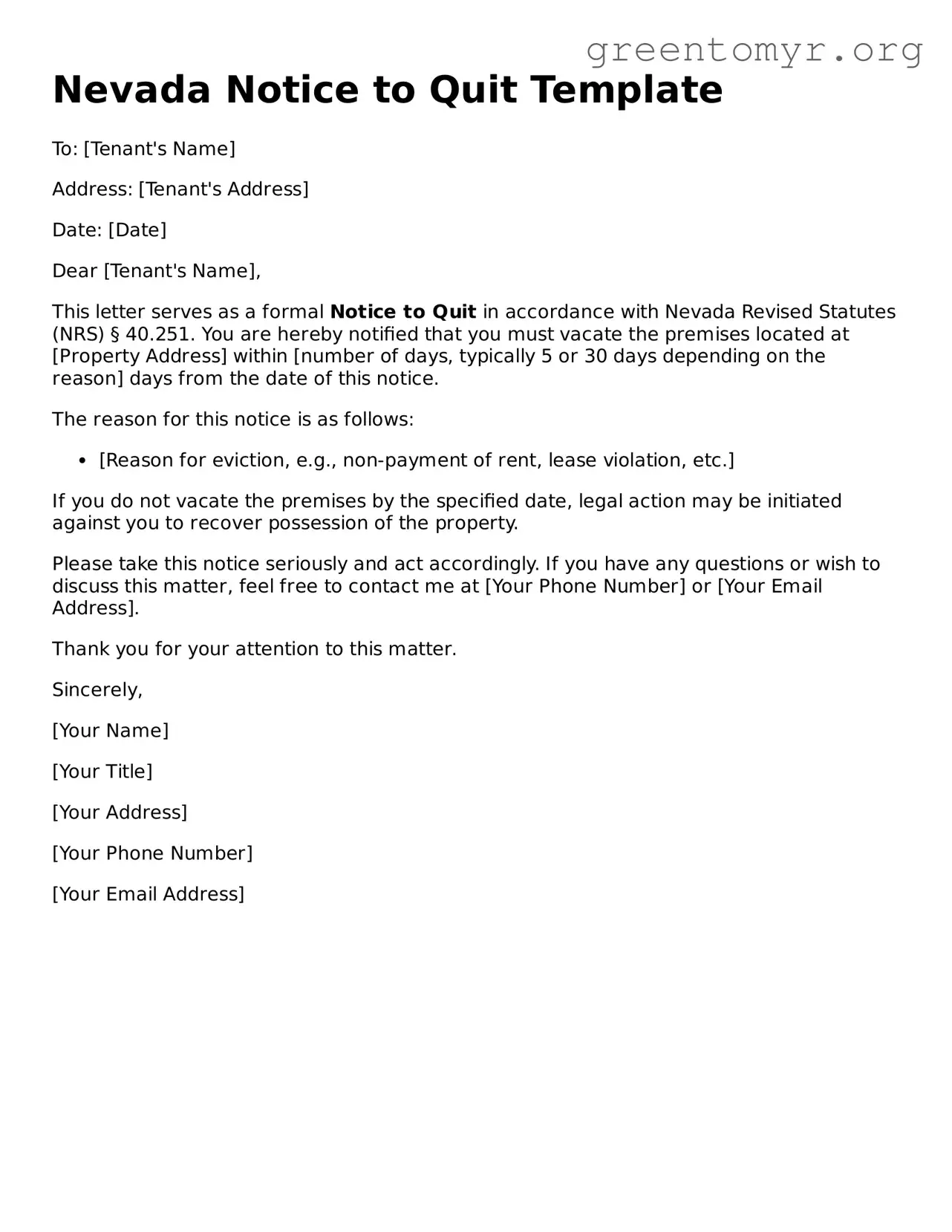
Nevada Notice to Quit Template
To: [Tenant's Name]
Address: [Tenant's Address]
Date: [Date]
Dear [Tenant's Name],
This letter serves as a formal Notice to Quit in accordance with Nevada Revised Statutes (NRS) § 40.251. You are hereby notified that you must vacate the premises located at [Property Address] within [number of days, typically 5 or 30 days depending on the reason] days from the date of this notice.
The reason for this notice is as follows:
If you do not vacate the premises by the specified date, legal action may be initiated against you to recover possession of the property.
Please take this notice seriously and act accordingly. If you have any questions or wish to discuss this matter, feel free to contact me at [Your Phone Number] or [Your Email Address].
Thank you for your attention to this matter.
Sincerely,
[Your Name]
[Your Title]
[Your Address]
[Your Phone Number]
[Your Email Address]
| Fact Name | Description |
|---|---|
| Purpose | The Nevada Notice to Quit form is used by landlords to inform tenants of the need to vacate the rental property. |
| Governing Law | This form is governed by Nevada Revised Statutes (NRS) Chapter 40, which outlines eviction procedures. |
| Notice Period | In most cases, landlords must provide a 5-day notice for non-payment of rent. |
| Delivery Methods | The notice can be delivered in person, posted on the property, or sent via certified mail. |
| Required Information | The form must include the tenant's name, address of the rental property, and the reason for eviction. |
| Tenant's Rights | Tenants have the right to contest the eviction in court if they believe it is unjust. |
| Legal Assistance | Tenants are encouraged to seek legal advice if they receive a Notice to Quit to understand their rights and options. |
After completing the Nevada Notice to Quit form, the next step involves delivering the notice to the tenant. This is a crucial part of the process, as it formally informs the tenant of the need to vacate the premises. Ensure you follow the correct delivery method as outlined by Nevada law.
Once the form is completed, ensure it is delivered to the tenant according to legal requirements. This may include personal delivery, posting on the property, or sending via certified mail.
The Nevada Notice to Quit form is a legal document used by landlords to inform tenants that they must vacate the rental property. This notice is typically given when a tenant has violated the terms of their lease or rental agreement, such as not paying rent or causing damage to the property.
A landlord should use a Notice to Quit when a tenant fails to comply with the lease agreement. Common reasons include:
It's important to follow the proper legal procedures when issuing this notice to ensure compliance with Nevada law.
The Notice to Quit should include several key details:
Including all this information helps ensure clarity and reduces the risk of disputes.
In Nevada, the amount of notice required can vary based on the reason for the eviction:
Always check current laws, as they can change.
Yes, a tenant can contest a Notice to Quit. If they believe the notice is unjust or that they have rectified the situation, they can communicate with the landlord. If the issue remains unresolved, the tenant may choose to respond formally in court.
If a tenant does not vacate the property by the deadline specified in the Notice to Quit, the landlord can proceed with legal action. This typically involves filing for eviction in the local court. The court will then schedule a hearing to determine the outcome.
While there is no official state format, the Notice to Quit should be clear and concise. It must contain all necessary information and be written in a straightforward manner. Templates are available online, but it’s advisable to ensure they comply with current Nevada laws.
Yes, a landlord can issue a Notice to Quit without prior communication. However, it's often beneficial to discuss issues with the tenant first. This can sometimes lead to a resolution without the need for formal eviction proceedings.
A Nevada Notice to Quit form can be found online through various legal websites, or you can consult with a local attorney. Many local courts may also provide templates or samples to assist landlords in the process.
Filling out the Nevada Notice to Quit form can be a straightforward process, but many people make common mistakes that can lead to complications. Understanding these pitfalls can help ensure the form is completed correctly and effectively. Here are ten mistakes to avoid.
One frequent error is not providing complete information. Landlords must include their name, address, and contact information, while tenants should do the same. Omitting any of this information can cause delays or even invalidate the notice.
Another mistake is failing to specify the reason for the notice. Nevada law requires that the reason for the eviction be clearly stated. Whether it’s non-payment of rent or lease violations, clarity is essential to prevent misunderstandings.
People often overlook the importance of the date. The notice must include the date it was issued. This date is crucial as it marks the beginning of the notice period. Without it, the timeline for eviction can become unclear.
Using vague language is another common issue. The notice should be direct and to the point. Phrases like “you need to leave soon” can create confusion. Instead, use clear language such as “you must vacate by [specific date].”
Some individuals forget to sign the form. A signature adds legitimacy to the notice. Without it, the recipient may question the authenticity of the document.
Another mistake is neglecting to deliver the notice properly. Simply handing it to the tenant or mailing it may not suffice. It’s important to follow the legal requirements for serving the notice to ensure it is valid.
People sometimes fail to keep a copy of the notice for their records. Having a copy is essential for future reference, especially if the eviction process escalates. This documentation can be critical in legal proceedings.
Additionally, not adhering to the required notice period can lead to issues. Different situations require different notice periods. For example, a 5-day notice for non-payment of rent differs from a 30-day notice for lease violations. Understanding these timelines is crucial.
Some may forget to check local laws. While the Nevada Notice to Quit form is standardized, local ordinances can impose additional requirements. It’s wise to familiarize yourself with any specific local rules that may apply.
Finally, misunderstanding the tenant's rights can lead to complications. Tenants have specific rights regarding eviction processes. Being informed about these rights can help landlords avoid potential legal challenges.
When dealing with rental agreements and eviction processes in Nevada, several forms and documents may accompany the Notice to Quit. Each of these documents serves a specific purpose and helps ensure that all parties are aware of their rights and responsibilities. Here’s a list of commonly used forms in conjunction with the Nevada Notice to Quit.
Understanding these documents can help both landlords and tenants navigate the rental process more effectively. Each form plays a role in protecting rights and ensuring that all parties are treated fairly throughout the rental relationship.
When filling out the Nevada Notice to Quit form, it's important to get it right. Here’s a list of things you should and shouldn't do:
Here are some common misconceptions about the Nevada Notice to Quit form:
Many people think a Notice to Quit is an eviction notice. In reality, it is a formal request for a tenant to vacate the property. An eviction notice follows a specific legal process after the Notice to Quit is issued.
Some believe landlords can issue a Notice to Quit for any reason. However, the reasons must align with state laws, such as non-payment of rent or lease violations.
Receiving a Notice to Quit does not mean tenants have no rights. They can contest the notice and have the right to respond or negotiate with the landlord.
While personal delivery is one option, the Notice to Quit can also be sent via certified mail or posted on the property, according to legal requirements.
Some think that once a Notice to Quit is issued, eviction is guaranteed. However, the landlord must still follow legal procedures to complete the eviction process.
Once a Notice to Quit is served, the terms outlined in it cannot be changed unilaterally by the landlord. Any modifications must be agreed upon by both parties.
Even with a lease in place, a Notice to Quit may still be required if the tenant fails to comply with the lease terms. It's a formal step before further action.
Notices can vary based on the reason for termination and the specific circumstances of the tenancy. It's important to use the correct form for the situation.
The Nevada Notice to Quit form is an important document for landlords and tenants. Understanding its key aspects can facilitate a smoother rental process. Here are some essential takeaways:
By understanding these key points, both landlords and tenants can navigate the eviction process more effectively in Nevada.