In Nevada, the Power of Attorney form serves as a crucial legal instrument that empowers individuals to designate someone else to act on their behalf in various matters, ranging from financial decisions to healthcare choices. This document is particularly important for those looking to ensure their preferences are honored when they can no longer make decisions due to illness or incapacity. The form allows the principal—the person granting authority—to specify the extent of the agent's powers, which can be broad or limited based on individual needs. Additionally, Nevada's laws require that the form be executed with certain formalities to ensure its validity, including the necessity for signatures and, in some cases, notarization. Understanding the nuances of this form is essential for anyone considering its use, as it not only protects the principal's interests but also provides clear guidance to the agent regarding their responsibilities. Whether you are planning for the future or addressing immediate needs, grasping the significance of the Power of Attorney form in Nevada can help facilitate smoother decision-making processes during challenging times.
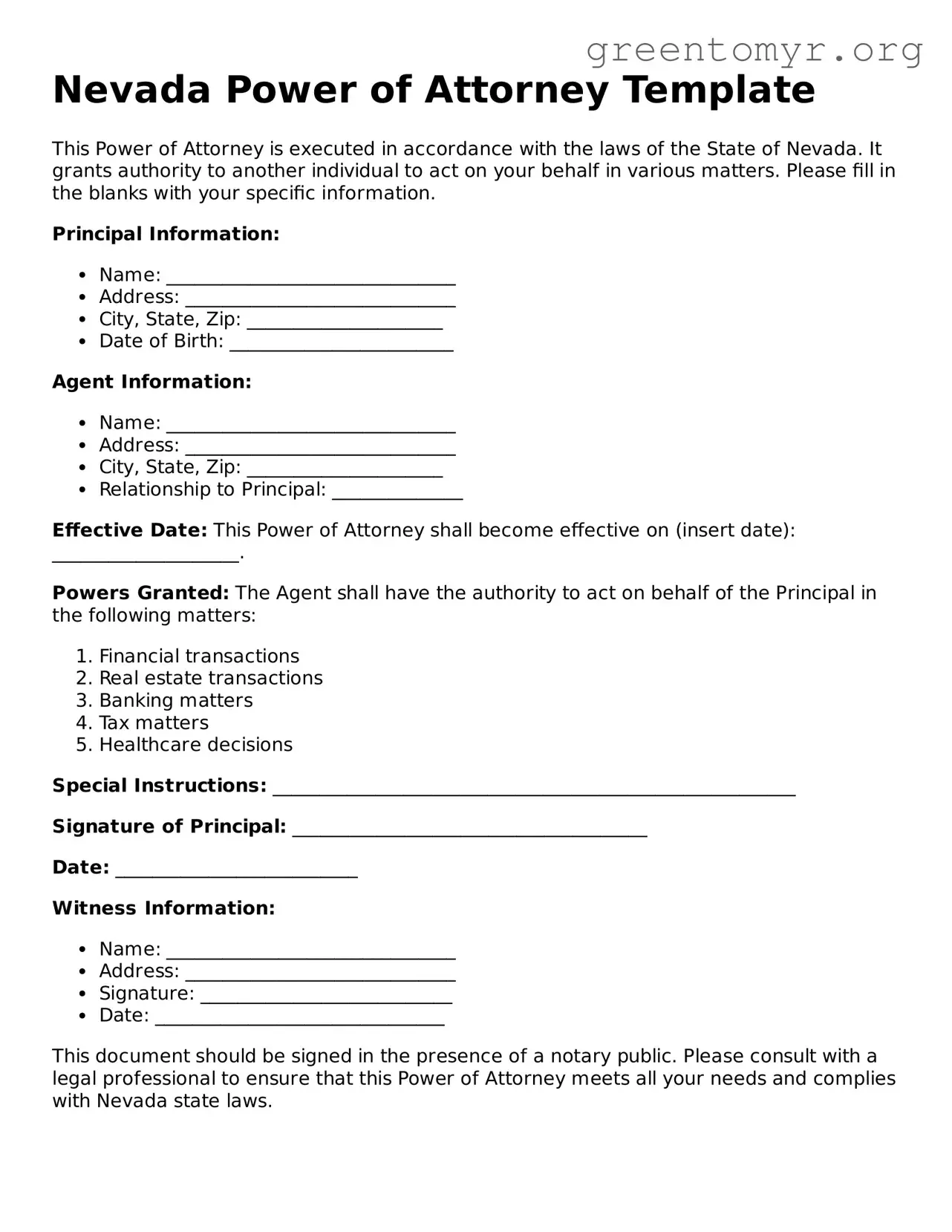
Nevada Power of Attorney Template
This Power of Attorney is executed in accordance with the laws of the State of Nevada. It grants authority to another individual to act on your behalf in various matters. Please fill in the blanks with your specific information.
Principal Information:
Agent Information:
Effective Date: This Power of Attorney shall become effective on (insert date): ____________________.
Powers Granted: The Agent shall have the authority to act on behalf of the Principal in the following matters:
Special Instructions: ________________________________________________________
Signature of Principal: ______________________________________
Date: __________________________
Witness Information:
This document should be signed in the presence of a notary public. Please consult with a legal professional to ensure that this Power of Attorney meets all your needs and complies with Nevada state laws.
| Fact Name | Description |
|---|---|
| Governing Law | The Nevada Power of Attorney form is governed by Nevada Revised Statutes, Chapter 162A. |
| Types of Powers | This form can grant broad or limited powers, depending on the needs of the principal. |
| Durability | A Power of Attorney in Nevada can be durable, meaning it remains effective even if the principal becomes incapacitated. |
| Signature Requirements | The principal must sign the document in the presence of a notary public or two witnesses. |
| Revocation | The principal can revoke the Power of Attorney at any time, as long as they are competent. |
| Agent's Responsibilities | The agent must act in the best interest of the principal and follow their instructions. |
| Common Uses | This form is often used for financial matters, healthcare decisions, and property management. |
Filling out the Nevada Power of Attorney form is a straightforward process. Once completed, you will need to sign the document and have it notarized to ensure its validity. Here are the steps to guide you through the process.
A Power of Attorney (POA) is a legal document that allows one person, known as the principal, to grant another person, called the agent or attorney-in-fact, the authority to make decisions on their behalf. In Nevada, this can include financial decisions, healthcare choices, and other legal matters. The principal can specify the extent of the agent's authority, which can be broad or limited to specific tasks.
Nevada recognizes several types of Power of Attorney, including:
To create a Power of Attorney in Nevada, follow these steps:
Yes, you can revoke a Power of Attorney at any time, as long as you are mentally competent. To do this, you should create a written revocation document and notify your agent and any institutions that were relying on the original POA. It’s a good idea to destroy any copies of the original document to prevent confusion.
If you become incapacitated without a Power of Attorney in place, your loved ones may need to go through a legal process called guardianship to make decisions on your behalf. This process can be lengthy, costly, and may not reflect your personal wishes. Therefore, establishing a POA is a proactive way to ensure your preferences are honored.
While it is not legally required to hire a lawyer to create a Power of Attorney in Nevada, consulting one can be beneficial, especially if your situation is complex. An attorney can help you understand the implications of the document, ensure that it complies with state laws, and provide guidance tailored to your specific needs.
When filling out a Power of Attorney (POA) form in Nevada, it’s crucial to avoid common mistakes that could lead to complications down the line. One frequent error is not specifying the powers granted. The POA should clearly outline what authority the agent has. Without this clarity, there may be confusion about what decisions the agent can make on your behalf.
Another mistake people often make is failing to date the document. A POA that lacks a date can create issues regarding its validity. If the form is ever questioned, the absence of a date may lead to disputes about when the authority was granted, potentially rendering the document ineffective.
Inadequate witness signatures can also pose a problem. Nevada law requires that a POA be signed in the presence of a notary public. However, some individuals overlook the need for witnesses or do not have the document properly notarized. This oversight can invalidate the entire document, leaving your wishes unfulfilled.
People sometimes overlook the importance of discussing the POA with the designated agent. It’s essential that the person you choose understands their responsibilities and is willing to accept them. Failing to have this conversation can lead to misunderstandings or reluctance on the part of the agent when it comes time to act.
Another common pitfall is neglecting to revoke previous Power of Attorney documents. If you have an existing POA and decide to create a new one, it’s vital to formally revoke the old document. Otherwise, both documents could be seen as valid, leading to confusion and potential conflicts.
Lastly, individuals may not keep copies of the completed POA. After executing the form, it’s important to provide copies to the agent, any relevant institutions, and keep a copy for personal records. Without these copies, you may encounter difficulties when the time comes to use the authority granted in the document.
When creating a Power of Attorney in Nevada, there are several other important documents that can complement this form. Each of these documents serves a specific purpose and can help ensure that your wishes are respected and that your affairs are managed effectively. Here are four commonly used forms that often accompany a Power of Attorney:
In summary, when preparing a Power of Attorney in Nevada, consider these additional documents to ensure comprehensive coverage of your wishes and needs. Each form plays a crucial role in managing different aspects of your life, from healthcare to financial matters, and can provide peace of mind for you and your loved ones.
The Power of Attorney (POA) form is a vital document that allows one person to act on behalf of another in legal or financial matters. While it serves a specific purpose, several other documents share similarities with the POA in terms of granting authority or managing affairs. Here are eight documents that are akin to the Power of Attorney:
Understanding these documents can empower individuals to make informed decisions about their legal and financial matters. Each serves a unique purpose but shares the common goal of ensuring that someone’s wishes are honored when they are unable to advocate for themselves.
When filling out the Nevada Power of Attorney form, it’s essential to approach the task with care. Here’s a list of things you should and shouldn’t do to ensure the document is valid and meets your needs.
Following these guidelines will help ensure that your Power of Attorney form is completed correctly and serves its intended purpose.
Understanding the Power of Attorney (POA) form in Nevada is essential for anyone considering this important legal document. However, there are several misconceptions that can lead to confusion. Here are five common misunderstandings:
Many people believe that a Power of Attorney is a one-size-fits-all document. In reality, there are different types of POA forms, including general, limited, and durable POAs. Each serves distinct purposes and has different implications for authority and duration.
While many associate POAs with financial decisions, they can also cover medical and personal care decisions. A healthcare POA allows someone to make medical choices on your behalf if you are unable to do so.
This is a common myth. You can revoke or modify a Power of Attorney at any time, as long as you are mentally competent. It’s important to follow the proper legal procedures to ensure the changes are valid.
While it's advisable to consult a lawyer for guidance, individuals can create their own POA documents. However, it’s crucial to ensure that the form complies with Nevada laws to avoid any issues in the future.
Many fear that signing a POA means they will lose control over their decisions. In fact, a POA allows you to choose someone you trust to make decisions on your behalf, but you can still retain control as long as you are capable of making your own decisions.
By understanding these misconceptions, individuals can make informed decisions about establishing a Power of Attorney that best meets their needs.
Filling out and using a Power of Attorney (POA) form in Nevada involves several important considerations. Here are key takeaways to keep in mind: