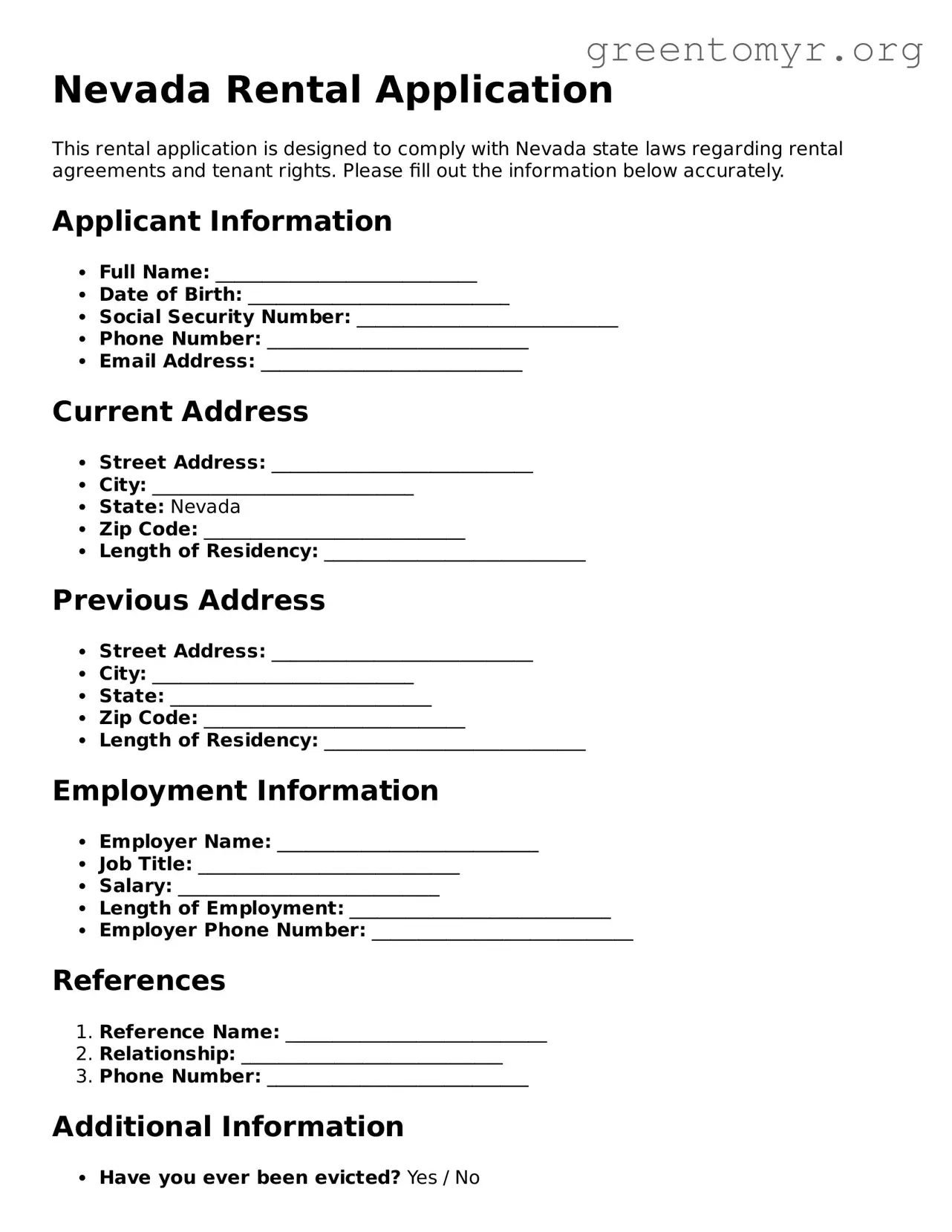
When considering a new place to call home in Nevada, the rental application form serves as a vital tool for both prospective tenants and landlords. This document collects essential information to facilitate the rental process, ensuring that all parties are on the same page. Typically, the form includes sections for personal details such as the applicant's name, contact information, and social security number. It may also require employment history and income verification, allowing landlords to assess the financial stability of applicants. Additionally, references from previous landlords can provide insights into an applicant's rental history and behavior. Some forms may even inquire about pets, vehicle information, and any criminal history, helping landlords make informed decisions. Understanding the nuances of the Nevada rental application form can empower renters to present themselves effectively while also equipping landlords with the necessary information to choose the right tenant.
Nevada Rental Application
This rental application is designed to comply with Nevada state laws regarding rental agreements and tenant rights. Please fill out the information below accurately.
Applicant Information
Current Address
Previous Address
Employment Information
References
Additional Information
By signing below, you confirm that the information provided is accurate to the best of your knowledge.
Applicant Signature: ____________________________
Date: ____________________________
| Fact Name | Description |
|---|---|
| Purpose | The Nevada Rental Application form is used by landlords to screen potential tenants. |
| Information Required | Applicants must provide personal information, rental history, and employment details. |
| Application Fee | Landlords may charge a non-refundable application fee to cover screening costs. |
| Background Check | Landlords often conduct background checks, including credit and criminal history. |
| Fair Housing Compliance | The application process must comply with Fair Housing laws to prevent discrimination. |
| Governing Laws | The Nevada Revised Statutes (NRS) govern rental applications and tenant rights. |
| Signature Requirement | Applicants must sign the form to authorize background checks and verify information. |
| Submission Method | Applications can be submitted in person, by mail, or electronically, depending on the landlord. |
| Processing Time | Landlords typically process applications within a few days, but it can vary. |
| Denial Notification | If denied, landlords must inform applicants and provide a reason based on screening results. |
Filling out the Nevada Rental Application form is an essential step in your journey to secure a rental property. By providing accurate and complete information, you can help streamline the approval process and increase your chances of being selected as a tenant. Here’s how to fill out the form step-by-step.
After filling out the application, review it for any errors or missing information. Once you’re satisfied, submit the form along with any required fees or documents. This will set the stage for the next steps in the rental process.
The Nevada Rental Application form is a document that prospective tenants fill out when applying to rent a property in Nevada. This form collects essential information about the applicant, including personal details, rental history, employment status, and financial information. Landlords use this information to evaluate whether to approve or deny a rental application.
A standard Nevada Rental Application form usually requests the following information:
After completing the Nevada Rental Application form, the applicant submits it to the landlord or property management company. The landlord will review the application and may conduct background and credit checks. This process helps assess the applicant's suitability as a tenant. Once the review is complete, the landlord will inform the applicant of their decision.
Yes, landlords in Nevada often charge an application fee. This fee covers the costs of processing the application, including background and credit checks. The amount can vary, so it is advisable for applicants to ask the landlord about the fee before submitting their application.
Yes, a landlord may deny an application based on the applicant's rental history. Factors that can lead to denial include previous evictions, late payments, or negative feedback from previous landlords. Each landlord has their own criteria for evaluating rental history.
Landlords in Nevada must comply with fair housing laws when processing rental applications. This means they cannot discriminate based on race, color, religion, sex, national origin, familial status, or disability. Additionally, landlords should provide applicants with a written notice if their application is denied.
The processing time for a rental application can vary. Typically, it takes anywhere from a few hours to several days. Factors that influence this timeline include the landlord's procedures, the number of applications received, and the time taken to conduct background checks.
If an application is denied, the applicant has the right to request a reason for the denial. The landlord must provide this information. If the denial was based on a credit report, the applicant can obtain a copy of the report to review any inaccuracies. If necessary, the applicant may choose to address the issues and reapply in the future.
While there is no formal appeal process for rental application denials, applicants can communicate with the landlord to discuss the denial. If the denial was based on incorrect information or if the applicant has since improved their rental history, they may request reconsideration of their application.
Filling out a rental application can seem straightforward, but many people make common mistakes that can affect their chances of securing a rental property. One significant error is providing incomplete information. Landlords and property managers often require specific details, such as employment history, income, and previous rental addresses. Omitting any of this information can raise red flags and lead to delays or even disqualification from the application process.
Another frequent mistake is failing to double-check for accuracy. Typos or incorrect figures can create confusion and may lead landlords to question the reliability of the applicant. For example, if someone accidentally lists their income as $30,000 instead of $50,000, it could significantly impact their perceived financial stability. Taking a moment to review the application before submission can prevent these issues.
Many applicants also underestimate the importance of providing references. Landlords typically look for references from previous landlords or employers to gauge the applicant's reliability. Not including these references, or failing to inform them that they may be contacted, can hinder the application process. It’s essential to select references who can speak positively about your rental history or work ethic.
In addition, some individuals neglect to disclose relevant information about their rental history. For instance, if someone has faced eviction in the past, it is crucial to address this openly rather than hoping it won’t be discovered. Being upfront about any past issues can demonstrate honesty and may even lead to a more favorable evaluation.
Another common pitfall is not providing proof of income. Many landlords require documentation, such as pay stubs or bank statements, to verify an applicant's financial capability. Failing to include this information can lead to automatic rejection, as landlords need assurance that tenants can meet their rent obligations.
Lastly, applicants often overlook the importance of following instructions. Each rental application may have specific requirements, such as submitting additional forms or paying an application fee. Not adhering to these instructions can result in delays or even disqualification. It’s vital to read the application thoroughly and ensure all requirements are met before submitting.
When applying for a rental property in Nevada, a rental application form is just one piece of the puzzle. Several other documents and forms may be required to support the application process. These documents help landlords assess the suitability of potential tenants and ensure that all parties understand their rights and responsibilities. Below is a list of commonly used forms alongside the Nevada Rental Application.
Understanding these additional forms and documents can help applicants navigate the rental process more smoothly. Each document serves a specific purpose and contributes to a transparent and fair rental experience for both tenants and landlords.
Lease Agreement: This document outlines the terms and conditions between a landlord and tenant. Like a rental application, it collects essential information about the tenant and establishes the legal framework for the rental relationship.
Background Check Authorization: This form allows landlords to conduct background checks on potential tenants. Similar to a rental application, it requires personal information and consent, ensuring that landlords can verify the applicant's history.
Credit Application: A credit application requests financial information to assess an applicant's creditworthiness. It shares similarities with the rental application in that it gathers detailed financial data to evaluate the applicant's ability to pay rent.
Employment Verification Form: This document confirms a tenant's employment status and income. It parallels the rental application by requiring information about the applicant's job and earnings, which helps landlords gauge financial stability.
Rental History Verification: This form collects information about a tenant's previous rental experiences. Like a rental application, it seeks to understand the applicant's past behavior as a tenant, which can influence the landlord's decision.
Guarantor Application: A guarantor application is completed by someone willing to co-sign the lease. It resembles the rental application as it requires personal and financial information to assess the guarantor's ability to support the tenant.
When filling out the Nevada Rental Application form, it's important to be thorough and accurate. Here are some key points to consider:
Taking these steps can help ensure a smoother application process and increase your chances of securing the rental you want.
Understanding the Nevada Rental Application form is essential for both tenants and landlords. However, there are several misconceptions that can lead to confusion. Here are five common misunderstandings:
This is not true. While many landlords ask for similar details, each may have unique requirements. Some might prioritize credit history, while others focus on rental history or income verification.
Some believe that an application fee is mandatory for every rental application. In reality, not all landlords charge this fee. It’s important to ask about fees before applying.
This is a misconception. Tenants can withdraw their application before it is approved. However, doing so may affect their standing with the landlord.
Good credit is a plus, but it does not guarantee approval. Landlords consider various factors, including rental history and income, when making their decision.
This is misleading. Each landlord may have different processes and timelines for reviewing applications. Some may conduct background checks, while others might focus solely on income verification.
Being aware of these misconceptions can help you navigate the rental application process more effectively.
When filling out and using the Nevada Rental Application form, there are several important points to keep in mind. Understanding these can help streamline the process and ensure that all necessary information is provided accurately.
By keeping these takeaways in mind, you can approach the rental application process with confidence and clarity.