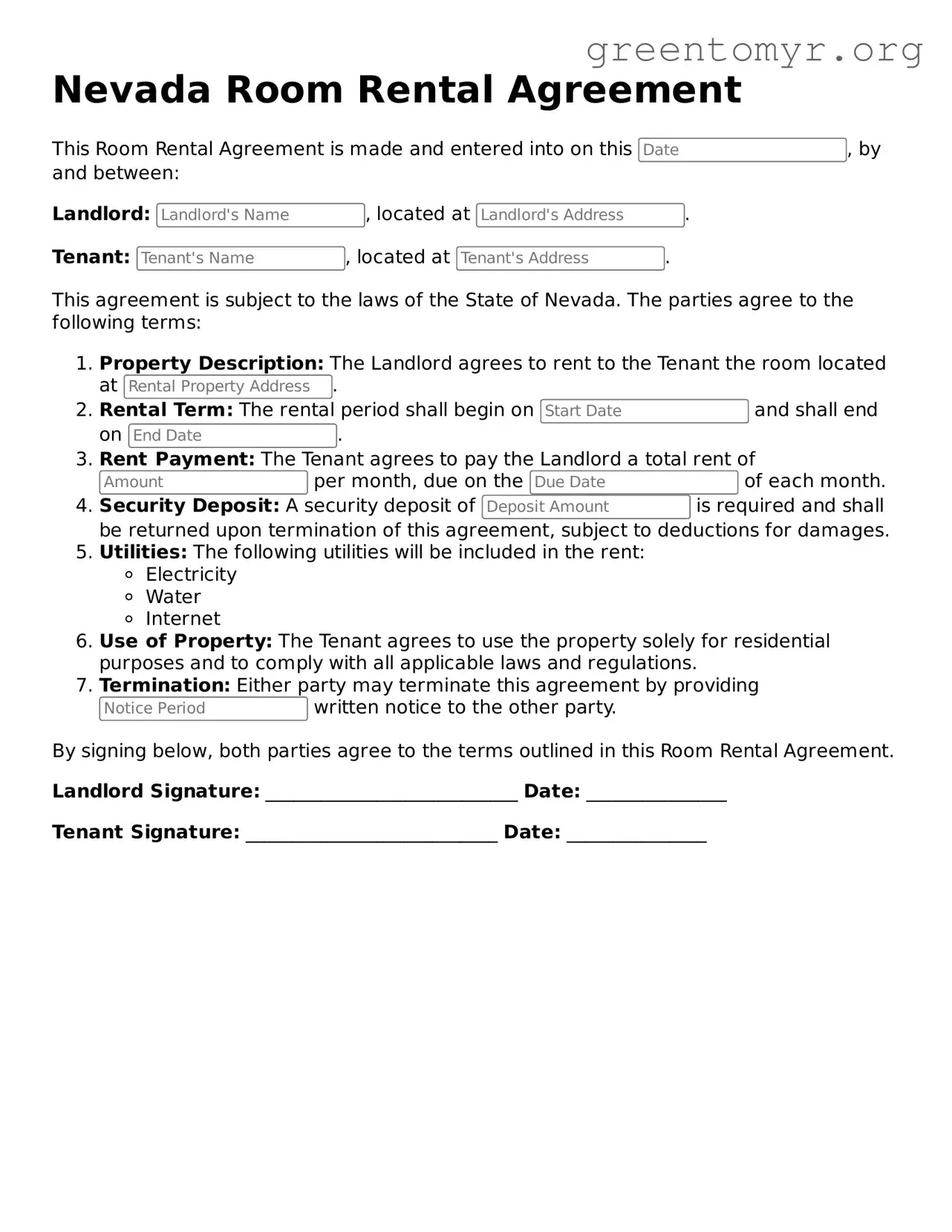
The Nevada Room Rental Agreement form serves as a crucial document for both landlords and tenants in establishing the terms of a rental arrangement. This form outlines essential aspects such as the rental amount, duration of the lease, and security deposit requirements, ensuring that both parties have a clear understanding of their responsibilities. It also addresses important provisions regarding maintenance, utilities, and termination conditions, which help prevent disputes down the line. By detailing rules related to property use, such as noise restrictions and pet policies, the agreement fosters a harmonious living environment. Furthermore, the form typically includes sections on legal compliance and dispute resolution, offering guidance should any issues arise during the tenancy. With its comprehensive structure, the Nevada Room Rental Agreement form is designed to protect the interests of both landlords and tenants, promoting a fair and transparent rental experience.
Nevada Room Rental Agreement
This Room Rental Agreement is made and entered into on this , by and between:
Landlord: , located at .
Tenant: , located at .
This agreement is subject to the laws of the State of Nevada. The parties agree to the following terms:
By signing below, both parties agree to the terms outlined in this Room Rental Agreement.
Landlord Signature: ___________________________ Date: _______________
Tenant Signature: ___________________________ Date: _______________
| Fact Name | Description |
|---|---|
| Governing Law | The Nevada Room Rental Agreement is governed by the laws of the State of Nevada. |
| Parties Involved | The agreement typically involves a landlord (property owner) and a tenant (renter). |
| Property Description | The form requires a detailed description of the rental property, including address and type. |
| Rental Amount | The total rent amount and payment schedule must be clearly outlined in the agreement. |
| Security Deposit | The form specifies the amount of the security deposit and conditions for its return. |
| Duration of Lease | The agreement defines the length of the rental period, whether it's month-to-month or fixed-term. |
| Utilities Responsibility | It clarifies which utilities are the responsibility of the tenant and which are covered by the landlord. |
| Termination Clause | The form includes terms for terminating the agreement, including notice periods required by both parties. |
To complete the Nevada Room Rental Agreement form, gather all necessary information and ensure that you understand the details of the rental arrangement. This form outlines the terms and conditions of the rental agreement between the landlord and tenant. Follow the steps below to accurately fill out the form.
A Nevada Room Rental Agreement is a legally binding document that outlines the terms and conditions between a landlord and a tenant for renting a room in a residential property. This agreement typically includes details such as the rental amount, duration of the lease, security deposit requirements, and responsibilities of both parties. It serves to protect the rights of both the landlord and the tenant, ensuring that everyone understands their obligations.
When creating a Room Rental Agreement in Nevada, it is essential to include several key elements:
To protect their rights, tenants should ensure that the Room Rental Agreement is comprehensive and clear. Here are some steps they can take:
If either the landlord or tenant wishes to terminate the agreement early, they must refer to the terms outlined in the document. Most agreements include a notice period that must be adhered to, typically ranging from 30 to 60 days. It is crucial for both parties to communicate openly and follow the agreed-upon process to avoid potential disputes. If the agreement does not specify the procedure for early termination, state law may provide guidance.
In Nevada, it is not a legal requirement to have a Room Rental Agreement notarized. However, having the document notarized can provide an additional layer of protection for both parties. It serves as proof that both parties willingly entered into the agreement and can help in resolving disputes should they arise. While notarization is not mandatory, it is often considered a good practice for ensuring the integrity of the agreement.
Filling out a Room Rental Agreement form can seem straightforward, but many individuals make common mistakes that can lead to confusion or even legal issues. One prevalent mistake is not reading the entire agreement before signing. Rushing through the document often results in overlooking critical details, such as payment terms or rules regarding security deposits.
Another frequent error is failing to provide accurate personal information. This includes names, addresses, and contact details. Inaccuracies can lead to complications in communication and may affect the enforcement of the agreement. It’s essential to double-check that all information is correct and up-to-date.
Many people neglect to specify the rental term clearly. Whether it’s a month-to-month arrangement or a fixed-term lease, clarity is vital. Not indicating the duration can create misunderstandings later on, particularly concerning rent due dates and move-out procedures.
Some individuals overlook the importance of documenting the condition of the property before moving in. A detailed walkthrough and noting any existing damages or issues can protect renters from being held responsible for those problems later. This step is often forgotten, but it is crucial for both parties involved.
Another mistake is not discussing or understanding the rules regarding pets. If the rental agreement includes specific pet policies, failing to adhere to these can lead to penalties or eviction. Always clarify any pet-related clauses to avoid surprises.
Additionally, many renters forget to inquire about utilities. Understanding which utilities are included in the rent and which are the tenant's responsibility is essential for budgeting. This oversight can lead to unexpected expenses that strain finances.
People often skip the section about late fees and penalties. Knowing the consequences of late payments can help renters avoid unnecessary charges. It’s important to be aware of these terms to ensure timely payments and maintain a good relationship with the landlord.
Some individuals assume that all verbal agreements are enforceable. However, without written documentation, these agreements may not hold up legally. It’s crucial to ensure that all terms discussed verbally are included in the written agreement.
Lastly, many fail to keep a copy of the signed agreement. Having a personal copy is important for reference and can provide protection if disputes arise. Always ensure to keep this document in a safe place for future use.
When entering into a room rental agreement in Nevada, several additional forms and documents may be necessary to ensure a clear understanding between the landlord and tenant. These documents can provide further protection and outline specific terms related to the rental arrangement. Below is a list of commonly used forms that complement the Nevada Room Rental Agreement.
Having these documents in place can facilitate a smoother rental experience for both landlords and tenants. They help clarify expectations, protect legal rights, and minimize misunderstandings throughout the rental period.
Lease Agreement: A lease agreement outlines the terms and conditions under which a tenant rents a property from a landlord. Like a room rental agreement, it specifies rent, duration, and responsibilities.
Rental Application: This document collects information from prospective tenants. Similar to a room rental agreement, it assesses eligibility and suitability for renting a space.
Sublease Agreement: A sublease agreement allows a tenant to rent out their leased space to another party. It shares similarities with a room rental agreement in terms of outlining rental terms and conditions.
Roommate Agreement: This document is used when multiple individuals share a rental space. It addresses shared responsibilities and is similar to a room rental agreement in defining terms of occupancy.
Property Management Agreement: This agreement is between a property owner and a management company. It details how the property will be managed, similar to how a room rental agreement outlines tenant rights and responsibilities.
Eviction Notice: An eviction notice informs a tenant of the intent to terminate their rental agreement. It shares a connection with a room rental agreement by enforcing terms of occupancy.
Security Deposit Agreement: This document outlines the terms regarding the security deposit. Like a room rental agreement, it addresses financial responsibilities related to renting.
Maintenance Request Form: This form is used by tenants to report issues needing attention. It is similar in that it pertains to the upkeep of the rented space, which is also a concern in a room rental agreement.
Move-In/Move-Out Checklist: This checklist documents the condition of the property at the beginning and end of a rental period. It relates to a room rental agreement by ensuring accountability for property condition.
When filling out the Nevada Room Rental Agreement form, attention to detail is crucial. This document serves as a legal contract between landlords and tenants, outlining the terms of rental. To ensure a smooth process, consider the following dos and don’ts:
Understanding the Nevada Room Rental Agreement form is crucial for both landlords and tenants. However, several misconceptions can lead to confusion. Here are seven common misunderstandings:
Being aware of these misconceptions can help both landlords and tenants navigate the rental process with confidence. Always seek clarity and ensure that all terms are understood before signing any agreement.
When filling out and using the Nevada Room Rental Agreement form, keep these key takeaways in mind:
By following these points, you can help ensure a smooth rental experience for everyone involved.