Content Navigation

The Nevada Trailer Bill of Sale form serves as an essential document for anyone involved in the buying or selling of a trailer in the state of Nevada. This form captures vital information about the transaction, including the names and addresses of both the seller and buyer, a detailed description of the trailer, and the sale price. Additionally, it may include the trailer's vehicle identification number (VIN), ensuring that the specific trailer is clearly identified. This document not only protects the interests of both parties but also provides a legal record of the sale, which is crucial for registration and titling purposes. By completing this form, individuals can ensure a smooth transfer of ownership and comply with state regulations. Understanding the importance of the Trailer Bill of Sale can help buyers and sellers navigate the process with confidence and clarity.

Nevada Trailer Bill of Sale Example

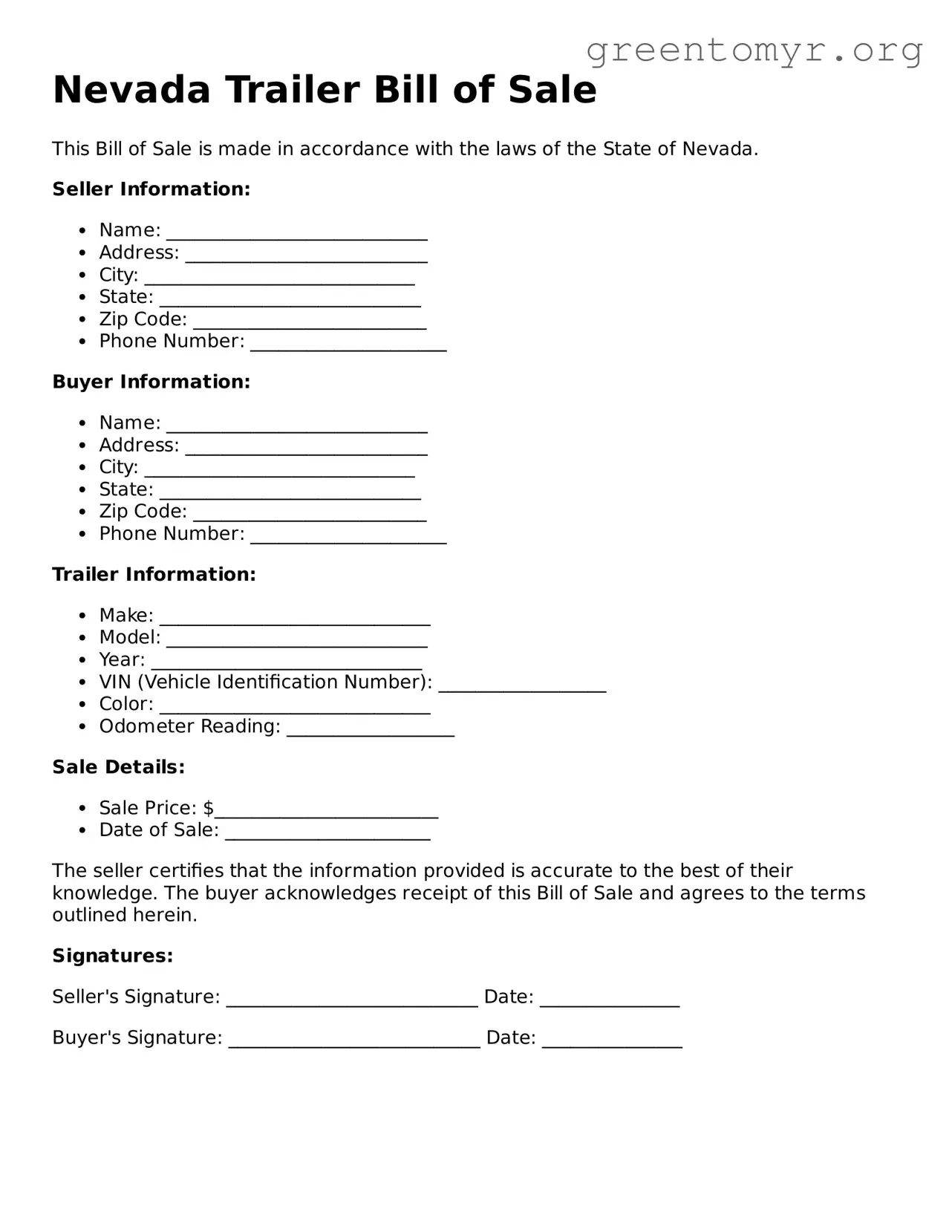
Nevada Trailer Bill of Sale

This Bill of Sale is made in accordance with the laws of the State of Nevada.

Seller Information:

  • Name: ____________________________
  • Address: __________________________
  • City: _____________________________
  • State: ____________________________
  • Zip Code: _________________________
  • Phone Number: _____________________

Buyer Information:

  • Name: ____________________________
  • Address: __________________________
  • City: _____________________________
  • State: ____________________________
  • Zip Code: _________________________
  • Phone Number: _____________________

Trailer Information:

  • Make: _____________________________
  • Model: ____________________________
  • Year: _____________________________
  • VIN (Vehicle Identification Number): __________________
  • Color: _____________________________
  • Odometer Reading: __________________

Sale Details:

  • Sale Price: $________________________
  • Date of Sale: ______________________

The seller certifies that the information provided is accurate to the best of their knowledge. The buyer acknowledges receipt of this Bill of Sale and agrees to the terms outlined herein.

Signatures:

Seller's Signature: ___________________________ Date: _______________

Buyer's Signature: ___________________________ Date: _______________

PDF Form Features

Fact Name Details
Purpose The Nevada Trailer Bill of Sale form serves as a legal document to record the sale and transfer of ownership of a trailer.
Governing Law This form is governed by Nevada Revised Statutes (NRS) Chapter 482, which regulates vehicle registration and titling in the state.
Required Information Essential details include the buyer's and seller's names, addresses, the trailer's description, and the sale price.
Signatures Both the seller and buyer must sign the document to validate the transaction and confirm the transfer of ownership.
Usage The completed form is often required for registering the trailer with the Nevada Department of Motor Vehicles (DMV).

Guide to Using Nevada Trailer Bill of Sale

Filling out the Nevada Trailer Bill of Sale form is an important step in transferring ownership of a trailer. After completing the form, you will need to ensure that both parties retain a copy for their records. This will help facilitate a smooth transaction and provide necessary documentation for future reference.

  1. Begin by entering the date of the sale at the top of the form.
  2. Provide the full name and address of the seller in the designated section.
  3. Next, fill in the buyer's full name and address.
  4. Include details about the trailer being sold, such as the make, model, year, and Vehicle Identification Number (VIN).
  5. Indicate the purchase price of the trailer clearly.
  6. If applicable, note any additional terms or conditions of the sale.
  7. Both the seller and buyer should sign and date the form to validate the transaction.
  8. Finally, make copies of the completed form for both parties to keep for their records.

Get Answers on Nevada Trailer Bill of Sale

What is a Nevada Trailer Bill of Sale form?

The Nevada Trailer Bill of Sale form is a legal document used to transfer ownership of a trailer from one party to another in the state of Nevada. This form serves as proof of the transaction and includes important details such as the trailer's description, the sale price, and the names of the buyer and seller.

Why is a Bill of Sale necessary for trailers in Nevada?

A Bill of Sale is important for several reasons:

  • It provides legal proof of the transaction.
  • It helps protect both the buyer and seller in case of disputes.
  • It may be required for registering the trailer with the Nevada Department of Motor Vehicles (DMV).

What information do I need to include in the form?

When completing the Nevada Trailer Bill of Sale form, be sure to include the following information:

  1. The full names and addresses of both the buyer and seller.
  2. A detailed description of the trailer, including make, model, year, and Vehicle Identification Number (VIN).
  3. The sale price and payment method.
  4. The date of the sale.
  5. Signatures of both parties.

Do I need to have the form notarized?

While notarization is not a strict requirement for the Nevada Trailer Bill of Sale, having it notarized can add an extra layer of authenticity and may be helpful if any disputes arise in the future. It is always a good idea to check with local regulations or the DMV for specific requirements.

Where can I obtain a Nevada Trailer Bill of Sale form?

You can obtain a Nevada Trailer Bill of Sale form from various sources:

  • The Nevada DMV website offers downloadable forms.
  • Local DMV offices may have physical copies available.
  • Online legal form providers often have customizable templates.

Common mistakes

When filling out the Nevada Trailer Bill of Sale form, it's easy to make mistakes that can lead to complications down the road. One common error is not providing accurate information about the trailer. This includes details like the vehicle identification number (VIN), make, model, and year. Double-checking this information can save you from potential issues later.

Another frequent mistake is neglecting to include the sale price. This figure is important for both the buyer and seller. It establishes the value of the trailer and can affect taxes and registration. Always ensure that the sale price is clearly stated and accurate.

Many people forget to sign the form. Both the buyer and seller must provide their signatures to validate the transaction. Without these signatures, the bill of sale may not be considered legally binding. Remember, a simple oversight can lead to significant problems.

Additionally, some individuals fail to date the form. The date of the sale is crucial as it marks when the transaction took place. This date can be important for tax purposes and for establishing ownership. Always include the date to avoid confusion later.

Another common mistake is not providing the correct contact information for both parties. This includes full names, addresses, and phone numbers. Accurate contact details ensure that both the buyer and seller can reach each other if needed, especially if any issues arise after the sale.

People sometimes overlook the importance of including any liens on the trailer. If there are existing liens, they must be disclosed in the bill of sale. Failing to do so can lead to legal complications and may affect the buyer's ownership rights.

Some individuals also forget to check the box indicating whether the trailer is sold "as-is." This statement clarifies the condition of the trailer and sets the expectations for the buyer. Be clear about this to avoid misunderstandings later.

Another mistake is not keeping a copy of the completed bill of sale. Both parties should retain a copy for their records. This document serves as proof of the transaction and can be useful for future reference.

Lastly, some people rush through the process and fail to read the entire form carefully. Each section has its importance, and overlooking even a small detail can lead to complications. Take the time to read through the form thoroughly before submitting it.

By avoiding these common mistakes, you can ensure a smoother transaction when completing the Nevada Trailer Bill of Sale form. Attention to detail will help protect both the buyer and seller, making the process more efficient and hassle-free.

Documents used along the form

When buying or selling a trailer in Nevada, the Trailer Bill of Sale form is essential. However, several other documents can accompany this form to ensure a smooth transaction. Each of these documents serves a specific purpose and helps protect both the buyer and seller.

  • Title Certificate: This document proves ownership of the trailer. It is crucial for the buyer to receive the title to avoid disputes over ownership later.
  • Registration Application: This form is necessary for registering the trailer with the state. It includes details about the trailer and is usually submitted to the Department of Motor Vehicles (DMV).
  • Odometer Disclosure Statement: Required for trailers under a certain age, this statement records the mileage on the trailer at the time of sale. It helps prevent fraud related to odometer readings.
  • Bill of Sale for Personal Property: This general document can be used for various personal property transactions. It details the sale and can provide additional protection for both parties.
  • Affidavit of Ownership: If the title is lost, this document can help establish ownership. The seller swears to the authenticity of their claim to the trailer.
  • Inspection Certificate: Some buyers may request an inspection certificate to ensure the trailer meets safety standards. This document can provide peace of mind about the trailer's condition.
  • Power of Attorney: If the seller cannot be present for the transaction, this document allows another person to sign on their behalf, ensuring the sale can proceed smoothly.
  • Sales Tax Receipt: This receipt shows that sales tax has been paid on the trailer. It can be important for the buyer when registering the trailer with the state.
  • Warranty Document: If the trailer comes with a warranty, this document outlines the terms and conditions. It can protect the buyer against defects or issues that arise after the sale.

Having these documents ready can simplify the buying or selling process. Each plays a role in ensuring that the transaction is clear, legal, and fair for both parties involved.

Similar forms

  • Vehicle Bill of Sale: Similar to the Trailer Bill of Sale, this document transfers ownership of a vehicle from one party to another. It includes details such as the vehicle's make, model, and VIN, along with the buyer's and seller's information.
  • Boat Bill of Sale: This document serves a similar purpose for watercraft. It outlines the transaction details, including the boat's specifications and the parties involved, ensuring legal ownership transfer.
  • Motorcycle Bill of Sale: Just like the Trailer Bill of Sale, this document is specific to motorcycles. It includes necessary information about the motorcycle and confirms the sale between the buyer and seller.
  • ATV Bill of Sale: This document is used for all-terrain vehicles. It captures the transaction details and protects both parties by documenting the sale and ownership transfer.
  • Snowmobile Bill of Sale: Similar to the Trailer Bill of Sale, this form is specific to snowmobiles. It includes essential details about the snowmobile and the transaction, ensuring both parties have a record.
  • Personal Property Bill of Sale: This document can be used for various personal items, not just vehicles. It formalizes the sale of personal property, detailing the items sold and the involved parties.
  • Trailer Registration Application: While not a bill of sale, this form is essential for registering a trailer after purchase. It often requires proof of ownership, which the Trailer Bill of Sale provides.
  • Lease Agreement: Although different in nature, a lease agreement also involves the transfer of rights. It outlines terms for using a property or vehicle, similar to how a bill of sale outlines ownership transfer.
  • Gift Receipt: This document serves as proof when a trailer is given as a gift. It documents the transfer of ownership without a sale, much like a bill of sale does in a purchase.
  • Insurance Policy Application: When insuring a trailer, this application often requires information similar to that found in a bill of sale. It helps establish ownership and the specifics of the trailer being insured.

Dos and Don'ts

When filling out the Nevada Trailer Bill of Sale form, it's important to be careful and thorough. Here are some things you should and shouldn't do:

  • Do double-check all information for accuracy.
  • Do ensure that both the seller and buyer sign the form.
  • Do include the trailer's Vehicle Identification Number (VIN).
  • Do provide a complete description of the trailer, including make and model.
  • Do keep a copy of the completed form for your records.
  • Don't leave any sections blank unless specified.
  • Don't use white-out or erasers to correct mistakes.
  • Don't forget to date the form.
  • Don't rush through the process; take your time to ensure everything is correct.

Misconceptions

The Nevada Trailer Bill of Sale form is an important document for anyone buying or selling a trailer in Nevada. However, there are several misconceptions about this form that can lead to confusion. Here are seven common misunderstandings:

  1. It is not necessary to have a bill of sale for a trailer.

    Many people believe that a bill of sale is optional. In reality, having a bill of sale is essential for proving ownership and facilitating the registration process.

  2. The form is only needed for new trailers.

    This is incorrect. The bill of sale is required for both new and used trailers. It serves as proof of the transaction regardless of the trailer's age.

  3. Any written agreement can substitute the bill of sale.

    While a simple agreement might seem sufficient, the Nevada Trailer Bill of Sale form includes specific information required by the state. Using the correct form ensures all necessary details are included.

  4. Only the seller needs to sign the bill of sale.

    Both the buyer and seller should sign the bill of sale. This protects both parties and confirms the agreement.

  5. The bill of sale does not need to be notarized.

    Notarization is not typically required for the bill of sale in Nevada. However, having it notarized can add an extra layer of security and legitimacy to the transaction.

  6. The bill of sale is only for trailers over a certain value.

    This is a misconception. The bill of sale is required regardless of the trailer's value. It is important for any transaction.

  7. You can fill out the form after the sale is completed.

    It is best to complete the bill of sale at the time of the transaction. This ensures that all details are accurate and agreed upon by both parties.

Key takeaways

When engaging in the sale or purchase of a trailer in Nevada, understanding the Trailer Bill of Sale form is essential. Here are some key takeaways to consider:

  • Accurate Information: Ensure that all details about the trailer, including the make, model, year, and Vehicle Identification Number (VIN), are accurately filled out. This helps avoid future disputes.
  • Seller and Buyer Information: Both the seller and buyer must provide their full names and addresses. This information is crucial for establishing ownership and for any future correspondence.
  • Sale Price: Clearly state the sale price of the trailer. This not only provides clarity for both parties but may also be necessary for tax purposes.
  • Signatures: Both parties must sign the form to validate the transaction. Without signatures, the document may not hold legal weight.
  • Record Keeping: Keep a copy of the completed Bill of Sale for your records. This serves as proof of the transaction and can be helpful in case of any future issues.

Using the Trailer Bill of Sale form correctly can facilitate a smooth transaction and protect the interests of both the buyer and seller. Always double-check the information before finalizing the document.