Content Navigation

When buying or selling a boat in New Hampshire, having a Boat Bill of Sale is essential for both parties involved in the transaction. This document serves as a legal record that outlines the specifics of the sale, including the names and addresses of the buyer and seller, a detailed description of the boat, and the purchase price. It also includes vital information such as the boat's hull identification number (HIN), which helps verify ownership and ensures that the boat is not stolen. By using this form, both the buyer and seller can protect their rights and avoid potential disputes in the future. Additionally, the Boat Bill of Sale may be required for registration purposes with the New Hampshire Department of Safety. Ensuring that all necessary details are accurately filled out and signed can make the process smoother and more secure for everyone involved.

New Hampshire Boat Bill of Sale Example

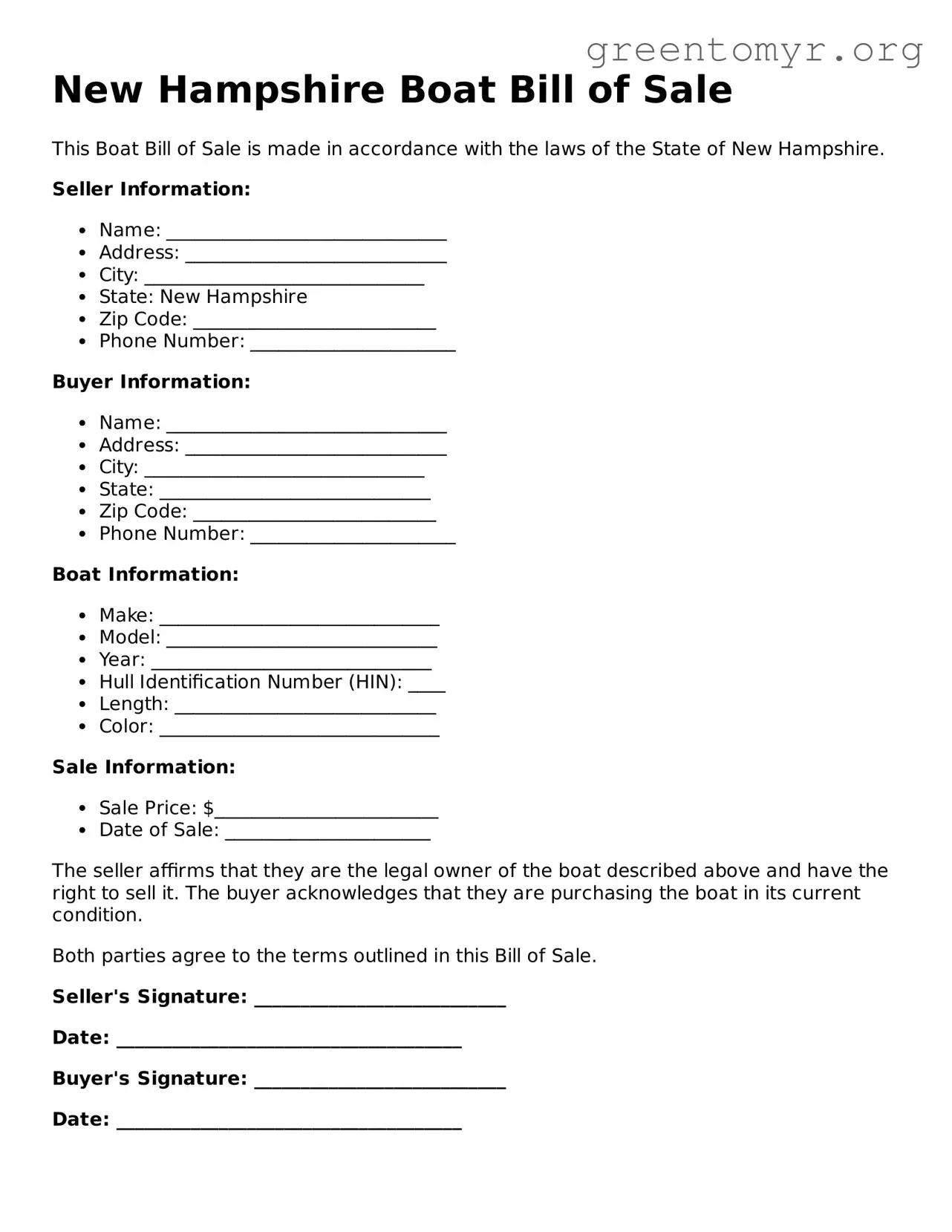
New Hampshire Boat Bill of Sale

This Boat Bill of Sale is made in accordance with the laws of the State of New Hampshire.

Seller Information:

  • Name: ______________________________
  • Address: ____________________________
  • City: ______________________________
  • State: New Hampshire
  • Zip Code: __________________________
  • Phone Number: ______________________

Buyer Information:

  • Name: ______________________________
  • Address: ____________________________
  • City: ______________________________
  • State: _____________________________
  • Zip Code: __________________________
  • Phone Number: ______________________

Boat Information:

  • Make: ______________________________
  • Model: _____________________________
  • Year: ______________________________
  • Hull Identification Number (HIN): ____
  • Length: ____________________________
  • Color: ______________________________

Sale Information:

  • Sale Price: $________________________
  • Date of Sale: ______________________

The seller affirms that they are the legal owner of the boat described above and have the right to sell it. The buyer acknowledges that they are purchasing the boat in its current condition.

Both parties agree to the terms outlined in this Bill of Sale.

Seller's Signature: ___________________________

Date: _____________________________________

Buyer's Signature: ___________________________

Date: _____________________________________

PDF Form Features

Fact Name Description
Purpose The New Hampshire Boat Bill of Sale form is used to document the sale and transfer of ownership of a boat from one party to another.
Governing Law This form is governed by New Hampshire state law, specifically under RSA 270-E:3, which outlines the requirements for boat registration and ownership transfer.
Required Information Essential details include the names and addresses of both the seller and buyer, the boat's make, model, year, and hull identification number (HIN).
Signature Requirement Both the seller and buyer must sign the form to validate the transaction and confirm the transfer of ownership.
Use for Registration This bill of sale is often required when registering the boat with the New Hampshire Department of Safety.
Notarization While notarization is not mandatory, it is recommended to add an extra layer of authenticity and protection for both parties.
Record Keeping It is advisable for both the seller and buyer to keep a copy of the completed Bill of Sale for their records, in case of future disputes or for tax purposes.

Guide to Using New Hampshire Boat Bill of Sale

Once you have the New Hampshire Boat Bill of Sale form in hand, it's time to fill it out carefully. This document is essential for transferring ownership of a boat, ensuring that both the seller and buyer have a clear record of the transaction. Follow these steps to complete the form accurately.

  1. Obtain the Form: Make sure you have the latest version of the New Hampshire Boat Bill of Sale form. You can usually find it online or at your local boating office.
  2. Fill in Seller Information: Enter the full name, address, and contact information of the seller. This information should be clear and legible.
  3. Fill in Buyer Information: Provide the full name, address, and contact details of the buyer. Accuracy is key here to avoid any future issues.
  4. Describe the Boat: Write down the boat's details, including the make, model, year, and hull identification number (HIN). This information is vital for identification purposes.
  5. State the Sale Price: Clearly indicate the agreed-upon sale price for the boat. This should reflect the amount both parties have agreed to.
  6. Include the Date of Sale: Enter the date when the sale is taking place. This helps establish a timeline for ownership transfer.
  7. Signatures: Both the seller and buyer must sign the form. Ensure that the signatures are dated and match the names provided earlier in the document.
  8. Keep Copies: Make copies of the completed form for both parties. This ensures that everyone has a record of the transaction.

After filling out the form, both the seller and buyer should retain their copies for future reference. This document will be useful for registering the boat and for any potential legal matters down the line.

Get Answers on New Hampshire Boat Bill of Sale

What is a New Hampshire Boat Bill of Sale?

A New Hampshire Boat Bill of Sale is a legal document that records the sale of a boat from one party to another. This form serves as proof of the transaction and includes essential details about the boat, such as its make, model, year, and hull identification number. Additionally, it outlines the sale price and the names and addresses of both the seller and the buyer. Having a properly completed bill of sale is crucial for both parties to ensure a smooth transfer of ownership.

Is a Boat Bill of Sale required in New Hampshire?

While it is not mandatory to use a Bill of Sale for every boat transaction in New Hampshire, it is highly recommended. This document provides legal protection for both the buyer and the seller by documenting the details of the sale. It can also be beneficial when registering the boat with the New Hampshire Department of Safety or if any disputes arise regarding ownership in the future.

What information should be included in the Boat Bill of Sale?

To ensure the Bill of Sale is complete and valid, it should include the following information:

  • The names and addresses of both the seller and the buyer
  • The date of the sale
  • A detailed description of the boat, including the make, model, year, and hull identification number (HIN)
  • The sale price of the boat
  • Any warranties or conditions of the sale, if applicable

Including this information helps to create a clear record of the transaction, which can be beneficial for future reference.

Do I need to notarize the Boat Bill of Sale?

In New Hampshire, notarization of the Boat Bill of Sale is not required. However, having the document notarized can add an extra layer of authenticity and may be beneficial if the transaction is ever questioned. It is advisable to keep a signed copy for both parties, which can serve as proof of the sale.

Where can I obtain a New Hampshire Boat Bill of Sale form?

A New Hampshire Boat Bill of Sale form can be obtained from several sources. Many online legal document services offer templates that can be customized to fit your needs. Additionally, local boating organizations or the New Hampshire Department of Safety may provide forms or guidance on how to create one. Ensure that any template used complies with state requirements to avoid any issues during the registration process.

Common mistakes

When filling out the New Hampshire Boat Bill of Sale form, many individuals make common mistakes that can lead to complications later on. One frequent error is not providing complete information about the boat. Essential details like the boat's make, model, year, and hull identification number should always be included. Omitting any of this information can create confusion and may even affect the transfer of ownership.

Another mistake people often make is failing to include the correct names and addresses of both the seller and the buyer. It is crucial that these details are accurate and match the identification documents of the parties involved. Inaccuracies can result in delays or disputes regarding ownership, which can be frustrating for everyone involved.

Many also overlook the importance of signatures. Both the seller and the buyer must sign the form for it to be valid. Without these signatures, the document may not hold up in a legal context. It is advisable to double-check that all required parties have signed before submitting the form.

Lastly, individuals sometimes neglect to keep a copy of the completed Boat Bill of Sale for their records. This document serves as proof of the transaction and can be essential if any issues arise in the future. Retaining a copy helps ensure that both parties have a reference point should any questions come up regarding the sale.

Documents used along the form

When purchasing or selling a boat in New Hampshire, the Boat Bill of Sale form is a crucial document. However, several other forms and documents are often needed to ensure a smooth transaction and to comply with state regulations. Below is a list of these documents, each serving a specific purpose in the process.

  • Title Transfer Form: This document is essential for transferring ownership of the boat from the seller to the buyer. It includes details about the boat, such as the hull identification number and the names of both parties involved in the transaction.
  • Registration Application: After purchasing a boat, the new owner must register it with the state. This application provides information about the boat and the owner, ensuring that the boat is legally recognized by the state.
  • Affidavit of Ownership: If the seller cannot provide a title, this document may be used to declare ownership of the boat. It serves as a sworn statement affirming that the seller is the rightful owner.
  • Manufacturer's Certificate of Origin (MCO): For new boats, the MCO is a vital document that proves the boat's origin and is often required for registration. It is issued by the manufacturer and includes important details about the vessel.
  • Sales Tax Form: This form is necessary for reporting sales tax on the transaction. It ensures that the buyer pays the appropriate taxes based on the purchase price of the boat.
  • Insurance Policy: Before taking ownership, buyers are often required to obtain insurance for their new boat. The insurance policy serves as proof of coverage and protects the owner against potential liabilities.
  • Bill of Sale for Trailer: If the boat comes with a trailer, a separate bill of sale for the trailer may be needed. This document details the sale of the trailer and ensures proper ownership transfer.
  • Inspection Report: An inspection report may be necessary to confirm the condition of the boat before purchase. This document can help identify any issues that may need to be addressed, providing peace of mind to the buyer.

Having these documents prepared and organized can facilitate a seamless boat transaction in New Hampshire. Ensuring that all necessary paperwork is completed will help protect the interests of both the buyer and the seller, making the process more efficient and secure.

Similar forms

  • Vehicle Bill of Sale: Similar to the Boat Bill of Sale, this document transfers ownership of a vehicle. It includes details such as the make, model, year, and VIN, ensuring both parties have a record of the transaction.
  • Motorcycle Bill of Sale: This document serves the same purpose for motorcycles. It outlines the specifics of the motorcycle, including its identification number and any agreed-upon price, providing legal protection for both buyer and seller.
  • Aircraft Bill of Sale: Just like the Boat Bill of Sale, this form is used to transfer ownership of an aircraft. It includes information about the aircraft, such as its registration number and any liens or encumbrances, ensuring a clear transfer of title.
  • Real Estate Purchase Agreement: This document details the sale of real property. While it involves different assets, it serves a similar purpose by outlining the terms of the sale, including the purchase price and any contingencies.
  • Personal Property Bill of Sale: This form is used for the sale of items like furniture or electronics. It provides a record of the transaction, including the item description and sale price, much like the Boat Bill of Sale does for boats.

Dos and Don'ts

When completing the New Hampshire Boat Bill of Sale form, it’s essential to follow certain guidelines to ensure accuracy and compliance. Below is a list of dos and don’ts that will help you navigate the process smoothly.

  • Do provide accurate information about the boat, including make, model, year, and hull identification number.
  • Do include the full names and addresses of both the seller and the buyer.
  • Do clearly state the sale price of the boat.
  • Do sign and date the form to validate the transaction.
  • Do keep a copy of the completed bill of sale for your records.
  • Don't leave any sections of the form blank; incomplete forms can lead to issues later.
  • Don't use nicknames or abbreviations for names; full legal names are required.
  • Don't forget to check for spelling errors; accuracy is crucial.
  • Don't sign the form before the buyer has signed it.
  • Don't submit the form without ensuring that both parties have a copy.

Misconceptions

When dealing with the New Hampshire Boat Bill of Sale form, several misconceptions can arise. Understanding these can help ensure a smoother transaction. Here are eight common misunderstandings:

  1. The form is only necessary for new boats. Many believe that a bill of sale is only required when purchasing a new boat. In reality, it is essential for both new and used boats to document the transfer of ownership.
  2. Verbal agreements are sufficient. Some individuals think that a verbal agreement is enough to complete a sale. However, having a written bill of sale protects both parties and provides legal proof of the transaction.
  3. The form must be notarized. There is a misconception that the Boat Bill of Sale must be notarized to be valid. While notarization can add an extra layer of security, it is not a requirement in New Hampshire.
  4. Only the seller needs to sign the form. It is often assumed that only the seller's signature is necessary. In fact, both the buyer and seller should sign the document to validate the sale.
  5. It is only for private sales. Many think the bill of sale is only applicable to private transactions. However, it can also be used in dealer sales, providing a clear record of ownership transfer.
  6. The form is not needed if the boat is registered. Some believe that if a boat is registered, a bill of sale is unnecessary. In truth, the bill of sale is essential for the registration process and to prove ownership.
  7. All boats require the same bill of sale. There is a misconception that one standard form works for all types of boats. Different boats may have specific requirements, so it’s important to ensure the form meets the necessary criteria.
  8. Once the bill of sale is signed, the transaction is complete. Many people think that signing the bill of sale concludes the process. However, it's crucial to also complete any necessary registration and title transfers to finalize the ownership change.

By addressing these misconceptions, individuals can navigate the process of buying or selling a boat in New Hampshire more effectively and with greater confidence.

Key takeaways

When filling out and using the New Hampshire Boat Bill of Sale form, keep the following key takeaways in mind:

  1. Accurate Information: Ensure all details, including the buyer's and seller's names, addresses, and contact information, are correct.
  2. Boat Details: Include the boat's make, model, year, and hull identification number (HIN) to avoid any confusion.
  3. Sale Price: Clearly state the sale price of the boat. This is important for both parties and for tax purposes.
  4. Signatures Required: Both the buyer and seller must sign the form to validate the transaction.
  5. Date of Sale: Record the date of the sale accurately. This marks the official transfer of ownership.
  6. Witness or Notary: While not mandatory, having a witness or notary public can add an extra layer of legitimacy to the transaction.
  7. Keep Copies: Both parties should keep a copy of the completed Bill of Sale for their records.
  8. Registration: The buyer must use the Bill of Sale to register the boat with the New Hampshire Department of Safety.
  9. Tax Implications: Be aware of any sales tax obligations that may arise from the purchase of the boat.

Following these steps will help ensure a smooth and legally sound transaction.