In the state of New Hampshire, the Do Not Resuscitate (DNR) Order form serves as a critical document for individuals who wish to express their preferences regarding medical treatment in the event of a life-threatening situation. This form is designed to communicate a person's desire to forgo resuscitation efforts, such as chest compressions or mechanical ventilation, should their heart stop or they stop breathing. It is essential for individuals to understand that a DNR order is not a declaration of intent to end life; rather, it is a means to ensure that medical interventions align with their personal values and wishes. The form must be completed and signed by both the patient and a licensed physician, ensuring that the decision is made with informed consent. Additionally, it is vital for individuals to discuss their wishes with family members and healthcare providers, fostering a clear understanding of their choices. By completing the DNR Order form, individuals can take an active role in their healthcare decisions, providing peace of mind for themselves and their loved ones during challenging times.
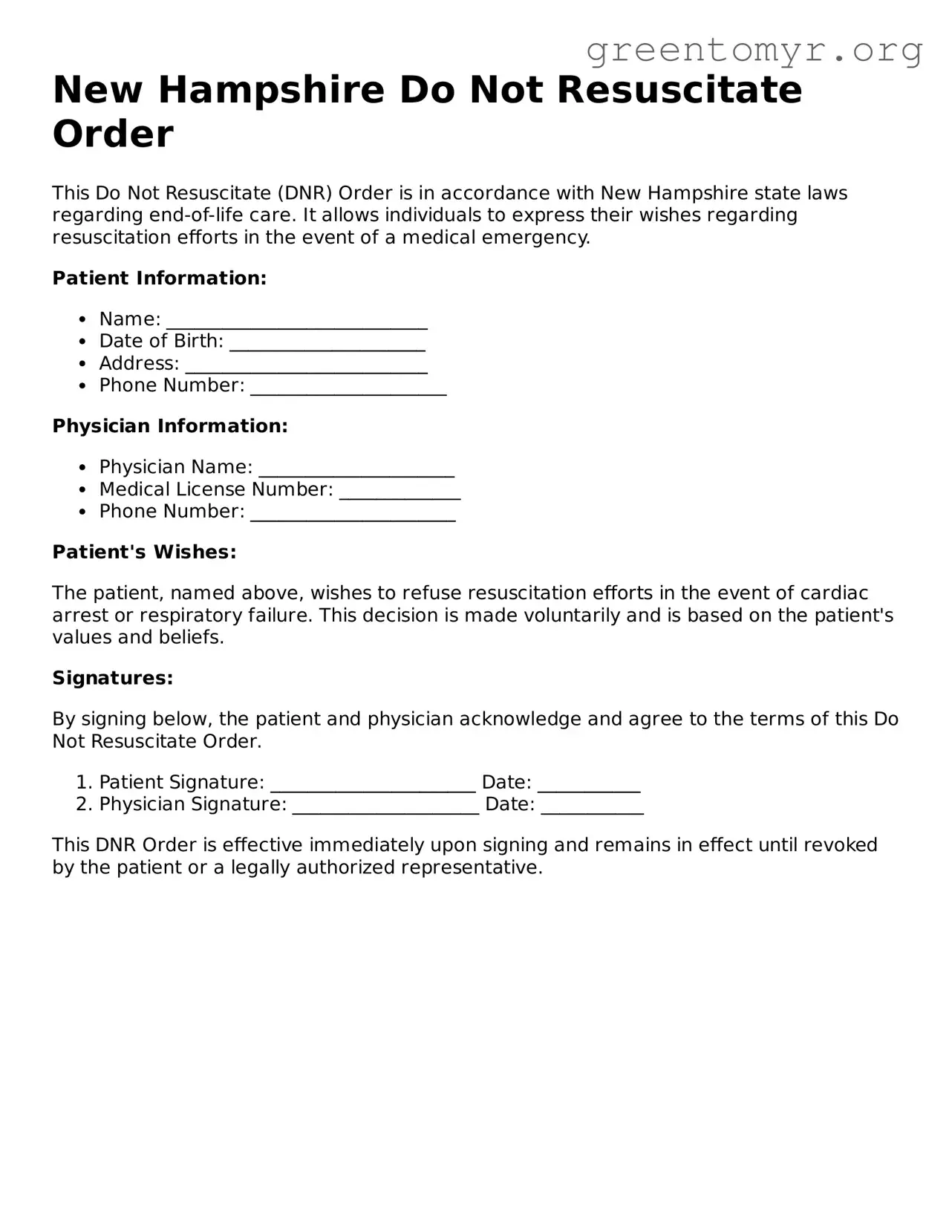
New Hampshire Do Not Resuscitate Order
This Do Not Resuscitate (DNR) Order is in accordance with New Hampshire state laws regarding end-of-life care. It allows individuals to express their wishes regarding resuscitation efforts in the event of a medical emergency.
Patient Information:
Physician Information:
Patient's Wishes:
The patient, named above, wishes to refuse resuscitation efforts in the event of cardiac arrest or respiratory failure. This decision is made voluntarily and is based on the patient's values and beliefs.
Signatures:
By signing below, the patient and physician acknowledge and agree to the terms of this Do Not Resuscitate Order.
This DNR Order is effective immediately upon signing and remains in effect until revoked by the patient or a legally authorized representative.
| Fact Name | Description |
|---|---|
| Governing Law | The New Hampshire Do Not Resuscitate Order form is governed by RSA 137-J:1 through RSA 137-J:9. |
| Purpose | This form allows individuals to express their wishes regarding resuscitation efforts in the event of a medical emergency. |
| Eligibility | Any adult can complete the form, provided they are of sound mind and understand the implications of their decision. |
| Signature Requirement | The form must be signed by the individual or their authorized representative and a witness to be valid. |
| Availability | The New Hampshire Do Not Resuscitate Order form can be obtained from healthcare providers or downloaded from state health department websites. |
Filling out the New Hampshire Do Not Resuscitate Order form is an important step in expressing your healthcare wishes. Once the form is completed, it should be shared with your healthcare providers and kept in a place where it can be easily accessed in case of an emergency.
After completing the form, ensure that it is stored safely and shared with those involved in your care. This will help ensure that your wishes are honored in a medical situation.
A Do Not Resuscitate (DNR) Order is a legal document that allows individuals to refuse resuscitation efforts in the event of cardiac arrest or respiratory failure. In New Hampshire, this order is typically used by patients who have a terminal illness or are in a state where they do not wish to have their life prolonged through aggressive medical interventions. It is important for patients and their families to discuss these wishes with their healthcare providers to ensure that everyone understands the patient's preferences.
To obtain a DNR Order, you must follow a specific process:
It is crucial to keep your DNR Order in a location where it can be easily accessed in an emergency. Consider the following options:
Yes, you can change or revoke your DNR Order at any time. If you decide to make changes, follow these steps:
Always communicate your wishes clearly to your healthcare team and family members to ensure that your current preferences are understood and respected.
Filling out the New Hampshire Do Not Resuscitate (DNR) Order form can be a crucial task for individuals wishing to communicate their healthcare preferences. However, several common mistakes can lead to misunderstandings or complications. It is essential to be aware of these errors to ensure that the form accurately reflects one’s wishes.
One frequent mistake is not providing sufficient identification information. The form requires specific details, such as the patient's name, date of birth, and address. Omitting any of this information can lead to confusion and may result in the form being disregarded during a medical emergency.
Another common error involves failing to have the form signed appropriately. Both the patient and a witness must sign the DNR order for it to be valid. If either signature is missing, healthcare providers may not recognize the document, which can lead to unwanted resuscitation efforts.
Some individuals overlook the importance of discussing their wishes with family members and healthcare providers. A DNR order should not exist in isolation. Communication about the decision can help ensure that everyone involved understands the patient's preferences and can advocate for them if necessary.
Additionally, people sometimes neglect to review and update the form regularly. As health conditions change, so may the individual's preferences regarding resuscitation. Keeping the DNR order current is vital to ensure that it accurately reflects the patient’s wishes at all times.
Finally, a lack of understanding about the DNR order itself can lead to mistakes. Some individuals may not fully grasp what a DNR order entails, believing it to be a blanket refusal of all medical care. This misconception can cause confusion and lead to unintended consequences. It is crucial to understand that a DNR order specifically pertains to resuscitation efforts and does not prevent other forms of medical treatment.
The New Hampshire Do Not Resuscitate (DNR) Order form is an important document for individuals who wish to express their preferences regarding resuscitation efforts in medical emergencies. Alongside this form, several other documents can help clarify medical wishes and ensure that an individual's rights and preferences are respected. Below is a list of commonly used forms and documents that complement the DNR Order.
Having these documents in place can provide clarity and peace of mind for both individuals and their families. They ensure that medical preferences are honored and that loved ones are equipped to make informed decisions during critical times.
The Do Not Resuscitate (DNR) Order form is an important document that communicates a patient's wishes regarding resuscitation efforts in the event of a medical emergency. Several other documents serve similar purposes in healthcare settings, each addressing specific aspects of patient care and end-of-life decisions. Below are seven documents that share similarities with the DNR Order form:
When it comes to filling out the New Hampshire Do Not Resuscitate (DNR) Order form, clarity and accuracy are paramount. Here’s a helpful guide to ensure you navigate this process smoothly. Below are nine essential dos and don'ts to keep in mind.
By following these guidelines, you can help ensure that your healthcare preferences are respected and understood. Taking the time to fill out the New Hampshire DNR Order form correctly is a vital step in advocating for your own health choices.
Many people have misunderstandings about the New Hampshire Do Not Resuscitate (DNR) Order form. It's important to clarify these misconceptions to ensure that individuals make informed decisions regarding their healthcare. Here are six common misconceptions:
This is not true. A DNR order specifically addresses resuscitation efforts in the event of a cardiac arrest or respiratory failure. You will still receive other medical treatments and care as needed.
While many people with terminal illnesses choose to have a DNR, it is not limited to them. Anyone can have a DNR if they wish to avoid resuscitation in specific situations, regardless of their overall health status.
These are different documents. A living will outlines your preferences for medical treatment in various situations, while a DNR specifically addresses resuscitation efforts. Both are important, but they serve different purposes.
This is a misconception. A DNR can be established in various settings, including at home or in a long-term care facility. It is essential to communicate your wishes to your healthcare providers regardless of your location.
This is false. A DNR can be revoked or modified at any time. If your preferences change, you can update your DNR order to reflect your current wishes.
This misconception can be particularly distressing. A DNR is a personal choice that reflects an individual's values and wishes regarding end-of-life care. It does not signify a lack of desire to live; rather, it indicates a preference for the type of medical interventions one wants or does not want.
Understanding these misconceptions can help individuals make better-informed decisions about their healthcare and end-of-life preferences. It's always a good idea to discuss your wishes with family members and healthcare providers to ensure everyone is on the same page.
Understanding the New Hampshire Do Not Resuscitate (DNR) Order form is crucial for individuals who wish to make their healthcare preferences known. Here are some key takeaways:
By taking these steps, individuals can ensure their healthcare preferences are respected and understood in critical situations.