Creating a comprehensive Employee Handbook is essential for any business operating in New Hampshire. This document serves as a vital resource for both employers and employees, outlining workplace policies, expectations, and benefits. Key aspects often included in the handbook are company values, code of conduct, anti-discrimination policies, and procedures for reporting grievances. Additionally, it addresses topics such as attendance, leave policies, and employee benefits, ensuring that all staff members understand their rights and responsibilities. By clearly communicating these elements, the handbook not only fosters a positive work environment but also helps protect the organization from potential legal issues. As New Hampshire's workforce continues to evolve, maintaining an up-to-date Employee Handbook is crucial for promoting a culture of transparency and accountability within the workplace.
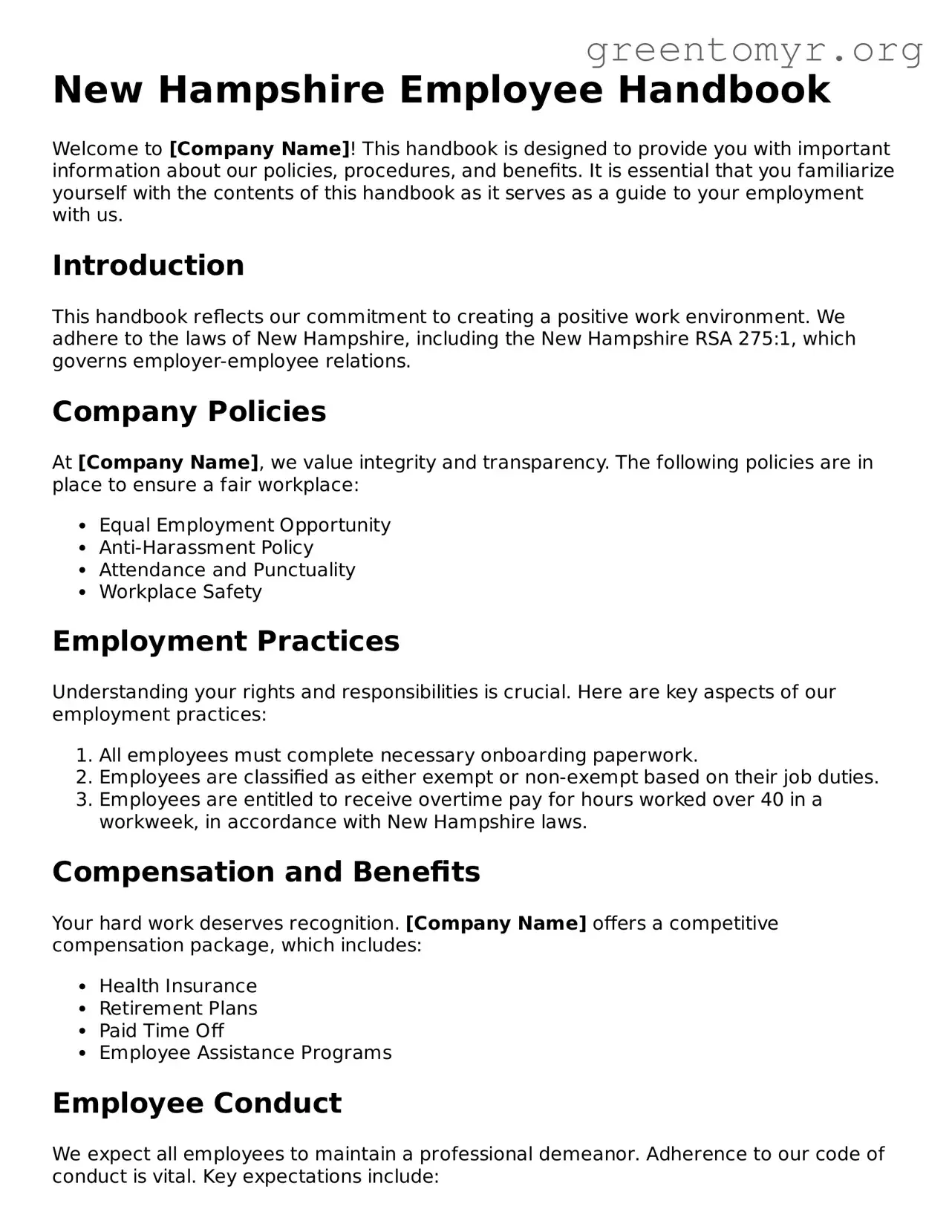
New Hampshire Employee Handbook
Welcome to [Company Name]! This handbook is designed to provide you with important information about our policies, procedures, and benefits. It is essential that you familiarize yourself with the contents of this handbook as it serves as a guide to your employment with us.
Introduction
This handbook reflects our commitment to creating a positive work environment. We adhere to the laws of New Hampshire, including the New Hampshire RSA 275:1, which governs employer-employee relations.
Company Policies
At [Company Name], we value integrity and transparency. The following policies are in place to ensure a fair workplace:
Employment Practices
Understanding your rights and responsibilities is crucial. Here are key aspects of our employment practices:
Compensation and Benefits
Your hard work deserves recognition. [Company Name] offers a competitive compensation package, which includes:
Employee Conduct
We expect all employees to maintain a professional demeanor. Adherence to our code of conduct is vital. Key expectations include:
Grievance Procedure
If you have concerns or grievances, we encourage open communication. Follow these steps:
Conclusion
This handbook serves as a resource for you throughout your employment at [Company Name]. We are excited to have you on board and look forward to a successful partnership. Please feel free to reach out to your supervisor or HR with any questions.
Thank you for being a part of our team!
| Fact Name | Details |
|---|---|
| Purpose | The New Hampshire Employee Handbook form serves as a guide for employees, outlining company policies and procedures. |
| Governing Law | The handbook is governed by New Hampshire state employment laws, including RSA 275:56 and RSA 275:57. |
| Mandatory Policies | Employers are encouraged to include policies on harassment, discrimination, and workplace safety. |
| Employee Acknowledgment | Employees should sign an acknowledgment form indicating they have received and understood the handbook. |
| Updates | The handbook should be reviewed and updated regularly to reflect changes in laws or company policies. |
| Accessibility | Employers must ensure the handbook is accessible to all employees, including those with disabilities. |
| Legal Protection | A well-drafted handbook can provide legal protection for employers against claims of unfair treatment. |
After obtaining the New Hampshire Employee Handbook form, you'll need to fill it out carefully to ensure all necessary information is included. This form will guide you through the process of acknowledging receipt and understanding of the employee handbook. Follow these steps to complete it accurately.
Once you have submitted the form, keep a copy for your records. This will serve as proof that you have received and acknowledged the employee handbook.
The New Hampshire Employee Handbook form is a document that outlines the policies, procedures, and expectations of an employer regarding employee conduct and workplace standards. It serves as a guide for employees to understand their rights and responsibilities within the organization. This handbook can cover various topics, including workplace safety, anti-discrimination policies, and attendance requirements.
An Employee Handbook is crucial for several reasons:
Every employee should receive a copy of the Employee Handbook upon their hiring. This includes full-time, part-time, and temporary employees. It is also a good practice to provide a copy to independent contractors or interns, as they may also need to be aware of certain policies. Employers should ensure that all employees acknowledge receipt of the handbook, often through a signature or electronic confirmation.
It's essential to review and update the Employee Handbook regularly, ideally at least once a year. Changes in laws, regulations, or company policies may necessitate updates. Additionally, if significant events occur within the organization, such as mergers or changes in leadership, these should be reflected in the handbook. Regular updates help ensure that employees are informed about the latest policies and practices.
A comprehensive Employee Handbook should include the following sections:
While an Employee Handbook is not typically a legally binding contract, it can create expectations between the employer and employees. Courts may consider the handbook as evidence of the company's policies and practices. To minimize misunderstandings, employers should include a disclaimer stating that the handbook does not constitute a contract of employment and that policies may change at the company's discretion. This helps clarify that employment is at-will, meaning either party can terminate the employment relationship at any time.
Completing the New Hampshire Employee Handbook form is an essential step for employees. However, several common mistakes can lead to complications. One frequent error is failing to read the entire handbook before signing. Understanding the policies and procedures outlined in the document is crucial. Ignoring this step may result in misunderstandings about workplace expectations.
Another common mistake is not providing accurate personal information. Employees must ensure that their name, address, and contact details are current and correct. Inaccurate information can lead to communication issues and delays in processing important documents.
Some individuals overlook the importance of signing and dating the form. A signature signifies acknowledgment of the handbook's contents. Without a signature or date, the form may be considered incomplete, potentially causing issues with compliance.
Additionally, employees sometimes fail to ask questions about unclear policies. If any section of the handbook is confusing, seeking clarification is advisable. Not doing so may lead to noncompliance with company policies, which could result in disciplinary action.
Another mistake is neglecting to keep a copy of the signed form. Employees should retain a copy for their records. This practice can be beneficial if questions arise regarding the handbook's contents in the future.
Lastly, some employees do not update the form when there are changes in their personal circumstances. It is important to inform the employer of any changes, such as a new address or contact number. Failing to do so may hinder communication and affect employment records.
The New Hampshire Employee Handbook is a vital document for any organization, outlining workplace policies, procedures, and employee expectations. Alongside this handbook, several other forms and documents are commonly utilized to ensure compliance and clarity in the workplace. Below is a list of related documents that often accompany the Employee Handbook.
These documents work together with the Employee Handbook to create a comprehensive framework for workplace policies and employee relations. Ensuring all employees are familiar with these forms can lead to a more informed and engaged workforce.
When filling out the New Hampshire Employee Handbook form, it’s essential to approach the task with care. Below are ten important dos and don’ts to guide you through the process.
By following these guidelines, you can ensure that your experience with the Employee Handbook form is smooth and efficient.
Misconceptions about the New Hampshire Employee Handbook form can lead to confusion for both employers and employees. Here are six common misunderstandings:
When filling out and using the New Hampshire Employee Handbook form, keep these key points in mind: