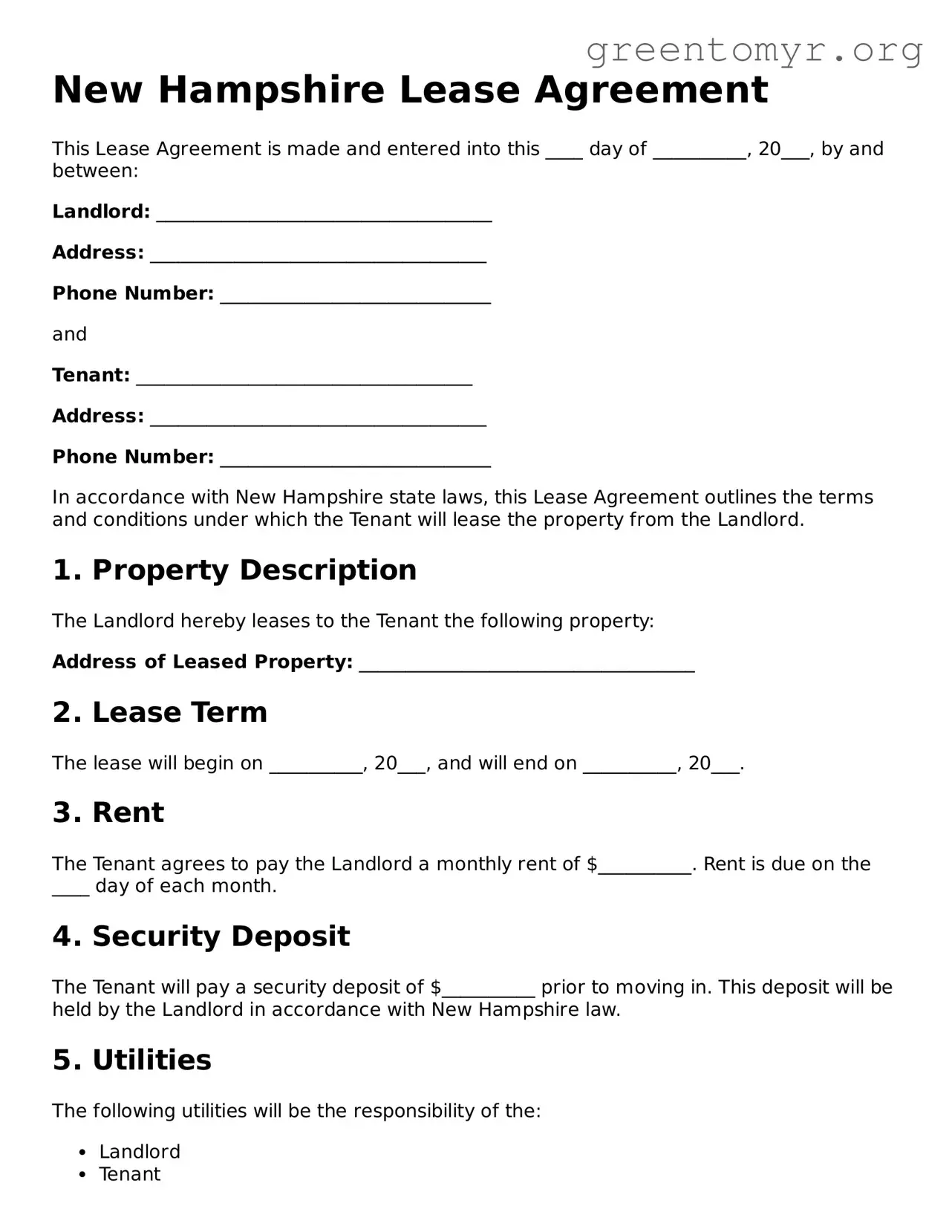
When entering into a rental arrangement in New Hampshire, understanding the Lease Agreement form is crucial for both landlords and tenants. This document serves as a binding contract that outlines the rights and responsibilities of each party involved. It typically includes essential details such as the duration of the lease, the amount of rent due, and the security deposit requirements. Additionally, the form addresses important aspects like maintenance responsibilities, rules regarding pets, and procedures for terminating the lease. By clearly delineating these terms, the Lease Agreement helps to prevent misunderstandings and disputes, fostering a positive rental experience. Both parties should take the time to review the agreement thoroughly, ensuring that they are aware of their obligations and any specific conditions that may apply. Understanding these elements not only protects the interests of both landlords and tenants but also promotes a harmonious living arrangement.
New Hampshire Lease Agreement
This Lease Agreement is made and entered into this ____ day of __________, 20___, by and between:
Landlord: ____________________________________
Address: ____________________________________
Phone Number: _____________________________
and
Tenant: ____________________________________
Address: ____________________________________
Phone Number: _____________________________
In accordance with New Hampshire state laws, this Lease Agreement outlines the terms and conditions under which the Tenant will lease the property from the Landlord.
1. Property Description
The Landlord hereby leases to the Tenant the following property:
Address of Leased Property: ____________________________________
2. Lease Term
The lease will begin on __________, 20___, and will end on __________, 20___.
3. Rent
The Tenant agrees to pay the Landlord a monthly rent of $__________. Rent is due on the ____ day of each month.
4. Security Deposit
The Tenant will pay a security deposit of $__________ prior to moving in. This deposit will be held by the Landlord in accordance with New Hampshire law.
5. Utilities
The following utilities will be the responsibility of the:
6. Maintenance and Repairs
The Tenant agrees to keep the property in good condition. Any repairs needed should be reported to the Landlord promptly.
7. Termination
Either party may terminate this lease by providing written notice at least ____ days before the lease ends.
8. Governing Law
This Lease Agreement shall be governed by the laws of the State of New Hampshire.
IN WITNESS WHEREOF, the parties have executed this Lease Agreement as of the day and year first above written.
Landlord Signature: ____________________________
Date: ____________________________
Tenant Signature: ____________________________
Date: ____________________________
| Fact Name | Description |
|---|---|
| Governing Law | The New Hampshire Lease Agreement is governed by the New Hampshire Revised Statutes Annotated, specifically RSA 540-A. |
| Types of Leases | This form can be used for various types of leases, including residential, commercial, and agricultural properties. |
| Duration of Lease | The lease agreement typically specifies the duration, which can range from month-to-month to multi-year terms. |
| Security Deposit | New Hampshire law limits security deposits to one month's rent for residential leases, ensuring tenant protection. |
| Notice Requirements | Landlords must provide tenants with written notice of any lease violations, allowing them a reasonable time to remedy the situation. |
| Termination Process | Both landlords and tenants must follow specific procedures to terminate the lease, which may include providing notice in advance. |
Filling out the New Hampshire Lease Agreement form is an important step in establishing a rental relationship. Completing this form accurately ensures that both the landlord and tenant understand their rights and responsibilities. Follow the steps below to fill out the form correctly.
A New Hampshire Lease Agreement is a legally binding document between a landlord and a tenant. It outlines the terms and conditions under which the tenant can occupy the rental property. This agreement typically includes details such as the rental amount, lease duration, and responsibilities of both parties.
The key components of a New Hampshire Lease Agreement include:
No, a written lease is not legally required for rental agreements in New Hampshire if the lease term is less than one year. However, having a written lease is highly recommended. It protects both parties by clearly outlining their rights and obligations.
In New Hampshire, landlords can collect a security deposit, but it cannot exceed one month's rent. The landlord must return the deposit within 30 days of the lease termination, minus any deductions for damages beyond normal wear and tear. A written statement detailing any deductions should also be provided.
Generally, landlords in New Hampshire must provide at least 24 hours' notice before entering the rental property, except in emergencies. This notice should specify the reason for entry. Tenants have the right to privacy, and landlords must respect that right.
If a tenant needs to break the lease early, they should first review the lease agreement for any specific terms regarding early termination. If no terms exist, the tenant may be responsible for paying rent until a new tenant is found. Communication with the landlord is essential to discuss options and avoid legal issues.
Yes, tenants in New Hampshire have several rights, including:
Understanding these rights can help tenants advocate for themselves effectively.
No, a landlord cannot evict a tenant without a valid reason. In New Hampshire, a landlord must provide a legitimate cause for eviction, such as non-payment of rent or violation of lease terms. Proper legal procedures must be followed, including providing notice and obtaining a court order if necessary.
You can obtain a New Hampshire Lease Agreement form through various sources. Many online legal services offer customizable templates. Local real estate offices or legal aid organizations may also provide forms. Ensure that the form you choose complies with New Hampshire laws and meets your specific needs.
Filling out the New Hampshire Lease Agreement form can be straightforward, but many people make common mistakes that can lead to confusion or legal issues. One frequent error is not including all required information. Tenants and landlords must provide accurate details such as names, addresses, and contact information. Leaving out even one piece of essential information can create problems later.
Another mistake is failing to read the entire agreement before signing. Many individuals skim through the document, missing crucial terms and conditions. This oversight can result in misunderstandings about responsibilities, such as maintenance duties or payment deadlines. It’s vital to understand every clause to avoid surprises down the line.
People often forget to specify the lease term. A lease can be for a fixed duration or month-to-month. Not clearly stating the term can lead to disputes about when the lease ends. Both parties should agree on the duration to ensure clarity and avoid any potential conflicts.
Additionally, some individuals overlook the importance of documenting any agreed-upon changes. If a landlord and tenant negotiate modifications to the lease, such as pet policies or repair responsibilities, these changes should be written into the agreement. Verbal agreements may be forgotten or disputed later, so it’s best to have everything in writing.
Another common mistake is neglecting to review the security deposit terms. Many people do not pay attention to how much the deposit is, when it is due, and the conditions for its return. Understanding these details can prevent disputes when the lease ends.
Lastly, individuals sometimes fail to include all necessary signatures. Both the landlord and tenant must sign the lease for it to be valid. If one party forgets to sign, the agreement may not hold up in court. Double-checking for signatures ensures that both parties are legally bound by the terms of the lease.
When entering into a lease agreement in New Hampshire, several other documents may be necessary to ensure a smooth rental process. These forms help clarify the responsibilities of both landlords and tenants, protect their rights, and provide essential information. Below is a list of commonly used forms that complement the New Hampshire Lease Agreement.
Utilizing these forms alongside the New Hampshire Lease Agreement can help both landlords and tenants navigate their rental relationships more effectively. By ensuring all parties are informed and protected, the likelihood of misunderstandings and disputes can be significantly reduced.
Rental Agreement: Similar to a lease agreement, a rental agreement outlines the terms under which a tenant can occupy a property. It typically covers the duration of the rental and the responsibilities of both parties.
Sublease Agreement: This document allows a tenant to lease a property to another individual. It includes terms that mirror the original lease, ensuring that the landlord’s rules are upheld.
Commercial Lease: A commercial lease is used for business properties. It specifies the terms of occupancy, including rent, duration, and permitted uses of the space.
Month-to-Month Lease: This type of lease provides flexibility, allowing tenants to occupy a property on a monthly basis. It can be terminated with short notice, similar to a standard lease agreement.
Lease Option Agreement: This document gives a tenant the right to purchase the property at a later date. It includes lease terms while outlining the conditions for buying the property.
Rent-to-Own Agreement: This agreement combines leasing and purchasing. It allows tenants to rent with the intention of buying the property, similar to a lease agreement with additional provisions for purchase.
Tenant Agreement: This document details the rights and responsibilities of tenants, often covering similar ground as a lease agreement but may be less formal.
Real Estate Purchase Agreement: While primarily for buying property, it shares similarities with lease agreements in outlining terms and conditions related to property use and obligations.
Property Management Agreement: This document is between a property owner and a management company. It details the management company's responsibilities, which can include leasing the property.
When filling out the New Hampshire Lease Agreement form, it is crucial to pay attention to details. Here is a list of things you should and shouldn't do:
Taking these steps can help ensure a smooth leasing experience for both landlords and tenants.
Understanding the New Hampshire Lease Agreement form can be challenging. Many people hold misconceptions that can lead to confusion or even legal issues. Here’s a list of eight common misconceptions:
Being informed about these misconceptions can help both tenants and landlords navigate their rights and responsibilities more effectively. Always consult with a legal expert if unsure about specific lease terms or conditions.
When filling out and using the New Hampshire Lease Agreement form, it is essential to keep several key points in mind:
By following these guidelines, individuals can create a comprehensive and clear lease agreement that protects the rights of both landlords and tenants.