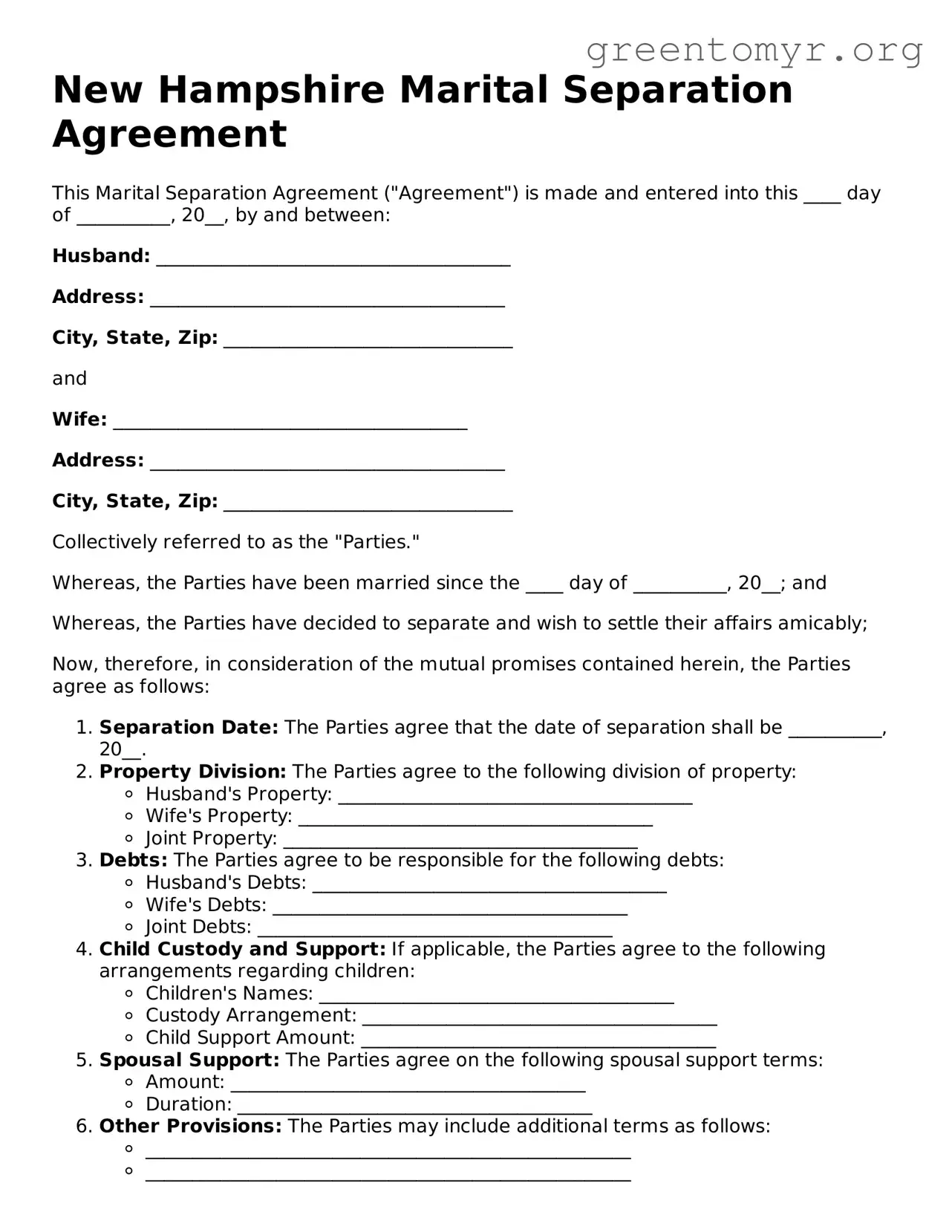
When couples decide to separate, having a clear understanding of their rights and responsibilities is crucial. In New Hampshire, a Marital Separation Agreement form serves as a valuable tool for outlining the terms of the separation. This form addresses key aspects such as the division of property, spousal support, and child custody arrangements. It helps both parties agree on how to handle finances and parenting responsibilities during the separation period. By clearly defining these important elements, the agreement can reduce misunderstandings and conflicts. Completing this form is an important step in ensuring that both individuals feel secure and respected as they navigate this challenging time in their lives.
New Hampshire Marital Separation Agreement
This Marital Separation Agreement ("Agreement") is made and entered into this ____ day of __________, 20__, by and between:
Husband: ______________________________________
Address: ______________________________________
City, State, Zip: _______________________________
and
Wife: ______________________________________
Address: ______________________________________
City, State, Zip: _______________________________
Collectively referred to as the "Parties."
Whereas, the Parties have been married since the ____ day of __________, 20__; and
Whereas, the Parties have decided to separate and wish to settle their affairs amicably;
Now, therefore, in consideration of the mutual promises contained herein, the Parties agree as follows:
This Agreement shall be governed by the laws of the State of New Hampshire.
IN WITNESS WHEREOF, the Parties hereto have executed this Marital Separation Agreement as of the day and year first above written.
Husband Signature: _______________________________
Date: ______________________________________
Wife Signature: _______________________________
Date: ______________________________________
| Fact Name | Details |
|---|---|
| Governing Law | The New Hampshire Marital Separation Agreement is governed by New Hampshire state law, specifically RSA 458:16-a. |
| Purpose | This agreement outlines the terms of separation between spouses, including asset division, child custody, and support obligations. |
| Voluntary Agreement | Both parties must voluntarily agree to the terms laid out in the separation agreement. |
| Written Form | The agreement must be in writing to be enforceable in court. |
| Not Required for Divorce | While helpful, a marital separation agreement is not a legal requirement for filing for divorce in New Hampshire. |
| Child Support Guidelines | Any child support provisions must adhere to New Hampshire's child support guidelines. |
| Modification | The agreement can be modified if both parties consent and the changes are documented in writing. |
| Legal Representation | It is advisable for each party to seek independent legal counsel before signing the agreement. |
| Filing with Court | The separation agreement can be submitted to the court as part of divorce proceedings, but it is not automatically filed. |
After completing the New Hampshire Marital Separation Agreement form, you will need to review the document for accuracy. Once finalized, both parties must sign the agreement. It is advisable to keep copies for your records and consider filing it with the court if necessary.
A New Hampshire Marital Separation Agreement is a legal document that outlines the terms and conditions agreed upon by spouses who wish to live separately while remaining legally married. This agreement can cover various aspects of the couple's life, including property division, child custody, visitation rights, and spousal support. It serves to clarify the responsibilities and rights of each party during the separation period.
Creating a Marital Separation Agreement can provide several benefits:
To create a Marital Separation Agreement in New Hampshire, follow these steps:
Yes, a Marital Separation Agreement can be modified if both parties agree to the changes. It is important to document any modifications in writing and have both parties sign the revised agreement. This ensures that any changes are legally recognized and helps avoid future disputes.
If you and your spouse cannot reach an agreement on the terms of the separation, consider seeking mediation. A neutral third party can help facilitate discussions and assist in finding common ground. If mediation is unsuccessful, you may need to explore legal options, such as filing for divorce or seeking court intervention to resolve disputes.
Completing a Marital Separation Agreement form in New Hampshire can be a daunting task. It’s essential to approach this process carefully to avoid mistakes that could lead to complications down the line. One common error is not fully understanding the terms of separation. Individuals often rush through the definitions and implications of various sections, which can result in misunderstandings about rights and responsibilities.
Another frequent mistake is failing to provide complete and accurate financial information. When filling out the form, it’s crucial to disclose all assets and liabilities honestly. Incomplete financial disclosures can lead to disputes later, and may even impact the enforceability of the agreement.
Many people overlook the importance of including specific details about child custody and support arrangements. Vague language can create confusion and disagreements in the future. It’s vital to clearly outline custody schedules, visitation rights, and financial responsibilities for children to prevent potential conflicts.
Additionally, some individuals neglect to consider tax implications. Certain decisions made during separation, such as asset division, can have significant tax consequences. Consulting a financial advisor or tax professional can help ensure that the agreement is structured in a way that minimizes tax liabilities.
Another mistake is not seeking legal advice. While it may be tempting to handle the separation without professional help, legal guidance can provide valuable insights. An attorney can help identify potential pitfalls and ensure that the agreement meets all legal requirements.
People often forget to review the agreement thoroughly before signing. This oversight can lead to agreeing to terms that may not be in one’s best interest. Taking the time to read through the entire document carefully is essential for ensuring that all parties understand and agree to the terms.
Failure to keep copies of the signed agreement is another critical error. After the agreement is finalized, it’s important for all parties involved to retain their own copies. This ensures that everyone has access to the same information and can refer back to the agreement if needed.
Finally, some individuals may not update the agreement when circumstances change. Life events such as job changes, relocations, or changes in the needs of children can necessitate modifications to the original agreement. Keeping the document current is essential for addressing the evolving needs of all parties involved.
A New Hampshire Marital Separation Agreement is an important document that outlines the terms of a couple's separation. However, several other forms and documents may be necessary to complete the separation process. Below is a list of commonly used documents that can accompany the Marital Separation Agreement.
Having these documents prepared and organized can facilitate a smoother separation process. Each form plays a crucial role in ensuring that both parties understand their rights and responsibilities moving forward.
The Marital Separation Agreement is an important document for couples who are separating. It outlines the terms of the separation, including financial arrangements and responsibilities. Here are eight documents that are similar to the Marital Separation Agreement:
When filling out the New Hampshire Marital Separation Agreement form, it’s essential to approach the process with care. Here are some important dos and don’ts to keep in mind:
By following these guidelines, you can help ensure that your Marital Separation Agreement is completed correctly and effectively addresses your needs.
Misconceptions about the New Hampshire Marital Separation Agreement form can lead to confusion and potential legal issues. Here are four common misunderstandings:
When navigating the New Hampshire Marital Separation Agreement form, it’s important to keep several key points in mind. Understanding these elements can help ensure that the process is smooth and clear for both parties involved.