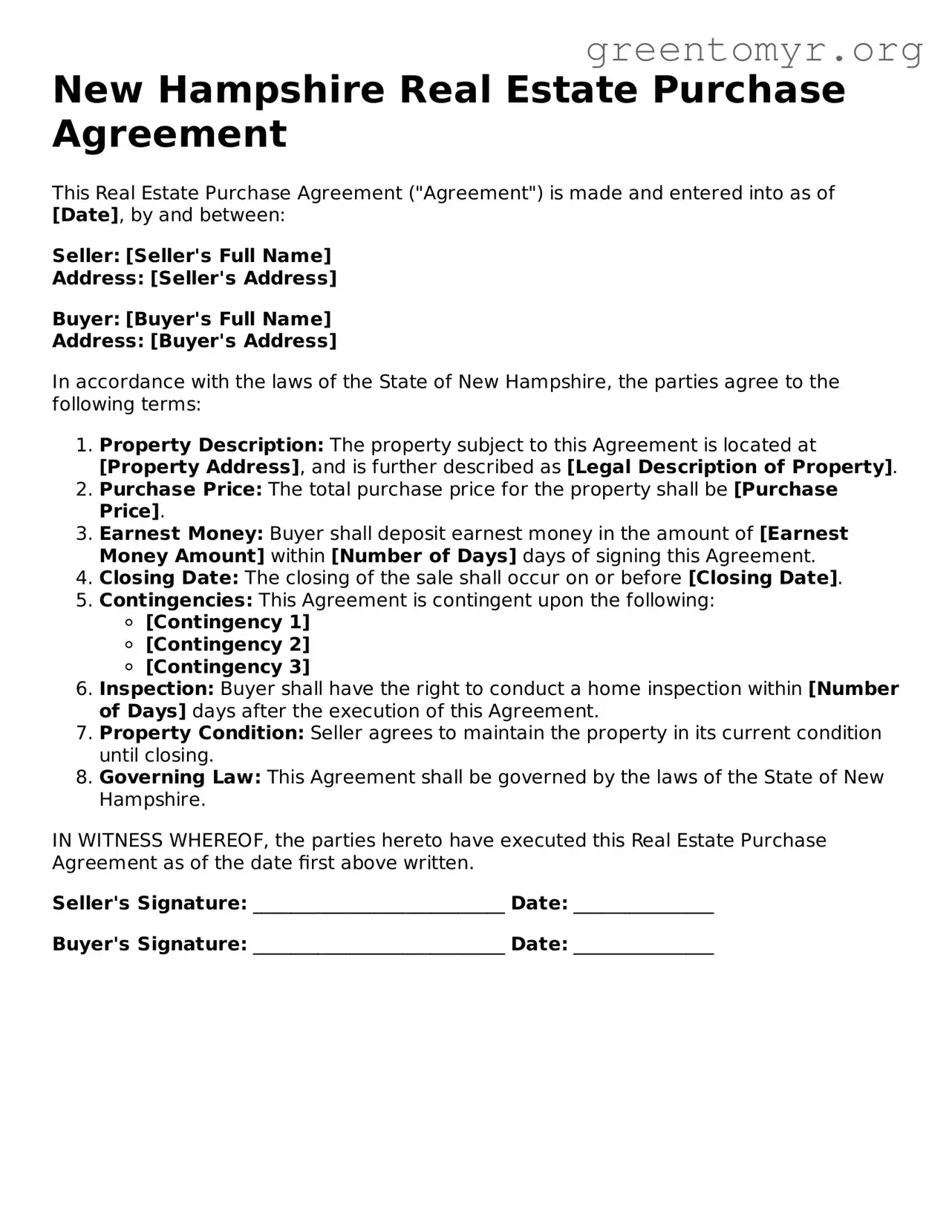
In the vibrant landscape of New Hampshire real estate, the Real Estate Purchase Agreement form stands as a crucial document that facilitates the buying and selling of properties. This form outlines the essential terms and conditions agreed upon by both the buyer and seller, ensuring clarity and mutual understanding throughout the transaction process. Key components include the purchase price, the description of the property, and the closing date, all of which are meticulously detailed to avoid any misunderstandings. Additionally, the agreement addresses contingencies, such as financing or inspections, which protect the interests of both parties involved. By including provisions related to earnest money deposits and the allocation of closing costs, this form lays the groundwork for a smooth transfer of ownership. With its comprehensive nature, the New Hampshire Real Estate Purchase Agreement serves not only as a legal contract but also as a roadmap guiding both buyers and sellers through one of life’s most significant financial decisions.
New Hampshire Real Estate Purchase Agreement
This Real Estate Purchase Agreement ("Agreement") is made and entered into as of [Date], by and between:
Seller: [Seller's Full Name]
Address: [Seller's Address]
Buyer: [Buyer's Full Name]
Address: [Buyer's Address]
In accordance with the laws of the State of New Hampshire, the parties agree to the following terms:
IN WITNESS WHEREOF, the parties hereto have executed this Real Estate Purchase Agreement as of the date first above written.
Seller's Signature: ___________________________ Date: _______________
Buyer's Signature: ___________________________ Date: _______________
| Fact Name | Description |
|---|---|
| Purpose | The New Hampshire Real Estate Purchase Agreement outlines the terms and conditions for buying and selling real estate in the state. |
| Governing Laws | This agreement is governed by the laws of New Hampshire, specifically under RSA 477:4. |
| Parties Involved | The agreement typically includes the buyer and seller, each of whom must provide their legal names and contact information. |
| Property Description | A detailed description of the property being sold is required, including its address and any relevant legal descriptions. |
| Purchase Price | The total purchase price must be clearly stated, along with the terms of payment, such as deposits and financing arrangements. |
| Contingencies | Common contingencies may include home inspections, financing approval, and appraisal conditions that must be met for the sale to proceed. |
| Closing Date | The agreement should specify the closing date, which is when the transfer of ownership takes place and funds are exchanged. |
Once you have the New Hampshire Real Estate Purchase Agreement form in hand, you are ready to proceed with filling it out. This document is essential for formalizing the terms of a property sale. Ensure that you have all necessary information available before starting.
After completing the form, review it carefully for accuracy. Each party should keep a copy for their records. The next steps typically involve negotiating any final terms and preparing for the closing process.
The New Hampshire Real Estate Purchase Agreement is a legal document used when buying or selling real estate in New Hampshire. It outlines the terms and conditions of the sale, including the purchase price, property description, and any contingencies that must be met before the sale can be finalized.
Both the buyer and the seller must sign the agreement. This legally binds both parties to the terms outlined in the document. If there are multiple buyers or sellers, all parties involved should sign to ensure that everyone agrees to the terms.
The key components typically include:
Earnest money is a deposit made by the buyer to show their commitment to purchasing the property. This amount is usually held in escrow and is applied to the purchase price at closing. If the deal falls through due to a contingency, the buyer may get this money back.
Yes, the agreement can be modified, but both parties must agree to any changes. Modifications should be documented in writing and signed by both the buyer and the seller to avoid any misunderstandings later on.
If either party fails to meet their obligations under the agreement, it may be considered a breach. The non-breaching party may have several options, including:
While it is not legally required, having a lawyer review the agreement is highly recommended. A legal professional can help ensure that your interests are protected and that the agreement complies with New Hampshire laws.
You can obtain a New Hampshire Real Estate Purchase Agreement form from various sources, including:
Filling out the New Hampshire Real Estate Purchase Agreement form can be a complex task. Many individuals make common mistakes that can lead to complications later in the process. Understanding these pitfalls can help ensure a smoother transaction.
One frequent error is not providing complete information about the property. Buyers often overlook details such as the property address, lot number, or specific boundaries. Omitting this information can create confusion and may delay the closing process.
Another mistake involves failing to specify the purchase price clearly. Sometimes, individuals write the price in one section but forget to include it in another. This inconsistency can lead to misunderstandings between the buyer and seller.
Many people also neglect to include contingencies in the agreement. Contingencies protect the buyer by allowing them to back out if certain conditions aren’t met, such as failing to secure financing or unsatisfactory inspection results. Without these clauses, buyers may find themselves in a difficult position.
In addition, some individuals do not pay attention to the deadlines outlined in the agreement. Missing a deadline can have serious consequences, including losing the right to negotiate or even losing the property altogether. It is essential to track all dates carefully.
Another common mistake is not having the agreement reviewed by a qualified professional. Many buyers and sellers assume they can handle the paperwork on their own. However, consulting with a real estate attorney or agent can help catch errors before they become problematic.
People sometimes forget to sign and date the agreement. An unsigned document is not legally binding, which means that all the work put into the agreement could be wasted. Ensuring that all necessary signatures are present is crucial.
Some buyers and sellers fail to disclose important information about the property. For example, if there are known issues, such as water damage or pest infestations, these should be disclosed upfront. Not doing so can lead to legal issues down the line.
Additionally, individuals may not understand the implications of including personal property in the sale. Items like appliances or furniture should be clearly listed if they are part of the sale. Otherwise, misunderstandings can arise during the closing process.
Lastly, some people do not keep a copy of the signed agreement. Having a record of the finalized document is important for future reference. Without it, individuals may struggle to remember the terms agreed upon or face disputes later on.
When entering into a real estate transaction in New Hampshire, several forms and documents are often utilized alongside the Real Estate Purchase Agreement. Each of these documents plays a crucial role in ensuring a smooth process and protecting the interests of all parties involved.
Understanding these documents can significantly ease the home buying or selling process. Each one serves a specific purpose and contributes to a successful transaction in New Hampshire's real estate market.
When filling out the New Hampshire Real Estate Purchase Agreement form, it's essential to follow certain guidelines to ensure accuracy and compliance. Below is a list of things you should and shouldn't do.
By adhering to these guidelines, you can help ensure a smoother transaction process.
When dealing with the New Hampshire Real Estate Purchase Agreement, several misconceptions can lead to confusion and potential issues for buyers and sellers. Understanding these misconceptions is crucial for a smooth transaction.
Many people believe that the Real Estate Purchase Agreement is just a formality that can be overlooked. In reality, this document is a legally binding contract that outlines the terms of the sale. Ignoring its importance can lead to misunderstandings and disputes.
Another common belief is that all real estate agreements are identical. However, each agreement can be tailored to fit the specific needs of the parties involved. Customizing the agreement ensures that all unique terms and conditions are addressed, which is essential for protecting your interests.
Some individuals think that a verbal agreement is enough to secure a deal. This is a dangerous assumption. A written agreement is necessary to provide clear documentation of the terms and to protect both parties in case of disputes.
Many assume that once the Real Estate Purchase Agreement is signed, it cannot be altered. In fact, amendments can be made if both parties agree. It is crucial to communicate any changes in writing to ensure that everyone is on the same page.
Filling out the New Hampshire Real Estate Purchase Agreement form is a crucial step in the home buying process. Understanding its key components can help ensure a smooth transaction. Here are some important takeaways:
By paying attention to these key elements, you can navigate the New Hampshire Real Estate Purchase Agreement with confidence.